
If you’re choosing between hand-winding and automatic watches, consider how you value craftsmanship and convenience. Hand-wound watches let you enjoy the ritual of winding and often showcase intricate movements, but they need daily attention. Automatics wind themselves as you wear them, offering ease and modern functionality, though they can be more complex and costly to service. Understanding these differences can help you pick the watch that best fits your lifestyle; explore further to see which suits you best.
Key Takeaways
- Hand-winding watches offer a tactile, ritualistic experience and showcase traditional craftsmanship, while automatics provide convenience through self-winding.
- Automatics require less daily effort but have more complex mechanisms, potentially increasing maintenance costs compared to simpler hand-wound movements.
- Hand-wound watches emphasize artisanal appeal and heritage, making them ideal for enthusiasts valuing craftsmanship; automatics suit those prioritizing ease of use.
- Regular manual winding is necessary for hand-wound watches to maintain accuracy, whereas automatics rely on wrist movement for continuous winding.
- Both types benefit from professional servicing every few years; automatics may incur higher costs due to their complex mechanisms.
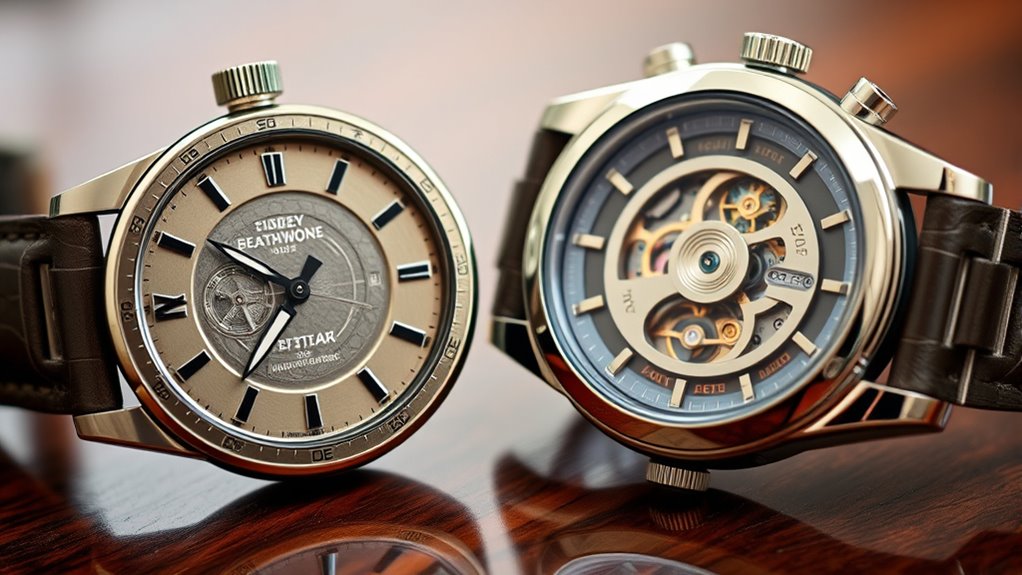
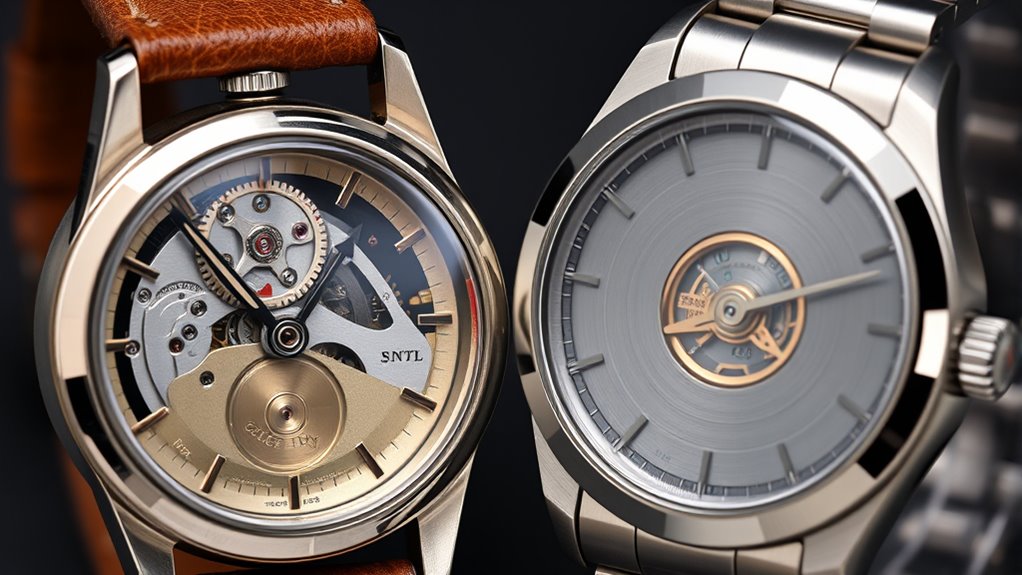
When choosing between hand-winding and automatic watches, understanding how each type powers itself can help you make an informed decision. Both are traditional mechanical options, but they differ in how they store and transfer energy to keep time. Hand-winding watches require you to manually turn the crown to wind the mainspring, which then powers the movement. Automatic watches, on the other hand, use the motion of your wrist to wind themselves through a rotor that spins with movement, storing energy automatically. If you prefer a watch that offers a sense of craftsmanship and connection to traditional watchmaking, you’ll likely appreciate the manual process of hand-winding. Conversely, if convenience appeals to you, automatic watches provide a seamless experience without needing daily winding, as long as you wear them regularly.
Hand-winding watches require manual winding, offering a traditional, craftsmanship-focused experience, while automatics wind themselves through wrist movement for convenience.
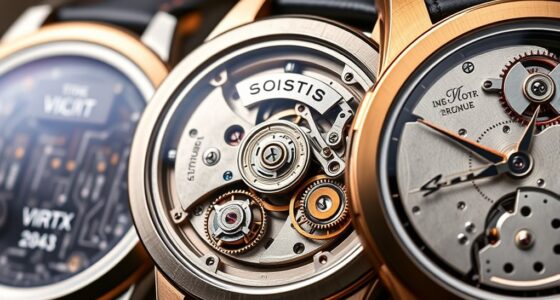
Luxury branding plays a role here as well. High-end brands often emphasize the artistry and heritage behind their hand-wound watches, showcasing intricate movements that can be admired through transparent case backs. These watches are often seen as symbols of sophistication and craftsmanship, appealing to collectors and connoisseurs. Automatic watches also carry prestige, especially when crafted by renowned brands that highlight precision engineering and innovation. Both types can be luxurious, but hand-winding models tend to evoke a more artisanal feel, often associated with heritage brands that emphasize tradition. Meanwhile, automatics tend to appeal to those who want a blend of elegance and modern convenience.
Maintenance requirements are another essential factor. Hand-winding watches generally need to be wound daily to keep accurate time, but their simpler movement can mean fewer parts to maintain. Automatic watches, however, have more complex mechanisms with additional components like the rotor and winding system, which may require more attentive servicing over time. Both types benefit from regular professional servicing—typically every 3 to 5 years—to guarantee longevity and top performance. If you’re someone who enjoys the ritual of winding your watch and doesn’t mind periodic maintenance, a hand-wound piece could be ideal. If you prefer a watch that stays wound with minimal effort and you wear it daily, an automatic might be better suited. Additionally, understanding industry trends can help you choose a model that remains relevant and maintains its value over time.
Ultimately, your choice hinges on your lifestyle, appreciation for craftsmanship, and how much maintenance you’re willing to undertake. Hand-winding watches offer a romantic connection to traditional watchmaking, often associated with luxury branding rooted in heritage. Automatic watches, meanwhile, combine luxury with practicality, making them a popular choice for everyday wear. Both require care, but understanding how each functions and what fits your personality will help you select the perfect timepiece.
Frequently Asked Questions
Which Watch Type Is More Durable Long-Term?
You’ll find that automatic watches tend to be more durable long-term because they have a better power reserve, meaning they keep running longer without winding. Plus, their sealed design often offers superior water resistance, protecting against moisture and dust. Hand-winding watches require regular winding, which can wear down components over time. So, if durability is your priority, automatic watches generally stand up better to daily wear and environmental factors.
How Accurate Are Hand-Wound Versus Automatic Watches?
Hand-wound watches can be quite accurate, especially with good chronograph precision, but they often depend on regular winding to maintain ideal timekeeping. Automatic watches tend to offer similar accuracy but benefit from their self-winding mechanism, which keeps the power reserve charged without daily winding. Overall, both types provide reliable timekeeping, but manual winding allows you to closely monitor the power reserve and maintain precision more actively.
Do Automatic Watches Require More Maintenance?
Yes, automatic watches generally require more maintenance because their watch winding mechanism depends on your wrist movement to stay powered, which can affect the power reserve if not worn regularly. You’ll need to keep an eye on the power reserve and occasionally service the movement to guarantee it stays accurate. Unlike hand-wound watches, automatic ones rely on consistent wear to keep the watch wound and functioning properly.
Can You Switch Between Hand-Winding and Automatic Modes?
You can switch between manual winding and automatic modes easily; most watches allow manual winding to boost the power reserve when needed. notably, manual winding can extend a watch’s power reserve by up to 50%, ensuring accuracy even if you haven’t worn it for a while. Simply turn the crown to wind it manually, and your watch will seamlessly switch modes, keeping it running reliably without any hassle.
Which Watch Type Is Better for Travel and Activities?
For travel and activities, automatic watches are better because they keep running with your movements and require less manual winding, making them convenient. If you prefer luxury styles, many automatic options offer elegant designs, while affordability options include reliable, budget-friendly models. Hand-winding watches suit collectors or those who enjoy a traditional experience, but for active lifestyles, automatic watches provide durability and ease, ensuring your watch keeps pace with your adventures.
Conclusion
Ultimately, choosing between hand-winding and automatic watches depends on your style and needs. Hand-winders offer a personal, traditional touch—like holding a piece of history in your hand—while automatics provide convenience, never needing to be wound if worn daily. Think of it this way: your watch is your loyal companion, either meticulously crafted or effortlessly self-sufficient. Whichever you pick, you’re embracing a timeless craft that makes every second feel like a masterpiece.