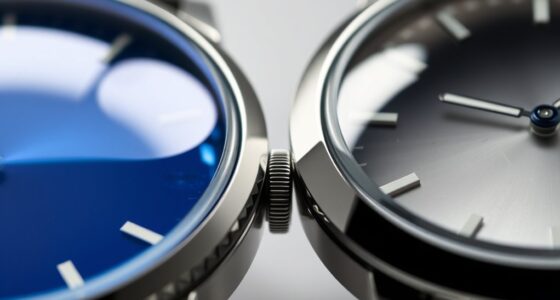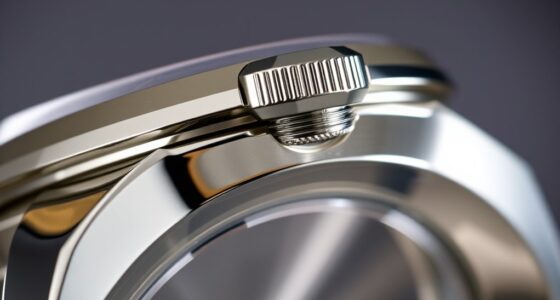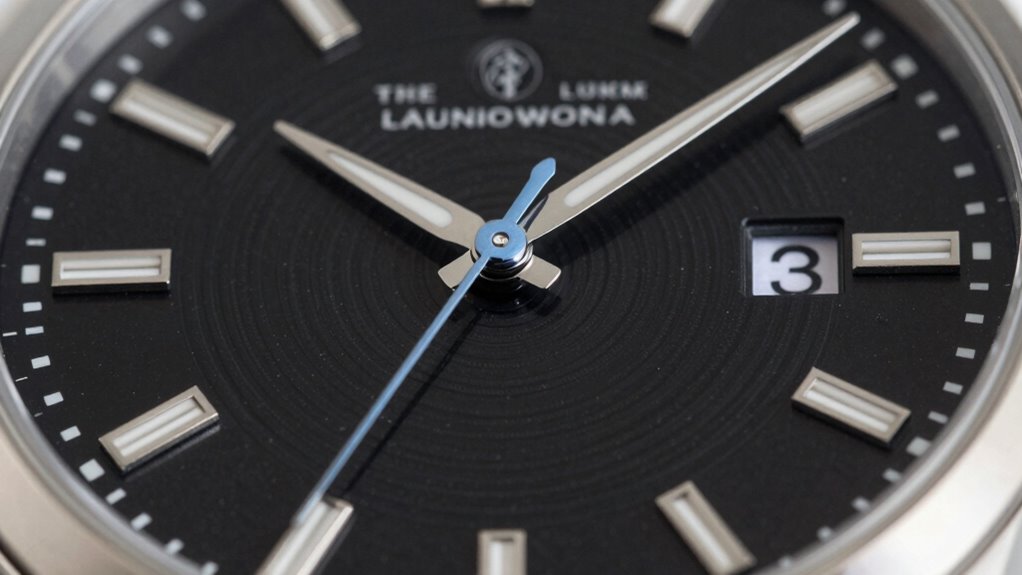
To read a watch dial like an enthusiast, start by identifying the main hour markers and their shape or number, which help you quickly locate the time. Pay attention to the style of the hands, especially the hour and minute hands, and recognize any brand-specific features for faster identification. Notice subdials and other details like date windows or chronograph functions. Recognizing these elements and their purpose will boost your confidence, and there’s much more to discover if you keep exploring.
Key Takeaways
- Identify main hour markers and minute markers for quick time reading.
- Observe the position and style of the hour, minute, and second hands.
- Recognize brand-specific design elements and signature features.
- Understand subdials and additional indicators for extra functions.
- Learn the history and typical layout to interpret complex or unique dial designs.
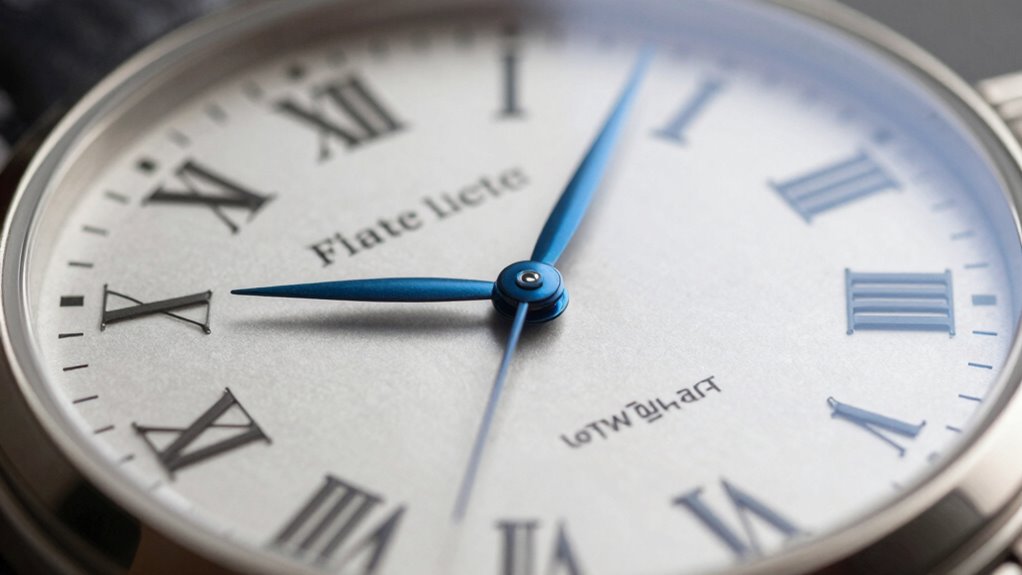
Understanding how to read a watch dial is essential if you want to tell time accurately and quickly. When you start exploring watches, you’ll notice that each one tells its story through design, features, and branding. The watch history reveals how timekeeping devices have evolved from simple sundials to complex mechanical and quartz watches. This evolution influences how the dial is structured, with some designs emphasizing tradition and others focusing on innovation. Recognizing these elements helps you appreciate a watch’s purpose and craftsmanship, making you more confident in reading its dial.
Mastering watch dial reading boosts confidence by understanding design, history, and brand-specific features for accurate timekeeping.
Brand significance plays a crucial role in how a watch dial is designed and interpreted. Certain brands, like Rolex or Patek Philippe, have iconic styles that make reading their watches straightforward. Their dials often feature clear markers, distinctive hands, and signature elements that stand out, making it easier for enthusiasts to identify and read the time at a glance. Other brands might opt for more minimalist or avant-garde designs, which challenge you to understand the dial’s layout and features. Knowing the brand’s significance helps you quickly identify what to look for, whether it’s the position of the hour markers or the style of the hands.
When you look at a watch dial, you’ll first notice the main hour markers, which are often numbered or represented by simple lines or dots. These markers divide the dial into 12 segments, guiding your eye from one hour to the next. The minute markers, usually smaller and more numerous, help you read the exact minutes and seconds. The hands are your primary indicators: the shorter, thicker one points to the hour, while the longer, thinner hand indicates minutes. Many watches also feature a sweeping second hand, which can be a simple thin line or a more elaborate design, depending on the watch’s brand and style. Recognizing the design elements can help you interpret different watch styles more accurately.
In some watches, especially those with a chronograph or additional complications, the dial includes subdials. These smaller dials serve specific functions, such as tracking seconds, minutes, or even a different time zone. Learning to read these subdials is essential if you want to become an enthusiast, as they add layers of functionality and complexity to the watch. As you familiarize yourself with different brands and their designs, you’ll start recognizing patterns and features that simplify reading even the most intricate dials. A good understanding of watch technology can further enhance your ability to interpret these features accurately.
Mastering how to read a watch dial becomes easier with knowledge of its history, design cues, and brand-specific features. Each watch has a story, and understanding those elements helps you read the dial with confidence and precision.

Watch Winder for Automatic Watches: Automatic Single Watch Winder Box with Japanese Quiet Motor, Rotating Watch Case in Black Carbon Fiber Leather, Gifts for Men & Collectors
Experience Exceptional Craftsmanship: Our automatic watch winder is meticulously handmade from premium materials like carbon fiber leather, MDF,…
As an affiliate, we earn on qualifying purchases.
As an affiliate, we earn on qualifying purchases.
Frequently Asked Questions
What Are the Different Types of Watch Dials?
You’ll find various watch dial types, including classic, textured, and luxury branding dials. Classic dials are simple with minimal markings, while textured dials feature patterns like guilloché or soleil, adding depth. Luxury branding dials highlight prestigious brand logos, often with intricate details. Each type influences the watch’s look and feel, helping you identify style and craftsmanship. Recognizing these differences enhances your appreciation for a watch’s design and quality.
How Do Vintage Watch Dials Differ From Modern Ones?
Vintage watch dials are like time capsules, showcasing a charming patina that develops with age, setting them apart from modern, pristine surfaces. Their dial typography often features distinctive fonts and layouts, reflecting the era’s design trends. You notice tiny imperfections and unique markings, adding character. Modern dials tend to be more uniform and sleek. This contrast makes vintage watches feel like treasured stories etched on every surface, inviting you to explore their history.
What Is the Significance of Watch Dial Colors?
Watch dial colors hold significant meaning through color symbolism and design variations. For example, black symbolizes elegance and formality, while blue often represents trust and calmness. Bright colors like red or yellow add boldness and visibility. These choices influence your perception and style, making the watch more than just a timepiece. Understanding these variations helps you select a dial that reflects your personality and complements your wardrobe.
How Do I Identify a Genuine Watch Dial?
To identify a genuine watch dial, start by inspecting brand markings—they should be clear, precisely printed, and consistent with official logos. Check the material finishes; authentic dials often have high-quality, smooth, and evenly applied surfaces without imperfections. Look closely at the indices and fonts, which should be sharp and well-aligned. Any discrepancies or blurry details suggest the dial might be a counterfeit, so compare it with official images for confirmation.
What Are Common Dial Complications Not Covered in Basics?
Think of watch complications as secret whispers on a dial’s canvas. Besides basics, you’ll find the moon phase, showing the night’s dance, and power reserve, like a fuel gauge for your watch’s soul. These features add drama and depth, revealing more than just time. Spotting them elevates your understanding, turning you into a true connoisseur who appreciates the artistry behind each tick and tock.

Magnifier, 6pcs Watch Date Calendar Magnifying Glass Jewelers Loupe Magnifiers Professional Convexity Watch Parts Tool for Watch Repairing Portable Magnifying Glass for Women Man
Time Saving And Labor Saving: The professional tools of watchmakers and watch repairers can save you expensive repair…
As an affiliate, we earn on qualifying purchases.
As an affiliate, we earn on qualifying purchases.
Conclusion
Now that you know how to read a watch dial like an enthusiast, you’re truly joining the ranks of those who appreciate the art of timekeeping. Think of it as revealing a secret language, much like deciphering hieroglyphs in an ancient temple—each detail revealing stories and craftsmanship. With this newfound knowledge, you’re not just telling time; you’re embracing a tradition, a dance between precision and artistry, as timeless as the stars themselves.

Watch Link Removal Kit, BYNIIUR Watch Repair Kit, Watch Case Opener Spring Bar Tools, Watch Battery Replacement Tool Kit, Watch Band Link Pin Tool Set with Carrying Case and Instruction Manual
UPGRADE COMPLETE 155 PCS WATCH REPAIR KIT suit for professional and general use, which can solution for most…
As an affiliate, we earn on qualifying purchases.
As an affiliate, we earn on qualifying purchases.

Pro Size Polishing Cleaning Cloth Made in USA for Gold, Silver, Platinum. Pure Cotton Eco Friendly Tarnish Remover Cleaner Large 11 x 14 Inch. Shines Jewelry Like New. Cleans Coins Watches Silverware
SHINES AND PROTECTS: Cleans, shines, and protects gold (14 k and 18 K), silver, and platinum. Use it…
As an affiliate, we earn on qualifying purchases.
As an affiliate, we earn on qualifying purchases.