
Understanding jewelry metals involves knowing what karats, hallmarks, and alloys mean. Karats measure how pure gold is, with higher numbers indicating more gold content. Hallmarks and stamps on jewelry verify its authenticity, showing details like metal type and origin. Alloys are mixtures of metals that improve durability and appearance. Recognizing these basics helps you choose and care for jewelry confidently—if you’d like to explore more details, keep going.
Key Takeaways
- Karats measure gold purity, with 24K being pure gold and lower karats indicating mixed alloys for durability.
- Hallmarks and stamps verify metal content, origin, and authenticity, helping identify genuine jewelry.
- Alloys combine metals like copper and silver to enhance strength, color, and tarnish resistance.
- Different metals (gold, silver, platinum) vary in durability, appearance, price, and ethical sourcing considerations.
- Proper cleaning and storage extend jewelry lifespan, while recognizing hallmarks helps ensure quality and authenticity.
Top picks for "jewelry metal karat"
Open Amazon search results for this keyword.
As an affiliate, we earn on qualifying purchases.
Understanding the Basics of Jewelry Metals
To understand jewelry metals, recognizing that different metals have unique properties that affect their appearance, durability, and value is essential. Some metals, like nickel, can trigger metal allergies, causing skin irritation for sensitive wearers. It’s important to choose hypoallergenic options if you have sensitive skin. Additionally, consider the environmental impact of metal sourcing; some metals require extensive mining, which can harm ecosystems and contribute to pollution. Recycled metals offer a more sustainable choice, reducing environmental harm. Understanding these factors helps you select jewelry that not only suits your style but also aligns with your health and eco-conscious values. Sustainable practices in metal sourcing are becoming increasingly important as consumers seek environmentally friendly options. By being aware of metal allergies and environmental concerns, you make smarter, more responsible decisions when choosing jewelry. Incorporating ethical sourcing into your selection process can help promote more responsible mining practices and reduce ecological footprints.
The Significance of Karat in Gold Jewelry
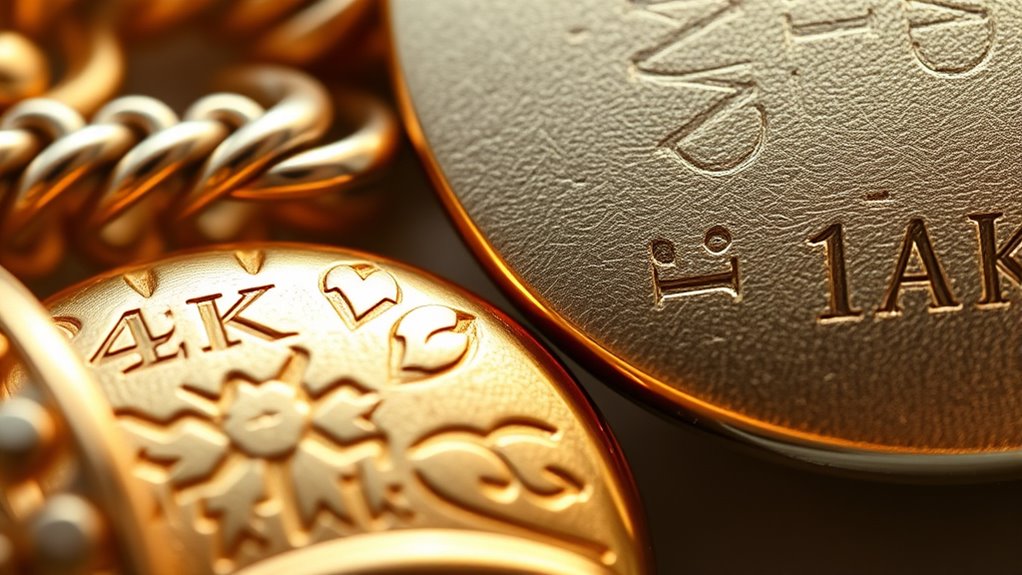
Karat is a key measure that determines the purity of gold in jewelry, directly affecting its value, appearance, and durability. The karat measurement indicates how much pure gold is present in a piece compared to other metals. For example, 24-karat gold is 100% pure, while 14-karat gold contains about 58.3% gold, mixed with other metals for strength. Higher karat numbers mean greater gold purity, giving jewelry a richer, more vibrant look. However, increased purity also makes the gold softer and more prone to scratching. Lower karats are more durable and suitable for everyday wear. Understanding the significance of karat helps you choose jewelry that balances beauty, durability, and value according to your preferences. Additionally, knowing about alloys can help you better understand how different metal combinations affect jewelry properties. Being aware of metal composition also assists in maintaining and caring for your jewelry over time. Recognizing the hallmarks stamped on jewelry can help verify its authenticity and purity.
Deciphering Hallmarks and Stamps on Jewelry
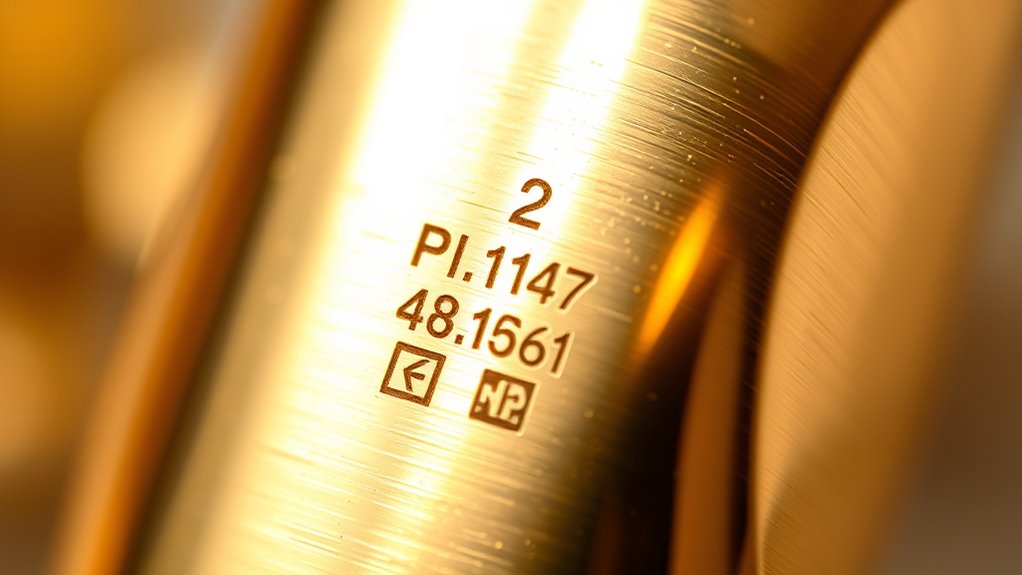
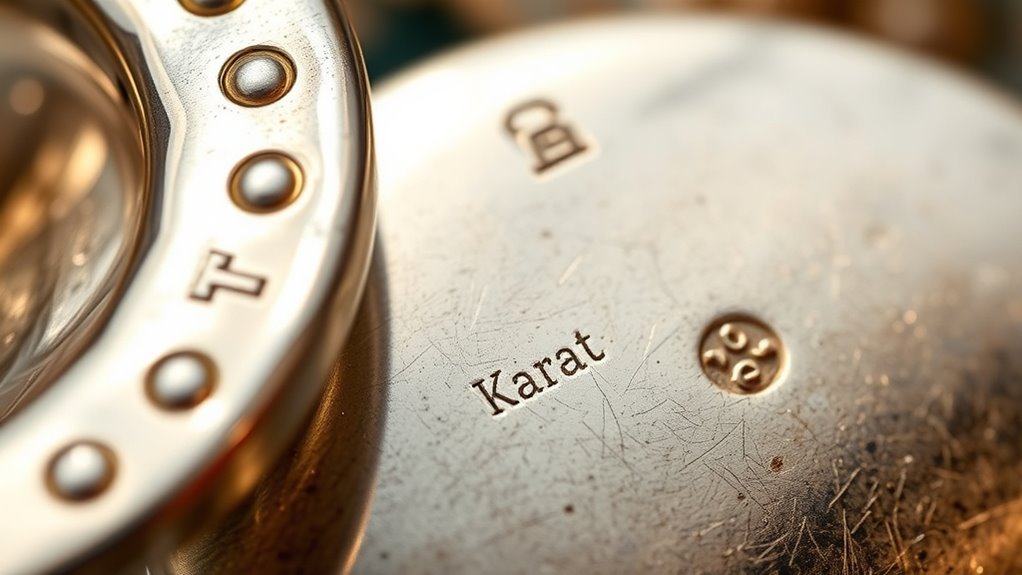
Have you ever noticed small marks or stamps on your jewelry and wondered what they mean? These marks are essential for hallmark identification, revealing important details about the piece’s metal content and authenticity. Each hallmark or stamp has significance, often indicating the metal purity, manufacturer, or country of origin. Recognizing these stamps helps you verify quality and value, especially when buying or selling jewelry. For example, a number like “14K” signifies 14-karat gold, while other symbols might represent the maker’s mark or assay office. Understanding the metal purity standards can help you better assess the value of your jewelry. Additionally, some hallmarks are regulated by government agencies, ensuring consistency and trustworthiness in jewelry markings. Taking the time to decode these stamps can significantly impact your knowledge of jewelry appraisal and authenticity. Knowing the hallmarking regulations can also help you distinguish genuine markings from counterfeit ones. Examining the stamps closely can reveal details about the jewelry’s origins and manufacturing process. Moreover, understanding the industry standards can aid collectors and enthusiasts in making informed decisions. Take a moment to examine your pieces; these marks can tell you much more than meets the eye.
Exploring Different Types of Metal Alloys
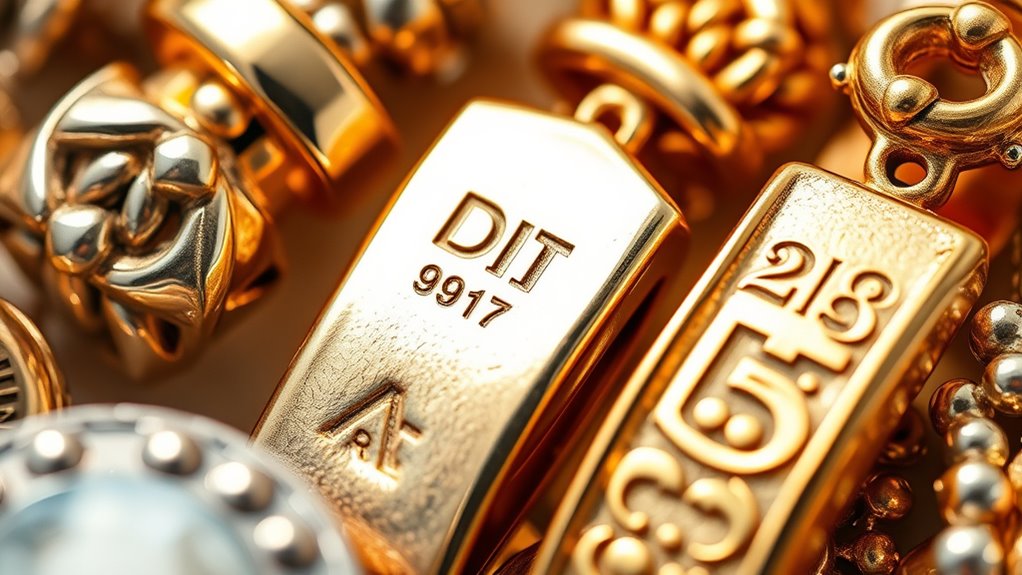
Understanding different metal alloys is essential because pure metals often lack the durability and workability needed for jewelry. Metal alloy compositions vary widely, combining metals like copper, silver, zinc, and nickel to enhance strength, color, and tarnish resistance. These alloys are created through specific alloy forging techniques, which involve heating and shaping the metal to achieve the desired properties. For example, sterling silver is an alloy of 92.5% silver and 7.5% copper, making it more durable than pure silver. Similarly, gold alloys blend pure gold with other metals to reach different karat levels. By exploring various alloy forging techniques, you can appreciate how jewelers manipulate metal compositions to produce jewelry that’s both beautiful and resilient.
Comparing Gold, Silver, and Platinum

When choosing between gold, silver, and platinum, you’ll want to take into account their durability and strength for daily wear. Price and value also matter, as each metal varies markedly in cost and long-term worth. Additionally, their appearance and color can influence your style, making it important to pick the one that best suits your preferences. For those interested in ethical considerations, sustainable practices in mining and manufacturing can also be a significant factor when selecting precious metals. Understanding net worth and other financial aspects can help you make a more informed decision about investing in jewelry.
Durability and Strength
Gold, silver, and platinum each differ particularly in their durability and strength, affecting how well they stand up to everyday wear. Gold, especially in higher karat versions, is softer and more prone to metal fatigue, which can cause it to bend or scratch more easily. Silver is fairly durable but can tarnish quickly and is susceptible to alloy corrosion if not properly maintained. Platinum, on the other hand, is incredibly strong and resistant to metal fatigue, making it ideal for daily wear. Its dense nature also helps resist alloy corrosion better than gold or silver. Overall, platinum offers the greatest durability, followed by silver, with gold being more delicate but still a popular choice for its beauty. Your choice depends on how much wear and tear your jewelry will endure.
Price and Value
While platinum outperforms gold and silver in durability, it also commands a considerably higher price, which impacts its overall value. When comparing these metals, understanding pricing strategies is key. Gold’s market value fluctuates based on global economic conditions and its purity, making it a popular investment. Silver is generally more affordable, but its price can be volatile due to industrial demand and supply levels. Platinum’s rarity keeps its market value high, but its pricing strategy often reflects its exclusivity and durability. If you’re seeking long-term investment or luxury appeal, platinum may justify its higher cost. However, for everyday jewelry or budget-conscious choices, silver and gold typically offer better value. Balancing price and value depends on your personal priorities and market trends.
Appearance and Color
Gold, silver, and platinum each have distinct appearances that influence their appeal and suitability for different jewelry styles. Gold’s warm, rich hue ranges from yellow to rose and white, often enhanced with color treatments or plated finishes to achieve specific shades. Silver offers a bright, shiny white luster that can be polished to a mirror finish or given matte or brushed textures for variety. Platinum’s naturally cool, silvery-white tone remains consistent without color treatments, maintaining its sleek, modern look. Metal finishes like high polish, matte, or textured surfaces further customize each metal’s appearance, adding depth and character. Your choice depends on the desired style, color preference, and whether you want a natural or enhanced look, making each metal unique in its visual appeal.
How to Recognize Genuine vs. Fake Metals

Have you ever wondered how to tell if a piece of jewelry is made of genuine metal or a fake? The first step is to look for hallmarks or stamps indicating authenticity, but beware of counterfeit detection tricks. Genuine metals typically have clear, consistent markings, while fake ones might lack stamps or have misspelled hallmarks. If you’re prone to metal allergy, testing the jewelry’s reaction on your skin can help—genuine metals like gold or platinum usually don’t cause irritation. Examine the piece closely—fake metals often have dull finishes or uneven color. When in doubt, consult a professional appraiser or jeweler. Recognizing real versus fake metals takes keen observation and sometimes expert help, ensuring you avoid counterfeit jewelry and find pieces that are safe and authentic.
Care and Maintenance for Various Metals
Taking care of your jewelry starts with proper cleaning techniques suited to each metal, helping them stay shiny and new. You should also store your pieces carefully to prevent scratches and tarnishing. In this section, you’ll learn how to maintain your jewelry’s beauty for years to come. Regular cleaning and appropriate storage can also help prevent damage caused by environmental factors, similar to how water filtration systems protect appliances from sediment and impurities water quality. Ensuring your jewelry is made from precise alloys can also make a significant difference in its longevity and appearance. Additionally, understanding metal composition can help you select pieces that are more durable and suitable for everyday wear. Using appropriate cleaning methods tailored to each metal type can further extend the life of your jewelry and keep it looking its best. Being aware of alloy composition can help you choose jewelry that resists tarnishing and corrosion over time.
Cleaning Techniques for Metals
Ever wondered how to keep your jewelry metals looking their best? The key lies in proper cleaning techniques. For polishing, use a soft cloth or a jewelry-specific polishing cloth to gently buff away fingerprints and minor scratches. When tarnish appears, tarnish removal is essential—try a gentle commercial cleaner or a homemade solution like baking soda paste. Dip a soft brush or cloth into the cleaner and carefully scrub the metal surface, then rinse and dry thoroughly. Avoid harsh abrasives that can scratch delicate metals. Regular cleaning not only restores shine but also prevents buildup that can damage your jewelry over time. Remember, always follow manufacturer instructions for any cleaning products to protect your jewelry’s integrity and beauty.
Storage Tips for Jewelry
Proper storage is essential to maintaining the beauty and longevity of your jewelry, especially since different metals react uniquely to environmental factors. To prevent metal tarnishing and damage, store each piece separately in soft pouches or lined jewelry boxes. Keep jewelry away from humid areas and direct sunlight, as moisture accelerates tarnishing, especially for silver and other reactive metals. For gold or platinum pieces, airtight containers help preserve their shine. Avoid stacking jewelry, which can cause scratches or deformities. Consider using anti-tarnish strips or silica gel packs to absorb moisture. Regularly inspecting and cleaning your jewelry before storage guarantees it stays in top condition. Effective jewelry storage not only preserves your pieces’ appearance but also extends their lifespan.
Tips for Choosing the Right Metal for You

When selecting the right metal for your jewelry, it’s important to contemplate your lifestyle, skin sensitivity, and personal style. If you have a metal allergy, choose hypoallergenic options like platinum, titanium, or surgical stainless steel to prevent irritation. Consider how active you are—harder metals like tungsten or stainless steel hold up better with daily wear. Your style also matters; if you prefer a classic look, gold or sterling silver might suit you, but remember to select higher karat gold to minimize skin reactions. Here are some tips to help you decide:
- Assess your skin sensitivity for hypoallergenic options.
- Match the metal’s durability with your activity level.
- Pick a metal that aligns with your style preferences.
- Consider maintenance requirements for long-term wear.
Frequently Asked Questions
How Do Environmental Factors Affect Jewelry Metal Durability?
Environmental factors impact your jewelry metal durability through oxidation effects and corrosion resistance. Exposure to moisture, sweat, and air accelerates oxidation, causing tarnishing or discoloration. Saltwater and chemicals weaken corrosion resistance, leading to rust or pitting. To protect your jewelry, remove it before swimming or cleaning, and store it properly. Regular cleaning and maintenance help preserve its appearance and strengthen its resistance against environmental damage.
What Are the Health Risks Associated With Certain Metal Alloys?
Be cautious—certain metal alloys can pose serious health risks. You might experience metal poisoning or allergic reactions if you’re sensitive to metals like nickel or cadmium. Always get allergy testing if you’re unsure, and choose jewelry labeled hypoallergenic. Ignoring these risks could lead to skin irritation, respiratory issues, or more severe health problems. Protect yourself by knowing which alloys are safe, and never overlook potential health warnings on your jewelry.
Can Metal Allergies Be Identified Before Purchasing Jewelry?
Yes, you can identify metal allergies before buying jewelry by undergoing metal allergy testing, which pinpoints specific sensitivities. To prevent reactions, look for hypoallergenic jewelry options made from metals like surgical stainless steel, titanium, or niobium. Always ask retailers about the materials used and consider testing if you’re unsure. This proactive approach helps you enjoy jewelry safely without risking allergic reactions.
How Does the Price of Metals Fluctuate Over Time?
Think of the metal market as a heartbeat, fluctuating with economic whispers and global events. You’ll see prices rise and fall, driven by metal market trends and precious metal valuation. When these trends shift, so does the cost of metals, affecting jewelry prices. Staying informed helps you anticipate changes, ensuring you make wise investments or purchases, just like tuning into the steady rhythm of a trusted heartbeat.
Are There Sustainable or Eco-Friendly Metal Options Available?
Yes, there are sustainable and eco-friendly metal options available. You can choose recycled metals, which are repurposed from existing jewelry or industrial waste, reducing environmental impact. Look for brands that prioritize eco-friendly sourcing, ensuring metals are obtained responsibly with minimal ecological harm. By selecting recycled or responsibly sourced metals, you support sustainability efforts and help reduce the demand for newly mined materials, making your jewelry choices more environmentally conscious.
Conclusion
Knowing your jewelry metals helps you make smarter choices and guarantees your pieces last. Did you know that gold jewelry accounts for about 50% of the global jewelry market? By understanding karats, hallmarks, and alloys, you can confidently shop and care for your jewelry. Whether you prefer gold, silver, or platinum, choosing the right metal is about your style and lifestyle. Keep these tips in mind, and you’ll always wear your jewelry with confidence.