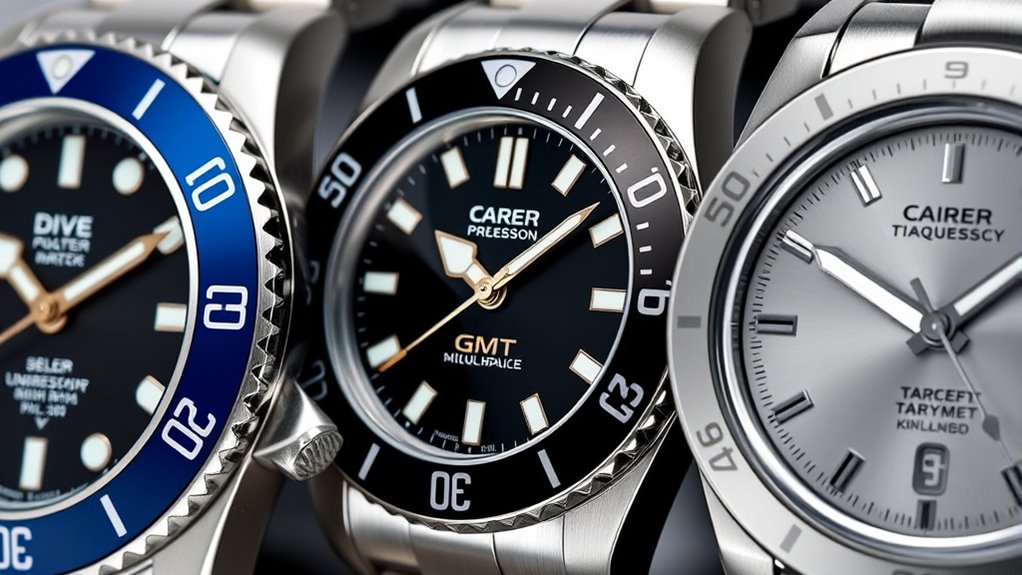
Bezel types like dive, GMT, and tachymeter serve specific functions in watches to improve both style and performance. Dive bezels are unidirectional and help track elapsed time underwater, essential for divers. GMT bezels are bidirectional and show a second time zone, ideal for travelers. Tachymeter bezels are fixed and measure speed over a set distance. Each design contributes to the watch’s durability, usability, and look—exploring these further helps you understand their unique features and benefits.
Key Takeaways
- Dive bezels are unidirectional, rotatable, and used to measure elapsed time underwater, often made of ceramic or stainless steel for durability.
- GMT bezels are bidirectional with 24-hour markings, designed to track a second time zone, aiding travelers.
- Tachymeter bezels are fixed, graduated scales used to calculate speed based on travel time, typically engraved on the bezel’s surface.
- Material choices—ceramic, stainless steel, or aluminum—impact durability, appearance, and resistance to wear for each bezel type.
- Proper installation and alignment are essential to ensure bezel functionality, accuracy, and seamless integration with the watch case.
Bezel types play a critical role in both the functionality and aesthetic appeal of watches and electronic displays. They aren’t just decorative; they serve specific purposes that can enhance your experience and understanding of the device. The choice of bezel materials influences not only the durability and look but also how well the bezel withstands daily wear and tear. Common bezel materials include stainless steel, ceramic, aluminum, and sometimes precious metals. Stainless steel offers strength and resistance to corrosion, making it a practical choice for everyday wear. Ceramic bezels, on the other hand, are prized for their scratch resistance and sleek finish, giving your watch a modern, polished appearance. Aluminum is lightweight and easy to mold, often used for more colorful or sporty designs. The material selection impacts the overall aesthetic and how the bezel interacts with your wrist or device, but proper bezel installation is equally critical. A well-installed bezel ensures it remains securely in place, functions smoothly, and maintains its visual appeal over time. During installation, attention to detail guarantees that the bezel aligns perfectly with the watch case or device frame, preventing any gaps or looseness that could compromise durability or performance.
When it comes to dive watches, the bezel is typically unidirectional, allowing you to measure elapsed time underwater. It’s designed to be robust and easy to turn, even with wet or gloved hands. The bezel materials here need to withstand saltwater, pressure, and frequent use, making ceramic or stainless steel common choices. Proper bezel installation ensures it moves smoothly in one direction only, without any wobbling or accidental turning. For GMT watches, the bezel is usually bidirectional and marked with 24-hour indicators. This helps you track a second time zone, which is especially useful if you travel often. The bezel’s materials must balance durability with readability, often featuring luminous markings for night-time visibility. Tachymeter bezels, often found on chronographs, are fixed and used for calculating speed based on travel time. They are usually engraved or printed onto the bezel, which must be precisely aligned during installation to ensure accurate readings. The bezel’s material and installation quality directly affect how well these markings stay clear and functional over time.
Frequently Asked Questions
How Do I Choose the Right Bezel Type for My Needs?
To choose the right bezel type, consider what bezel functionality you need and how it complements your style. If you dive often, a dive bezel with a unidirectional rotation helps track elapsed time underwater. For frequent travelers, a GMT bezel displays multiple time zones. If you love racing or speed, a tachymeter bezel measures speed over distance. Pick one that suits your activities and enhances your watch’s visual aesthetics for a balanced look.
Are There Specific Watch Brands Known for Particular Bezel Styles?
Did you know that Rolex is renowned for GMT bezels, especially on vintage models? If you’re into diver watches, brands like Seiko and Omega excel with their dive bezels. For tachymeter bezels, look at TAG Heuer and Breitling. These luxury watchmakers have built a reputation for specific bezel styles, making it easier for you to find vintage models or new pieces that match your style and functional needs.
Can Bezel Types Be Customized or Modified After Purchase?
Yes, you can customize or modify bezel designs after purchase. Bezel customization options include swapping out the original for a different style or material, like ceramic or metal, to match your preference. Many watches allow modifying bezel designs through professional services, giving you a personalized look. Just make certain you choose a skilled technician to avoid damaging the watch. This way, you can truly make your timepiece unique.
What Maintenance Is Required for Different Bezel Materials?
You should clean your bezel regularly with a soft cloth and gentle soap to prevent dirt buildup, especially for materials like ceramic or metal. Avoid harsh chemicals that could damage the finish. If your bezel becomes scratched or severely worn, consider bezel replacement to restore its appearance and functionality. Proper maintenance keeps your bezel looking new and ensures it functions smoothly, prolonging the life of your watch.
How Do Bezel Types Affect the Watch’s Overall Durability?
You’ll find that bezel types substantially impact your watch’s overall durability, especially considering bezel material and impact resistance. Dive bezels, often made from ceramic or stainless steel, offer high impact resistance, protecting your watch during underwater adventures. GMT and tachymeter bezels, usually metal or aluminum, provide decent durability but may scratch more easily. Choosing the right bezel material based on impact resistance ensures your watch stays protected in various conditions.
Conclusion
Now that you know the basics of bezel types—dive, GMT, and tachymeter—you’re ready to select the style that suits your style. Whether you prefer the practical precision of a tachymeter or the adventurous allure of a dive bezel, understanding their functions helps you make a smarter choice. So, step into the world of watches with confidence, and let your bezel be your bold, beautiful badge of your unique taste and timing talent.