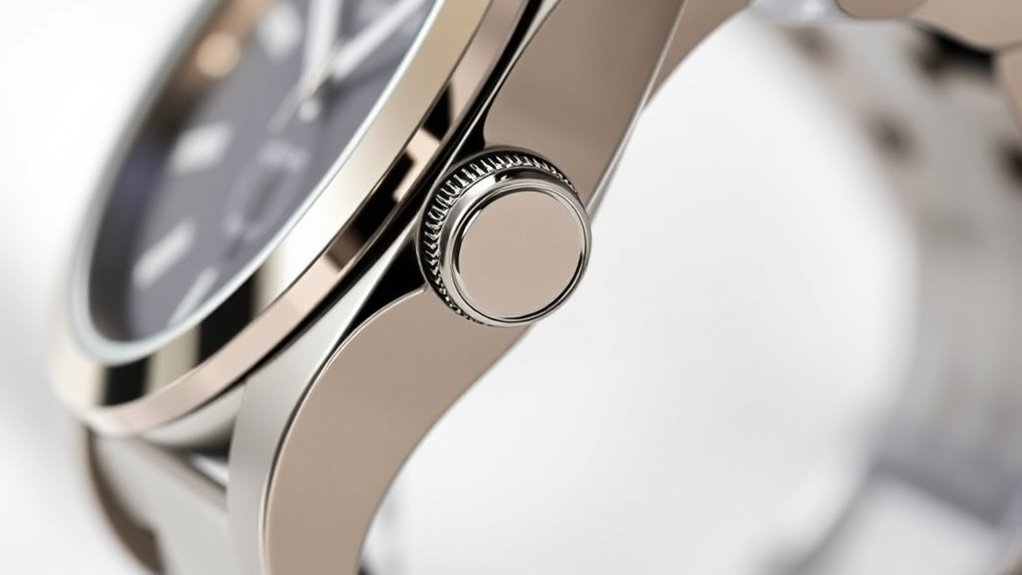

Lug-to-lug measures the distance between the strap attachments, influencing how the watch sits on your wrist. Case size affects the watch’s overall look and comfort, with larger cases making bold statements and smaller ones more understated. For a good fit, your watch should balance these sizes to avoid overhang or gaps, ensuring comfort and style. Want to find the perfect match? Keep exploring for detailed tips on measuring and choosing your ideal watch.
Key Takeaways
- The lug-to-lug measurement determines how well a watch fits by matching wrist size and avoiding overhang or gaps.
- Case size influences the watch’s appearance and comfort, with smaller sizes suited for petite wrists and larger sizes for bigger wrists.
- Proper fit depends on balancing lug-to-lug distance and case diameter to ensure the watch sits comfortably without pinching or slipping.
- Selecting the right strap material and adjusting the bracelet helps improve comfort and overall fit on the wrist.
- Understanding case and lug measurements ensures a proportional, comfortable, and stylish watch wearing experience.

deBeer Watch Lug End/Watch Band Measuring Tool
- Free Shipping: Complimentary shipping included
- Multi-purpose Tool: Measures watch bands and lug ends
- Accurate Measurements: Measures from 7mm to 22mm in 1mm steps
As an affiliate, we earn on qualifying purchases.
As an affiliate, we earn on qualifying purchases.
What Is Lug-to-Lug and Why It Matters

Lug-to-lug measurement is the distance between the two points where the watch strap attaches to the case. It’s essential because it influences how the watch fits on your wrist. A proper lug-to-lug guarantees comfort and prevents overhang or tightness. The material of your watch strap can also affect comfort—leather, silicone, or metal straps each sit differently against your skin. Additionally, the watch’s movement type, whether quartz or mechanical, can impact the case design and, consequently, the lug-to-lug measurement. For example, mechanical watches often have larger cases, which can change how the strap fits. Understanding this measurement helps you select a watch that fits well and complements your style, avoiding discomfort or awkward proportions. In addition, Free Floating designs in watches can influence the overall aesthetic and fit, making it important to consider how the watch case interacts with your wrist and strap. Recognizing the case size is also crucial, as it directly affects the overall appearance and comfort of the watch on your wrist.

ProCase Watch Box, 6 Slot Watch Display Case with Drawer -Espresso
- Overall Dimensions: 12.8"W x 4.3"D x 4.3"H
- Watch Capacity: Holds 6 watches up to 50mm dial
- Two-Layer Design: Upper watch slots and bottom jewelry drawer
As an affiliate, we earn on qualifying purchases.
As an affiliate, we earn on qualifying purchases.
Understanding Case Size and Its Impact on Style
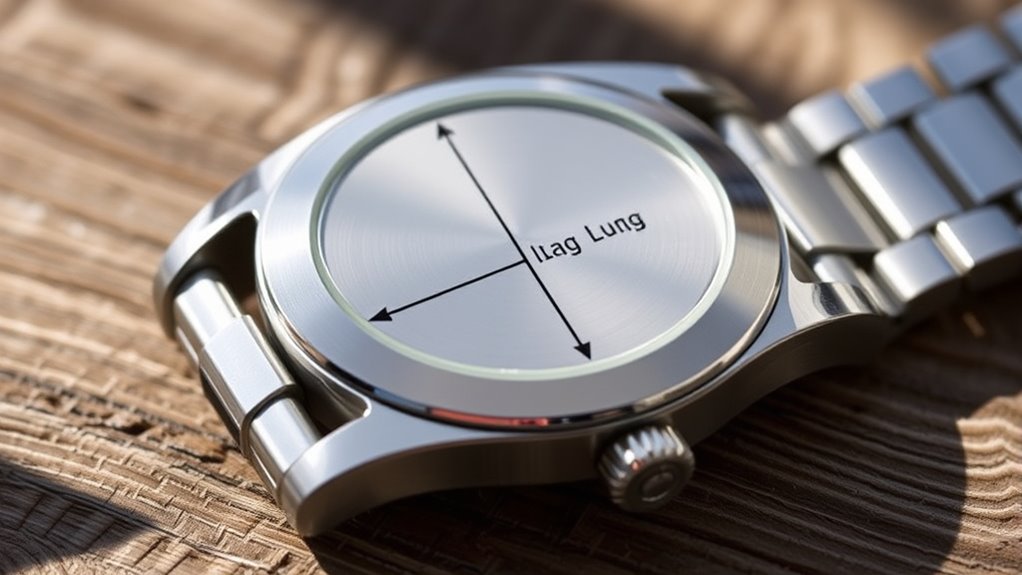
Your watch’s face diameter influences how it looks on your wrist, affecting both style and comfort. A larger dial makes a bold statement, while a smaller one offers a more understated appearance. Consider how the size complements your wrist and the occasion to choose a watch that enhances your overall look. Additionally, understanding precious metal investment options can help you select a timepiece made from valuable materials that suit your investment goals. Being aware of wall decor ideas can also guide you in selecting accessories or accents that harmonize with your watch style and material. For example, choosing decor that matches the case material can create a cohesive aesthetic. Moreover, choosing a case size that aligns with your wrist size ensures comfort and proportionality. Recognizing case size variations can further assist you in finding a watch that perfectly fits your personal style and needs.
Watch Face Diameter
The diameter of a watch face considerably influences its overall look and how comfortably it fits your wrist. A larger watch face, with a bigger dial design, makes a bold statement but can feel bulky. Conversely, a smaller diameter offers a sleek, understated style suited for everyday wear. To help you choose, consider these points:
- Size impact on style: Larger watch face diameters tend to be more modern and eye-catching, while smaller diameters evoke classic elegance.
- Wrist compatibility: Thinner wrists often suit smaller diameters, whereas larger wrists can handle bigger dial designs comfortably.
- Dial design considerations: The watch face diameter affects the visibility of details and overall aesthetics of the dial design.
Choosing the right watch face diameter balances style and comfort perfectly.
Proportional Wrist Fit
Ever wondered how a watch’s case size influences its overall look and how well it fits your wrist? The key is proportional wrist fit. A larger case can make a bold statement but may overwhelm a smaller wrist, while a smaller case offers a sleek, understated appearance. The bracelet material also plays a role; a lightweight metal or leather strap can enhance comfort, especially with larger cases. Additionally, dial color affects visual balance—bright or dark hues can draw attention and influence perceived size. When choosing a watch, consider how the case size complements your wrist’s proportions and how the bracelet material feels during daily wear. A well-proportioned watch ensures both style and comfort, making it a seamless extension of your personal aesthetic.
Style and Formality
Have you considered how case size influences a watch’s overall style and level of formality? Larger cases tend to look bold and modern, making a statement suitable for casual or fashion-forward settings. Smaller cases exude elegance and subtlety, fitting formal or professional environments. Here’s what to keep in mind:
- Material durability: Larger watches often use robust materials, enhancing their sporty or rugged style.
- Color coordination: Smaller, sleeker cases pair well with subtle colors, maintaining a refined appearance.
- Style impact: Bigger cases communicate confidence and modernity, while smaller ones emphasize tradition and sophistication.
Understanding these factors helps you select a watch that aligns with your style and the occasion, ensuring it complements your overall look.

BISONSTRAP Watch Strap 18mm, Vintage Leather Replacement Watch Band, Brown
- Size Options: Available in multiple widths from 14mm to 24mm
- Material: Vintage Crazy Horse leather with genuine leather lining
- Buckle Type: Polished stainless steel buckle
As an affiliate, we earn on qualifying purchases.
As an affiliate, we earn on qualifying purchases.
How Fit Affects Comfort and Wearability

When a watch fits well, it makes a noticeable difference in comfort and wearability throughout the day. A proper fit guarantees you don’t experience pinching, slipping, or tightness. Your choice of bracelet materials and clasp mechanisms greatly influences comfort; softer materials like leather or silicone adjust more easily, while metal bracelets may need precise sizing. A secure clasp prevents accidental drops and adds to comfort by reducing unnecessary movement. The right fit also distributes weight evenly, preventing fatigue or soreness. To help visualize this, consider the following:
| Fit Factors | Impact on Comfort |
|---|---|
| Bracelet materials | Soft materials reduce irritation |
| Clasp mechanisms | Secure, adjustable clasps improve fit |
| Tightness | Too tight causes soreness |
| Looseness | Too loose causes slipping |
| Wrist shape | Tailored fit enhances comfort |
A perfect fit blends these factors for all-day wearability. Additionally, understanding wrist shape can help you select the most comfortable and supportive watch design. Moreover, biomechanical studies show that ergonomic fit significantly enhances overall comfort during prolonged wear. Recognizing proper sizing techniques is essential for achieving an optimal fit that promotes comfort and prevents strain. Incorporating personalized fitting adjustments can further optimize comfort for individual wrist variations. Furthermore, adjustable clasps play a vital role in fine-tuning the fit for personalized comfort and security.

Nizonlaie 18mm Stainless Steel Watch Band Quick Release Premium Matte Brushed Solid Metal Watch Bracelet 14mm 16mm 18mm 20mm 22mm 24mm Universal Stainless Steel Smartwatch Replacement Band Men Women
- High-Quality Material: Solid 316L stainless steel with brushed finish
- Secure Clasp Design: Double push button folding clasp for safety
- Easy Installation: Quick-release spring bars for effortless strap changes
As an affiliate, we earn on qualifying purchases.
As an affiliate, we earn on qualifying purchases.
Measuring Lug-to-Lug: Step-by-Step Guide

Measuring the lug-to-lug distance is a straightforward process that guarantees your watch will fit comfortably on your wrist. To start, gather a flexible ruler or caliper. Next, follow these steps:
To ensure a comfortable fit, measure your watch’s lug-to-lug distance accurately with a flexible ruler or caliper.
- Place the watch face down on a soft surface, and gently measure from one lug’s outer edge to the opposite lug’s outer edge. This measurement determines the watch’s case size, which is essential for proper fit.
- Record the measurement in millimeters, ensuring accuracy.
- Consider the bracelet width or strap materials you plan to use, as they affect overall fit and comfort.
- Keep in mind that vetted wave and wind conditions can influence your choice of watch strap materials for durability and comfort during outdoor activities.
Choosing the Right Case Size for Your Wrist

Choosing the right case size is key to ensuring your watch looks proportionate and feels comfortable on your wrist. When selecting, consider your wrist size and personal style. A smaller wrist benefits from a 36-40mm case, while larger wrists can carry 42mm or more confidently. Your watch strap materials also matter; leather straps offer classic comfort, while metal bracelets provide durability. Watch movement types influence case thickness—automatic movements tend to be thicker, so larger cases can balance this out. Here’s a quick guide:
| Wrist Size | Ideal Case Size | Suitable Strap Material |
|---|---|---|
| Small | 36-38mm | Leather |
| Medium | 39-42mm | NATO or Rubber |
| Large | 43mm+ | Metal Bracelet |
Find what fits best for your style and comfort.
Balancing Lug-to-Lug and Case Size for Optimal Fit
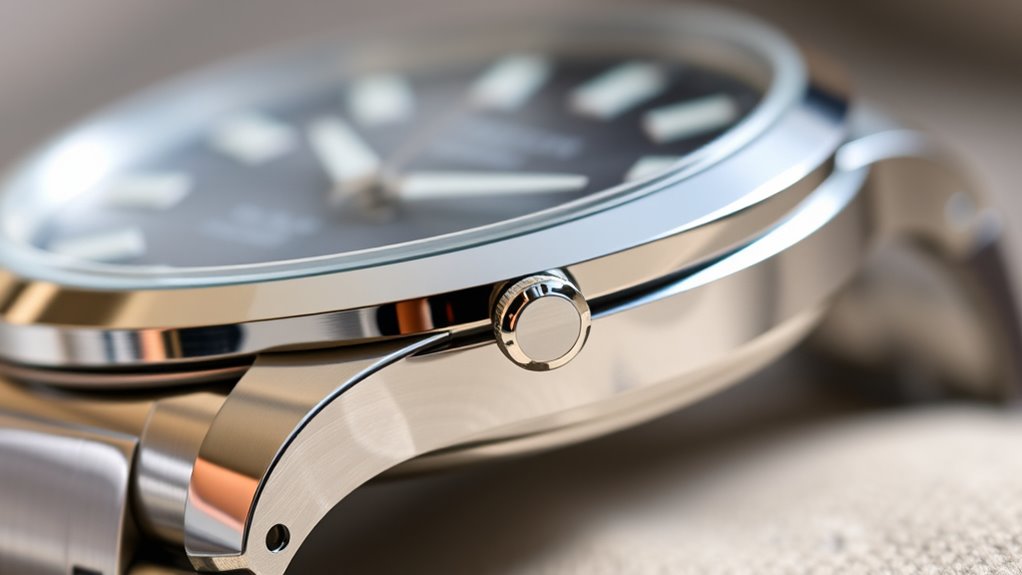
Balancing lug-to-lug measurements with case size is essential to achieving a comfortable and proportionate fit on your wrist. When selecting a watch, consider how the lug-to-lug distance complements the case diameter to prevent overhang or gaps. To optimize your watch’s look and feel, think about:
- Choosing watch strap materials that enhance comfort and style, like rubber for active wear or leather for elegance.
- Matching the dial color options with your wardrobe to make the watch versatile and visually appealing.
- Ensuring the lug width aligns with the strap width for a seamless, secure fit without pinching or looseness.
Tips for Trying Watches to Find the Perfect Fit
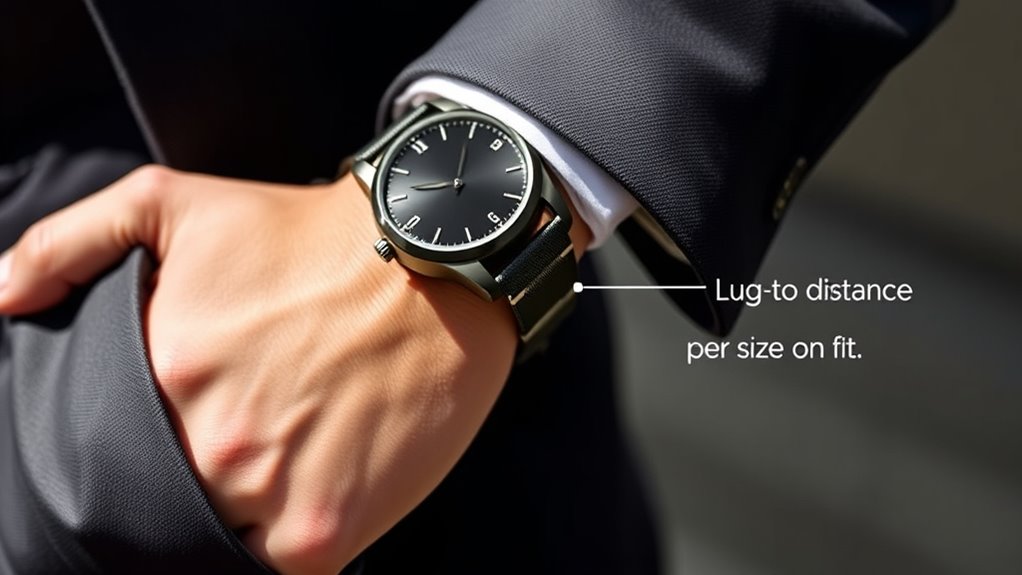
Trying watches on in person is the best way to guarantee a perfect fit. When testing, focus on comfort and how the watch sits on your wrist, considering luxury materials like gold or ceramic, which can affect weight and feel. Pay attention to movement types, as automatic or quartz watches may influence thickness and overall size. A well-fitting watch should sit snugly without pinching or sliding around. Adjust the strap or bracelet to see how it feels during daily activities. Don’t just evaluate the look; assess how the watch feels after wearing it for a few minutes. This hands-on approach helps you determine if the case size and lug-to-lug distance suit your wrist, ensuring both comfort and style. Additionally, understanding the artistic complexities of different watch designs can help you appreciate the craftsmanship behind each piece. Being aware of watch case measurements and how they relate to your wrist size can further refine your selection process. Recognizing the importance of lug-to-lug distance can improve your overall fit and comfort, especially for larger or smaller wrists. Moreover, considering watch weight can impact how comfortable the watch feels during extended wear.
Frequently Asked Questions
How Does Lug-To-Lug Length Influence Watch Durability?
A shorter lug-to-lug length generally enhances watch durability because it reduces stress on the strap and case, especially if you have a flexible strap. This also allows the watch to better follow your wrist’s natural curvature, improving comfort. When the lug-to-lug length is well-matched to your wrist size, strap flexibility is optimized, decreasing chances of damage from unnecessary movement or strain, ultimately extending your watch’s lifespan.
Can Case Size Affect the Watch’s Water Resistance?
Yes, case size can influence your watch’s water resistance more than you might think. Larger cases often require thicker straps and more robust bezel designs to maintain a good seal. If the case is too big without these adjustments, water might find its way in during those unexpected splashes or dives. So, pay attention to how strap thickness and bezel design complement the case size to guarantee your watch stays watertight.
Does Strap Material Impact Comfort Regardless of Case Size?
Yes, strap material impacts your comfort regardless of case size. You’ll find that strap flexibility plays a big role in how comfortable it feels on your wrist, especially during daily activities. Durable materials like silicone or leather tend to mold better to your wrist over time, offering a snug fit without irritation. Choosing the right material guarantees your watch feels comfortable, whether your case size is small or large.
Are Larger Watches Suitable for Smaller Wrists?
You might think larger watches won’t suit smaller wrists, but don’t jump to conclusions. If your wrist proportions and style preferences align, a bigger watch can actually make a bold statement and suit your look perfectly. It’s all about balance and confidence. With the right strap and a mindful choice, you can pull off larger watches elegantly, turning a potential mismatch into a signature style.
How Does Lug-To-Lug Measurement Vary Among Different Watch Brands?
You’ll notice lug-to-lug measurements differ among brands due to variations in bracelet styles and lug shape. Some brands favor shorter, more compact lugs for a snug fit, while others opt for longer lugs to create a bold look. These design choices impact how the watch sits on your wrist, so you should consider brand-specific lug-to-lug sizes to find a watch that feels comfortable and suits your style.
Conclusion
Getting your watch just right isn’t a small feat—it’s the key to unleashing unmatched comfort and style. By understanding lug-to-lug, case size, and fit, you’ll avoid the disaster of a watch that feels like it’s trying to swallow your wrist. So, measure carefully, choose wisely, and try on plenty. Because when you find that perfect fit, your wrist will thank you more than a hero’s cape on a superhero—absolutely unstoppable!