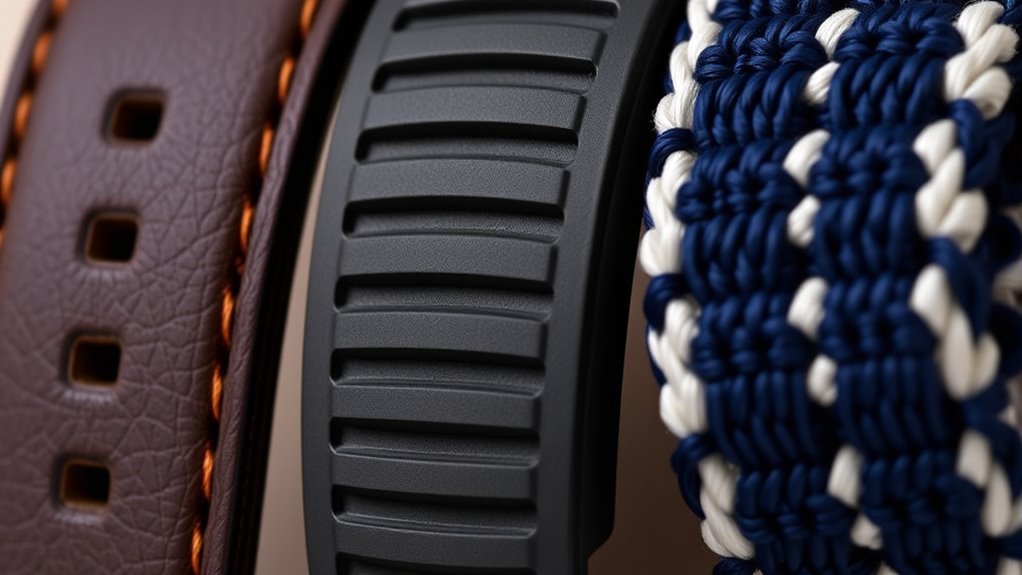

When choosing a watch strap, consider leather for a classic and durable look that ages well with care, or opt for rubber if you want water-resistant and sporty versatility. Textile straps offer lightweight comfort and eco-friendly options, especially if made from recycled fibers. Your lifestyle, style preferences, and environmental values play a key role in selection. Stay tuned to uncover more details about each material to find the perfect fit for you.
Key Takeaways
- Leather straps offer a sophisticated look and durability with proper care but are vulnerable to water and sweat damage.
- Rubber straps are highly resilient, water-resistant, and ideal for sports and outdoor activities, with eco-friendly biodegradable options available.
- Textile straps are lightweight, comfortable, and versatile, often made from natural or recycled fibers, making them eco friendly and easy to maintain.
- Material choice depends on activity level, aesthetic preference, and environmental values, with sustainable options increasingly available.
- Proper maintenance extends strap lifespan, and eco-friendly materials like recycled leather, biodegradable rubber, and natural textiles support sustainability.
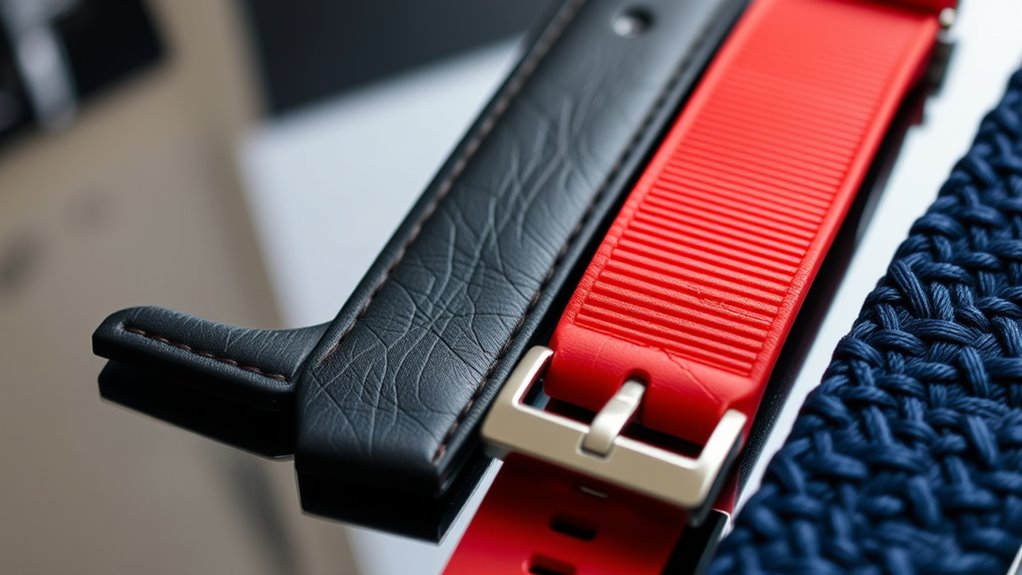
Choosing the right strap material is essential for ensuring your watch or accessory not only looks great but also lasts. When you’re selecting a strap, consider how durable it needs to be and whether eco friendly strap options are important to you. The material directly influences the watch band durability, comfort, and overall style. Leather straps offer a classic, sophisticated look, but they can be vulnerable to water and sweat, which may shorten their lifespan if not properly maintained. High-quality leather can be surprisingly durable, especially when treated well, but it’s not the best choice if you need something that withstands daily exposure to elements. Conversely, rubber straps are renowned for their resilience and flexibility, making them a popular choice for sports and outdoor activities. They handle moisture, sweat, and rough handling well, ensuring your watch stays secure and functional through vigorous use. However, not all rubber is eco friendly strap options, and some synthetic rubbers may have environmental drawbacks. If sustainability matters to you, look for biodegradable or recycled rubber options that minimize environmental impact without sacrificing durability.
Textile straps strike a different balance. They are lightweight, comfortable, and often come in a variety of colors and patterns, making them perfect for casual or fashion-forward looks. While they may not match the longevity of leather or rubber, textile straps can be surprisingly durable if chosen carefully. Many are treated with water-resistant coatings, boosting their watch band durability and making them suitable for everyday wear. They also tend to be more eco friendly strap options, especially when made from natural fibers like cotton, hemp, or recycled materials. These options reduce environmental footprint and are often easier to clean and replace. When selecting a strap, think about where and how you’ll wear it. If you need a strap that can handle water, sweat, and rough activity, rubber or synthetic materials might be best. For a more refined look that lasts years with proper care, leather can be ideal, but look for vegetable-tanned or sustainably sourced leather to align with eco friendly strap options. Additionally, advances in biodegradable materials are making sustainable options more accessible than ever.
Ultimately, your choice depends on your lifestyle, aesthetic preferences, and values. You want a strap that not only fits your style but also withstands daily wear and tear. Remember, investing in quality materials—be it durable leather, resilient rubber, or eco friendly textiles—can save you money and hassle in the long run. When you choose wisely, your watch becomes more than just a timepiece; it’s a reflection of your personality and commitment to sustainability.
Top picks for "strap material leather"
Open Amazon search results for this keyword.
As an affiliate, we earn on qualifying purchases.
Frequently Asked Questions
How Do Strap Materials Affect Watch Durability?
Strap materials markedly influence your watch’s durability. Leather straps require regular maintenance to prevent cracking and wear, but they offer classic style. Rubber straps are highly durable and resistant to water, making them ideal for active use. Textile straps are lightweight and versatile, though they may show wear faster. Choosing the right material depends on your lifestyle; maintenance guarantees lasting aesthetic versatility and maximum performance.
Are There Eco-Friendly Strap Material Options?
You can absolutely find eco-friendly strap options that are kind to the planet. Think of it as killing two birds with one stone—getting a stylish watch strap while helping the environment. Look for straps made from biodegradable materials or those created through recycling options. These materials, like plant-based leather or recycled rubber, reduce waste and pollution, giving you a sustainable choice without sacrificing style or durability.
Which Strap Materials Are Best for Water Resistance?
For water resistance, rubber straps are your best choice, as they’re made from water resistant fabrics that withstand moisture and sweat. Silicone straps also perform well, offering flexibility and durability. Avoid leather, which isn’t corrosion resistant and can deteriorate with water exposure. Textile straps, unless specially treated, tend to absorb water, so they’re less ideal for water resistance. Choose rubber or silicone for reliable moisture protection.
How Do Strap Materials Impact Watch Comfort?
Your choice of strap material directly affects watch comfort through strap flexibility and aesthetic appeal. Rubber straps offer excellent flexibility, making them comfy for active wear, while textile straps mold easily to your wrist, enhancing comfort. Leather straps provide a classic look but may feel stiffer initially. Consider how each material’s flexibility and style match your daily needs for ideal comfort and visual appeal.
Can Strap Materials Cause Skin Allergies?
Yes, strap materials can cause skin allergies, especially if you have material sensitivities. Some materials, like certain leathers or rubber, may contain hypoallergenic properties, but others might trigger reactions. If you notice itching, redness, or irritation, it’s wise to choose hypoallergenic options or strap materials designed for sensitive skin. Always check for allergy warnings and consider testing a small skin patch before wearing a new strap long-term.
Conclusion
Choosing the right strap material is like picking the perfect thread to weave your personal story. Leather offers timeless elegance, rubber provides sporty durability, and textile delivers versatile comfort. Each material is a different brushstroke on your wrist’s canvas, shaping your style and experience. So, consider what suits your lifestyle best—because your strap isn’t just an accessory; it’s the foundation of your wrist’s narrative. Make your choice and wear it with confidence.