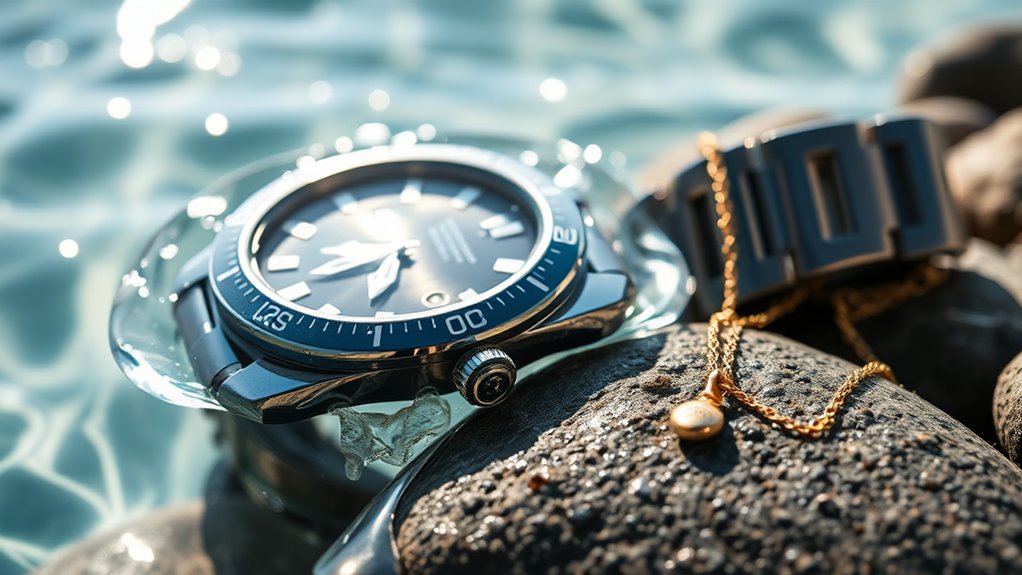

When choosing jewelry or watches, understand that waterproof items can handle full immersion in water, like swimming or diving, while water-resistant pieces can only resist splashes or brief submersion up to a certain depth. Waterproof features usually mean sealed casings, making them more durable for water activities, but they might look bulkier. Water-resistant pieces work well for everyday use. To protect your items and get the most out of them, knowing these differences can guide your choice and care strategies.
Key Takeaways
- Waterproof items can be submerged fully without damage, while water-resistant items resist water to a certain depth but aren’t meant for full immersion.
- Waterproof watches and jewelry are designed with sealed casings and gaskets for activities like swimming and diving.
- Water-resistant pieces have specific depth ratings (e.g., 30m, 50m) and are suitable for light splashes or brief water contact.
- Proper maintenance, including seal checks and rinsing after water exposure, is essential to preserve water resistance and prevent damage.
- Choose waterproof or water-resistant jewelry and watches based on your water activity level and frequency of exposure.
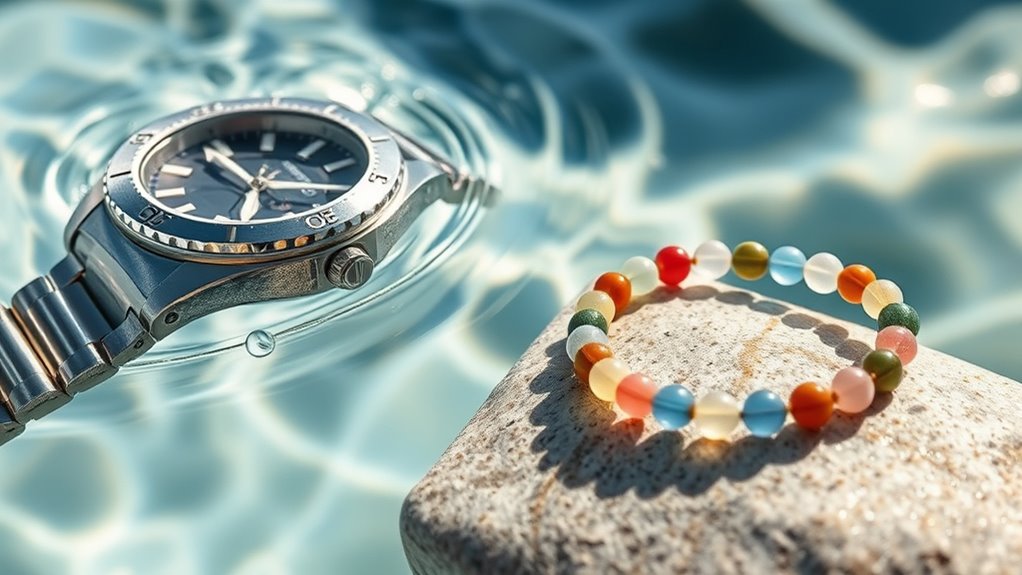
When choosing jewelry or watches for everyday wear or specific activities, understanding the difference between waterproof and water-resistant features is vital. These terms influence how you should handle your accessories and impact their longevity. Waterproof items are designed to withstand immersion in water without damage, making them suitable for swimming, diving, or heavy water exposure. Water-resistant items, on the other hand, can resist water to a certain degree but are not meant for prolonged submersion. Knowing this distinction helps you select the right piece for your lifestyle and prevents accidental damage.
Understanding waterproof versus water-resistant jewelry ensures proper care and longevity.
Design considerations play a vital role when evaluating water-related features. Waterproof watches or jewelry often require a sealed casing with tightly fitted gaskets to prevent water ingress. This design adds to the durability and can influence the overall aesthetic, sometimes making these pieces appear bulkier or more robust. Water-resistant pieces typically have a specified depth rating, such as 30 meters or 50 meters, indicating how much water they can handle under specific conditions. When choosing between these options, consider how often you’ll be exposed to water, the activities you’ll be doing, and whether the design complements your style.
Maintenance tips are equally important to keep your jewelry or watch in prime condition. For waterproof items, regular checks of seals and gaskets ensure they maintain their water integrity. After exposure to water, especially salt or chlorinated water, rinse the item with fresh water and dry it thoroughly. For water-resistant pieces, avoid exposing them to water beyond their rated depth or duration, as prolonged exposure can compromise their protective barriers. Cleaning your jewelry or watch with a soft cloth and mild soap helps maintain its appearance and functionality. If your item has a water resistance rating, it’s wise to have it tested periodically by a professional, especially after impacts or significant temperature changes that might affect its seals. Proper maintenance**** is essential to ensure continued water resistance and overall longevity.
In terms of design considerations, think about how water resistance aligns with your lifestyle and style preferences. If you lead an active lifestyle or spend a lot of time in or around water, investing in a waterproof watch might be worthwhile despite the potentially higher cost. Conversely, if your activities involve occasional splashes, a water-resistant piece with a suitable rating can be a practical, stylish choice. Always follow the manufacturer’s maintenance tips to preserve your jewelry or watch’s water resistance capabilities. Proper care extends the lifespan of your accessories and guarantees they perform as expected when you need them most. Ultimately, understanding these features helps you make informed decisions and keeps your jewelry or watch looking and functioning great over time.
Top picks for "waterproof water resistant"
Open Amazon search results for this keyword.
As an affiliate, we earn on qualifying purchases.
Frequently Asked Questions
Can Water-Resistant Jewelry Be Safely Worn During Swimming?
Water-resistant jewelry can usually be worn during swimming, but you should take precautions for diving or prolonged water exposure. Avoid exposing it to hot water or harsh chemicals, which can damage its water resistance. Remember to store jewelry properly when not wearing it, using jewelry storage tips like a soft pouch or jewelry box to prevent scratches. Always check your jewelry’s water resistance rating before swimming to ensure it stays safe.
How Often Should I Have Waterproof Watches Tested for Water Resistance?
Imagine your watch as a fortress against water. You should have it tested for water resistance every 12 to 18 months, especially if you wear it frequently or expose it to water often. Follow the maintenance schedule recommended by the manufacturer, and don’t skip testing—this guarantees your watch stays protected. Regular testing helps catch potential issues early, keeping your timepiece safe during aquatic adventures.
Are There Specific Cleaning Methods for Waterproof Versus Water-Resistant Jewelry?
For cleaning your waterproof jewelry or watches, use gentle cleaning techniques like warm water and mild soap, avoiding harsh chemicals that can damage seals. For water-resistant pieces, you can often clean them with a soft cloth and light soap, but avoid submerging if not fully waterproof. Regular maintenance tips include checking seals and avoiding exposure to chemicals or extreme temperatures, which can compromise their protective features.
Does Water Resistance Decline Over Time or With Daily Wear?
Like a trusted knight’s armor, water resistance can weaken over time, especially with daily wear. Your jewelry’s wear resistance and durability factors, such as exposure to chemicals, impact, and temperature changes, all contribute to this decline. While a well-made piece maintains its protection initially, repeated exposure to water and wear can gradually diminish its water resistance, making regular checks and maintenance essential to preserve its integrity.
Can Water-Resistant Watches Withstand Hot Tubs or Saunas?
Water-resistant watches generally can’t withstand hot tubs or saunas because thermal stress and pressure limits are exceeded. The high temperatures cause the rubber seals to expand or contract, compromising water resistance. Additionally, pressure from hot water can push past the watch’s rated limits. So, it’s best to avoid exposing your watch to such extreme conditions, as they can damage the internal components and reduce its water resistance over time.
Conclusion
Think of your jewelry and watches as loyal sailors steering your busy life. Knowing whether they’re waterproof or water-resistant helps you steer clear of trouble, so they stay shining and ticking smoothly. Waterproof gear is like a submarine, ready for deep dives, while water-resistant pieces are more like a boat that handles gentle waves. By understanding the difference, you’re charting a safe course—keeping your treasures afloat and beautiful for years to come.