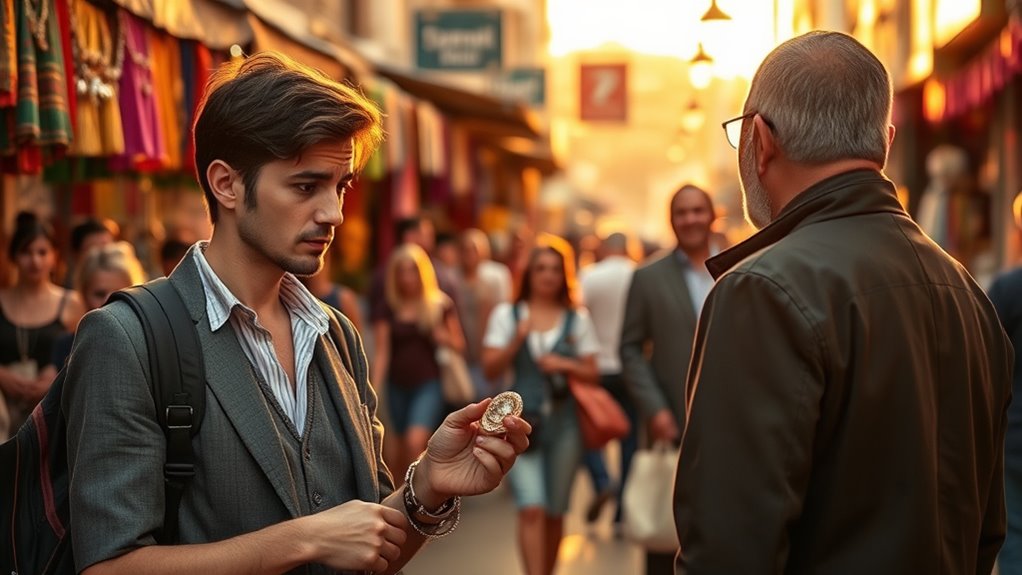

When visiting expensive destinations, stay alert to common scams like overpricing, fake attractions, and impersonators. Keep valuables close, use reputable currency exchange and card services, and avoid flashing expensive gear. Trust your instincts and seek advice from locals or trusted reviews to identify genuine experiences. Be cautious with strangers offering unsolicited help or deals, and always monitor your surroundings. If you want to find out more tips to stay safe, keep exploring these essential strategies.
Key Takeaways
- Research and trust reputable sources and reviews to avoid tourist traps and overpriced attractions.
- Stay vigilant with personal belongings, keep valuables secure, and avoid displaying expensive items.
- Be cautious of common scams, such as fake offers or unsolicited help, and trust your instincts.
- Use secure payment methods, be aware of local currency practices, and shield PINs from skimming devices.
- Seek local advice and authentic experiences to ensure safety and avoid falling for overpriced or misleading options.
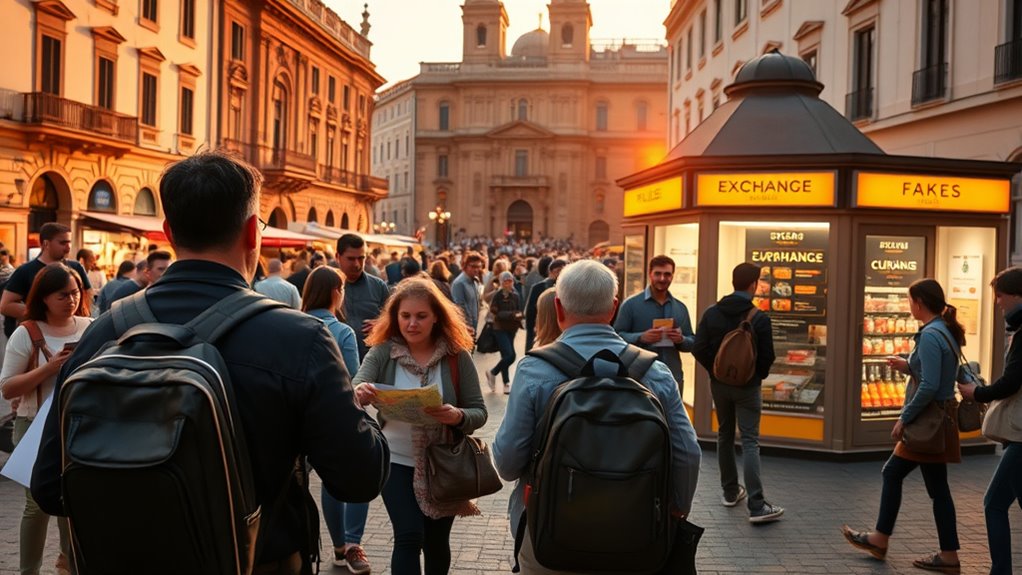
Traveling can be an exciting experience, but it also exposes you to various scams that can ruin your trip if you’re not careful. One of the most common pitfalls is falling victim to tourist traps, which often lure travelers with seemingly irresistible deals or attractions that turn out to be overpriced or disappointing. To avoid this, you need to be proactive in your planning and stay alert for signs of overcharging or misleading information. When exploring new destinations, steer clear of vendors or restaurants that are overly crowded with tourists, as they tend to charge higher prices and offer lower quality. Instead, ask locals for recommendations or follow reviews from trusted sources. This way, you can enjoy authentic experiences without falling into the trap of inflated prices.
Avoid tourist traps by asking locals and reading trusted reviews for authentic, reasonably priced experiences.
Handling your money wisely is another essential aspect of travel safety. When dealing with local currency tips, make sure you’re familiar with the current exchange rates and common pricing practices. Carry a small amount of local currency for immediate expenses and use reputable ATMs or currency exchange services. Avoid exchanging money at airports or tourist-heavy spots, as they often offer poor rates and may charge hidden fees. Using a secure credit or debit card can also help you track your spending and reduce the risk of theft. Be cautious of card skimming devices on ATMs or suspicious payment terminals, and always shield your PIN. Knowing the local currency tips guarantees you don’t overpay or get scammed by vendors who might try to give you counterfeit bills or confuse you with unfamiliar denominations.
Another key tip is to stay vigilant about your surroundings and belongings. Keep your valuables close, avoid flashing expensive gear, and be wary of strangers who approach you offering unsolicited help or deals. Scammers often target tourists by pretending to be friendly locals, only to lead you into situations that benefit them financially. Remember, if an offer sounds too good to be true, it probably is. Trust your instincts and don’t be pressured into making quick decisions. Learning about common scams in your destination beforehand can give you an advantage in spotting suspicious activity. Additionally, understanding the role of contrast ratio in projectors can help you better evaluate visual quality when booking accommodations with in-room entertainment options, ensuring a more enjoyable experience.
In essence, protecting yourself while traveling involves a mix of awareness, preparation, and cautious decision-making. By mastering local currency tips, avoiding tourist traps, and staying alert to potential scams, you can greatly reduce risks and focus on enjoying your trip. With a little vigilance and common sense, you’ll be better equipped to navigate unfamiliar environments safely and make the most of your travel experience without falling prey to preventable scams.

SaiTech IT 5 Pack RFID Blocking Card, One Card Protects Entire Wallet Purse, NFC Contactless Bank Debit Credit Card Protector ID ATM Guard Card Blocker–(Black)
SECURE YOUR WALLET FROM e-PICKPOCKETING: Prevent potential identity and financial theft through your contactless cards. Don’t become a…
As an affiliate, we earn on qualifying purchases.
As an affiliate, we earn on qualifying purchases.
Frequently Asked Questions
How Can I Identify Fake Tour Operators?
You can identify fake tour operators by researching their reviews online—look for fake reviews that seem suspicious or overly positive. Check if they’re licensed and registered with local authorities; unlicensed operators are a red flag. Trust reputable agencies and ask for credentials or references. If their communication is unprofessional or they pressure you into booking quickly, it’s safest to steer clear. Always verify before making any payments.
What Are Common Signs of a Scammer?
Imagine a wolf in sheep’s clothing—scammers often hide behind fake reviews and honeypot tactics to lure you in. Watch out for signs like overly generic responses, pressure to make quick decisions, or prices that seem too good to be true. They might also avoid providing verifiable contact info. Trust your instincts, and verify reviews across multiple sources before taking a leap. If it feels off, it probably is.
How Do I Report a Travel Scam?
You should report a travel scam by first gathering evidence like online reviews, messages, and receipts. Contact your credit card company immediately to dispute any fraudulent charges and prevent credit card fraud. Then, file a report with local authorities or consumer protection agencies. Sharing your experience online can warn others. Prompt action helps authorities track scammers and keeps your finances safe. Always stay vigilant and report suspicious activities quickly.
Are Travel Insurance Policies Sufficient for Scams?
Travel insurance policies aren’t always enough, especially when it comes to scams. They often include hidden clauses and claim exclusions, which can prevent you from getting reimbursed for scam-related losses. You might think you’re protected, but read the fine print carefully. Relying solely on insurance can leave gaps—stay vigilant, document everything, and report scams promptly to maximize your safety and compensation.
What Precautions Should Solo Travelers Take?
As a solo traveler, you should always carry reliable travel gear like money belts and anti-theft bags to protect your valuables. Stay culturally aware by researching local customs and dress codes, which helps you avoid misunderstandings. Keep digital copies of important documents, stay alert in crowded areas, and avoid risky situations. Trust your instincts, and don’t hesitate to ask locals for advice—they can help you navigate safely and enjoy your trip fully.

VENTURE 4TH Money Belt for Travel – Hidden Under-Clothes RFID Blocking Passport Holder & Slim Travel Wallet Pouch for Men & Women to Protect Cash, Cards & Documents (Black)
HIDDEN MONEY BELT FOR TRAVEL – Stay secure with this slim hidden money belt for travel, designed to…
As an affiliate, we earn on qualifying purchases.
As an affiliate, we earn on qualifying purchases.
Conclusion
Remember, every adventure has its shadows, but with awareness, you hold the power to turn them into mere illusions. Stay alert, trust your instincts, and don’t let scammers steal your joy. Think of safety as your loyal compass—guiding you through the unknown with confidence and clarity. By staying vigilant, you’re not just avoiding scams; you’re ensuring your journey remains a story worth telling. Embrace caution, and let your travels shine brighter than any deception.
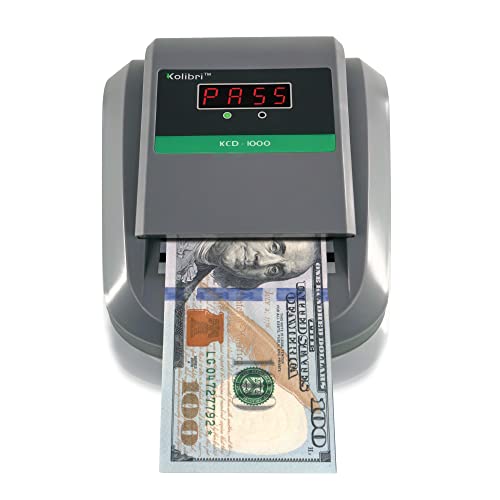
Kolibri KCD-1000 4-Way Orientation Portable Fake Currency Reader and Counterfeit Bill Detector with UM, Magnetic, Infrared Counterfeit Money Detector, Easy Pass/Fail Indicator (KCD-1000)
EASY TO USE: With a simple PASS or FAIL, the KCD-1000 money detector makes it easier to use…
As an affiliate, we earn on qualifying purchases.
As an affiliate, we earn on qualifying purchases.

Cardian RFID Blocking Cards Set 3 – Credit Card Protector for Wallets, Passport Shield & NFC Blocking Device | Anti-Skimming Protection for Debit, ID & EMF Cards | Travel Accessories for Men and Women
Stop Digital Theft Instantly: Protect your credit cards, debit cards, passports, and IDs with Cardian’s advanced smart NFC…
As an affiliate, we earn on qualifying purchases.
As an affiliate, we earn on qualifying purchases.