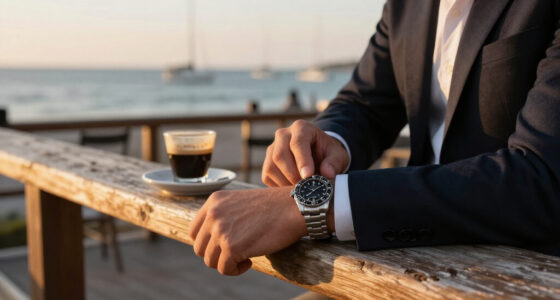
My picks for the best luxury mechanical watches span several distinct ways to enjoy mechanical timekeeping: the Longines is the lineup’s premium choice, the Tissot PR516 adds an exhibition-style manual chronograph, and the Hamilton Boulton makes a strong case for a traditional hand-wound dress watch. The Citizen Tsuyosa takes a more casual route with an automatic movement and integrated steel bracelet.

Get your wardrobe favorites delivered free with Prime
- Fast, free delivery on millions of items
- Prime Video, Amazon Music and more included
- Member-only deals all year
These watches do not compete on one narrow measure. Their differences are the point: automatic convenience versus the ritual of winding, compact dress proportions versus a bolder sports chronograph, and documented specifications versus a model listing with too little information to compare confidently. I rank them by how clearly each offers a distinct mechanical-watch experience, how much useful information is available to judge its fit, and how well its design and stated specifications support its intended role. The Longines name carries premium appeal, but the missing model details matter; the Tissot and Hamilton provide more concrete reasons to choose them, while the Citizen is the easiest everyday style in this group.
Key Takeaways
- Longines is the premium-brand pick, but the supplied listing gives no model, movement, dimensions, or other specifications, so I would verify the exact reference before buying.
- Tissot PR516 is the most feature-rich mechanical choice here: it combines a manual Swiss movement, tachymeter bezel, open caseback, 100-meter water resistance, and a quick-release bracelet.
- Hamilton Boulton suits dress-watch buyers who want a distinctive Art Deco-inspired case and an 80-hour reserve, provided they are comfortable winding it by hand.
- Citizen Tsuyosa favors daily convenience with automatic winding, a green sunray dial, sapphire crystal, and integrated bracelet, though its 50-meter water resistance is not a substitute for a dive watch.
- The key decision is wearing style, not a single spec: choose automatic convenience, deliberate hand-winding, dress-watch proportions, or chronograph styling before comparing the details.
| Longines |  | Best Premium Brand Pick | Brand: Longines | Model or collection: Not specified in supplied information | Movement: Not specified | VIEW LATEST PRICE | See Our Full Breakdown |
| Tissot PR516 Swiss Mechanical 41mm Black Dial Men’s Watch |  | Best Mechanical Chronograph | Case size: 41 mm | Case thickness: 13.67 mm | Movement: Swiss manual-winding mechanical | VIEW LATEST PRICE | See Our Full Breakdown |
| Hamilton American Classic Boulton Mechanical Men’s Watch, 34 × 38 mm |  | Best Hand-Wound Dress Watch | Movement: Hamilton H-50 hand-wound mechanical | Power reserve: 80 hours | Case size: 34 × 38 mm | VIEW LATEST PRICE | See Our Full Breakdown |
| Citizen Men’s Tsuyosa Automatic Sport Watch with Green Dial |  | Best Everyday Automatic | Series: NJ015 | Case diameter: 40 mm | Movement: Automatic Citizen Caliber 8210 | VIEW LATEST PRICE | See Our Full Breakdown |
| luxury mechanical watch | Movement | Crystal | Water resistance | Case size |
|---|---|---|---|---|
| Longines | Not specified | Not specified | Not specified | Not specified |
| Tissot PR516 Swiss Mechanical | Swiss manual-winding mechanical | Sapphire, glassbox style | 100 m / 10 bar | 41 mm |
| Hamilton American Classic Boul | Hamilton H-50 hand-wound mechanical | Sapphire | 50 m / 5 bar | 34 × 38 mm |
| Citizen Men’s Tsuyosa Automati | Automatic Citizen Caliber 8210 | Anti-reflective sapphire | 50 m | — |
More Details on Our Top Picks
Longines
The Longines is the natural premium-brand choice in this comparison, but the product information supplied for this entry is unusually sparse: it gives only the brand name and an ASIN. I cannot responsibly identify the collection, movement, case size, material, crystal, functions, or water resistance from that alone. That makes it difficult to compare its actual wearing experience with the Citizen’s automatic convenience, the Hamilton’s hand-wound dress format, or the Tissot’s chronograph specification.
For a buyer drawn to Longines, the sensible reason to keep this option in the running is the brand’s established position in Swiss watchmaking. That is a starting point for research, not a substitute for confirming the watch itself. A reference number would let me judge whether this is a dress watch, sports model, or another design entirely; it would also clarify whether the movement is automatic or manual and whether the dimensions suit the buyer. Without those facts, even assigning it a precise role beyond premium brand appeal would imply more certainty than the listing supports.
Compared with the Tissot PR516, Longines has less documented information here, while the Tissot at least states its movement type, case dimensions, water resistance, and bracelet arrangement. Compared with the Hamilton Boulton, there is no basis to tell whether the Longines offers a similar dress-watch profile or a very different look. I would choose this listing only after confirming the exact model and its specifications with the seller. If that information is not available, the Hamilton, Tissot, and Citizen each provide a clearer picture of what the buyer will receive.
Pros:- Longines is a recognizable Swiss watch brand.
- The brand may appeal to buyers prioritizing premium-brand identity.
- The listing can be assessed further if the exact reference is confirmed.
Cons:- The supplied product information does not identify a model or collection.
- Movement, dimensions, materials, functions, and water resistance are not provided.
- The missing specifications make direct comparison and fit assessment difficult.
Best for: A buyer specifically seeking a Longines watch who can confirm the exact model reference and specifications before ordering.
Not ideal for: A buyer who wants to compare movement, dimensions, water resistance, or design from the listing alone, or who needs a clearly documented watch for a particular use.
- Brand:Longines
- Model or collection:Not specified in supplied information
- Movement:Not specified
- Case size:Not specified
- Case material:Not specified
- Crystal:Not specified
- Water resistance:Not specified
Our verdict“I would consider this Longines only after verifying its exact reference and specifications, since the brand name alone is not enough to judge fit or value.”
Tissot PR516 Swiss Mechanical 41mm Black Dial Men’s Watch
The Tissot PR516 is the most technically expressive pick in this group. Its Swiss manual-winding movement is presented through an open caseback, while the glassbox-style sapphire crystal, tachymeter bezel, and chronograph design make the watch feel purpose-built for buyers who want a mechanical instrument rather than a quiet dress piece. Its stated 100-meter water resistance also gives it more everyday flexibility than the 50-meter Citizen and Hamilton, though it should not be mistaken for a dedicated dive watch.
That extra character comes with a larger, more substantial presence: a 41 mm case that is 13.67 mm thick, black PVD-coated steel, and a stainless-steel bracelet. The case size is close to the Citizen’s 40 mm, but the Tissot’s chronograph styling and thickness make it likely to feel bolder on the wrist. The quick-release bracelet is a practical advantage if the wearer likes to change the look, while the folding clasp with safety and push-buttons provides a secure closure. The product description does not specify a power reserve, so buyers should not assume it matches the Hamilton’s 80 hours.
Compared with the Hamilton Boulton, the PR516 is sportier, more visually technical, and better specified for water exposure; the Hamilton is the more restrained dress-watch choice and clearly states its reserve. Compared with the automatic Citizen Tsuyosa, the Tissot asks for manual winding but offers a chronograph-focused design and stronger stated water resistance. That hand-winding is a meaningful part of ownership, not a minor footnote: a buyer who wants a watch that winds itself through wrist movement may prefer the Citizen. I would pick the PR516 for its unusual mix of mechanical display, bold styling, and versatile bracelet, while accepting that it is neither slim nor low-maintenance.
Pros:- Swiss manual-winding mechanical movement with an open caseback.
- Sapphire glassbox-style crystal and Super-LumiNova-coated indices.
- 100-meter stated water resistance exceeds the Citizen and Hamilton specifications.
- Quick-release stainless-steel bracelet supports changes in styling.
Cons:- Manual winding requires regular attention.
- At 13.67 mm thick, it has a more substantial profile than a traditional dress watch.
- The supplied description does not state the power reserve.
Best for: A buyer who wants a hand-wound mechanical chronograph with visible movement details, a dark sports design, and stronger stated water resistance than the other fully specified picks.
Not ideal for: Someone seeking a slim dress watch, automatic winding, or a low-profile design for smaller wrists.
- Case size:41 mm
- Case thickness:13.67 mm
- Movement:Swiss manual-winding mechanical
- Case material:316L stainless steel with black PVD coating
- Crystal:Sapphire, glassbox style
- Water resistance:100 m / 10 bar
- Bracelet:Interchangeable quick-release stainless steel
- Clasp:Folding clasp with safety and push-buttons
Our verdict“I recommend the PR516 to buyers who want a bold, hand-wound mechanical chronograph and are happy to trade automatic convenience for its more instrument-like design.”
Hamilton American Classic Boulton Mechanical Men’s Watch, 34 × 38 mm
The Hamilton Boulton is the clearest choice here for a buyer who wants a mechanical watch with a traditional dress-watch sensibility. Its Art Deco-inspired stainless-steel case, white dial, and leather strap create a more formal look than the Citizen’s integrated bracelet or the Tissot’s black chronograph styling. The listed 34 × 38 mm case also offers a more compact alternative to their 40 and 41 mm round cases, making it a better fit for buyers who prefer a smaller, more tailored presence.
Its hand-wound H-50 movement provides an 80-hour power reserve, the longest stated reserve among the watches with documented movement details. That means the wearer can set it aside for a weekend and still have a better chance of finding it running than a watch with a shorter reserve. It does not remove the winding ritual, though: unlike the automatic Citizen, the Boulton needs the wearer to wind it deliberately. Some buyers will enjoy that direct connection to a mechanical watch; others will find it a chore.
The sapphire crystal adds a durable surface for regular wear, and the stated 50-meter water resistance is on par with the Citizen. But the leather strap is less suitable for repeated water exposure than a metal bracelet, so the water-resistance figure should not turn this into a pool or beach choice. Compared with the Tissot PR516, the Hamilton is slimmer in spirit and more formal in design, but it lacks the Tissot’s chronograph presentation and 100-meter rating. Compared with the automatic Citizen, it is more distinctive as a dress watch but less convenient for everyday grab-and-go wear. I would choose it for style and the long reserve, not for sport or carefree wet-weather use.
Pros:- Art Deco-inspired case gives it a more formal identity than the Citizen or Tissot.
- 80-hour power reserve is the longest stated reserve in this lineup.
- Sapphire crystal helps protect the dial during regular wear.
- 34 × 38 mm case offers a compact alternative to the larger sport-oriented picks.
Cons:- Hand-winding requires regular interaction from the wearer.
- Leather is less suited to frequent water exposure than a metal bracelet.
- Its dress-oriented design is less adaptable to sportier outfits than the Tissot.
Best for: A buyer who prefers compact dress-watch proportions, Art Deco-inspired styling, a leather strap, and the hands-on routine of winding a mechanical watch.
Not ideal for: Someone who wants automatic winding, frequent water exposure, or a sporty bracelet watch for one-watch-everywhere use.
- Movement:Hamilton H-50 hand-wound mechanical
- Power reserve:80 hours
- Case size:34 × 38 mm
- Case material:Stainless steel
- Dial:White
- Crystal:Sapphire
- Strap and clasp:Leather strap with tang buckle
- Water resistance:50 m / 5 bar
Our verdict“I would choose the Boulton for a compact, formal mechanical watch with a useful long reserve, but not as my first choice for wet or active use.”
Citizen Men’s Tsuyosa Automatic Sport Watch with Green Dial
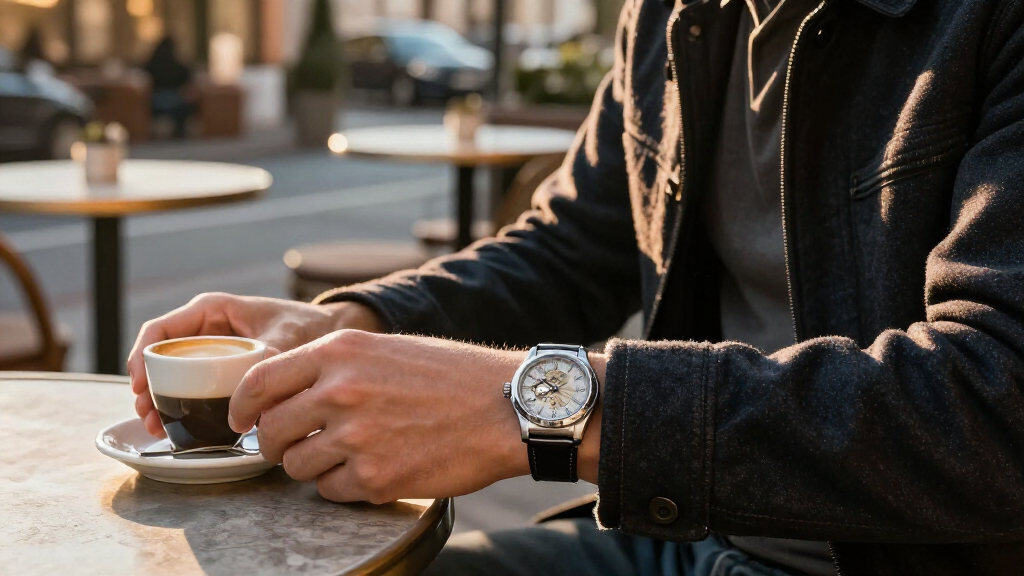
The Citizen Tsuyosa is the easiest recommendation for someone who wants a mechanical watch to wear regularly without winding it by hand every day. Its automatic Caliber 8210 uses wrist movement to keep running, and the stated 42-hour power reserve gives it a practical window when it is off the wrist. The bright green sunray dial adds visual character without relying on a chronograph layout or a formal dress-watch case, while the integrated stainless-steel bracelet gives it a cohesive, contemporary sports-watch look.
At 40 mm, it sits between the Hamilton’s more compact 34 × 38 mm case and the Tissot’s 41 mm chronograph. That makes it a middle-ground option in size, although the integrated bracelet means fit and adjustment deserve attention. The listing does not specify bracelet adjustability, so I would confirm how sizing works before ordering. Its anti-reflective sapphire crystal is a meaningful everyday feature: it is more resistant to scratching than a typical mineral crystal, and the coating can help keep the dial easier to read in changing light.
The tradeoff is that the Tsuyosa is not as formal as the Hamilton and does not have the Tissot’s chronograph functions, open caseback, or 100-meter water resistance. Its 50-meter rating suits ordinary day-to-day exposure better than demanding water sports, but I would not buy it as a dive watch. Compared with the manual-winding Hamilton and Tissot, the Citizen has the least hands-on winding routine; compared with both, its specification set is simpler. The 42-hour reserve is also shorter than the Hamilton’s 80 hours, which matters if the watch is rotated with others. I would choose it for automatic convenience, a vivid dial, and an integrated bracelet rather than for maximum versatility or extended time off the wrist.
Pros:- Automatic Caliber 8210 avoids routine hand-winding.
- Green sunray dial gives the watch a distinctive everyday look.
- Anti-reflective sapphire crystal is suited to regular wear.
- Integrated stainless-steel bracelet creates a unified sport-watch style.
Cons:- 50-meter water resistance is limited compared with the Tissot’s stated 100 meters.
- 42-hour reserve is shorter than the Hamilton’s 80-hour reserve.
- The supplied description does not specify bracelet adjustability.
Best for: A buyer seeking an automatic mechanical watch for everyday wear, with a distinctive green dial, sapphire crystal, and integrated stainless-steel bracelet.
Not ideal for: Someone needing a dive-oriented watch, a long reserve for frequent rotation, or clear details about bracelet sizing before purchase.
- Series:NJ015
- Case diameter:40 mm
- Movement:Automatic Citizen Caliber 8210
- Power reserve:42 hours
- Case and bracelet:Stainless steel; integrated bracelet
- Dial:Green sunray with date at 3 o’clock
- Crystal:Anti-reflective sapphire
- Water resistance:50 m
- Warranty:5-year limited warranty
Our verdict“I recommend the Tsuyosa as the most approachable everyday automatic here, provided its bracelet fit and modest water-resistance limit suit the buyer.”
How We Picked
I organized this roundup around the decision a mechanical-watch buyer actually faces: what kind of watch will feel right to wear, and what compromises come with that choice? I compared the stated movement type, power reserve where provided, case and bracelet or strap details, crystal, water resistance, functions, and design. I gave extra weight to useful, verifiable information because a compelling brand name or an attractive feature list cannot answer fit questions by itself.
That approach gives each watch a separate role instead of treating all four as interchangeable luxury objects. The Longines receives the premium-brand position, but its provided listing contains no specifications, which limits how confidently I can recommend its size, movement, or purpose. The Tissot PR516 is ranked for its mechanical chronograph presentation and stronger stated water resistance. The Hamilton Boulton is a focused dress option with an unusually long stated reserve, while the Citizen Tsuyosa is the automatic everyday pick. The order reflects both appeal and the amount of evidence available to support a buying decision.
I have not treated the word “luxury” as a guarantee of precious materials, finishing, accuracy, service convenience, or long-term value. The supplied descriptions do not document all of those attributes, so I do not infer them. I also do not assume that a mechanical watch is automatically more practical than a quartz alternative. Here, the appeal is the mechanical movement and the design around it; the tradeoffs include winding habits, water-use limits, case size, and uncertainty where the listing leaves information out.
My recommendations rely on the supplied product details rather than claims of hands-on testing. Buyers should verify the exact model reference, current specifications, bracelet sizing and included accessories with the seller, especially for the Longines entry. That check matters because case proportions, movement type, and water resistance can vary across a brand’s collection, and those differences directly affect whether a watch matches the buyer’s intended use.
| luxury mechanical watch | Movement | Crystal | Dial |
|---|---|---|---|
| Longines | Not specified | Not specified | — |
| Tissot PR516 Swiss Mechanical | Swiss manual-winding mechanical | Sapphire, glassbox style | — |
| Hamilton American Classic Boul | Hamilton H-50 hand-wound mechanical | Sapphire | White |
| Citizen Men’s Tsuyosa Automati | Automatic Citizen Caliber 8210 | Anti-reflective sapphire | Green sunray with date at 3 o’clock |
Factors to Consider When Choosing Best Luxury Mechanical Watches
I would choose among these watches by starting with the way I want to interact with a mechanical movement, then matching case style and water resistance to the settings where I plan to wear it. The details that separate this group are more useful than a broad luxury label.Automatic winding or a hand-wound routine
The Citizen Tsuyosa is the only explicitly automatic watch among the fully documented entries. It winds through wrist movement, which suits a buyer who wants mechanical timekeeping without making winding a daily ritual. Its 42-hour reserve still means it may stop if left off the wrist for longer, so an automatic watch is not maintenance-free in the everyday sense.
The Hamilton Boulton and Tissot PR516 are hand-wound. That asks more of the wearer, but can make setting aside a moment to wind the watch part of its appeal. The Hamilton has an 80-hour stated reserve, giving it more time off the wrist than the Citizen’s 42 hours; the Tissot listing does not state its reserve. If I rotate watches frequently or dislike winding, the Citizen is the more natural fit. If I enjoy deliberate interaction, the Hamilton offers the clearest reserve information, while the Tissot adds a chronograph design to the manual format.
Match the case and design to how you dress
The Hamilton’s 34 × 38 mm case, white dial, and leather strap make it the most formal and compact choice. It is suited to buyers who want a watch that sits comfortably under a cuff and has a design distinct from a conventional round sports watch. The Citizen measures 40 mm and pairs its green dial with an integrated bracelet, so it reads more casually. The Tissot’s 41 mm case, black PVD coating, tachymeter bezel, and chronograph look create the boldest, most technical appearance.
Those measurements are only a starting point for fit. Case shape, thickness, lug design, and bracelet articulation also affect how a watch wears. The Tissot’s 13.67 mm thickness is provided, while the other descriptions do not give comparable thickness details. For the Longines listing, even the case size and design are unknown; I would not choose it for a particular wrist or dress code until the exact model is identified.
Read water resistance as a use limit
The Tissot’s stated 100-meter resistance is the highest in this group, while the Citizen and Hamilton each state 50 meters. That difference gives the Tissot a broader stated margin for everyday exposure, but water resistance alone does not establish that a watch is a dive watch or that it suits every water activity. The Hamilton’s leather strap is also a practical limitation around frequent water exposure, regardless of its stated rating.
I would match the rating to actual use and follow the manufacturer’s guidance for swimming, water sports, and care. The Longines listing provides no water-resistance figure at all, so it cannot be ranked for wet-weather use from the available details. Buyers who expect regular water exposure should confirm the exact rating for the specific reference they intend to purchase rather than relying on the brand name or appearance.
Compare the details the listing actually confirms
A good comparison depends on more than movement type. The Citizen specifies sapphire crystal with anti-reflective treatment, a date, bracelet construction, and a 42-hour reserve. The Hamilton identifies its H-50 movement and 80-hour reserve. The Tissot provides case thickness, crystal style, clasp, bracelet release system, and water resistance, but not a power reserve. Those details help buyers judge durability, convenience, and how the watch might fit their routine.
The Longines entry is the exception: no model, movement, case size, or materials are supplied. I would seek a full reference number and seller confirmation before comparing it on technical grounds. This is not a claim that the watch itself is inferior; it is a limit on what can be established from the current product information. When a specification is missing, I treat it as unknown instead of filling the gap with assumptions.
Decide whether the mechanical experience suits you
Mechanical watches bring a particular appeal: a movement with moving parts, a power reserve, and a routine that differs from a battery-powered watch. They also ask the buyer to accept tradeoffs, including winding or wearing the watch often enough to keep an automatic movement running. I would not select one of these options on the assumption that the listing proves accuracy, service interval, repair cost, or long-term value; those details are not provided consistently here.
For low-effort daily wear, the automatic Citizen is the straightforward choice. For a dress-first watch and a longer documented reserve, I would look at the Hamilton. For the most overtly mechanical, sport-chronograph presentation, the Tissot is the standout. The Longines deserves a place on a shortlist only when the exact reference and its specifications can be checked. Choosing by wearing routine first keeps the brand and feature lists in perspective.
Frequently Asked Questions
Which watch in this comparison is automatic?
The Citizen Tsuyosa is the automatic option among the entries with movement details: it uses the automatic Caliber 8210 and has a stated 42-hour power reserve. The Hamilton Boulton and Tissot PR516 are hand-wound. The Longines listing does not identify a model or movement, so I cannot classify its winding type from the supplied information.
Which model has the longest stated power reserve?
The Hamilton Boulton has the longest stated reserve, at 80 hours. The Citizen Tsuyosa is listed at 42 hours, and the Tissot PR516 description does not provide a reserve figure. The Longines entry also has no movement specifications, so there is no basis for comparing its reserve.
Which watch is best suited to a formal dress style?
I would choose the Hamilton Boulton for a formal look. Its Art Deco-inspired case, white dial, leather strap, and 34 × 38 mm dimensions give it a more tailored character than the Citizen’s integrated bracelet or the Tissot’s dark chronograph design. Buyers who prefer a larger or more technical-looking watch may find those other styles a better match.
Can I swim with these watches?
The Tissot PR516 has the highest stated rating in this group at 100 meters, while the Citizen and Hamilton are each listed at 50 meters. Those figures do not, by themselves, answer every question about swimming or water sports; I would follow the watch maker’s specific guidance. The Hamilton’s leather strap is also less suited to frequent water exposure. The Longines entry has no supplied water-resistance information.
What should I verify before buying the Longines?
I would first confirm the exact reference or collection name, then check its movement, case size, materials, crystal, functions, water resistance, and included strap or bracelet. The supplied listing identifies only the Longines brand, so it does not support a meaningful comparison of fit or everyday use. If the seller cannot provide those details, the Citizen, Hamilton, and Tissot are easier to assess from their documented specifications.
Conclusion
My recommendation depends on the experience you want. For an everyday automatic with a vivid dial and integrated bracelet, I would choose the Citizen Tsuyosa, while accepting its 50-meter rating and shorter reserve than the Hamilton’s. For a compact dress watch with a long stated reserve, the Hamilton Boulton is the clearest match, as long as hand-winding and a leather strap suit your routine. For a sportier mechanical chronograph with an open caseback and the highest stated water resistance here, I would pick the Tissot PR516, with its larger, thicker case and manual winding in mind.
The Longines is my premium-brand shortlist option, not a specification-led recommendation: I would buy only after the exact model reference and its features are confirmed. That distinction is important. A brand can attract interest, but fit, movement, and intended use decide whether a watch makes sense for its owner. If the listing remains as sparse as the information available here, I would favor one of the three watches whose design and mechanical details are clearly stated.