To taste wine like a sommelier at home, start by choosing a variety of wines from different regions and styles, ensuring they’re at the right temperature and served in appropriate glasses. Focus on mastering swirl, sniff, and sip techniques, paying attention to aroma, flavor, and texture. Keep notes and practice regularly to sharpen your palate and sensory skills. If you keep exploring, you’ll discover even more ways to elevate your wine experience.
Key Takeaways
- Select diverse wines by varietals, regions, and styles, and use proper glassware and temperature for optimal tasting.
- Set up a clean, well-lit space with necessary tools like tasting glasses and spittoons for a professional experience.
- Master tasting techniques such as swirling, smelling, and noting flavors to develop sensory skills and aroma recognition.
- Keep a tasting journal to record impressions, identify subtle differences, and track your palate’s development over time.
- Enhance your experience by practicing regularly, exploring food pairings, and sharing impressions to deepen appreciation.
As an affiliate, we earn on qualifying purchases.
Choosing the Right Bottle for Your Tasting

When selecting a bottle for your wine tasting, it’s important to choose wines that offer a variety of flavors and styles to keep the experience engaging. Start by exploring different grape varietals, which influence the wine’s taste, aroma, and character. Sampling wines from various wine regions helps showcase regional differences and unique terroirs. For example, you might pick a bold Cabernet Sauvignon from California, a crisp Sauvignon Blanc from France, or a vibrant Malbec from Argentina. By diversifying your selection, you’ll better appreciate the nuances between styles and origins. Incorporating top-rated wines of 2024 into your tasting can further enhance your experience and introduce you to highly recommended options. This variety not only enhances your tasting experience but also deepens your understanding of how grape varietals and wine regions shape the wines you enjoy.
As an affiliate, we earn on qualifying purchases.
Preparing Your Tasting Space and Tools

Creating an inviting and organized tasting space sets the tone for an enjoyable experience. Start with a clean, well-lit area that minimizes distractions. Your tasting room setup should include a sturdy table or countertop where you can comfortably arrange your wines and glasses. Focus on tool selection—choose appropriate tasting glasses that showcase the wine’s color and aroma. Have a spittoon or discard bucket nearby for tasting multiple wines without overindulging. Keep a cloth or napkins handy for cleaning drips. Arrange your wines, glasses, and tools logically to streamline the process. By creating a comfortable environment with the right tools, you’ll enhance your ability to focus on the wine’s nuances and fully enjoy each tasting. Additionally, utilizing energy-efficient devices and tools can help maintain an environmentally friendly tasting experience.
As an affiliate, we earn on qualifying purchases.
Mastering the Art of Swirling, Sniffing, and Sipping

To truly appreciate wine, you need to master the swirl technique, which helps release its full aroma. As you swirl, focus on enhancing your ability to detect subtle scents and complexities. Sipping slowly will then allow you to savor the flavors and appreciate the wine’s character more fully. Incorporating a Free Floating approach to your tasting can help you better understand the wine’s natural qualities without distraction.
Perfecting the Swirl Technique
Mastering the art of swirling your wine glass enhances aroma release and enriches your tasting experience. To do this effectively, choose the right glassware selection—wide bowls help aerate the wine and concentrate aromas. When practicing your swirl technique tips, hold the stem of the glass between your fingers and gently rotate it in a circular motion. Keep your wrist steady and use a smooth, controlled motion to avoid spills. The goal is to create a gentle vortex that exposes more surface area without over-agitating the wine. Focus on maintaining a relaxed grip and consistent movement. With practice, you’ll find your swirl becomes more natural, reveal deeper aromas and setting the stage for a more enjoyable tasting.
Enhancing Aroma Detection
Once you’ve perfected your swirl technique, you’ll notice the wine’s aromas become more pronounced and easier to detect. Using proper aeration techniques helps release volatile compounds, making aromas clearer and more accessible. Take a gentle sniff after swirling, focusing on different scent layers—fruits, spices, or earth. To sharpen your aroma memory, compare scents from different wines, noting subtle differences. Practice deep inhalations, not just quick sniffs, to fully engage your sense of smell. Repeating this process improves your ability to identify specific aromas over time. Remember, aroma detection is about patience and attention. With consistent practice, you’ll train your nose to recognize and appreciate complex wine profiles, elevating your tasting experience from casual sipping to refined appreciation.
As an affiliate, we earn on qualifying purchases.
Analyzing Aroma, Flavor, and Texture

To truly appreciate wine, you need to recognize its scent profile, including the subtle and bold notes that emerge. As you taste, pay attention to the layers of flavor that develop on your palate, revealing complexity and depth. Don’t forget to notice the texture and how the finish lingers, completing your overall impression of the wine. Additionally, understanding the assessment techniques used by sommeliers can enhance your ability to analyze and enjoy wine more profoundly.
Scent Profile Recognition
Recognizing a wine’s scent profile involves actively engaging your senses to identify the aromas, flavors, and textures that define its character. To improve aroma identification, focus on the following steps: 1. Smell deeply, taking in the entire glass to capture complex scents. 2. Break down the aromas into categories like fruity, floral, earthy, or spicy. 3. Use scent memory development by recalling past experiences with similar smells to enhance recognition. 4. Practice regularly to sharpen your ability to distinguish subtle differences. Developing your scent memory helps you connect aromas to specific qualities, making aroma identification more intuitive. Over time, this process deepens your appreciation and understanding of wine’s nuanced scent profile, elevating your tasting experience to that of a sommelier. Incorporating knowledge of aroma categories can further refine your ability to analyze and appreciate the intricate scent profiles of wines.
Flavor Layer Detection
Understanding flavor layers involves actively analyzing how aromas, tastes, and textures interact on your palate. Flavor layer detection requires you to identify and differentiate these components as you taste. Focus on breaking down each sip, noting initial impressions and how flavors evolve. Developing a tasting vocabulary helps you articulate what you’re experiencing, from fruity notes to earthy undertones. Pay attention to how the wine’s acidity, sweetness, and bitterness contribute to the overall profile. By practicing flavor layer detection, you’ll sharpen your ability to recognize complex wine characteristics. This skill enhances your appreciation and confidence during tastings, making you feel more like a sommelier. Remember, precise language and mindful observation are key to mastering tasting vocabulary development. Incorporating sensory awareness into your practice can further refine your ability to discern subtle flavor nuances.
Texture and Finish
While tasting wine, paying close attention to its texture and finish reveals how aromas, flavors, and sensations linger or evolve after swallowing. Your goal is to assess the mouthfeel sensations and finish longevity. Consider these points:
- Notice the mouthfeel—whether it feels silky, velvety, or tannic—this adds dimension to the wine’s texture.
- Observe the finish—how long the flavors and sensations persist after swallowing.
- Evaluate the evolution—do the aromas intensify or diminish over time?
- Recognize the balance—how the texture complements the lingering flavors, enhancing or diminishing the overall experience.
- Incorporating insights from Vetted wine tools or kits can help refine your understanding of these sensory details.
Developing Your Palate and Tasting Notes
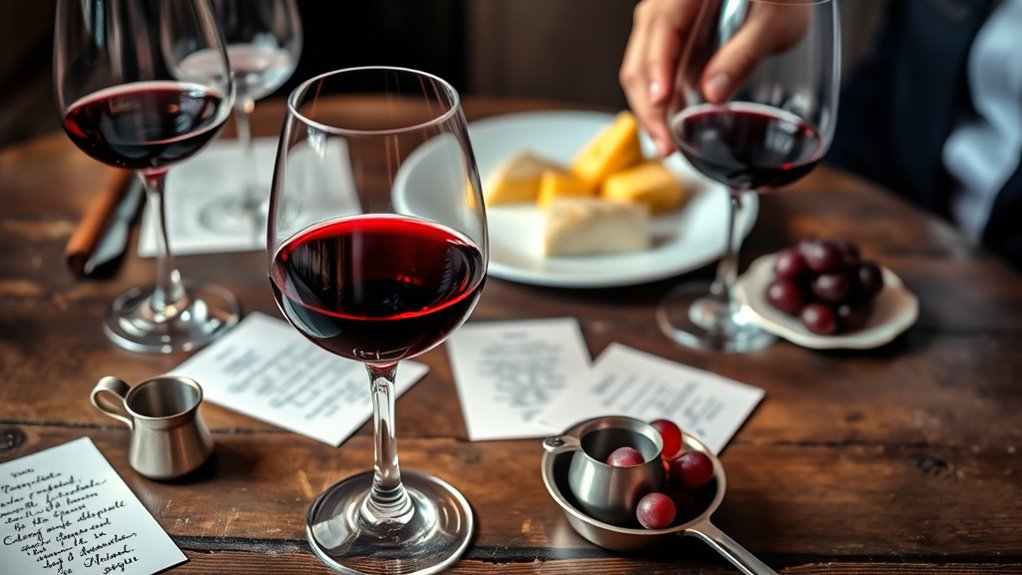
Developing your palate and tasting notes is an essential step in becoming a confident home wine taster. You can enhance this process by paying attention to glass shapes, which influence aroma concentration and how flavors develop. When tasting, guarantee the wine is at the right temperature, as this affects aroma and taste perception. Take notes on what you smell and taste, focusing on specific flavors like fruit, spice, or earthiness. Practice identifying subtle differences between wines to sharpen your palate. As you taste more wines, you’ll start recognizing personal preferences and common flavor profiles. Keep a tasting journal to track your impressions and improvements. Additionally, understanding the proper storage of wine ensures it maintains its qualities for better tasting experiences. Over time, you’ll develop a nuanced palate and a more descriptive vocabulary, making your wine experience richer and more enjoyable.
Enhancing Your Wine Experience With Pairings and Sharing
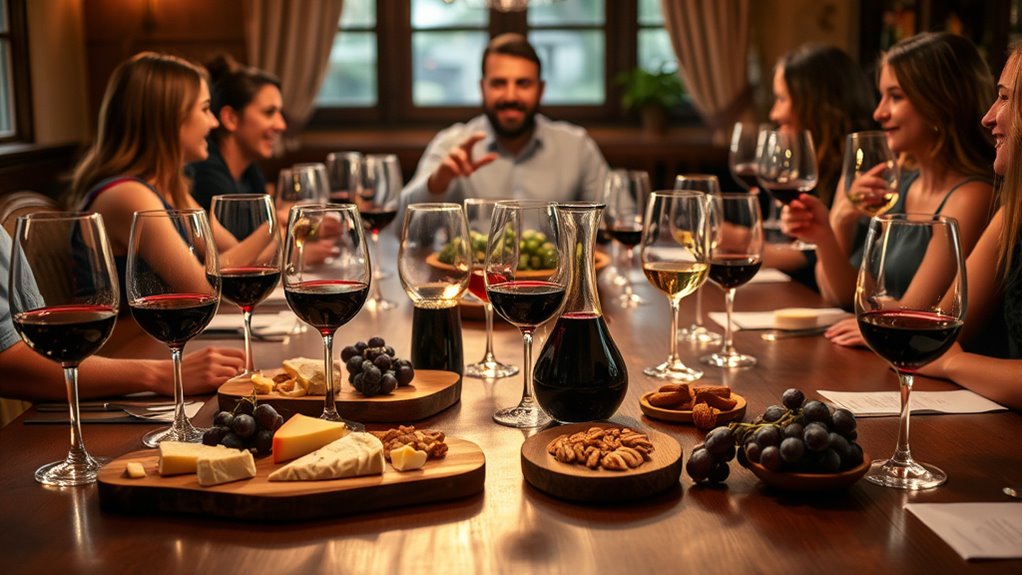
Sharing your wine experience with others can considerably enhance enjoyment and deepen your appreciation for different flavors and styles. To elevate your tasting, try these tips:
- Experiment with cheese pairings to highlight wine nuances.
- Focus on food complementing, choosing dishes that enhance your wine’s character.
- Share your impressions to discover new flavor combinations.
- Keep a tasting journal to track which pairings work best.
- Explore the artistry behind wine presentation and tasting techniques to further enrich your experience increasing your appreciation for craftsmanship.
Frequently Asked Questions
How Can I Identify Quality Wines During a Tasting?
You can identify quality wines during a tasting by focusing on their wine aroma profiles and applying tasting technique tips. Swirl the glass to release complex aromas, then take a deep sniff to detect layered scents. Look for balance, intensity, and complexity in the aroma. A high-quality wine will have a harmonious aroma profile, with a lingering finish. Practice these techniques regularly to sharpen your ability to spot great wines.
What Common Mistakes Should I Avoid When Tasting Wine at Home?
When tasting wine at home, avoid rushing through the process, as this can hinder your ability to notice wine aroma and palate balance. Don’t swirl too vigorously, which can disturb subtle aromas. Also, steer clear of tasting too many wines at once, leading to palate fatigue. Take your time, breathe between sips, and focus on each wine’s aroma and balanced palate to truly appreciate its qualities.
How Should I Store Leftover Wine After Tasting?
Imagine sealing in the rich aroma of your leftover wine like a treasure chest. For wine preservation, tightly cork or use a wine stopper to keep air out. Store the bottle upright in a cool, dark place—think of it as a cozy hideaway. Proper leftover wine storage slows oxidation, letting you savor every last drop later. Remember, good storage extends the life of your wine and preserves its flavors.
Are There Specific Glassware Types for Different Wines?
Yes, there are specific glassware types for different wines to enhance your wine presentation. For example, red wines benefit from wider bowls to aerate the flavors, while whites are best in narrower glasses to preserve their crispness. Choosing the right glassware selection not only improves your tasting experience but also elevates the overall presentation. Use appropriate glasses for each wine type to truly enjoy the nuances and complexity of your wines.
How Does Wine Temperature Affect the Tasting Experience?
They say “temperature is key,” and it’s true for wine. When you serve wine at the right wine temperature, it highlights flavors and enhances your tasting experience. Too warm, and the wine can taste flat or overly alcoholic; too cold, and you might miss out on its nuances. Maintaining your wine at the proper temperature ensures you get the full flavor profile, making every sip more enjoyable.
Conclusion
Now that you’ve learned the basics of home wine tasting, remember that developing your palate takes time and practice. Like experts say, the more you taste, the more your senses sharpen—making each session more enjoyable and insightful. Remarkably, some studies suggest that our perception of wine can actually be influenced by our environment and expectations. So, create a welcoming space, stay curious, and let your taste buds guide you on this flavorful journey.