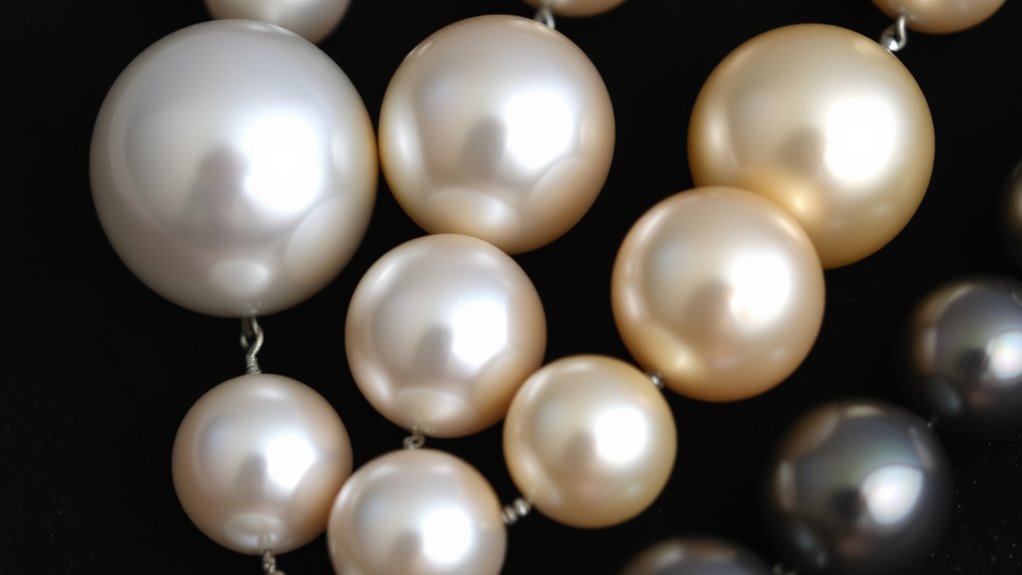

If you’re exploring pearl types, you’ll find Akoya pearls are prized for their high luster and smooth surface, mainly cultivated in Japan and China. South Sea pearls are larger, with a velvety sheen, and farmed mainly in Australia, Indonesia, and the Philippines. Tahitian pearls stand out for their exotic dark colors and deep glow, primarily sourced from French Polynesia. Each type offers unique beauty and origins—discovering more will help you appreciate their distinct qualities even further.

Get your wardrobe favorites delivered free with Prime
- Fast, free delivery on millions of items
- Prime Video, Amazon Music and more included
- Member-only deals all year
Key Takeaways
- Akoya pearls are cultivated mainly in Japan and China, known for their high luster and smooth surface.
- South Sea pearls are larger, produced in Australia, Indonesia, and the Philippines, with a thick, velvety luster.
- Tahitian pearls originate from French Polynesia, renowned for their dark, exotic colors like black, gray, and peacock hues.
- Cultivation periods vary: Akoya (6 months to 1 year), South Sea and Tahitian (around 2 years).
- Each pearl type is distinguished by size, color, cultivation region, and the oysters used for farming.
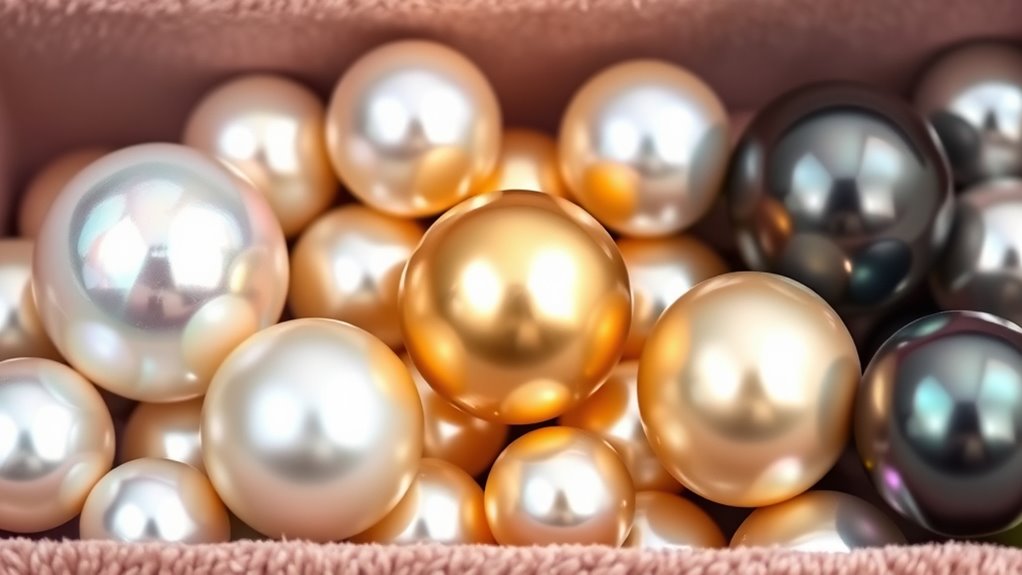
Are you curious about the different types of pearls? If so, you’ll find that understanding their origins and the methods used to create them can deepen your appreciation for their beauty. Pearl cultivation techniques vary depending on the type, and each region known for pearl farming produces unique varieties that stand out in the jewelry world. Akoya, South Sea, and Tahitian pearls each have their own distinct characteristics, and their differences are rooted in both the environment where they’re farmed and the cultivation processes involved.
Discover the unique origins and cultivation methods that make each pearl type special and beautiful.
When exploring Akoya pearls, you’re looking at some of the most classic and sought-after pearls. These pearls are primarily cultivated in regions like Japan and China, where specific pearl farming regions provide the ideal conditions. The pearl cultivation techniques used for Akoya involve carefully inserting a small bead nucleus into the oyster to stimulate pearl production. This process requires precision and patience, often taking about six months to a year for the oyster to produce a usable pearl. The waters of Japan, particularly around the Atsumi Peninsula, are renowned for their pristine conditions, which contribute to the high luster and smooth surface of Akoya pearls. These pearls are generally smaller, typically around 6-8 millimeters, with a bright, mirror-like shine that makes them a favorite for jewelry.
Moving to South Sea pearls, you’re dealing with a different set of pearl farming regions, mainly in Australia, Indonesia, and the Philippines. The cultivation techniques for South Sea pearls involve implanting larger nuclei into the oysters, which are usually a different species called Pinctada maxima. This process takes longer—often around two years—because the oysters and pearls grow more slowly. The result is a larger, thicker pearl with a natural, satiny luster. South Sea pearls are prized for their impressive size, often reaching 12-20 millimeters, and their warm, golden or white hues. The environment of these regions, with their warm, clean waters, allows these oysters to produce pearls with a unique, velvety appearance.
Tahitian pearls, originating mainly from French Polynesia, stand out for their dark, exotic colors. The pearl farming regions here are carefully selected, with lagoons providing the calm and nutrient-rich waters needed for pearl cultivation. The techniques are similar to those used for Akoya and South Sea pearls, involving implanting nuclei into the Pinctada margaritifera oyster. The process can take around two years, and the resulting pearls are known for their rich black, gray, green, or peacock hues. These pearls often feature unique overtones and a deep, mysterious glow that’s hard to find elsewhere.
Frequently Asked Questions
How Do I Determine the Authenticity of Pearl Types?
To determine if your pearls are authentic, examine their surface for imperfections and luster, as natural pearls typically have unique marks. Ask about their origin; genuine pearls come from pearl farming, which ensures quality. Consider their weight and color consistency. Authentic pearls often hold cultural significance, symbolizing beauty and tradition. Trust reputable jewelers or get a professional appraisal to verify authenticity, guaranteeing your pearls are real and valuable.
What Factors Influence the Value of Different Pearl Types?
You influence the value of different pearl types through factors like pearl grading, which assesses surface quality, luster, shape, and color. Higher-grade pearls with excellent luster and minimal blemishes command a higher market value. The size, origin, and rarity also play vital roles. By understanding these aspects, you can better determine a pearl’s worth and select pieces that reflect quality and value in the market.
Are There Specific Care Instructions for Each Pearl Type?
You should follow specific care instructions for each pearl type to maintain their beauty. Handle them gently, clean with a soft, damp cloth, and avoid harsh chemicals. Pearl cultivation methods vary, so understanding your pearl’s origin helps with proper care. Opt for ethically sourced pearls to ensure sustainability and quality. Store your pearls separately to prevent scratches, and wear them regularly to keep their luster alive.
How Do Pearl Types Differ in Durability and Longevity?
You’ll find that each pearl type offers a unique tale through its durability and longevity. Akoya pearls, with their delicate pearl luster and subtle coloration, may require gentle handling to preserve their charm. South Sea and Tahitian pearls, known for their robust nature and striking coloration, tend to withstand daily wear better. Proper care helps maintain their lustrous appeal and guarantees your pearls tell their story beautifully for years to come.
Can Different Pearl Types Be Combined in Jewelry Designs?
Yes, you can combine different pearl types in jewelry designs. When doing so, you should consider pearl color variations and matching pearl sizes to create a harmonious look. Mixing pearls like Akoya, South Sea, and Tahitian adds unique textures and colors, but make certain they complement each other. Matching sizes helps maintain balance, while contrasting colors can make your jewelry more eye-catching and distinctive.
Conclusion
Now that you know the main pearl types—Akoya, South Sea, and Tahitian—imagine the elegance each one can bring to your collection. But the true magic lies in discovering which pearl captures your heart, whispering stories of the ocean’s depths. Will it be the shimmering shine of Akoya, the golden glow of South Sea, or the mysterious allure of Tahitian? The choice is yours, and the ocean’s secrets are waiting to be revealed.
Fall Picks
fall essentials
As an affiliate, we earn on qualifying purchases.