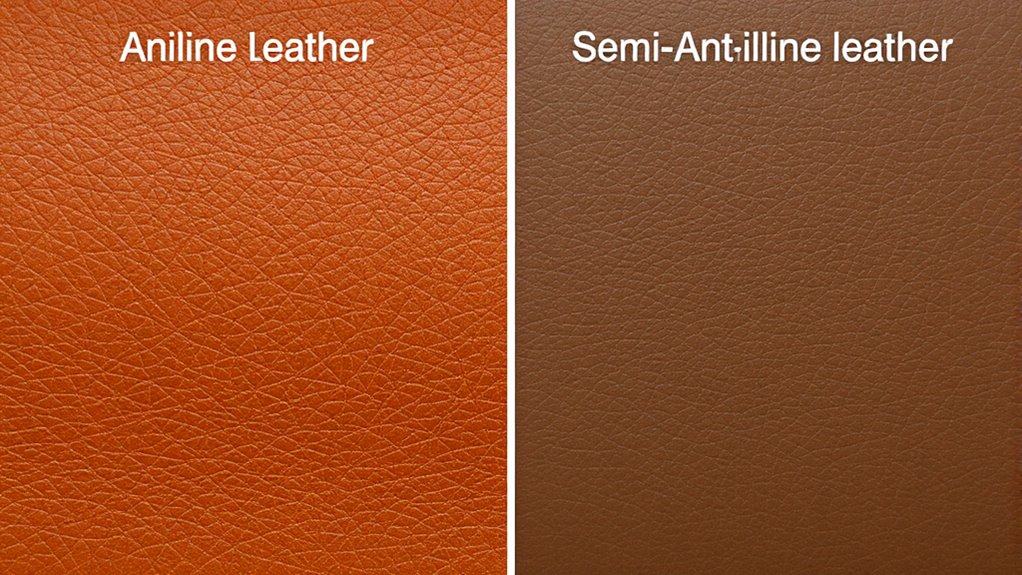

When comparing aniline and semi-aniline leather, you’ll notice that aniline retains a more natural look with minimal surface treatment, allowing its unique markings and patina to develop over time. Semi-aniline has a light protective coating, making it more resistant to stains, scratches, and wear, while still showing some natural features. These differences affect aging and durability. Want to discover how these changes influence your furniture’s appearance and longevity? Keep exploring to learn more.
Key Takeaways
- Aniline leather develops a more pronounced patina and natural markings over time compared to semi-aniline leather.
- Semi-aniline leather has a protective coating, resulting in less visible aging and surface changes.
- The aging process in aniline leather leads to subtle color and texture variations, enhancing its character.
- Semi-aniline leather maintains a more consistent appearance with minimal surface changes as it ages.
- Aniline leather is more susceptible to stains and scratches, with changes becoming more noticeable over time.
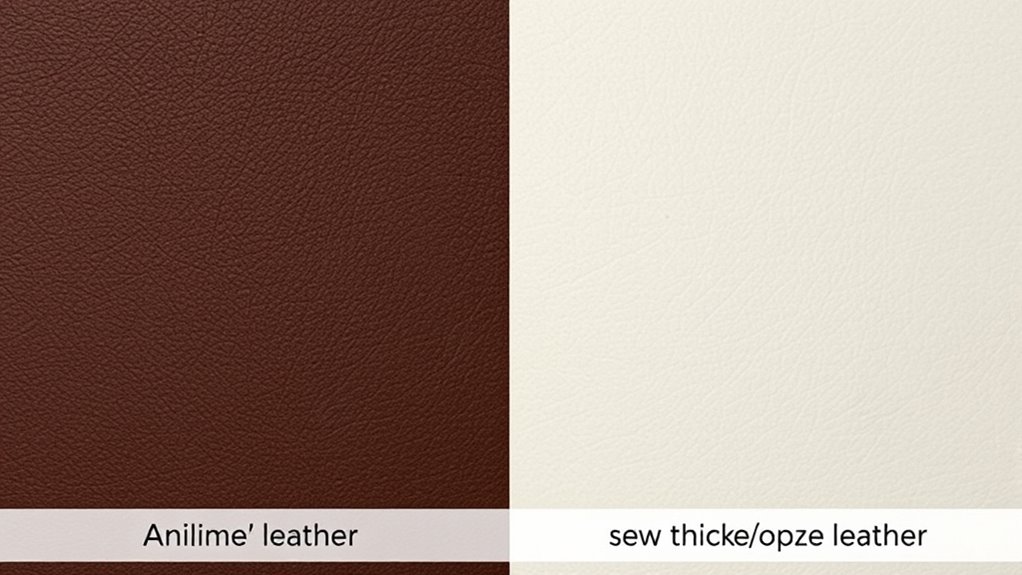
When choosing between aniline and semi-aniline leather, understanding their differences can help you make a more informed decision. Both types are popular for their luxurious feel and appearance, but they differ considerably in how they age and how they’re finished through surface treatment. Knowing how each behaves over time will guide you toward the right choice for your needs.
Aniline leather is prized for its natural, authentic look. It’s dyed with transparent, soluble dyes that penetrate the leather’s surface, preserving the hide’s natural markings and character. Because of this minimal surface treatment, aniline leather ages beautifully, developing a rich patina that enhances its character over the years. As it ages, you might notice subtle changes in color and surface texture, which many consider desirable, as they add to its unique charm. However, this minimal surface treatment also means aniline leather is more vulnerable to stains, scratches, and fading, especially when exposed to direct sunlight or harsh conditions. If you want a piece that looks even better with age and don’t mind some maintenance, aniline leather might be your ideal choice. Additionally, understanding the surface treatment process helps in assessing the durability and maintenance needs of each type.
Semi-aniline leather shares some qualities with its fully-aniline counterpart but incorporates a light surface treatment layer. This additional coating provides a slight barrier, helping to protect the leather from stains and fading, while still allowing much of the natural character to show through. The surface treatment in semi-aniline leather is carefully applied to balance preservation with appearance, so it retains much of the natural look but offers increased durability. As it ages, semi-aniline leather also develops a patina, but the process is often less pronounced compared to fully aniline leather due to the protective layer. Its resistance to wear and environmental factors makes it a practical option if you want the look and feel of natural leather without sacrificing too much protection.

POLY & BARK Napa 88.5" Leather Sofa – Full-Grain Italian-Tanned Aniline Leather, Feather-Down Comfort, Solid Wood Frame, Walnut Legs, Cognac Tan
- Premium Italian Leather Upholstery: Full-grain aniline or semi-aniline dyed leather
- Timeless Cognac Tan Color: Highlights natural leather variations for classic style
- Develops Vintage Patina: Scuffs over time for a sophisticated look
As an affiliate, we earn on qualifying purchases.
As an affiliate, we earn on qualifying purchases.
Frequently Asked Questions
How Does Leather Aging Differ Between Aniline and Semi-Aniline?
You’ll notice that the leather surface of aniline leather ages gracefully, developing a rich patina over time, which enhances its character. Semi-aniline leather ages more subtly, with a softer aging process that maintains its uniform appearance longer. The aging process for aniline leather reveals more natural marks and color variations, while semi-aniline leather’s surface stays more consistent, making it easier to maintain its original look over the years.
Are Semi-Aniline Leathers More Environmentally Friendly Than Aniline?
Semi-aniline leathers are generally more eco-friendly than aniline because they undergo less intensive chemical treatment, reducing environmental impact. Eco-friendly manufacturing practices often involve fewer harmful chemicals, which benefits both the environment and your health. While aniline leathers are more natural, semi-aniline leathers balance durability and sustainability, making them a better choice if you’re concerned about chemical effects and want a product with a smaller ecological footprint.
Can Semi-Aniline Leather Be Restored More Easily Than Aniline?
Yes, semi-aniline leather can be restored more easily because its surface treatment allows for better absorption of leather dyeing products. You can apply touch-ups or refinishing with minimal disruption, as the surface is less permeable than aniline leather. This makes maintenance simpler, since the surface treatment helps hide imperfections, making repairs and restorations more effective and longer-lasting compared to aniline leather.
How Do Stain Resistance Levels Compare Between the Two Leathers?
Imagine spilling red wine on your sofa; semi-aniline leather‘s surface coating acts as a barrier, providing higher stain resistance by limiting dye penetration. In contrast, aniline leather’s minimal surface coating allows liquids to seep in, making stains harder to remove. As a result, semi-aniline offers better stain resistance due to its protective surface coating, which reduces dye penetration and makes cleaning easier. You’ll find semi-aniline more forgiving with spills and stains.
What Is the Typical Cost Difference Between Aniline and Semi-Aniline Leather?
You’ll find semi-aniline leather typically costs more than aniline because of its enhanced leather processing and protective coatings. Consumers often prefer semi-aniline for its balance of natural look and durability, which influences pricing. Aniline, being more natural and less processed, tends to be less expensive but offers less stain resistance. Your choice depends on your budget and preferences for appearance and maintenance, with semi-aniline generally providing better longevity.

Geist. Aniline Leather Care | for Aniline & semi-Aniline Furniture, Jacket, Bag and Accessories (Care Kit)
- Stain and Water Protection: Resists stains and water damage
- UV Protection: Reduces fading with UV filters
- Soft Touch Finish: Maintains soft, elastic surface
As an affiliate, we earn on qualifying purchases.
As an affiliate, we earn on qualifying purchases.
Conclusion
Think of aniline and semi-aniline leather as two chapters in a story—one raw and unfiltered, the other subtly refined. Choosing between them is like selecting a mirror or a window; both reveal beauty, but each offers a different view. Your decision shapes the journey of your furniture, symbolizing your taste and values. Ultimately, whether you embrace the wild spirit or polished grace, you’re crafting a piece that reflects your unique story.

Leather Honey Complete Leather Care Kit – Non-Toxic, Made in USA
- Powerful Leather Conditioner: Deeply protects and rejuvenates leather
- Non-Toxic, Gentle Cleaner: Fragrance-free, safe for all leather types
- Versatile Leather Use: Suitable for furniture, car seats, shoes, and more
As an affiliate, we earn on qualifying purchases.
As an affiliate, we earn on qualifying purchases.

Weiman Leather Cleaner & Conditioner – Cleans, Restores & Protects Leather, UV Protection Prevent Cracking & Fading, Auto, Sofas, Shoes, Bags & All Finished Leather Surfaces, 1 Pack, 12 Fl Oz
- Powerful Leather Cleaning and Conditioning: Removes dirt, oils, grime, restores suppleness
- UV Protection Against Fading and Cracking: Prevents sun damage, maintains color and durability
- Suitable for All Finished Leather: Cleans and conditions car seats, furniture, shoes, and more
As an affiliate, we earn on qualifying purchases.
As an affiliate, we earn on qualifying purchases.