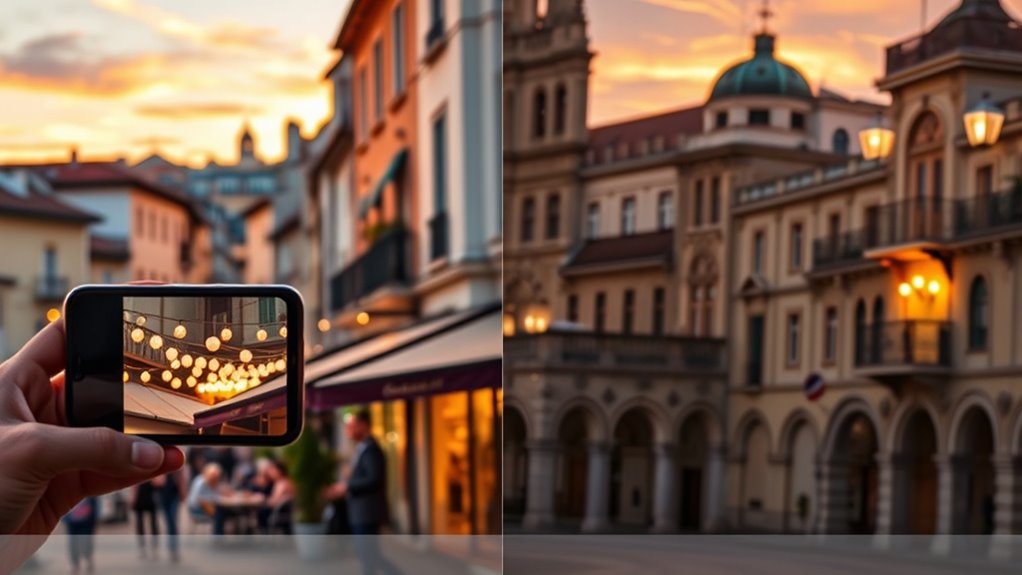

Smartphones today can produce stunning images thanks to advanced computational photography, AI, and impressive sensor tech, often rivaling $5,000 cameras in everyday scenarios. They excel in convenience and spontaneous captures, using features like HDR and night mode to compensate for smaller sensors. However, for extreme zoom, high resolution, and professional-grade clarity, dedicated cameras with larger sensors and optical zoom still dominate. Continue exploring to see how each technology stacks up in different photography situations.

Get your wardrobe favorites delivered free — and shop member deals
- Fast, free delivery on millions of items
- Access to Prime Big Deal Days deals on October 6–7
- Prime Video, Amazon Music and more included
Key Takeaways
- Professional cameras with large sensors and optical zoom generally outperform smartphones in image detail and low-light conditions.
- AI-enhanced digital zoom in smartphones can mimic some optical zoom effects but often sacrifices image quality at extreme magnifications.
- Computational photography allows smartphones to produce high-quality images, but they still can’t fully match the raw detail and dynamic range of $5,000 cameras.
- For maximum image quality, sharpness, and versatility in challenging environments, dedicated professional cameras remain superior.
- Smartphones excel in convenience and spontaneous shooting, making them competitive for everyday photography, but high-end cameras deliver professional-grade results.

Have you ever wondered which camera brand truly comes out on top? When comparing your smartphone to a high-end $5,000 camera, it’s natural to focus on features like digital zoom and sensor size. These elements play a huge role in determining image quality, and understanding how they stack up can help you see what your phone can really do.
Digital zoom, for example, often gets a bad rap because it can degrade image quality. Unlike optical zoom, which physically adjusts the lens to magnify the scene, digital zoom simply enlarges pixels, often resulting in blurry or pixelated photos. But some modern smartphones have improved digital zoom capabilities with AI-enhanced algorithms that stabilize the image and add detail, narrowing the gap with professional cameras. Still, there’s a limit—if you need sharp, high-resolution shots at extreme zoom levels, a dedicated camera with optical zoom remains superior.
Sensor size is another critical factor. Professional cameras typically feature larger sensors, such as full-frame or medium format, which gather more light and deliver better dynamic range and detail. Your smartphone’s sensor, meanwhile, is tiny in comparison. While modern phone sensors have grown significantly and benefit from advanced computational photography, they still can’t match the depth and quality of larger sensors. Larger sensors produce cleaner images with less noise, especially in low-light situations, and give you more flexibility when editing. Sensor size significantly influences image quality, especially in challenging lighting.
Despite these differences, your smartphone isn’t without its advantages. Advanced computational photography techniques can compensate for smaller sensors and limited optical zoom. Features like HDR, night mode, and AI scene recognition help your phone produce stunning images in various conditions, often rivaling professional cameras in everyday scenarios. furthermore, the convenience and portability of a smartphone mean you’re more likely to have it on hand, ready to capture spontaneous moments without fuss.
In the end, whether your smartphone can beat a $5,000 camera depends on what you need. If you’re pursuing professional-grade images with extreme detail, larger sensors and optical zoom will give the professional camera the edge. But for everyday photography, social media sharing, and quick captures, smartphones keep closing the gap. Advances in digital zoom technology and sensor improvements mean you should never underestimate the power of your phone in the right circumstances. It’s all about knowing your gear’s strengths and limitations and leveraging them to get the best shot possible.
Frequently Asked Questions
How Do Lighting Conditions Affect Smartphone Versus Professional Camera Photos?
Lighting conditions greatly impact your photos’ lighting consistency and color accuracy. Smartphones handle varied lighting situations well but often struggle in low light, causing noise and color shifts. Professional cameras excel here, capturing more detail and maintaining true colors even in challenging light. So, while smartphones are convenient, they’re more affected by lighting changes, making professional cameras better for consistent, high-quality images in diverse conditions.
Can Smartphone Cameras Achieve the Same Depth of Field as High-End DSLRS?
You can achieve a similar depth of field with smartphones, especially newer models, by using portrait mode and adjusting focus. While traditional DSLR cameras create more pronounced bokeh effects due to larger sensors and wider apertures, smartphones now simulate this look effectively. Keep in mind, though, that high-end DSLRs still offer superior control over depth of field, but your smartphone can produce impressive background blur for everyday photography.
What Post-Processing Tools Are Necessary to Enhance Smartphone Photos?
Want your smartphone photos to truly stand out? You need editing software like Lightroom or Snapseed to fine-tune brightness, contrast, and sharpness. Color grading helps set the mood and enhances vibrancy, making your images pop. Isn’t it worth investing a little time to elevate your shots? With these post-processing tools, you turn simple captures into stunning visuals, giving your photos a professional touch right from your phone.
How Do Different Lens Accessories Impact Smartphone Photography Quality?
Different lens accessories, like lens filters and clip-on accessories, markedly impact your smartphone photography quality. Lens filters can reduce glare, enhance colors, and improve contrast, while clip-on lenses offer wider angles or macro shots. These accessories add versatility, allowing you to capture more professional-looking images. By experimenting with various lens filters and clip-ons, you can elevate your photos, making them sharper, more vibrant, and creatively dynamic with minimal effort.
Is There a Significant Difference in Low-Light Shooting Capabilities?
They say a picture’s worth a thousand words, and in low-light conditions, your smartphone’s capabilities matter. You’ll notice a significant difference, as larger sensor size captures more light, reducing noise. Plus, advanced image processing algorithms enhance details and brightness. With newer models, your smartphone can perform surprisingly well in dim environments, but a dedicated camera still holds an edge for professional-grade low-light shots.
Conclusion
So, next time someone brags about their fancy camera, just smile and snap a quick shot with your phone. Who needs a $5,000 lens when you’ve got the power of technology in your pocket? After all, if your smartphone can beat the pro gear in a photo contest, maybe it’s time to admit that your camera’s just a fancy paperweight. But hey, at least you look cool trying, right?
Fall Picks
fall essentials
As an affiliate, we earn on qualifying purchases.