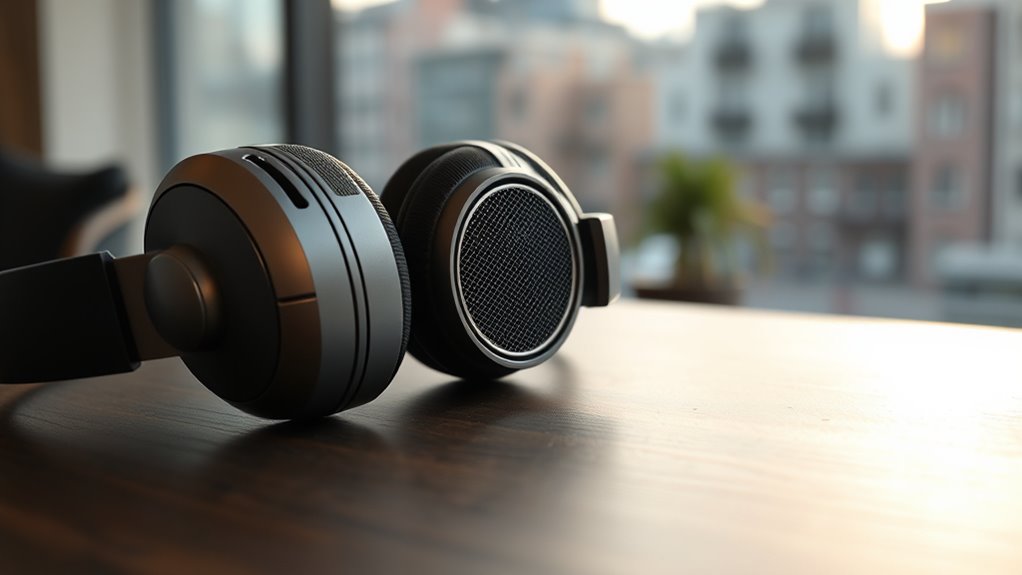

Noise-canceling headphones work by using microphones to detect ambient sounds and sophisticated algorithms to create anti-noise sound waves that interfere destructively with the noise. This process mainly cancels out consistent, low-frequency sounds like engine hum. Good design also combines active noise cancellation with passive insulation for better results. Some brands excel in fine-tuning this technology for a quieter experience. If you want to discover which models do it best, there’s more to explore.
Key Takeaways
- Noise-canceling headphones use microphones to detect ambient sounds and generate anti-noise waves that interfere destructively.
- They rely on acoustic engineering principles, especially sound wave interference, to cancel out consistent, low-frequency noises effectively.
- High-quality devices combine active noise cancellation with passive insulation, enhancing overall sound reduction.
- Real-time adaptive algorithms continuously fine-tune anti-noise signals to maintain effectiveness in changing environments.
- Top brands like Sony, Bose, and Apple lead the market with advanced technology and superior noise-canceling performance.

Noise-canceling headphones have become essential for anyone seeking to block out unwanted sounds and focus on their music, work, or relaxation. At the heart of their effectiveness lies a fascinating combination of acoustic engineering and the science of sound wave interference. When you put on a pair of noise-canceling headphones, you’re engaging with technology that actively detects ambient noise and generates sound waves that oppose it, creating a silence that feels almost tangible. This process is rooted in principles of acoustic engineering, a field that combines physics and sound design to manipulate how sound waves behave in a given environment.
Noise-canceling headphones use acoustic engineering to detect ambient sounds and generate opposing sound waves for silence.
The core mechanism involves microphones embedded in the headphones that pick up external sound waves. These sound waves are then analyzed by sophisticated algorithms that determine their frequency and amplitude. The headphones generate anti-noise sound waves—sound waves that are exactly out of phase with the incoming noise. When these opposing waves meet, they interfere with each other through a phenomenon called sound wave interference. This interference causes the sound waves to cancel each other out, substantially reducing the noise that reaches your ears. The result is a noticeable reduction in background sounds, whether it’s the hum of an airplane engine or chatter in a busy café.
This technology works best with consistent, low-frequency sounds like engine noise or air conditioning. Higher-frequency noises, such as voices or squealing brakes, are more challenging to cancel completely because they are more complex and less predictable. However, the design of noise-canceling headphones considers this limitation, often combining active noise cancellation with passive insulation—like thick ear cups and snug fits—to enhance overall noise reduction.
The quality of the sound wave interference process depends heavily on the quality of acoustic engineering. Top-tier headphones use advanced microphones and powerful processors to adapt in real-time, fine-tuning the anti-noise waves continuously. This dynamic response ensures that the noise cancellation remains effective even as your environment changes, such as moving from a quiet office to a noisy street. The precision of this engineering directly impacts how well the headphones perform, making the difference between a muffled experience and a truly immersive silence.
In essence, noise-canceling headphones are a marvel of acoustic engineering. They harness the physics of sound wave interference to create a personal bubble of silence, allowing you to focus, relax, or enjoy your music without distraction. When you choose a pair that employs high-quality technology, you’re investing in a device that understands and manipulates sound at a fundamental level—delivering the quiet you crave through the clever science of sound wave interference. Additionally, ongoing advances in acoustic engineering continue to improve the effectiveness and comfort of these devices, making them more accessible and efficient for everyday use.
best noise-canceling headphones for travel
As an affiliate, we earn on qualifying purchases.
As an affiliate, we earn on qualifying purchases.
Frequently Asked Questions
Can Noise-Canceling Headphones Cause Hearing Damage?
Noise-canceling headphones can cause ear damage if you don’t practice proper volume management. Listening at high volumes for extended periods increases the risk of ear damage, even with noise cancellation. To protect your hearing, keep the volume at a safe level and take regular breaks. Being mindful of your volume settings helps prevent ear damage while allowing you to enjoy noise cancellation benefits safely.
How Long Do Noise-Canceling Batteries Typically Last?
Your noise-canceling headphones’ battery life usually lasts anywhere from 20 to 40 hours, enough to power your entire week of long commutes or flights. Charging time typically takes 2 to 3 hours, giving you a quick boost when you’re in a rush. Keep in mind, higher-end models often have longer-lasting batteries, so investing a bit more can mean fewer interruptions and more immersive silence whenever you need it most.
Are Noise-Canceling Headphones Safe for Children?
Yes, noise-canceling headphones can be safe for children if you prioritize child safety and use them appropriately. Make sure they fit well, limit usage time, and choose models designed for kids. Excessive noise exposure can impact a child’s development, so monitor volume levels and duration carefully. Always supervise their use, and consult with a pediatrician if you have concerns about the developmental impact of headphone use.
Do Noise-Canceling Headphones Work Equally Well in All Environments?
Noise-canceling headphones don’t work equally well in all environments, like a boat on choppy waters. Environmental variables like wind, sirens, or crowded places can diminish their effectiveness. Device limitations also matter—some models handle background noise better than others. You’ll find that the best headphones adapt to different settings, but no device can block out every sound perfectly. Adjust expectations accordingly for ideal listening.
Can They Be Used in Noisy Outdoor Activities Like Running or Cycling?
Yes, noise-canceling headphones can be used during outdoor activities like running or cycling, but with caution. They effectively reduce environmental noise, helping you focus or enjoy your music. However, always prioritize safety—keep the volume at a safe level and remain alert to your surroundings. Consider using only one earbud or selecting headphones designed for outdoor use to stay aware of traffic and other hazards.
top active noise-canceling headphones 2024
As an affiliate, we earn on qualifying purchases.
As an affiliate, we earn on qualifying purchases.
Conclusion
So, next time you slip on those noise-canceling headphones, you’re not just blocking out noise—you’re stepping into a fortress of silence so powerful, it’s like shutting out the chaos of the universe itself. With the right pair, you can escape the noise apocalypse, find your Zen in a hurricane, and make the world’s racket disappear with a mere flick of a switch. Silence has never been this epic—prepare to be amazed!
wireless noise-canceling headphones with passive insulation
As an affiliate, we earn on qualifying purchases.
As an affiliate, we earn on qualifying purchases.
adaptive noise-canceling headphones for office
As an affiliate, we earn on qualifying purchases.
As an affiliate, we earn on qualifying purchases.