
Japanese knife sets feel different in your hand because of their ergonomic handles, which are smaller and designed for precise, natural grip, reducing fatigue during use. The blades are balanced or slightly forward-weighted, making cutting more effortless and controlled. This thoughtful design allows for smooth maneuvering and delicate cuts. Crafted with attention to craftsmanship and materials, these knives enhance control and comfort, offering a superior, responsive experience. Keep exploring to discover more about what makes these knives so special.
Key Takeaways
- Japanese knives feature smaller, ergonomic handles that promote a natural grip and reduce hand fatigue.
- Balanced or slightly forward-weighted blades enhance responsiveness and require less force during cutting.
- The slim handle design allows for precise control and smooth maneuverability for delicate tasks.
- Craftsmanship emphasizes ergonomic principles and high-quality materials for durability and optimal performance.
- The overall design promotes lighter, more agile handling, improving control and comfort during extended use.
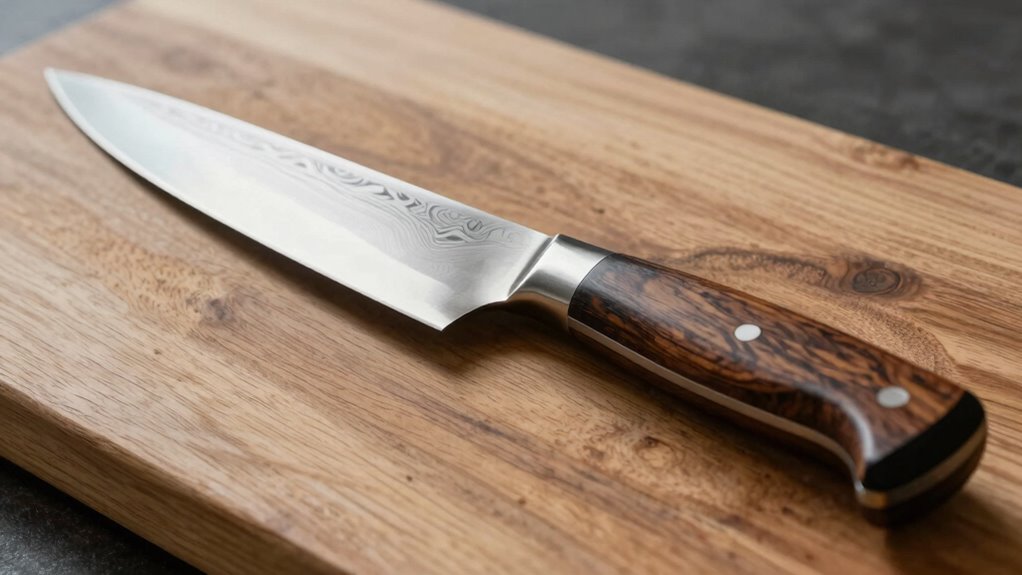
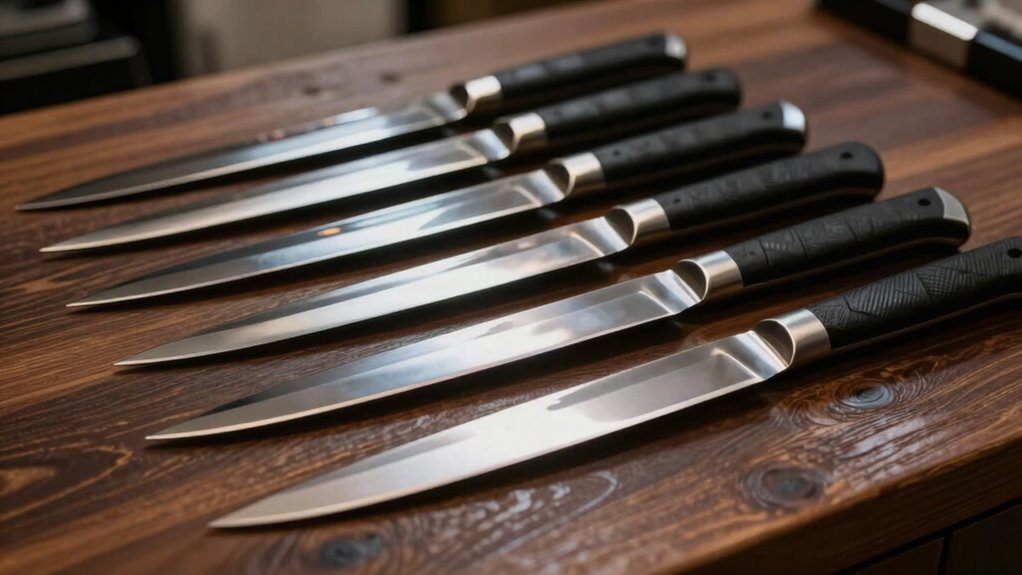
Japanese knife sets often feel noticeably different in your hand compared to Western-style knives, thanks to their unique design and craftsmanship. This difference isn’t just about aesthetics; it’s rooted in the way these knives are built to optimize your cutting experience. One of the first things you’ll notice is the knife handle ergonomics. Japanese knife handles are generally smaller and more streamlined, designed to fit comfortably in your hand without excess bulk. This compact, cylindrical or D-shaped handle allows for a precise grip, giving you better control during delicate tasks like slicing sashimi or julienning vegetables. Unlike Western knives, which often have thicker, more substantial handles, Japanese handles encourage a lighter, more agile grip, reducing fatigue during extended use. The blade weight distribution plays a critical role in how these knives feel when you use them. Japanese knives often have a more balanced or even slightly forward-weighted design, meaning the blade’s center of gravity is closer to the edge. This clever weight distribution makes chopping and slicing feel effortless because you don’t need to exert as much force to maintain control. With Western knives, the heavier handle tends to make the knife feel more like an extension of your arm, which can be good for heavy-duty tasks but less precise for finer cuts. Japanese knives, on the other hand, give you a more nimble and responsive feel, allowing you to execute delicate cuts with less effort. Another key aspect is how the handle ergonomics and blade weight distribution work together. The smaller handle size combined with the well-balanced blade means you can maneuver the knife smoothly and accurately. You’re encouraged to use a lighter touch, which enhances precision without sacrificing power. This design also helps in reducing hand strain, especially if you’re working for long periods. You’ll find that your grip feels more natural, almost intuitive, because the knife’s weight and shape complement the way your hand moves. Proper balance and weight distribution are essential for improving control and reducing fatigue during extended cutting tasks. Additionally, the craftsmanship behind Japanese knives often involves a focus on ergonomic design that considers natural hand movements. This thoughtful approach to functional craftsmanship aligns with how these knives are tailored for optimal performance. Recognizing the importance of material quality in Japanese knives further emphasizes their superior craftsmanship and durability. Ultimately, the difference in how Japanese knives feel is a combination of thoughtful ergonomics and strategic weight distribution. These design elements aren’t accidental—they’re carefully crafted to improve your control, reduce fatigue, and elevate your overall cutting experience. Once you get used to the balance and handle design, it’s easy to see why many chefs and home cooks prefer Japanese knife sets for their precision, comfort, and responsiveness.

MITSUMOTO SAKARI 4-Piece Japanese Chef Knife Set, 9Cr18MoV Steel
4-Piece Japanese Knife Set: Includes a Gyuto knife for slicing, Santoku knife for all-purpose prep, Nakiri knife for…
As an affiliate, we earn on qualifying purchases.
As an affiliate, we earn on qualifying purchases.
Frequently Asked Questions
How Do Japanese Knives Differ From Western Knives in Grip?
Japanese knives differ from Western knives in grip mainly because of their handle design and blade curvature. You’ll notice Japanese handles are often more streamlined, offering a closer, more precise grip that fits comfortably in your hand. The blade curvature promotes a rocking motion, making cutting smoother. In contrast, Western knives typically have larger, sturdier handles designed for a different grip style, providing more leverage but less finesse.
Are Japanese Knife Handles Ergonomic for All Hand Sizes?
Japanese knife handles are generally ergonomic for many hand sizes, but cultural differences influence their design aesthetics, which may affect comfort. Smaller handles suit those with petite hands, while larger handles can accommodate bigger grips. You might find some handles less comfortable if your hand size doesn’t match the traditional design, so trying different styles helps guarantee you find one that feels natural and comfortable for your grip.
What Materials Influence the Feel of Japanese Knife Handles?
Handle materials and grip texture dramatically influence how Japanese knife handles feel. Imagine a handle carved from silky, lightweight wood that molds perfectly to your grip, or a textured resin that feels like it’s an extension of your hand. These materials provide different grip textures, making each cut feel precise and effortless. The choice of handle material shapes your experience, whether you crave smoothness or added grip during intense kitchen tasks.
Do Japanese Knives Require Special Maintenance for Comfort?
Japanese knives don’t require special maintenance just for comfort, but you should regularly sharpen the blades to keep them performing well. If the handle becomes uncomfortable or damaged, handle replacement can restore comfort and control. Proper care involves gentle cleaning and avoiding harsh chemicals, which helps sustain the handle’s integrity and your comfort. Regular knife sharpening ensures smooth cuts, while handle replacement keeps the grip comfortable and safe.
How Does the Weight Distribution Affect Handling Comfort?
The weight distribution greatly influences handling comfort by affecting the knife’s balance point. When the weight is properly balanced, you’ll find it easier to control and use with less grip tension, reducing fatigue. Japanese knives often have a well-placed balance point that feels natural in your hand, allowing for smoother cuts. This balance minimizes strain and makes precision work more comfortable, enhancing your overall experience in the kitchen.

HOSHANHO Kitchen Knife in Japanese High Carbon Steel, Professional High-Class Chef's Knife 8 inch, Non-slip Ultra Sharp Cooking Knives with Ergonomic Handle
【High-End Japanese Steel Chef's Knife】 HOSHANHO chef's knife is made of Japanese high carbon steel 10Cr15CoMoV, 2x of…
As an affiliate, we earn on qualifying purchases.
As an affiliate, we earn on qualifying purchases.
Conclusion
Handling a Japanese knife set is like holding a finely tuned musical instrument; each curve and balance whispering its purpose. You’ll find it responds to your touch, a partner in your culinary symphony. With patience, you’ll discover that the knife isn’t just an object but an extension of your will, transforming simple ingredients into art. Embrace the dance, and you’ll soon see that these knives aren’t just tools—they’re the heartbeats of your kitchen.

imarku 14-Piece Knife Set, Japanese Stainless Steel Knives Set for Kitchen, Full-Tang Gyutou Knife Sets with Block and Build-in Sharpener, Brown, Dishwasher Safe, House Warming Gifts for Men
【Effortless Cutting & Artistic Beauty】Ultra-sharp blades hand-sharpened to a precise 15° angle per side, balancing lasting sharpness and…
As an affiliate, we earn on qualifying purchases.
As an affiliate, we earn on qualifying purchases.

Lucky Cook 10” Sashimi Sushi Knife – Ultra Sharp Traditional Japanese Sushi Knife for Sashimi, Fish Filleting & Precision Slicing – Premium Stainless Steel Blade, Pakkawood Handle & Gift Box
✅ Razor-Sharp Japanese Edge – Handcrafted for extreme precision; cuts through fish, meat, and vegetables like silk.
As an affiliate, we earn on qualifying purchases.
As an affiliate, we earn on qualifying purchases.