TL;DR

Get your wardrobe favorites delivered free with Prime
- Fast, free delivery on millions of items
- Prime Video, Amazon Music and more included
- Member-only deals all year
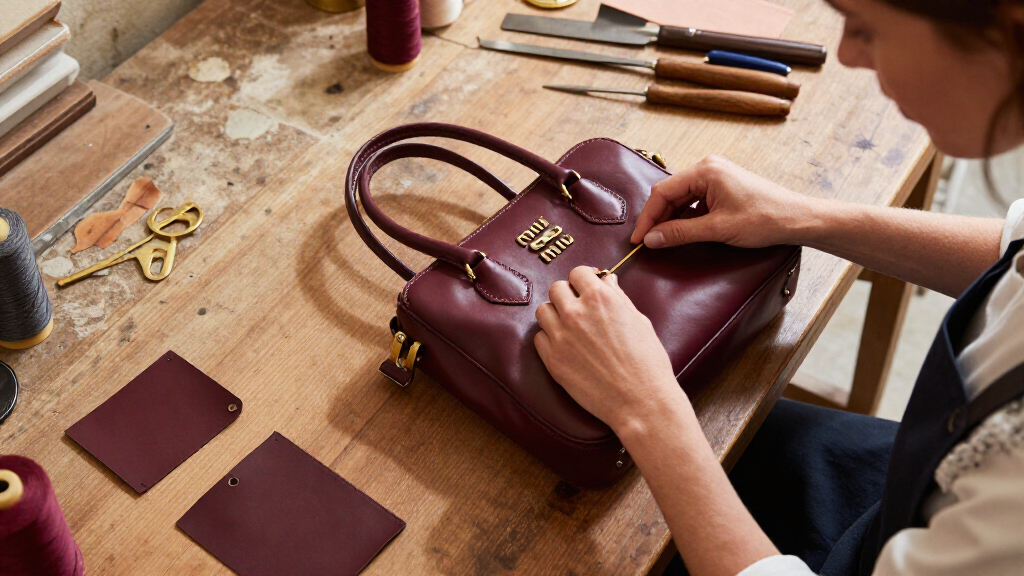
ELLE reports from Miu Miu’s leather goods workshop at The Garden Factory in Tuscany, where artisans make the brand’s matelassé handbags by hand. The report also describes the archive, materials and training behind the bags, which trace their origins to the label’s fall/winter 2006 collection.
ELLE has reported from Miu Miu’s leather goods workshop at The Garden Factory in Tuscany, describing how artisans make the brand’s signature matelassé handbags by hand. The account offers a look at the process and specialist training behind a technique introduced with Miu Miu’s fall/winter 2006 collection, two decades before the report’s publication.
The workshop is housed at The Garden Factory, the Prada Group’s headquarters in the Valvigna region of Tuscany. Architect Guido Canali designed the complex in the mid-1990s; it was completed in 2015. ELLE describes a building with extensive glass, angled ceilings and a balance between its steel structure and surrounding greenery. The site is also used to store and consult the brands’ product history.
According to ELLE, the archive holds about 66,000 leather goods and 77,000 pairs of shoes. Items are organized by product category rather than season or collection, with a dedicated section for matelassé. The report describes workshop stations staffed by artisans, many of them women, who work in teams of two.
The matelassé effect is made by layering elastic Lycra, thin padding and nappa lambskin sourced from a Miu Miu tannery in France. Artisans stitch patterns into the layers, then remove the Lycra so the leather and padding fold around the stitches. ELLE says the bags are assembled by hand, without 3-D modeling, and manually inspected. The smaller the item, such as a card holder, the more difficult the technique can be to execute.
The Craft Behind Matelassé
The report makes visible the labor and expertise behind a surface that is also a recognizable design feature. Miu Miu’s method depends on carefully controlled layers and stitching; the resulting texture is not simply a decorative pattern applied to finished leather. The description helps explain why the brand presents matelassé as a craft technique as well as a visual signature.
The account also places the workshop in a wider luxury-market setting. ELLE argues that tactile materials have become more prominent as brands compete for attention through images and video, where texture can act as a visual cue to craftsmanship. That is the magazine’s interpretation of the trend, not a measured claim about consumer behavior. For readers, the workshop report provides a concrete account of how one fashion house connects product design, skilled work and its archive.
Popular right now

Vitamix 5200 Blender with 64 oz. Container, Black

Ninja Foodi Air Fryer 8 Qt DualZone 6-in-1 Grey DZ201

Apple AirPods Pro (1st Generation) with MagSafe Charging Case
As an affiliate, we earn on qualifying purchases.
From the Coffer to Today
Miu Miu introduced matelassé in its fall/winter 2006 Paris show through the Coffer, a soft shoulder bag with a twisted handle and metal clasp. ELLE says three bags appeared on the runway, all in one color. The outlet traces the quilting method to an older tradition used in bedding and upholstery, while describing Miu Miu’s use of it in leather goods as a new application for the brand.
In the two decades since, Miu Miu has expanded the technique across colors and styles. ELLE identifies the Wander and Arcadie among the brand’s current matelassé offerings and notes that the 2026 campaign features Gigi Hadid. The anniversary framing links the current products to the Coffer’s debut, while the Tuscan workshop report focuses on the production process rather than announcing a new bag or manufacturing initiative.
Training is another part of that process. ELLE reports that craftspeople spend six months at the Prada Group’s leather goods academy learning the brands’ methods and standards. It can take a further five to 10 years for a craftsperson to learn to make a complete bag independently, from beginning to end, according to the report.
““3-D modeling is never used.””
— ELLE’s report on the workshop
What the Report Does Not Specify
The ELLE account does not give a date for its workshop visit or name the individual artisans interviewed. It also does not state how many matelassé bags are made at the site, how production is divided among Miu Miu’s facilities, or whether output has changed over time. The numbers for the archive and the training timeline are attributed to the report; no independent verification or additional sourcing is provided in the supplied material.
The report describes the technique and the current product range but does not announce a new collection, change in manufacturing policy, or broader expansion of the workshop. It is not clear from the available account whether Miu Miu plans to release further details about the archive or production process.
No New Production Plans Announced
The report provides a look at the existing workshop and connects its work to the 20th anniversary of matelassé’s introduction; it does not identify a forthcoming product launch or production milestone. Readers can expect the brand’s matelassé styles to remain part of its current leather goods offering, as described by ELLE, but the supplied material gives no schedule for future releases. Any further details about workshop capacity, individual artisans or new designs have not been announced in the source.
Key Questions
Where is Miu Miu’s handbag workshop?
ELLE places the leather goods workshop at The Garden Factory, the Prada Group headquarters in the Valvigna region of Tuscany.
How are Miu Miu matelassé bags made?
According to ELLE, artisans layer elastic Lycra, thin padding and nappa lambskin, stitch patterns into the layers, and remove the Lycra so the leather and padding form the quilted texture. The bags are assembled by hand and manually inspected.
When did Miu Miu introduce matelassé?
The technique appeared in Miu Miu’s fall/winter 2006 collection, through the Coffer shoulder bag, according to the report.
How long does it take to train a Miu Miu bagmaker?
ELLE reports that Prada Group academy training lasts six months. It can then take five to 10 years for a craftsperson to learn to make a complete bag independently.
Source: elle.com