TL;DR
Choose a winter scarf by weighing fiber, thickness, weave, fit, and how you plan to wear it; the material name alone cannot tell you how warm it will feel. Match its shape and volume to your coat, try the color against clothes you already wear, and follow the care label so a favorite scarf lasts.
A scarf can turn a cold walk into a comfortable one, but the softest-looking knit on the rack may not be the one you reach for every morning. Warmth depends on more than fiber: thickness, weave, how the scarf sits, and what you wear over it all matter.

Get your wardrobe favorites delivered free with Prime
- Fast, free delivery on millions of items
- Prime Video, Amazon Music and more included
- Member-only deals all year
When you shop for stylish winter scarves, think about your actual day. Are you waiting for a windy bus, walking between meetings, or stepping out of a warm car for five minutes? The answer changes how much coverage and bulk will feel useful.
This guide explains how to choose a comfortable material, pair a scarf with your coat, wear it without wrestling with loose ends, and care for it at home. You’ll find practical examples and key facts and a simple comparison to help you pick a scarf you’ll enjoy wearing, not just admire on a hanger.
Judge warmth by thickness, weave, fit, and layering as well as fiber.
Check measurements because scarf sizing varies by brand and one size may not suit every preferred wrap.
Balance scarf volume with your coat’s collar and shape.
Use a knot, tuck, or textured fabric to help a scarf stay in place.
Follow the care label, and store scarves clean and dry.
Choose a scarf by how it feels and performs outside
A warm winter scarf balances fiber, thickness, weave, and fit; the fiber name alone cannot predict how cozy it will feel. Wool and cashmere are popular insulating choices, while alpaca is often soft and insulating. Fine merino tends to feel smoother than coarser wool, but individual comfort varies. These differences matter because a scarf sits against sensitive skin and is often worn for hours: a theoretically warm scarf that feels scratchy or too heavy may spend more time in your bag than around your neck.
Think of scarf warmth like making a cup of tea: the ingredients matter, but so do the mug and how long you let it steep. A loosely woven scarf may let cold air through, while a dense, brushed knit can feel snug even in a blend. Fit changes the result too: a scarf that closes the gap at your collar can reduce drafts, while one that hangs open may look elegant but offer less protection. If you’re sensitive to wool, try a softer fiber or a lined design against your neck before buying; a lining can add comfort, though it may also make the scarf warmer and bulkier.
For a windy commute, a long, closely woven wool scarf tucked into your coat can block drafts better than a short, airy fashion knit. For a mild winter and quick errands, a lighter cotton or synthetic blend may feel less stuffy and prove easier to wash. The tradeoff is that a lightweight scarf may not provide enough coverage for a long wait outdoors, while a dense one can feel excessive once you enter a heated space. Scarves add neck warmth, but they don’t replace weather-appropriate outerwear.
Use the care label and your own comfort as part of the decision. Natural fibers aren’t automatically easier to maintain, and blends can trade a little softness for durability or simpler washing. Consider how often you expect to wash the scarf and whether you have time for gentle care; a demanding routine can make even a beautiful purchase impractical. A scarf you can comfortably wear and care for often beats a luxurious one that stays in a drawer.
Popular right now

De'Longhi Stilosa Compact Manual Espresso Machine with Milk Frother

Roborock Q7 L5 Robot Vacuum and Mop Combo, 8,000 Pa Suction

iRobot Roomba Max 875 Robot Vacuum and Mop
As an affiliate, we earn on qualifying purchases.
Compare popular scarf materials before you buy
Wool, cashmere, alpaca, cotton, and synthetic blends each offer a different mix of warmth, feel, price, and care. The table is a starting point rather than a ranking: construction and personal comfort can outweigh the fiber label. Your best match depends on how cold your winters get, how close the fabric sits to your skin, and whether you’re happy to hand wash or dry clean. Considering those factors together helps you avoid paying for a quality you won’t use, such as exceptional softness when easy washing matters more.
| Material | What you may like | What to check |
|---|---|---|
| Wool | Insulating, breathable feel | Texture and washing instructions |
| Cashmere | Light, soft feel | Price and gentle care needs |
| Alpaca | Softness and insulation | How the specific knit feels on your neck |
| Cotton | Often straightforward care | Thickness and weave for cold weather |
| Synthetic or blended fibers | Can balance durability, cost, and easy care | Breathability and warmth vary by construction |
Imagine choosing between a fine merino scarf for your office commute and a thick acrylic blend for snowy weekend walks. The merino may slip neatly under a tailored collar, feel comfortable indoors, and be easy to carry when removed. The chunkier scarf may give you more coverage outside, at the cost of some bulk and warmth you may not want once you reach a heated office. Neither is automatically the better buy; the useful question is which one fits the conditions in which you’ll wear it most.
Try the fabric against your neck if you can, and check the label before deciding. A sale price may not feel like a bargain if the care routine doesn’t suit your life, and a soft sample may not tell you how a thick scarf will sit under your coat. Material names are useful clues, not guarantees of softness, warmth, or easy upkeep. Look at the finished scarf as a whole: its weight, density, feel, and care instructions all shape the experience.
Match the scarf’s shape and size to your coat
Long rectangles, squares, and infinity scarves create different amounts of coverage and give you different styling options. Long rectangular scarves offer the most ways to drape, wrap, or knot; that flexibility is useful if you change how you wear it, but the loose ends may need adjusting. A closed-loop infinity scarf is quick to put on and has no ends to manage, though its fixed circumference can limit layering options. A square scarf can be folded into several shapes, but its coverage depends on how it is folded.
A wider scarf can double as a shoulder wrap in a chilly café, giving you another use beyond the commute, but extra width may bunch beneath a high collar. Picture getting ready for work: a slim rectangular scarf tucked into a tailored coat keeps the front tidy and leaves room to move, while an oversized brushed scarf sits comfortably over a simple, open-front coat. The coat’s neckline matters because a scarf needs space to sit without pushing the collar out of shape or pressing uncomfortably against your jaw.
“One size fits all” is a style convention, not a promise that every scarf will provide comfortable coverage or tie the way you want. If you like a double wrap, check whether the length lets you loop it without pulling at your neck; a tight loop can feel restrictive, while a very loose one may let cold air through. If you dislike bulk, a shorter or narrower design may fit better with your usual coat, although it may offer fewer ways to wrap and less coverage.
Sizing varies by brand, so check the listed measurements rather than guessing from a label or product photo. If you’re shopping online, compare the scarf’s length and width with one you already own and consider how that one behaves with your coat. That small check can prevent the familiar disappointment of a scarf that looks dramatic in a product shot but overwhelms your everyday outfits. It also helps you judge whether a new shape adds a useful option or simply repeats what you already have.
Style your scarf without adding awkward bulk
The easiest scarf styling rule is to balance volume with your coat. A slim scarf works well tucked into a tailored collar, while an oversized knit looks at home over a simpler outer layer. This balance matters for comfort as well as appearance: too much fabric beneath a structured collar can press at your neck, while a very slim scarf against a bulky coat may feel visually lost and provide little coverage. Recent winter looks often include brushed textures, chunky knits, classic checks, and saturated accent colors, but those are options, not rules.
For a neat weekday look, drape a long scarf around your neck once and tuck the ends inside a wool coat. The tuck reduces movement and keeps the front orderly, though it may feel warm when you go indoors. For a relaxed weekend walk, let a large plaid scarf hang loose over a plain jacket, then pull it closer when the wind picks up. The first feels crisp; the second brings a soft, colorful sweep across the coat and makes the coverage easy to adjust.
Try this quick sequence when you’re getting dressed:
- Put on your coat and check how much space the collar leaves.
- Choose a slim wrap for a high collar, or a looser drape for an open neckline.
- Tuck the ends or tie a simple knot if the scarf keeps slipping.
- Walk around and move your shoulders; loosen the wrap if it pulls or bunches.
This small movement check catches problems a mirror may not show. If a scarf shifts when you turn your head or restricts your shoulders, it is likely to become annoying over a full day, even if the color and shape look right.
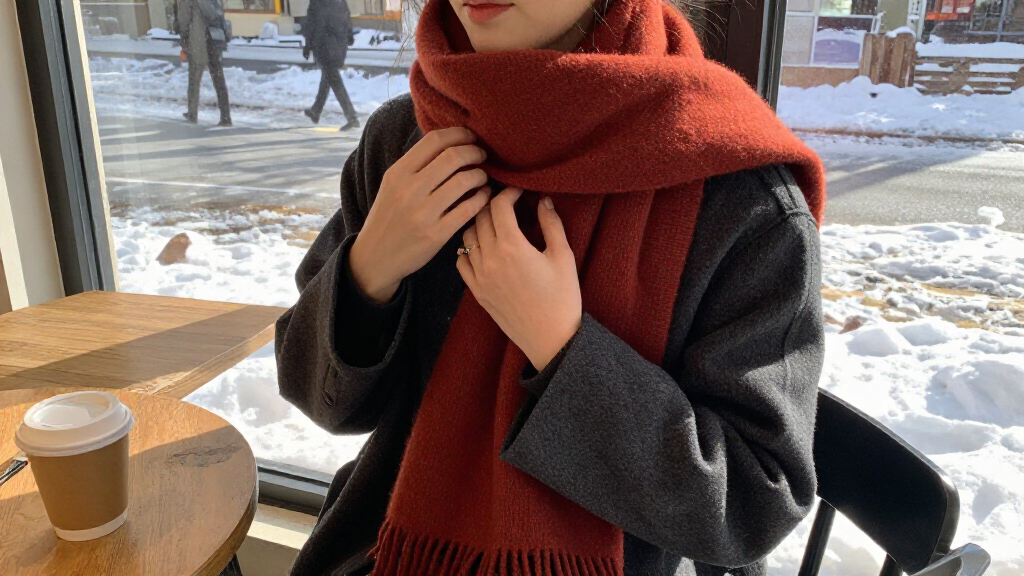
For color, a neutral like navy, gray, camel, or cream can pair with many coats. A bright red or green scarf can wake up a dark outfit without requiring you to replace your whole wardrobe. Hold the scarf beside the coats and shoes you actually wear; the best match is the one that makes getting dressed easier. A versatile neutral may earn more frequent use, while a bold color can make familiar clothes feel different—choose according to whether you want repeat wear or a noticeable accent.
Keep your scarf comfortable and practical all day
A good scarf should stay put, feel comfortable, and suit where you’re going. A simple knot, a tuck into your coat, or a slightly textured fabric can help stop slipping. The right approach depends on how you wear your scarf and how much movement your day involves. A snug wrap can stay in place on a windy walk, but if it is too tight it may feel restrictive; a loose drape is easy to remove but may need frequent adjustment.
For example, if you walk to the train with your scarf sliding off one shoulder, wrap it once and tuck both ends into your coat. The coat holds the ends and limits flapping, which can make the walk more comfortable. If you’re indoors often, a lighter style you can remove quickly may be more comfortable than a bulky knit you have to carry around. A wider scarf that works as a wrap can be handy on a cold office evening, though it may feel cumbersome in a packed carriage. Think through the whole day, not just the coldest moment, so the scarf suits transitions between outdoors and heated spaces.
Think about children’s scarves, too: loose ends can catch on playground equipment. A close-fitting snood or neck warmer may be a more practical choice for some activities because it has no long tails to manage. A traditional scarf has loose ends; a snood is usually a closed loop or tube. The choice depends on the setting and the child’s activity, since freedom to move and easy adjustment matter as much as warmth.
Wear a scarf as one layer of winter protection. It can help block drafts around your neck, but it cannot take the place of a warm coat suited to the weather.
There’s no single right way to wear a scarf. If a style pulls, slips, or gets in your way, change the knot, choose a different shape, or save it for another setting. Comfort is part of style: a scarf you forget you’re wearing can be more useful than one you keep adjusting. Small adjustments can change how a scarf performs, so try the wrap with the coat you plan to wear instead of judging it on its own.
Make your favorite scarf last with simple care
Follow the garment label before washing or storing your scarf. Some wool and cashmere scarves call for gentle hand washing or dry cleaning, while others can go in a suitable machine cycle. Care needs depend on the specific item, so don’t assume a fiber name tells you what to do. The wrong method can change a scarf’s feel or shape, making label checks part of protecting the fit and comfort you chose it for.
If hand washing is allowed, use cool water and a gentle detergent, move the scarf carefully, and avoid twisting it like a wet towel. Twisting can stretch or distort a knit, while rough handling can encourage fuzzing. Press out water gently and dry it flat, away from direct heat. Imagine laying a soft knit on a clean towel after washing: it keeps its shape better than hanging heavy and wet from a peg. Allow it to dry fully before putting it away, since storing it damp can leave an unpleasant smell or harm the fabric.
Pilling can appear where a scarf rubs against a coat or bag strap. Gentle wear and careful washing may help; if pills form, remove them with a fabric comb or suitable de-pilling tool, following the item’s care guidance. Removing pills can refresh the surface, but aggressive scraping may damage fibers, so use a light touch. Store scarves clean and dry, and protect natural fibers from moths. This reduces the chance that a favorite piece is damaged while it waits for the next cold spell.
Durability and sustainability depend on more than a “natural” label. Sourcing, processing, how long a scarf lasts, and whether you actually wear it all play a part. A well-made scarf that works with several coats may serve you for years, spreading its cost and material impact across many wears. Before replacing a tired favorite, check whether careful cleaning or mending can bring it back into regular rotation. Keeping a scarf you already enjoy can be the most practical choice when the repair is simple and it still suits your needs.
Frequently Asked Questions
Which scarf material is warmest for winter?
Wool, cashmere, and alpaca are popular insulating choices, but warmth also depends on thickness, weave, and fit. A dense scarf tucked into your coat may block drafts better than a loose, airy scarf made from a warmer-sounding fiber.
What is the softest scarf material?
Cashmere and fine merino are often valued for their soft feel, though softness varies by grade, finish, and personal sensitivity. If you can, try the scarf against your neck before buying.
How long should a winter scarf be?
The right length depends on your height and how you want to tie or wrap it. A longer scarf gives you more ways to layer; a shorter one may create less bulk under a coat collar. Check measurements, since sizing varies by brand.
How do I keep a scarf from slipping?
Try a simple knot, loop it once, or tuck the ends into your coat. A textured fabric may grip more readily than a smooth one. If it still slips, adjust the wrap so it rests comfortably rather than pulling tight.
Can I wash a wool or cashmere scarf at home?
Check the care label first; some scarves need dry cleaning, while others allow gentle hand washing. When hand washing is allowed, use cool water and mild detergent, avoid twisting the fabric, and dry the scarf flat.
What scarf color goes with everything?
Black, gray, navy, camel, and cream are versatile choices, but the best color depends on the coats and other clothes you wear. A bright scarf can also work like a small splash of paint against a neutral winter outfit.
Conclusion
Choose a scarf for the weather you face, the feel you enjoy, and the coats you already wear. Check its measurements, try its texture if possible, and make sure its care routine fits your week.
Then wear it your way: a neat loop under a city coat or a bright, soft wrap catching the winter light. The best scarf is the one you’re glad to reach for when the cold air meets you at the door.