Porcelain and bone china may look similar, but you can spot the difference by feeling and observing them. Bone china is lighter, more translucent, and has a delicate, brighter appearance thanks to bone ash, making it feel softer and more refined. Porcelain is heavier, more opaque, and has a smooth, polished finish with vibrant colors. Exploring these subtle differences can help you choose the perfect piece — learn more to see what sets them apart.
Key Takeaways
- Bone china contains bone ash, making it lighter, more translucent, and softer than porcelain.
- Porcelain is fired at higher temperatures, resulting in a denser, more opaque, and often more durable material.
- Bone china offers a delicate shine and translucency, whereas porcelain has a smooth, polished surface with high translucency.
- Bone china feels lighter and softer to the touch, while porcelain is heavier and has a cool, firm feel.
- Bone china generally costs more due to its refined appearance and craftsmanship, while porcelain is often more affordable and versatile.
Top picks for "porcelain bone china"
Open Amazon search results for this keyword.
As an affiliate, we earn on qualifying purchases.
Composition and Materials

Porcelain and bone china differ markedly in their composition and materials, which influence their appearance and durability. Historically, porcelain originated in China around the 7th century and gained global popularity for its strength and translucence, holding cultural significance as a symbol of craftsmanship. The addition of special materials like bone ash in bone china not only affects its appearance but also enhances its physical properties. Bone china, developed later in England during the 18th century, incorporates bone ash, giving it a distinct whiteness and translucency. The addition of bone ash makes bone china softer yet more durable and lightweight compared to traditional porcelain. These differences in materials not only reflect their unique origins but also influence their cultural importance—porcelain being revered in Asian art, while bone china became a hallmark of British fine dining. Your choice between the two depends on the aesthetic and historical value you seek. Additionally, the material composition of each affects their ability to withstand everyday use, with bone china generally being more resistant to chipping. Moreover, the manufacturing techniques employed during production can also impact their overall quality and finish.
Manufacturing Techniques

Your understanding of porcelain and bone china deepens as you explore their manufacturing techniques. You’ll notice that differences in material composition lead to distinct production processes for each. These variations influence the final look, durability, and quality of the finished pieces. Incorporating smart home automation concepts can also help protect valuable china collections through advanced security and environmental controls. Recognizing the material composition of each type can further enhance your appreciation for their unique characteristics and care requirements.
Material Composition Differences
The manufacturing techniques for porcelain and bone china differ considerably, shaping their distinct material compositions. Porcelain is made from a mix of kaolin, feldspar, and quartz, fired at high temperatures to create a dense, durable ceramic. Bone china, on the other hand, incorporates bone ash, giving it a lighter, more translucent quality. To appeal to eco-conscious consumers, some manufacturers now explore vegan alternatives and eco-friendly materials, replacing animal-derived components like bone ash with plant-based or recycled materials. These innovations aim to reduce environmental impact while maintaining the aesthetic qualities of traditional bone china. Ultimately, the key difference in material composition influences both the look and feel of these ceramics, with bone china’s unique blend offering a softer, more delicate appearance compared to porcelain’s more rigid structure.
Production Process Variations
Manufacturing techniques for porcelain and bone china involve distinct processes that considerably affect their final appearance and qualities. Porcelain is crafted through a high-temperature firing process, often relying on artisan craftsmanship to shape and glaze the material carefully. Bone china, on the other hand, incorporates animal bone ash, which requires precise technological innovations during production to achieve its unique translucency. The addition of bone ash allows for a softer, more delicate finish, but it demands stricter control over firing times and temperatures. The use of modern machinery complements traditional craftsmanship, ensuring consistency and quality. These process variations influence the final product’s strength, translucency, and surface texture, making each type of china uniquely suited for different aesthetic and functional purposes.
Appearance and Aesthetic Qualities
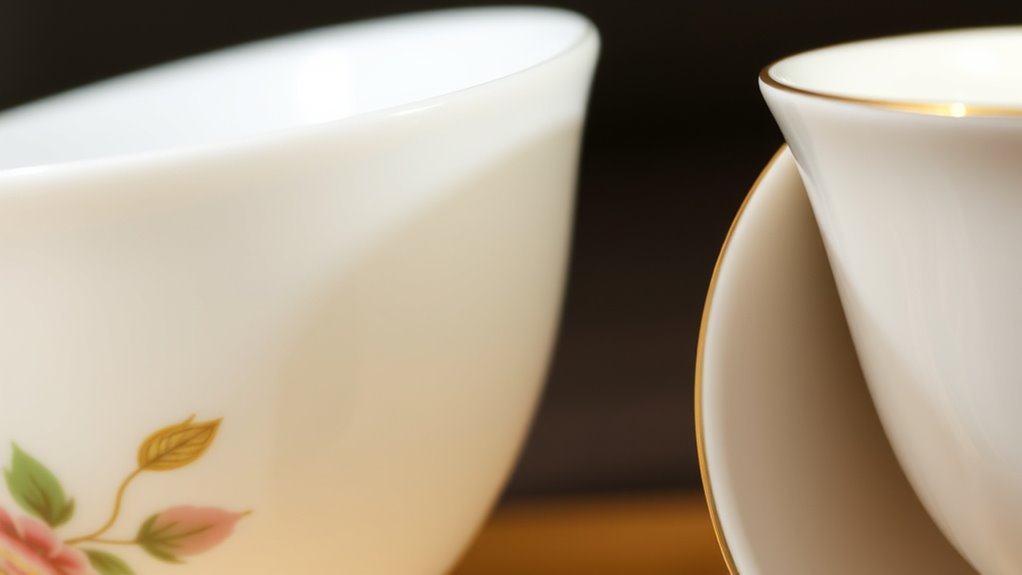
When comparing porcelain and bone china, you’ll notice differences in their visual clarity and shine that impact their overall appeal. Bone china often has a brighter, more translucent appearance, while porcelain can offer a more matte finish. Both materials provide a wide range of design and pattern options to suit your personal style and preferences. Additionally, understanding material safety and manufacturing quality can help you choose pieces that are both beautiful and durable. Recognizing the craftsmanship involved in their production can deepen your appreciation for each material’s unique qualities. Furthermore, the material composition significantly influences their physical properties and overall appearance.
Visual Clarity and Shine
Porcelain often exhibits a brighter, more translucent appearance that enhances its visual clarity and shine, making it particularly appealing for display and fine dining. Its high level of color vibrancy ensures that patterns and designs stand out sharply, adding to its elegance. The surface texture of porcelain is smooth and polished, reflecting light beautifully and giving it a luminous quality. This shine highlights the crispness of its edges and the clarity of its glaze, making each piece look pristine and refined. In comparison, bone china also offers a delicate shine but tends to be softer and less translucent. If you value a vivid, clear presentation, porcelain’s brilliance and sleek surface texture make it the ideal choice for showcasing both its aesthetic and craftsmanship.
Design and Pattern Options
Both porcelain and bone china offer a wide range of design and pattern options that enhance their visual appeal. You’ll find a rich pattern variety, from delicate floral motifs to bold geometric designs, allowing you to choose styles that match your taste. Bone china often features intricate design intricacies, with fine detailing and elegant motifs that exude sophistication. Porcelain, meanwhile, tends to showcase vibrant colors and clear, crisp patterns, making each piece stand out. The variety in patterns means you can select dinnerware that complements your décor or elevates special occasions. Whether you prefer subtle, understated designs or elaborate artwork, both materials provide ample options to express your personal style while adding a touch of elegance to your table setting.
Weight and Feel

Have you ever noticed how porcelain and bone china differ in their weight and feel? Bone china is generally lighter and feels delicate in your hand, offering a smooth tactile sensation. Porcelain, on the other hand, tends to be heavier and more substantial, giving a solid, cool touch. Here’s a quick weight comparison:
| Attribute | Bone China | Porcelain |
|---|---|---|
| Weight | Light and airy | Heavier and denser |
| Tactile sensation | Soft, plush feel | Firm, cool touch |
| Fragility | Thin but resilient | Slightly more fragile |
| Overall feel | Elegant, lightweight | Robust, substantial |
| User experience | Feels fragile but sturdy | Feels durable but weighty |
This contrast shapes your tactile experience, making each material unique to your handling style.
Durability and Strength
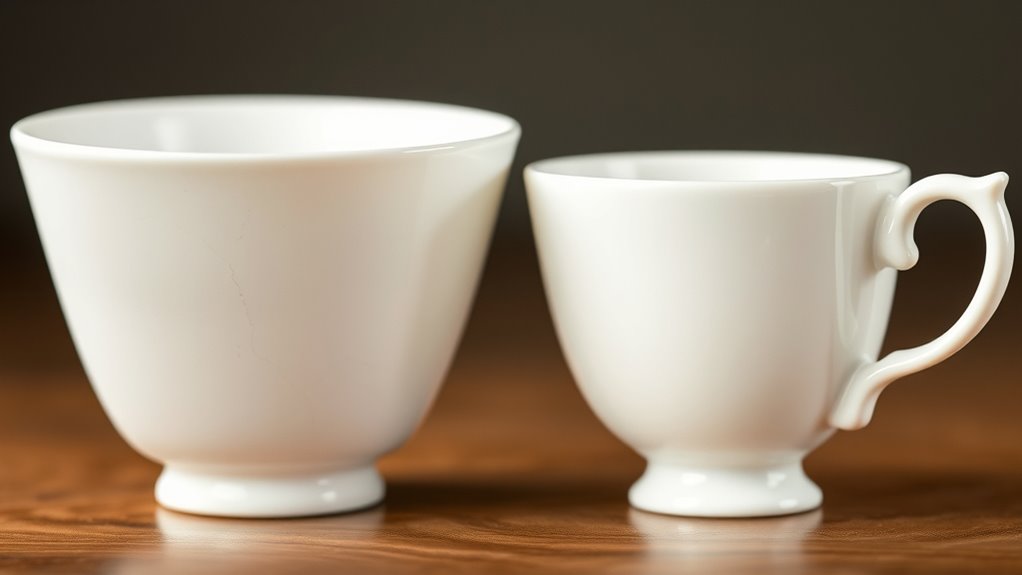
While bone china feels delicate and lightweight, it actually offers impressive durability thanks to its unique manufacturing process. Its porcelain durability stems from the high-temperature firing and the addition of bone ash, which enhances strength without sacrificing elegance. Bone china strength makes it resistant to chipping and cracking, ideal for daily use. In contrast, porcelain durability depends on its dense, vitrified structure, making it hard and resilient. To understand their differences better, consider these points:
- Bone china’s combination of strength and lightness for practical use
- Porcelain’s dense surface resists scratches and chips
- Bone china’s flexibility reduces likelihood of breakage
- Proper handling extends the lifespan of both materials
- Free floating elements in manufacturing contribute to the overall resilience of both types of china.
- The incorporation of microstructural features during production further improves their durability against everyday wear.
Knowing these qualities helps you choose the right material based on your durability needs.
Translucency and Light Reflection

Ever wondered why porcelain and bone china differ so much in their appearance? It all comes down to their optical properties and how they handle lighting effects. Bone china is highly translucent, allowing light to pass through its thin, refined body, creating a soft glow when illuminated. This translucency enhances its delicate and luxurious look, making it appear luminous and vibrant under the right lighting. Additionally, the composition of materials in bone china contributes to its unique light-transmitting qualities, setting it apart from porcelain. Porcelain, on the other hand, is more opaque, reflecting light rather than letting it through. Its surface produces a subtle sheen, giving it a smooth, matte finish. These differences in translucency and light reflection influence how each material interacts with lighting, ultimately shaping their visual appeal and helping you distinguish between the two based on their optical characteristics. Additionally, understanding light reflection properties can aid in selecting the right material for decorative or functional purposes.
Cost and Price Range
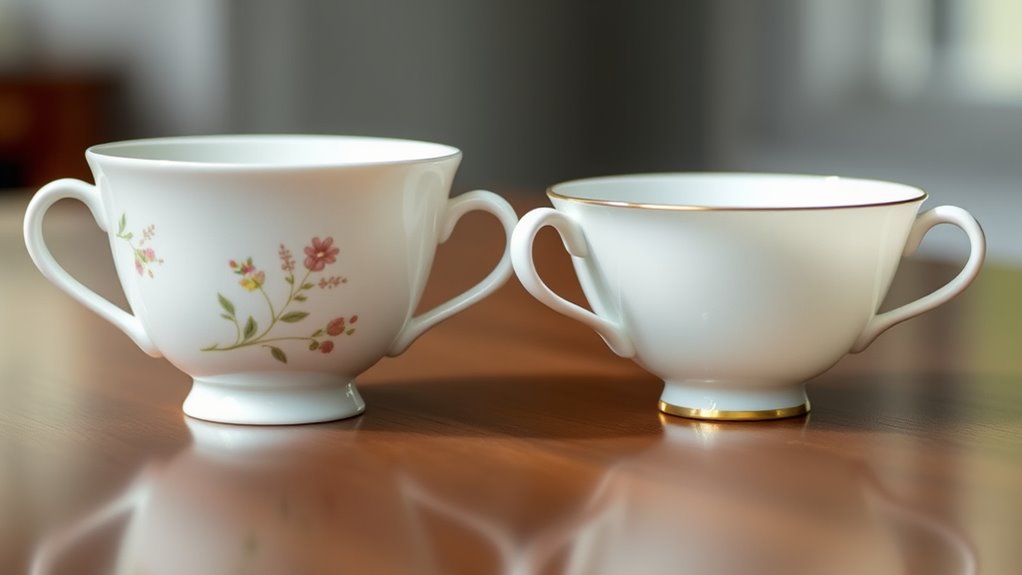
The optical qualities of porcelain and bone china also influence their price points, reflecting differences in craftsmanship and material costs. Typically, bone china commands a higher price due to its delicate translucency and refined finish, making it a staple in luxury branding. Porcelain, while generally more affordable, still offers elegance that appeals to collectors seeking quality craftsmanship. The collector appeal of both types can profoundly elevate their value, especially when from renowned makers. Factors influencing cost include:
Bone china’s translucency and finish elevate its luxury appeal and value.
- Material purity and craftsmanship complexity
- Brand reputation and rarity
- Degree of translucency and finish
- Limited editions or designer collaborations
Moreover, the translucency and fineness of the material play a significant role in determining their desirability and price. Understanding these factors helps you appreciate their premium pricing, whether for everyday elegance or investment purposes. Additionally, material quality directly impacts durability and overall aesthetic appeal, influencing long-term value. Recognizing the importance of craftsmanship quality can also help in assessing the true worth of collectible pieces. For collectors and enthusiasts, the manufacturing process can further distinguish between high-end and mass-produced options, impacting their overall value. The finishing techniques used in production also contribute significantly to the final appearance and desirability of these fine ceramics.
Typical Uses and Settings

Are you wondering where porcelain and bone china are typically used? Both types of china are popular for serving occasions like formal dinners, afternoon teas, and special celebrations. Porcelain’s durability makes it ideal for everyday use, but it also elevates upscale events with its elegant appearance. Bone china, known for its translucency and delicate feel, is often reserved for more refined settings such as high tea parties or fine dining. Besides serving, both are commonly used for decorative purposes, displayed in cabinets or as centerpieces. While porcelain is versatile and practical, bone china’s sophisticated look makes it especially suited for stylish, formal environments. Knowing their typical uses helps you choose the right one for your occasion or décor style.
Care and Maintenance
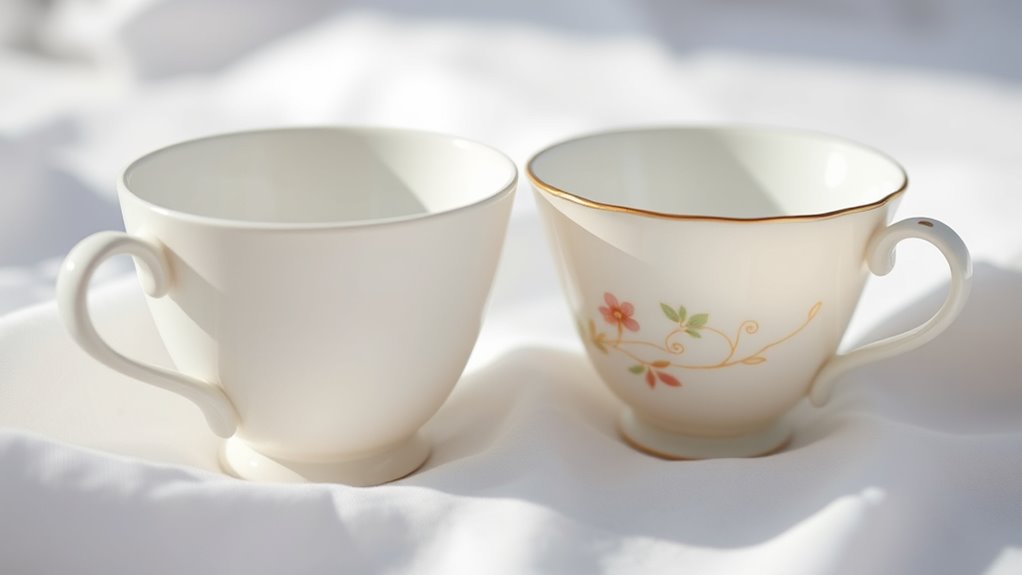
Proper care and maintenance are essential to keep your porcelain and bone china looking their best. Always check if your pieces are dishwasher safe and microwave friendly before cleaning or reheating. To preserve their appearance, hand washing with mild detergent and warm water is recommended, especially for delicate or antique items. Avoid abrasive scrubbers that can scratch the surface. Store your dishes carefully to prevent chipping and cracking, and consider using padding between stacked pieces. When using a dishwasher, select a gentle cycle to minimize damage. For microwave use, ensure your china is labeled microwave friendly. Regularly inspect for signs of wear, and handle with care to maintain their elegant finish and longevity. Proper maintenance ensures your fine pieces stay beautiful for years to come.
Frequently Asked Questions
How Can I Tell Porcelain From Bone China by Touch Alone?
You can tell porcelain from bone china by touch alone by feeling the texture differences and weight. Bone china feels smoother, more delicate, and has a slightly warmer, softer touch due to its bone content. It’s also noticeably lighter than porcelain, which is denser and heavier. When you hold them, bone china’s lighter weight and silky texture stand out, making it easier to distinguish between the two just by touch.
Are There Any Health Concerns With Specific Types of Porcelain or Bone China?
You should be aware that some porcelain and bone china can contain ceramic toxins or lead concerns, especially if they’re vintage or imported. To stay safe, avoid using dishes with chipped or faded glazes, and opt for products labeled as lead-free or food-safe. Always check for safety certifications to reduce your risk of exposure to harmful ceramic toxins or lead concerns, ensuring your dishes are both beautiful and safe for everyday use.
Does Bone China Contain Animal-Derived Ingredients?
You might wonder if bone china contains animal-derived ingredients, and the answer is yes; it traditionally includes bone ash from animals. This makes it unsuitable for vegans or those avoiding animal products. However, many manufacturers now offer vegan alternatives made from synthetic materials or plant-based ingredients, so you can still enjoy elegant tableware without compromising your ethical choices. Always check product labels to confirm they align with your values.
Which Material Is More Eco-Friendly—Porcelain or Bone China?
You’ll find porcelain generally more eco-friendly because it has a lower environmental impact during production, using fewer animal-derived ingredients. Its recycling options are often better, as porcelain is widely accepted in recycling programs. Bone china, while durable, involves animal bone ash, raising concerns about sustainability. If reducing your environmental footprint matters, porcelain is the smarter choice due to its greener production process and easier recycling options.
Can I Microwave or Dishwasher Either Material Safely?
You can microwave and dishwasher both porcelain and bone china, but you should check for manufacturer guidelines first. Food safety isn’t a concern if they’re labeled microwave or dishwasher safe. Keep in mind, durability considerations matter—bone china tends to be more delicate and may chip more easily, while porcelain is generally more robust. Always use gentle cycles and avoid sudden temperature changes to prolong their lifespan.
Conclusion
Understanding the differences between porcelain and bone china helps you make informed choices for your tableware. For example, if you value elegance and translucency, bone china might be your best fit. But if durability is key, porcelain offers a practical solution. Think of it like choosing between a delicate, heirloom piece and a sturdy everyday set—your needs determine the right choice. Knowing these details guarantees your tableware matches your style and lifestyle.