
Since the 1930s, chronographs have been your go-to tools for measuring speed and short time intervals with precision. These mechanical watches feature push buttons and intricate movements that let you start, stop, and reset timing instantly. Athletes, pilots, and scientists rely on them in demanding environments, appreciating their durability and craftsmanship. If you want to discover how these timeless devices combine engineering and art to keep pace, there’s much more to uncover.
Key Takeaways
- Chronographs have been essential for precise timing in sports, aviation, and scientific research since the 1930s.
- Mechanical chronograph movements utilize intricate gear systems to measure fractions of a second accurately.
- Vintage chronographs feature push buttons for start, stop, and reset, enabling precise measurement of elapsed time.
- They symbolize technological innovation and craftsmanship, reflecting the era’s emphasis on reliability and artistry.
- Chronographs continue to be valued as both functional tools and collectible mechanical masterpieces.

Have you ever wondered how athletes, pilots, or scientists precisely measure short intervals of time? That’s where chronographs come into play. These specialized timepieces have been essential tools since the 1930s, enabling users to record elapsed time with remarkable accuracy. Early chronographs relied heavily on mechanical movements, which involved intricate gears and levers working in perfect harmony. Unlike digital timers, these watches operated through purely mechanical systems, requiring manual winding and precise calibration. Their design often emphasized durability and reliability, making them invaluable in demanding environments. Today, many collectors and enthusiasts appreciate vintage designs that harken back to the golden age of watchmaking, showcasing the craftsmanship that went into each chronograph. These vintage models not only serve as functional instruments but also as timeless pieces of art, reflecting the technological and aesthetic standards of their era.
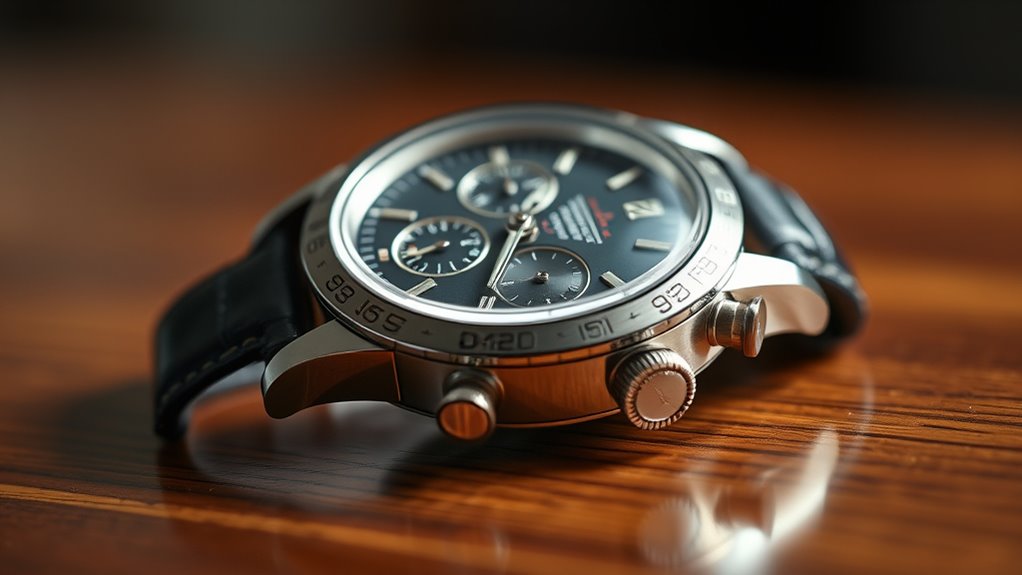
When you look at a vintage chronograph, you notice the complex dial layout, often featuring multiple sub-dials for measuring seconds, minutes, and sometimes even hours. The mechanical movements inside these watches are marvels of engineering, with components like column wheels and vertical clutches that control the start, stop, and reset functions of the chronograph. The precision of these movements allowed users to time events with fractions of a second, a critical feature for racing, aviation, and scientific experiments. Operating a vintage chronograph involves a manual push of a button to start the timing process, then stopping it at the desired moment, and finally resetting the hands to zero. This tactile process creates a direct connection between the user and the measurement, emphasizing the craftsmanship involved in each watch. Additionally, many of these movements were designed with robust construction to withstand harsh conditions, ensuring long-term reliability.
Vintage designs often feature robust cases, domed crystals, and distinctive pushers that give them a classic appeal. These watches are not just tools; they’re statements of style and engineering prowess. Many collectors prize these models for their historical significance and the artistry embedded in their mechanical movements. Owning a vintage chronograph means appreciating the skill it took to create something that combines functionality with beauty. Whether used for timing laps on a racetrack or as a collector’s item, these watches remind you of an era when precision was achieved through mechanical ingenuity rather than digital perfection. Through their design and mechanics, vintage chronographs continue to symbolize the enduring human desire to measure time accurately and beautifully.
vintage mechanical chronograph watch
As an affiliate, we earn on qualifying purchases.
As an affiliate, we earn on qualifying purchases.
Frequently Asked Questions
How Do Chronographs Differ From Regular Stopwatches?
You’ll notice that chronographs differ from regular stopwatches because they combine precision engineering with mechanical complexity, acting as both a stopwatch and a watch. While a regular stopwatch simply measures elapsed time, a chronograph features additional functions like tachymeters and multiple sub-dials, allowing you to measure speed and other intervals. Its intricate design guarantees higher accuracy and versatility, making it essential for timing sports, racing, and other precise events.
What Are the Most Iconic Chronograph Models Historically?
You might find yourself captivated by iconic models like the Rolex Daytona or the Omega Speedmaster, which define luxury watchmaking and chronograph aesthetics. These watches, born from racing and space exploration, symbolize precision and innovation. Their timeless design and historical significance make them sought after, blending functionality with style. When you wear one, you’re wearing a piece of history that’s shaped the evolution of chronographs worldwide.
How Accurate Are Vintage Chronographs Compared to Modern Ones?
Vintage chronographs can be quite accurate, but they often don’t meet modern precision benchmarks without proper calibration. Over time, wear and aging affect their accuracy, so you need to use calibration techniques to keep them reliable. Compared to contemporary models with advanced quartz or electronic movements, vintage chronographs may show slight deviations. However, with careful maintenance, some vintage pieces can still perform remarkably well, preserving their historical charm and functional precision.
What Maintenance Is Required for Vintage Chronographs?
Imagine your vintage chronograph as a fragile ballet dancer—delicate and demanding. You’ll need regular watch restoration to keep it graceful, focusing on movement lubrication to prevent wear. Avoid neglect by cleaning it professionally, and consider servicing every few years. Proper maintenance guarantees it keeps time accurately and remains a stunning piece of history, rather than a rusted relic. Treat it well, and it’ll keep dancing for decades.
Are There Specific Brands Renowned for Chronograph Innovation?
You’ll find that luxury watchmakers like Rolex, Patek Philippe, and Omega are renowned for their innovative chronograph designs. These brands continuously push technological innovations, blending precision mechanics with advanced features, making their chronographs highly sought after. Their commitment to innovation guarantees you get reliable, cutting-edge timepieces that stand out for durability and precision, perfect for enthusiasts who want the best in both craftsmanship and technological advancement.
automatic chronograph wristwatch
As an affiliate, we earn on qualifying purchases.
As an affiliate, we earn on qualifying purchases.
Conclusion
Now that you’ve explored the history of chronographs, it’s clear they’ve been essential since the 1930s, helping you time races and adventures with precision. From vintage models to modern marvels, these watches have evolved but kept their core purpose: measuring speed. Imagine telling your friends you’re wearing a device that’s been racing through time, from the days of moon landings to today’s high-tech circuits. Chronographs aren’t just tools—they’re timeless companions in your journey.
As an affiliate, we earn on qualifying purchases.
mechanical stopwatch for athletes
As an affiliate, we earn on qualifying purchases.
As an affiliate, we earn on qualifying purchases.