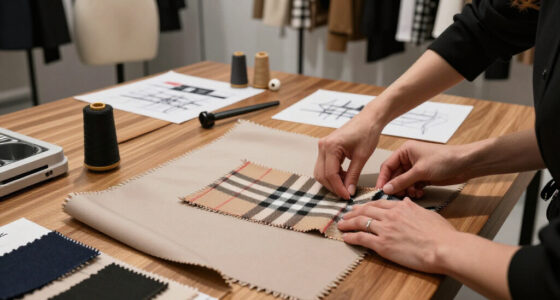
Tartan has its roots in Scottish culture, symbolizing clan identity, social status, and regional pride through unique patterns and natural dyes. Over time, it shifted from a strict traditional marker to modern checks seen in fashion and design, with simpler, more versatile patterns like gingham and plaid. These contemporary patterns maintain a connection to their heritage while fitting current styles. Continue exploring to discover how tartan evolved into the popular check patterns that power the world of fashion today.
Key Takeaways
- Tartan’s origins are rooted in Scottish clans, symbolizing identity, social status, and regional loyalty.
- Transitioned from traditional clan patterns to modern checks emphasizing aesthetics and commercial appeal.
- Modern checks like gingham and plaid derive from traditional tartan but lack specific clan associations.
- Pattern designs evolved with simplified, versatile styles suitable for mass production and contemporary fashion.
- Contemporary checks retain visual links to tartan while embracing individual expression and global style trends.

Have you ever wondered how traditional tartan patterns evolved into the more versatile check designs we see today? It all starts with the history of tartan, a textile pattern deeply rooted in Scottish culture. Originally, tartan was more than just a fabric design; it signified clan identity, social standing, and regional heritage. Each clan had its unique tartan pattern, created through specific color combinations and weaving techniques that were passed down through generations. These patterns were carefully regulated, often using natural dyes derived from local plants, which gave tartan its distinctive hues. Over time, tartan became a symbol of loyalty and pride, especially during significant historical events like battles and political unions. Its strict usage kept the patterns exclusive to Scottish clans and their allies, making tartan a symbol of heritage and tradition.
As centuries progressed, the rigid boundaries of traditional tartan started to loosen. The mid-19th century saw a shift when manufacturers began experimenting with the basic concept of tartan, adapting it for broader use beyond clan identifiers. This experimentation led to the emergence of modern check patterns, which simplified the intricate designs into more uniform, versatile styles suitable for mass production. Unlike traditional tartan, these modern check patterns focused on aesthetic appeal and commercial appeal, often featuring cleaner lines, consistent spacing, and more accessible color palettes. They became popular in fashion, interior design, and textiles, transcending their Scottish origins to become global symbols of style. Today, modern check patterns are celebrated for their adaptability, appearing in everything from casual shirts to luxury handbags. They’re no longer confined to heritage wear but have become a fundamental element of contemporary fashion, blending tradition with modernity.
You’ll notice that the progression from tartan to check isn’t just about pattern design; it reflects a cultural evolution. Modern check patterns retain the visual appeal of their tartan ancestors but are stripped of the strict clan associations. Instead, they serve as a canvas for individual expression and design innovation. Whether you see a classic gingham or bold plaid on a runway, these patterns carry centuries of history but have been reimagined to suit current tastes. The evolution of patterns illustrates how design can adapt while still honoring its origins. So, when you choose a checkered shirt or a plaid accessory, you’re participating in a visual tradition that has evolved from centuries of Scottish heritage into a universal symbol of style. This transformation highlights how patterns can adapt and thrive, maintaining their cultural roots while embracing new forms and functions.
As an affiliate, we earn on qualifying purchases.
Frequently Asked Questions
How Did Tartan Patterns Originate Historically?
You might not know, but tartan patterns originated from clan heritage in Scotland, where each clan created unique designs to signify identity. Over time, textile evolution made these patterns more intricate and durable, transforming them into symbols of tradition and pride. Today, you see tartan widely used, but its roots in history reflect a deep connection to family, culture, and the evolving art of weaving textiles.
What Are the Main Differences Between Tartan and Plaid?
Think of tartan as a classic, intricate tapestry, while plaid is more like a casual, versatile shirt. The main difference is that tartan is a specific pattern with historical significance, often linked to Scottish clans, whereas plaid refers to any pattern of crisscrossed horizontal and vertical bands. When it comes to fashion trends and fabric durability, tartan tends to be more structured and durable, making it a timeless choice for enduring style.
Can Tartan Patterns Be Personalized or Custom-Designed?
Yes, you can definitely create a custom tartan or personalized check design. Many companies offer options to customize tartan patterns, allowing you to choose colors, stripe widths, and even add unique elements. This way, you can design a tartan that’s uniquely yours, perfect for special events or personal expression. Just select a reputable provider, and you’ll be able to bring your personalized check design to life with ease.
Which Countries Have Officially Recognized Tartan Patterns?
You’ll notice that Scotland officially recognizes tartan patterns, highlighting their deep cultural significance. These patterns symbolize Scottish heritage and identity, with each clan having its unique design. Other countries, like Ireland and Wales, also celebrate similar woven traditions, though not officially. Modern adaptations have kept tartans vibrant and relevant, blending tradition with contemporary fashion. So, Scottish government officially recognizes tartan patterns, but their cultural importance extends beyond borders, inspiring new designs worldwide.
How Are New Check Patterns Created and Named?
You create new check patterns by experimenting with colors, line widths, and arrangements, then follow established pattern naming conventions to give them unique names. Modern check pattern creation often involves digital design tools, allowing you to customize and refine your designs easily. Once finalized, you submit your pattern for approval to relevant authorities or organizations, who then assign a proper name based on tradition, origin, or distinctive features, ensuring your pattern’s recognition.
As an affiliate, we earn on qualifying purchases.
Conclusion
Now that you see how tartan and check patterns weave their way into fashion, you realize they’re more than just designs—they’re a tapestry of history and style. Like a sturdy bridge connecting past and present, these patterns hold timeless appeal. So, whenever you wear them, you’re not just making a statement; you’re donning a piece of history that stands strong and vibrant, ready to turn any outfit into a mesmerizing work of art.
As an affiliate, we earn on qualifying purchases.
As an affiliate, we earn on qualifying purchases.