
Artisan chocolate costs more because it’s crafted with high-quality ingredients, traditional techniques, and respect for the cacao’s origin, resulting in richer, more complex flavors. Each step—from bean selection to processing—is done with care, highlighting unique regional notes and natural qualities. This craftsmanship creates a deeper sensory experience you won’t find in mass-produced options. If you want to discover more about what makes artisan chocolate special, there’s plenty to explore.
Key Takeaways
- Artisan chocolate is handcrafted with high-quality ingredients, emphasizing skill and traditional techniques that enhance flavor complexity.
- The origin of cacao beans significantly influences flavor, with terroir-specific notes that mass-produced chocolates often lack.
- Meticulous craft processes like fermentation, roasting, and conching develop richer, more nuanced flavors and smoother textures.
- The careful sourcing and artisanal methods result in a product with authentic cacao character, depth, and sensory richness.
- Higher costs reflect the craftsmanship, quality ingredients, and respect for cacao origins, delivering a premium, memorable taste experience.

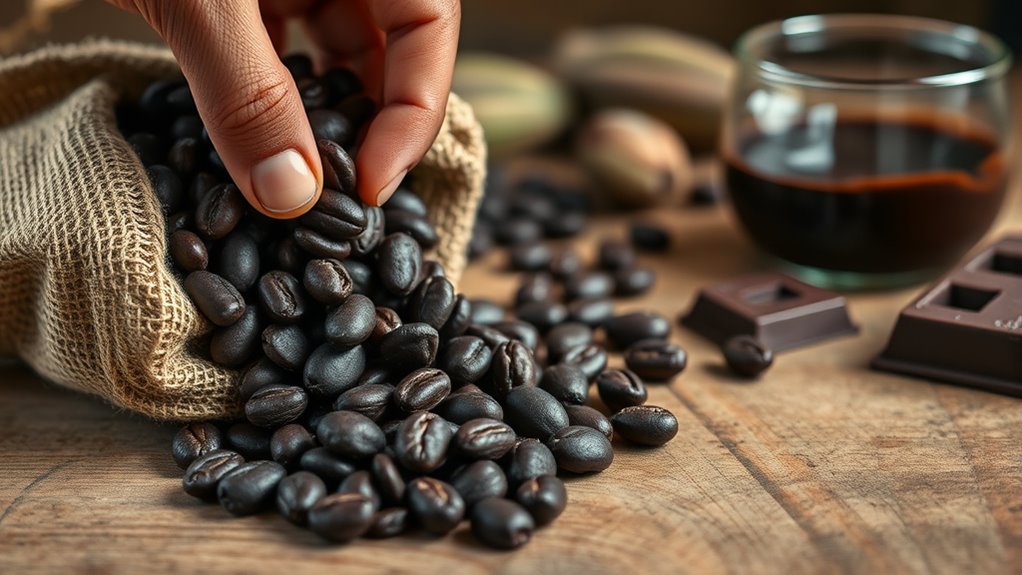
Have you ever tasted chocolate that feels handcrafted and bursting with unique flavors? If so, you’re already familiar with the magic behind artisan chocolate. Unlike mass-produced options, artisan chocolates are deeply rooted in the quality of their ingredients and the skill of their makers. One of the key factors that sets them apart is the bean origin. The specific region where the cacao beans are grown influences the flavor profile dramatically. Beans from different countries or even specific farms carry distinct notes—think fruity, nutty, floral, or earthy. When chocolatiers select beans from particular origins, they’re making a deliberate choice to craft a unique taste experience, emphasizing the importance of bean origin in creating a superior product.
Beyond the origin of the beans, craft techniques play a crucial role in elevating artisan chocolates. These techniques involve meticulous attention to every step, from fermentation and drying to roasting and conching. Unlike factory methods, craft techniques require time, skill, and precision. Roasting, for example, is carefully calibrated to bring out the best flavor notes from the beans without overpowering them. Conching, a process where the chocolate is continuously mixed and aerated, helps develop a smooth, refined texture and enhances flavor complexity. Every step is performed with care, allowing chocolatiers to accentuate the unique qualities of their chosen beans. These craft techniques are labor-intensive but essential for producing a product that’s not just sweet, but layered with depth and character. Additionally, understanding the bean origin helps in appreciating how terroir influences the flavor profile.
As you explore artisan chocolates, you’ll notice how these elements translate into a richer sensory experience. The flavors are more pronounced and nuanced because the process respects the natural characteristics of each bean. Unlike mass-produced chocolates that often rely on additives and shortcuts, artisan chocolates celebrate the raw, authentic flavors of cacao. The craftsmanship involved in selecting the right bean origin and applying traditional techniques results in a bar that offers more than just sweetness—it provides an invitation to taste the journey of the cacao from farm to your palate.
The higher cost of artisan chocolate reflects the dedication and expertise poured into each bar. You’re paying for quality ingredients, careful sourcing, and the craft techniques that transform raw beans into a luxurious treat. When you choose artisan chocolate, you’re not just indulging in a sweet snack; you’re experiencing a carefully curated product that embodies tradition, skill, and a deep respect for the cacao’s origin. It’s a richer, more memorable flavor adventure—one that’s well worth the extra investment.
As an affiliate, we earn on qualifying purchases.
Frequently Asked Questions
How Does Bean Origin Affect Chocolate Flavor?
You’ll notice that the bean origin greatly impacts chocolate flavor through unique cocoa varietals and terroir influence. Different regions grow distinct cocoa varietals, which bring specific notes and textures to the chocolate. The terroir, including soil, climate, and elevation, shapes these flavors further. So, when you try chocolate from various origins, you experience a diverse palette of tastes, each reflecting its unique geographic and botanical roots.
What Are the Health Benefits of Artisan Chocolate?
Like a ray of sunshine, artisan chocolate boosts your health with cocoa antioxidants that fight free radicals. You’ll enjoy mood enhancement, as the rich flavors stimulate serotonin release. Unlike mass-produced options, artisanal varieties often contain higher cocoa content, offering more health benefits. Indulging in this crafted treat supports your well-being, making each bite both delicious and nourishing, helping you feel happier and healthier with every piece you savor.
How Is Artisan Chocolate Sustainably Produced?
You can enjoy artisan chocolate knowing it’s sustainably produced through eco-friendly practices and sustainable sourcing. Makers prioritize responsible farming, reducing environmental impact, and supporting local communities. They often use organic ingredients, minimize waste, and implement fair-trade policies. By choosing these chocolates, you’re supporting environmentally conscious methods that preserve ecosystems and ensure fair treatment for farmers, making your treat both delicious and eco-friendly.
Why Do Artisan Chocolates Have a Shorter Shelf Life?
Think of artisan chocolate as a delicate bloom, vibrant but fleeting. Its shorter shelf life stems from minimal preservatives and fresh ingredients, making it more sensitive to moisture, light, and temperature. To preserve its rich flavor, store it in a cool, dark place, away from humidity. Proper storage tips can extend its life, but remember, this chocolate’s freshness is part of its charm—celebrating craftsmanship over longevity.
Can Artisan Chocolate Be Allergy-Friendly?
Yes, artisan chocolate can be allergy-friendly, but you need to check labels carefully. If you have dairy allergies, look for varieties labeled dairy-free or vegan. Watch out for nut contamination, as many artisan chocolates process nuts alongside other ingredients, which can pose risks. Always read ingredient lists and contact producers if you’re unsure, ensuring you enjoy delicious artisan chocolate safely without triggering allergies.
single origin cacao chocolate bar
As an affiliate, we earn on qualifying purchases.
As an affiliate, we earn on qualifying purchases.
Conclusion
So, next time you bite into that silky artisan chocolate, remember, you’re tasting a masterpiece crafted from rare beans and passion. It’s not just candy—it’s a luxurious voyage through time and land, a symphony of flavors that cost a fortune to create. When you choose artisan, you’re not just indulging; you’re indulging in pure magic that transforms simple ingredients into the most extraordinary, mouthwatering experience imaginable. Treat yourself—you deserve the best!
As an affiliate, we earn on qualifying purchases.
As an affiliate, we earn on qualifying purchases.