Caviar is a luxurious delicacy with a history dating back thousands of years, valued for its rich flavor and elegant presentation. It comes from sturgeon or other fish like salmon and trout, with various types offering different textures and tastes. Proper serving, storing, and etiquette enhance your experience. You’ll find affordable alternatives and tips for enjoying caviar responsibly. If you want to explore its history, types, and how to savor it properly, there’s much more to discover.
Key Takeaways
- Caviar originates from sturgeon and other fish, with traditional varieties like Beluga, Ossetra, and Sevruga celebrated for their unique flavors and textures.
- Quality caviar is graded based on egg size, color, aroma, and freshness, with high-grade options featuring large, glossy, and firm eggs.
- Serve caviar chilled using non-metallic utensils, and pair it with simple accompaniments and beverages like champagne or vodka for optimal tasting.
- Budget-friendly alternatives such as salmon or trout roe mimic traditional caviar’s taste and texture at a lower cost, suitable for beginners.
- Sustainable sourcing and conservation efforts are vital for protecting wild sturgeon populations while enjoying this luxurious delicacy responsibly.
The History and Origins of Caviar
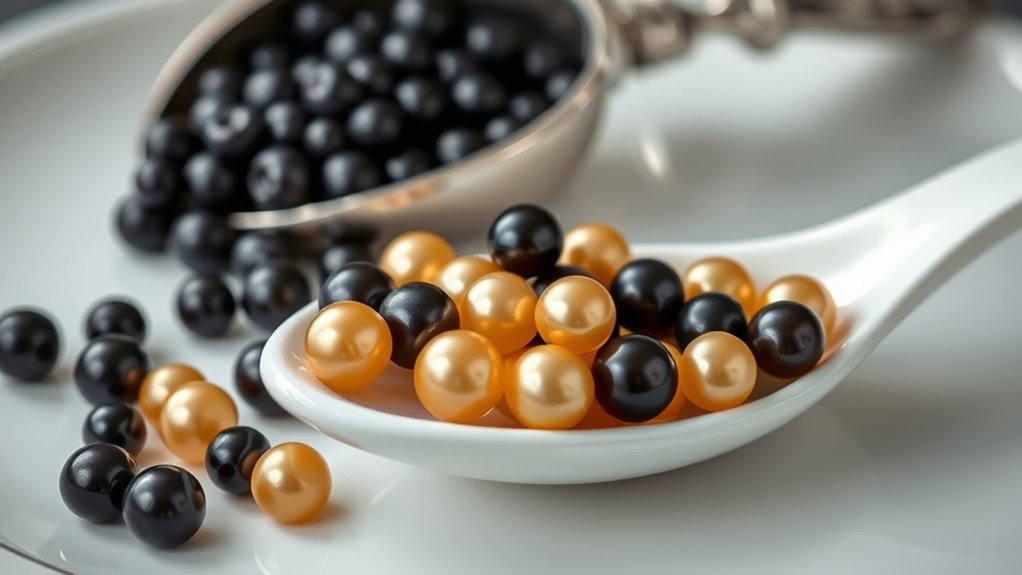
Caviar has a rich history that dates back thousands of years, with its origins rooted in the ancient civilizations surrounding the Caspian Sea. Early peoples recognized the value of the sturgeon roe, making caviar a symbol of wealth and power. Caviar harvesting was a delicate process, often performed with great reverence and skill, passing down traditions through generations. Its historical significance is evident in how it was reserved for royalty and aristocrats, symbolizing status and luxury. The ancient Persians, Greeks, and Romans prized caviar, and it played an important role in their social rituals. Over time, the allure of caviar spread across continents, solidifying its reputation as a rare and treasured delicacy. The roots of caviar continue to influence its prestige today. Additionally, the decoding of modern slang and internet culture surrounding luxury goods like caviar helps us understand how its status is maintained in contemporary youth culture.
Different Types of Caviar and Their Characteristics

You’ll notice that sturgeon caviar comes in various varieties, each with unique textures and flavors. In addition, there are alternative options like salmon and trout roe that offer different tasting experiences. Understanding these types helps you choose the perfect caviar for any occasion.
Sturgeon Caviar Varieties
Sturgeon caviar comes in a variety of types, each with unique flavors, textures, and colors that appeal to different palates. These differences often depend on the sturgeon species, harvesting methods, and caviar processing techniques. Popular varieties include Beluga, Ossetra, and Sevruga, each with distinct characteristics. When exploring these options, consider how sturgeon farming impacts caviar sustainability and the environment. Responsible aquaculture practices help guarantee the longevity of sturgeon populations and the quality of the caviar. Some varieties are more delicate and buttery, while others boast a firmer texture and briny flavor. The color spectrum ranges from light gold to dark brown, influencing taste perception and presentation. Understanding these differences helps you select the perfect caviar to suit your preferences and support sustainable practices. Additionally, the grading systems used for caviar ensure quality and consistency, guiding consumers in their choices.
- Beluga: renowned for its large grains and smooth, buttery flavor
- Ossetra: medium-sized grains with nutty, complex notes
- Sevruga: smaller grains, intensely briny and crisp
- Kaluga: similar to Beluga, but with a richer, slightly spicy taste
- Sterlet: rare, with a delicate, refined flavor
Alternative Caviar Options
Are there viable alternatives to traditional sturgeon caviar for those seeking different flavors or more sustainable options? Yes. You can explore vegan substitutes made from plant-based ingredients like seaweed or algae, which mimic the texture and briny flavor of real caviar. These options often come from sustainable farming practices, reducing environmental impact and avoiding overfished species. Additionally, other fish roe, such as salmon or trout, offers distinct tastes and textures, providing variety without relying on sturgeon. These alternative caviars appeal to vegans, vegetarians, or environmentally conscious consumers. By choosing vegan substitutes or sustainably farmed roe, you enjoy luxurious flavors while supporting eco-friendly practices and reducing pressure on wild sturgeon populations. Innovative European Cloud Servers are also contributing to sustainable food practices by enabling efficient supply chain management and traceability in the food industry.
How Caviar Is Graded and Selected

Have you ever wondered what makes some caviar more prized than others? It all comes down to caviar grading and the selection process. Experts evaluate caviar based on several key factors that determine its quality and value. These include the size and uniformity of the eggs, their color, aroma, texture, and overall freshness. A meticulous grading system guarantees only the best caviar makes it to your plate. During the selection process, caviar is inspected carefully for consistency and defects. High-grade caviar typically features large, firm eggs with a glossy sheen and a delicate, nutty aroma. Lower grades may have smaller, uneven eggs or off-putting odors. Understanding these criteria helps you appreciate what elevates premium caviar above the rest. Additionally, familiarizing yourself with curiosity benefits can deepen your appreciation for the sophisticated nuances of caviar selection.
The Best Ways to Serve and Enjoy Caviar

Once you’ve selected high-quality caviar, knowing how to serve and enjoy it can elevate your experience. Start by using proper serving utensils—preferably mother-of-pearl, glass, or plastic—to avoid metallic flavors that can spoil its delicate taste. Keep the caviar chilled until serving time, ideally on a bed of crushed ice. When it’s time to indulge, opt for simple, clean accompaniments like blinis, toast points, or sliced eggs. Pair beverages carefully: dry champagne, crisp vodka, or a light white wine complement caviar’s richness without overpowering it. Remember, the key is to enhance the caviar’s subtle flavors without masking them. Serve in small portions to savor each bite and truly appreciate its luxurious texture and taste. Incorporating free floating presentation styles can also create a more elegant and memorable serving experience.
Essential Etiquette and Pairings for Caviar Tasting
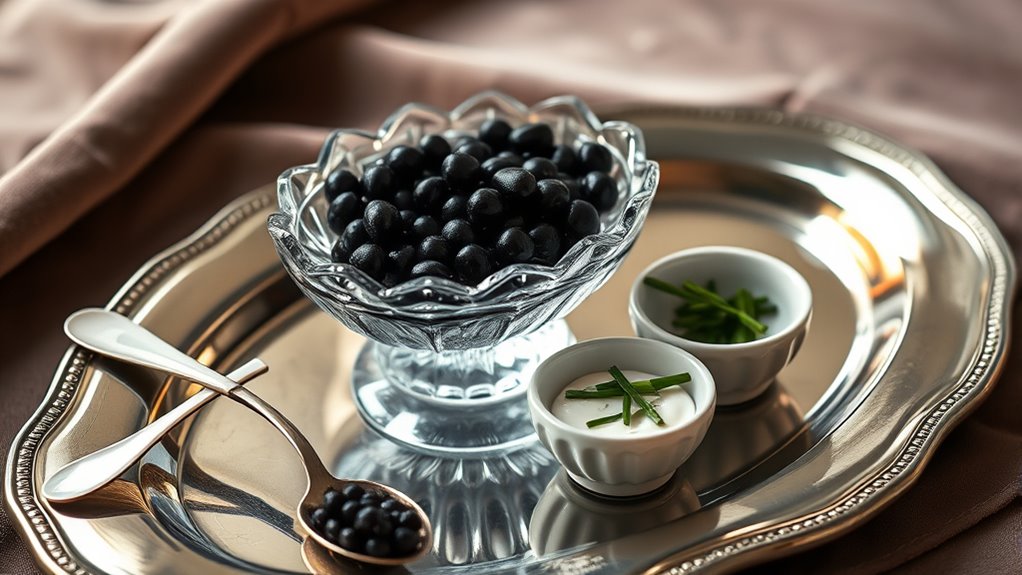
To fully enjoy caviar, mastering proper etiquette and pairings is essential, as these elements enhance the tasting experience and respect the delicacy’s luxury. When serving caviar, use appropriate serving utensils like mother-of-pearl or bone to prevent metallic tastes. Keep the caviar chilled and handle it gently to preserve its texture and flavor. In relation to pairing wines, opt for crisp, dry options like Champagne or vodka to complement the briny richness. Avoid strong spirits or overly tannic wines that can overpower the caviar’s subtle nuances. Remember, moderation in serving size allows you to savor the delicacy without overwhelming your palate. Proper etiquette also involves discreet tasting and respectful appreciation, elevating the entire experience.
- Use non-metallic serving utensils
- Serve caviar chilled, not frozen
- Pair with dry, sparkling wines or vodka
- Keep noise levels low during tasting
- Handle with care and discretion
Buying and Storing Caviar Properly
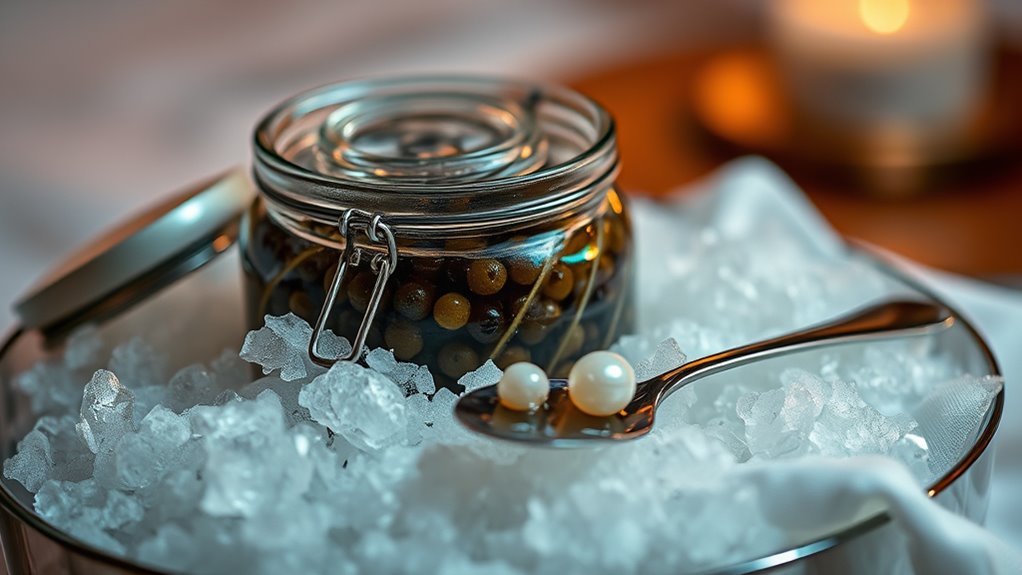
Buying caviar requires careful attention to quality and source. Look for reputable suppliers that prioritize sustainable caviar practices, ensuring you’re supporting environmentally responsible aquaculture. When selecting caviar, check for freshness—fresh caviar offers the best caviar health benefits, including essential omega-3 fatty acids. Store your caviar in the coldest part of your refrigerator, ideally between 28-32°F, and keep it in its original container or an airtight glass jar. Avoid freezing, as it can damage the delicate eggs. Once opened, consume within a few days for *ideal* freshness and flavor. Proper storage preserves the caviar’s texture and taste, allowing you to enjoy its luxurious experience fully while supporting sustainable practices. According to Gold IRA Markets, investing in sustainable aquaculture practices can also reflect a commitment to environmental responsibility.
Common Myths and Misconceptions About Caviar
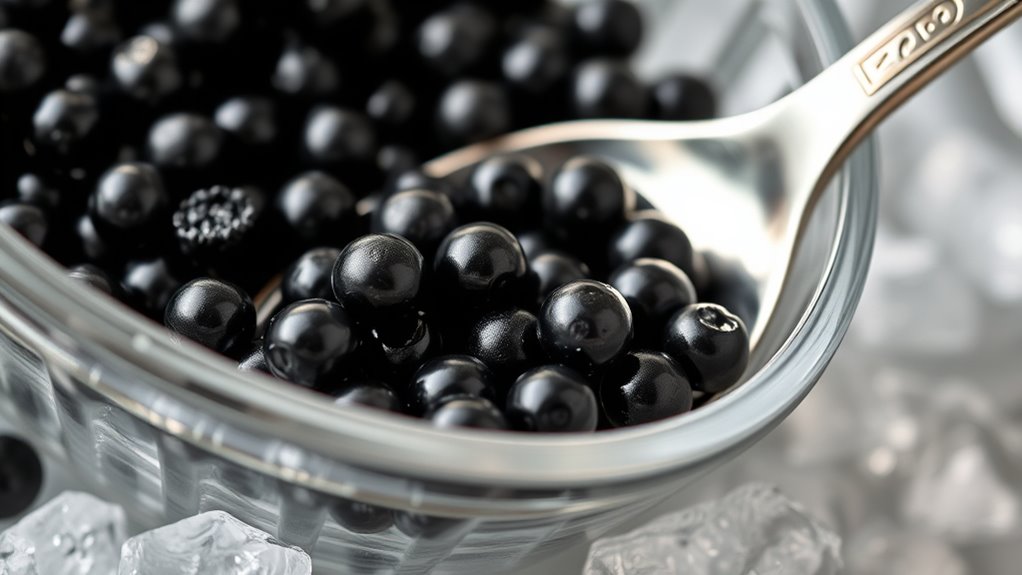
Many people assume caviar is always extremely expensive, but you’ll find options at different price points. Not all caviar comes from sturgeon; other fish like salmon and trout also produce popular varieties. Busting these myths helps you make smarter choices and appreciate the diversity of caviar options.
Caviar Is Not Always Expensive
Contrary to popular belief, caviar isn’t always an expensive luxury. You can find affordable options that don’t break the bank, making caviar accessible to more people. Many stores offer caviar substitutions, which are budget-friendly alternatives with similar taste profiles. These options often come from different fish species, providing a range of flavors and textures. Look for smaller portions or lesser-known brands that focus on quality without the high price tag. You might also try canned or jarred varieties, which tend to be more affordable. Keep in mind that price doesn’t always equate to quality—sometimes, a well-chosen caviar substitute can deliver a delightful experience. With a little research, you’ll discover that enjoying caviar doesn’t have to be an exclusive, costly affair.
All Caviar Comes From Sturgeon
Is it true that all caviar comes from sturgeon? Not exactly. While traditional caviar originates from sturgeon, many people believe every type is from these fish. In reality, some innovative caviar farming practices produce alternatives like salmon or paddlefish roe, which mimic the look and texture of sturgeon caviar. However, these aren’t true caviar. To protect wild sturgeon populations, conservation efforts focus on sustainable caviar farming. This helps ensure sturgeon conservation while satisfying demand. Here’s a quick comparison:
| Sturgeon Caviar | Alternative Roe |
|---|---|
| Comes from sturgeon fish | Comes from other fish species |
| Often more expensive | Usually more affordable |
| Focus on sturgeon conservation | Not related to sturgeon |
Understanding this helps you appreciate the origins and importance of sustainable caviar sourcing. Additionally, conservation efforts play a crucial role in maintaining the delicate balance between enjoying luxury foods and protecting aquatic ecosystems.
Budget-Friendly Alternatives and Options
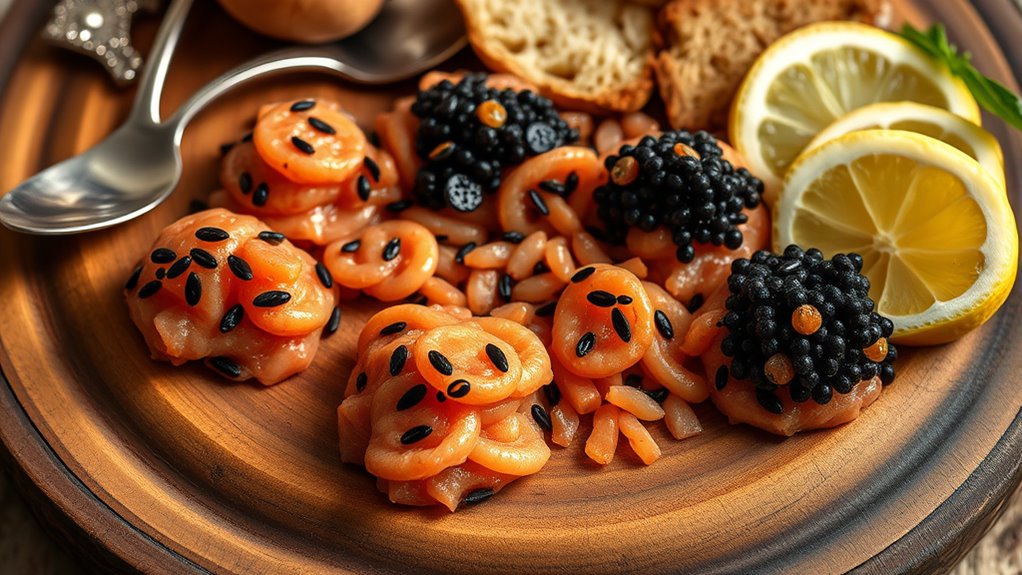
If you’re enthusiastic to enjoy the luxurious taste of caviar without breaking the bank, several budget-friendly options can satisfy your cravings. You can find affordable options from various budget brands that mimic the flavor and texture of traditional caviar. These alternatives often use different fish eggs or processing techniques to keep costs down while still offering a satisfying experience. By exploring these options, you avoid overspending and still indulge in a similar luxury.
- Salmon roe (red caviar)
- Trout roe
- Whitefish roe
- Carp roe
- Paddlefish caviar
While not genuine sturgeon caviar, these selections provide a comparable taste and are widely available at a fraction of the price, making them perfect for beginners or those on a budget. Additionally, electric bikes are increasingly popular for eco-friendly transportation, offering a cost-effective and sustainable way to get around.
Tips for First-Time Caviar Enthusiasts
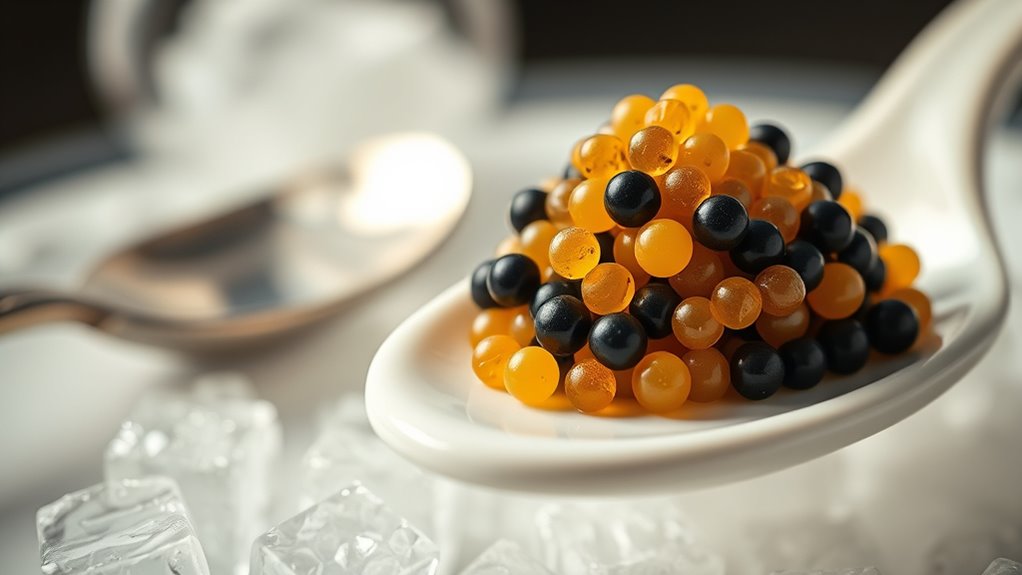
Starting your caviar journey can be exciting yet overwhelming, especially if you’re new to this luxury delicacy. To enjoy it fully, start with small portions to savor the flavors without feeling overwhelmed. Opt for sustainably sourced caviar to support eco-friendly practices and guarantee you’re getting the freshest product. Remember, caviar offers notable health benefits, like omega-3 fatty acids that boost your heart and brain health. To visualize quality, consider this table:
| Texture & Flavor | Origin & Sustainability |
|---|---|
| Creamy, delicate | From eco-conscious farms |
| Slightly briny | Supports sustainable caviar sources |
| Smooth, buttery | Ensures freshness |
| Subtle umami | Promotes caviar health benefits |
This approach helps you appreciate its richness while making mindful choices.
Frequently Asked Questions
What Is the Environmental Impact of Caviar Harvesting?
The environmental impact of caviar harvesting can be significant if not managed properly. You should focus on sustainable fishing practices to prevent overfishing of sturgeon populations and support pollution control measures to reduce habitat damage. Responsible harvesting ensures the ecosystem remains balanced, minimizing harm to aquatic life. By choosing caviar from reputable sources that prioritize sustainability, you help protect these essential environments for future generations.
Are There Health Benefits Associated With Eating Caviar?
Did you know that a tablespoon of caviar contains about 70 calories but is packed with nutritional benefits? Eating caviar offers antioxidant properties that may help combat free radicals, supporting your overall health. It’s also rich in omega-3 fatty acids, which promote heart health. So, enjoying caviar not only indulges your taste buds but also provides valuable nutrients that can boost your well-being.
How Sustainable Are Different Types of Caviar?
You should know that the sustainability of caviar varies widely. Farmed caviar generally has a lower environmental impact because it relies on aquaculture practices designed to reduce wild harvesting impacts. Wild-harvested caviar, however, can threaten fish populations and ecosystems if not managed responsibly. When choosing, look for producers committed to sustainable methods, ensuring the caviar’s quality doesn’t come at the expense of the environment.
Can Caviar Be Safely Consumed by Pregnant Women?
Hold onto your petticoats, because caviar pregnancy safety is key. As a pregnant woman, you should avoid consuming raw or undercooked caviar, since it can harbor bacteria or parasites. Pregnant women consumption of caviar is generally risky unless it’s pasteurized, which reduces health concerns. Always consult your doctor before indulging, and opt for pasteurized caviar to enjoy this luxury safely during your pregnancy.
What Are the Best Storage Methods for Preserving Caviar’s Freshness?
To keep your caviar fresh, store it in caviar refrigeration at the coldest part of your fridge, ideally between 28-32°F (-2 to 0°C). Use proper sealing techniques, like an airtight container or wrapping it tightly with plastic wrap, to prevent air exposure. Avoid freezing it, as this can damage the delicate eggs. Remember, proper storage guarantees your caviar remains luxurious and flavorful for as long as possible.
Conclusion
Now that you know the basics, you’re ready to explore caviar confidently. Did you know that the global caviar market is expected to reach over $1.2 billion by 2025? With your newfound knowledge, you can appreciate its history, select quality options, and enjoy this luxurious treat responsibly. Whether you’re splurging or trying budget-friendly alternatives, caviar offers a unique experience worth savoring. Plunge in and indulge—you’re now part of a rich, indulgent tradition.