Decoding fancy menus is easier when you understand key terms like wine pairings, which enhance flavors, and descriptions that showcase the chef’s artistry. Phrases like “artfully plated” highlight presentation, while “recommended wine pairing” guides your choices for a balanced meal. Recognizing these terms helps you enjoy each dish’s visual appeal and culinary craftsmanship. Keep exploring, and you’ll uncover more secrets behind the sophistication of fine dining.
Key Takeaways
- Understanding descriptive language reveals the chef’s artistic intent and enhances appreciation of both presentation and flavor.
- Recognizing wine pairing suggestions helps elevate the dining experience through harmonious food and drink combinations.
- Terms like “artfully plated” or “elegantly presented” highlight visual appeal, emphasizing the importance of plating as an art form.
- Familiarity with menu language guides informed choices, aligning dishes with personal preferences and enhancing satisfaction.
- Decoding fine dining terms transforms an ordinary meal into an immersive culinary experience, fostering confidence and curiosity.
Have you ever been puzzled by a fancy menu’s cryptic descriptions and elaborate dish names? It can be intimidating, especially when every item seems to come with its own language. But don’t worry—once you understand some key terms, navigating fine dining menus becomes easier and more enjoyable. One of the first things to grasp is how wine pairings are described. Chefs and sommeliers often highlight specific wines that complement particular dishes to elevate your dining experience. These suggestions aren’t just optional; they’re carefully curated to balance flavors and enhance textures. When a menu mentions a dish “pairs beautifully with a crisp Chardonnay” or “complements a robust Merlot,” it’s giving you a hint to contemplate ordering wine along with your meal. This isn’t just about drinking; it’s about creating a harmonious balance between the food and drink, which can transform your entire experience. Recognizing how menu descriptions communicate the chef’s intent can help you better appreciate the artistry involved.
Understanding wine pairings enhances your dining experience by balancing flavors and elevating dishes.
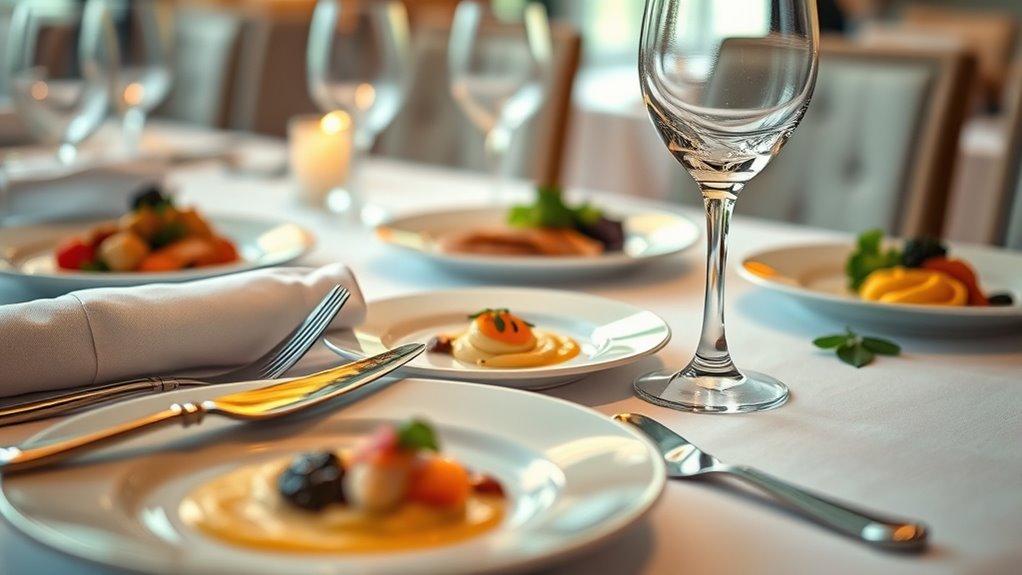
Another important term you’ll encounter relates to plating presentation. Fine dining isn’t just about taste; it’s an art form. Plating presentation refers to how the dish is arranged on your plate—the colors, the placement of ingredients, the overall visual appeal. When a menu describes a dish as “artfully plated” or “elegantly presented,” it indicates that the chef has paid special attention to aesthetics, turning the meal into a visual masterpiece before you even take your first bite. Recognizing these descriptions helps you appreciate not just the flavors but also the craftsmanship involved. It’s a reminder that in fine dining, every element, from the choice of ingredients to the way they’re arranged, matters.
Understanding these terms also helps you make more informed choices. When you see “recommended wine pairing,” you’re encouraged to try the suggested wine, which could enhance your enjoyment. Similarly, descriptions emphasizing plating presentation suggest a dish worth savoring visually as well as gastronomically. It’s a way to engage more deeply with the dining experience, appreciating the chef’s artistry and the thoughtful pairing of flavors.
In the end, decoding fancy menus boils down to familiarizing yourself with these key concepts. Wine pairings offer a chance to explore complementary flavors, while attention to plating presentation highlights the visual beauty of each dish. By recognizing these terms, you’ll feel more confident ordering and truly savoring the artistry behind fine dining. So next time you face a menu filled with unfamiliar language, remember these pointers and enjoy the experience with curiosity and appreciation.
Frequently Asked Questions
How Do I Politely Ask About Unfamiliar Menu Items?
When you see unfamiliar menu items, you can make a polite inquiry by asking your server about the dish’s ingredients or preparation. Use friendly menu vocabulary like, “Could you tell me more about this dish?” or “What does this term mean?” This shows your interest and respect for the chef’s creations. Keep your tone courteous, and don’t hesitate to ask questions—servers appreciate guests who want to learn more about their offerings.
Are There Common Etiquette Tips for Fine Dining Experiences?
When you’re at a fine dining restaurant, remember to follow proper restaurant manners and dining etiquette. Keep your elbows off the table, use the correct utensils, and wait for everyone to be served before starting. Be polite to staff, avoid loud conversations, and don’t rush your meal. These small gestures show respect and help you enjoy the experience, making it pleasant for everyone involved.
What Should I Know About Wine Pairings With Fancy Dishes?
Imagine you’re a sommelier from the 18th century, guiding your guests. When pairing wine with fancy dishes, focus on matching wine varietals to the flavors on your plate. Consider tasting notes—fruity, earthy, or spicy—to enhance your experience. Light wines like Chardonnay complement seafood, while bold reds like Cabernet pair well with red meats. Trust your palate, and don’t be afraid to experiment to find perfect harmony.
How Can I Identify the Chef’s Specialty Dishes?
To spot the chef’s specialty dishes, look for menu symbols like stars or icons next to items. These often indicate chef recommendations or signature creations. Pay attention to descriptions highlighting unique ingredients or techniques, as they often signal the chef’s personal favorites. Don’t hesitate to ask your server about the chef’s specialties; they can point you toward dishes that showcase the chef’s talent and creativity.
What Are Tips for Navigating a Multi-Course Tasting Menu?
When steering a multi-course tasting menu, you should pace yourself, taking small bites and savoring each dish. Keep good table manners, such as using utensils properly and engaging politely with your server. If you’re unsure about tipping etiquette, consider tipping around 15-20% at the end of the meal, based on your experience. Avoid rushing and stay attentive to the presentation, which enhances your overall fine dining experience.
Conclusion
Now you’ve navigated the nuanced nomenclature of fine dining, you’ll never be lost in a luxe lunch or lavish dinner. With newfound finesse, you’ll confidently contemplate, savor, and share sophisticated selections. Remember, mastering menus makes moments memorable, and every elegant experience easier to enjoy. So, step into the splendid, savor the style, and let your culinary confidence shine through, turning every meal into a marvelous, memorable masterpiece. Bon appétit!