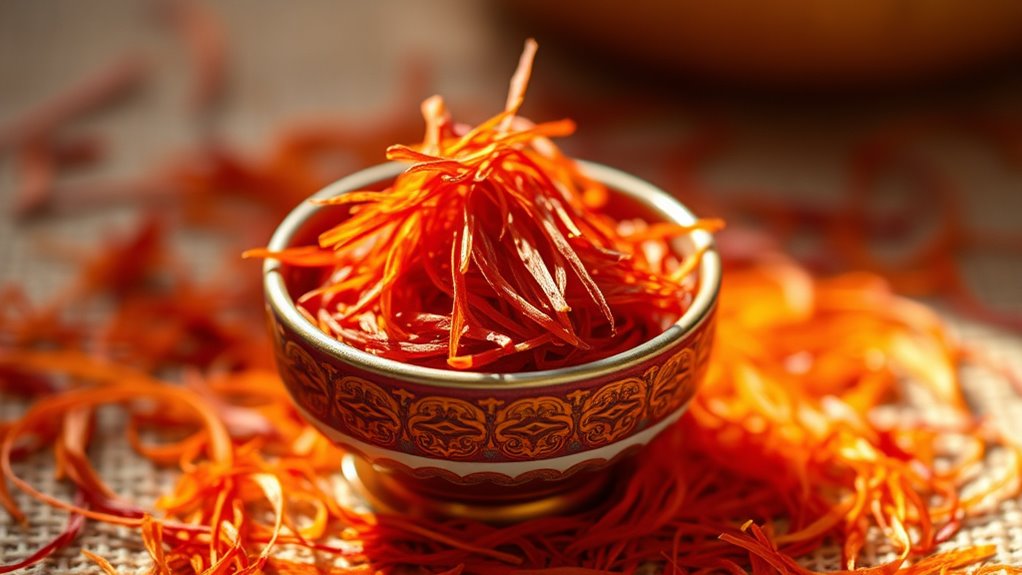

Saffron’s steep price is justified because its labor-intensive harvesting process and rich flavor make it a luxurious, valued ingredient. Hand-picking tiny stigmas from delicate flowers requires skill and time, which increases costs. Despite its high price, a little saffron goes a long way, adding vibrant color and complex aroma to dishes. If you want to uncover the true worth of this ‘red gold,’ there’s more to discover below.
Key Takeaways
- Saffron’s high cost reflects labor-intensive harvesting and production, ensuring top quality and rich flavor.
- A small amount of saffron provides intense color and aroma, making it economical despite its price.
- Proper handling during harvest preserves its distinctive flavor, justifying its luxury status.
- Its unique flavor profile enhances culinary dishes, offering significant value for gourmet cooking.
- The rarity and meticulous production process make saffron a worthwhile investment for authentic culinary experiences.
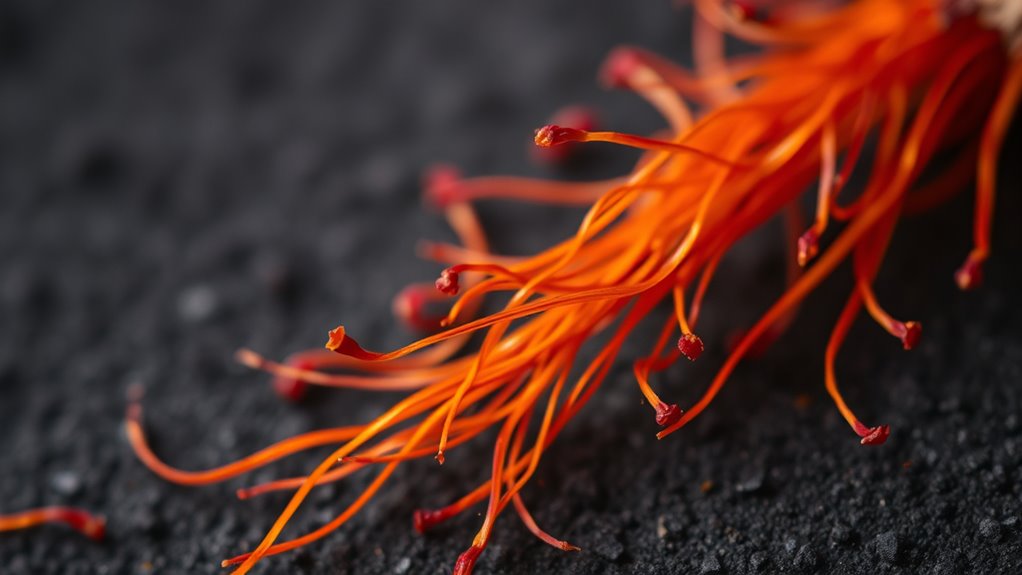
Saffron is often called “red gold” for good reason—its vibrant color and distinctive flavor come with a hefty price tag. You might wonder why such a tiny amount commands thousands of dollars per pound. The answer lies in the labor-intensive harvesting techniques required to produce high-quality saffron and its remarkable culinary uses. When you handle saffron, you’re dealing with delicate stigmas from the crocus flower, which must be carefully handpicked to guarantee purity and quality. This meticulous process involves plucking each stigma by hand, avoiding damage to the delicate threads, and then drying them just right to preserve their aroma and color. Because of this laborious method, saffron’s production is slow and costly, making it a luxury ingredient.
The harvesting techniques directly impact saffron’s quality and flavor profile. Skilled harvesters work during the brief window when the crocus flowers bloom, usually in autumn. They must pick the stigmas early in the morning to prevent spoilage, handling hundreds of flowers to gather just a few grams of the spice. Each flower yields only three stigmas, so you can see how time-consuming and precise the process is. Once harvested, the stigmas are carefully dried, either in the sun or with controlled heat, to lock in their aromatic compounds. This attention to detail guarantees that the saffron retains its vibrant color, intense aroma, and unique flavor, which are essential for its culinary uses.
When it comes to culinary uses, saffron’s versatility shines. You’ll find it transforming dishes from paella and risottos to Persian stews and desserts. Because of its potency, you only need a small pinch to infuse an entire dish with a rich golden hue and a complex, slightly sweet flavor. To get the most out of saffron, many cooks steep the threads in warm water or broth before adding them to their recipes. This process releases the full spectrum of flavors and colors, elevating simple ingredients into gourmet creations. You might also use saffron to make infusions or add it to baked goods for a luxurious touch. Despite its price, a little saffron goes a long way, making it a worthwhile investment for those seeking authentic, flavorful dishes.

Golden Saffron, Finest Pure Premium All Red Saffron Threads, Grade A+ Super Negin, Non-GMO Verified. For Tea, Paella, Rice, Desserts, Golden Milk and Risotto (2.0 Grams)
GRADE 1 SUPER NEGIN SAFFRON THREADS – Our SUPER NEGIN Grade Saffron. 100% Pure, and Fresh Threads in…
As an affiliate, we earn on qualifying purchases.
As an affiliate, we earn on qualifying purchases.
Frequently Asked Questions
How Is Saffron Traditionally Harvested and Processed?
You harvest saffron by carefully plucking the vivid red stigmas from freshly picked crocus flowers using gentle harvesting techniques. After collection, you process saffron by drying the stigmas in controlled conditions to preserve flavor and potency. This meticulous process guarantees high-quality saffron, as the delicate harvesting techniques prevent damage, and precise processing methods retain its rich aroma and color, making it a prized spice worldwide.
What Are the Different Grades of Saffron and Their Prices?
You’ll find saffron graded mainly as “Coupe,” “A Grade,” and “Top Grade,” with prices rising accordingly. Higher grades have more vibrant color, better aroma, and fewer adulterants, which influence saffron pricing factors. Be cautious of saffron adulteration, as lower-quality grades may be mixed with other materials, cutting costs but reducing quality. Always verify the grade to guarantee you get authentic, premium saffron worth its price.
Can Saffron Be Cultivated Outside Its Native Regions?
Yes, you can cultivate saffron outside its native regions if you consider climate adaptability and soil requirements. Saffron thrives in areas with hot, dry summers and cool winters. You’ll need well-draining soil, preferably sandy or loamy, with a neutral to slightly alkaline pH. With proper care, including irrigation and protection from extreme frost, you can successfully grow saffron in Mediterranean, parts of North America, and similar climates.
How Can I Tell if Saffron Is Genuine or Fake?
Spotting fake saffron is like finding a needle in a haystack. To spot adulteration, check for authentic saffron markers like deep red stigmas with orange tips, a strong aroma, and high crocin content. Genuine saffron releases a vibrant color when soaked, unlike fake versions that often lack intensity or contain fillers. Trust your senses and buy from reputable sources to verify you’re getting the real deal.
Are There Any Health Benefits Associated With Saffron Consumption?
You’ll find saffron offers several health benefits, including antioxidant properties that help protect your cells from damage. It’s also known for mood enhancement, potentially reducing symptoms of depression and anxiety. Regular, moderate consumption can support your overall well-being, but remember to use it in moderation. Incorporating saffron into your diet might boost your health while also adding a unique flavor to your meals.

Jarware Tea Infuser Lid for Regular Mouth Mason Jars, Green
TRANSFORMS YOUR JAR into your new favorite tea infuser! Simply place your loose tea leaves into the mesh…
As an affiliate, we earn on qualifying purchases.
As an affiliate, we earn on qualifying purchases.
Conclusion
So, next time you sprinkle saffron into your dish, remember you’re wielding a spice worth more than gold—literally. With each tiny strand costing a fortune, you’re basically tossing tiny nuggets of culinary treasure into your pot. Who knew that something so small could turn your meal into a millionaire’s feast? Just don’t forget to stash your saffron carefully—lest it vanish faster than a pirate’s treasure, leaving you with empty hands and a very expensive dinner.

Bellavita Luxury Mood Collection Perfume Gift Set with Alpha, Magnetic, and Fantasy | 45ml | Perfume for Women | Saffron, Mandarin, Cassis Notes | Long Lasting Women's Fragrance
Luxury Women's Cologne Gift Set – BellaVita Mood Collection includes three premium women’s fragrances—Alpha, Fantasy, and Magnetic. Designed…
As an affiliate, we earn on qualifying purchases.
As an affiliate, we earn on qualifying purchases.

Zaffrus – Certified Organic Premium Saffron Powder for Cooking Saffron Rice, Paella, Risotto, Soup, Desserts & Herbal Teas. Pack of 6 (.75 gram/ .026 Oz)
Very easy to use premium category 1 organic ground saffron in pre-measured single serve containers (125 mg) designed…
As an affiliate, we earn on qualifying purchases.
As an affiliate, we earn on qualifying purchases.