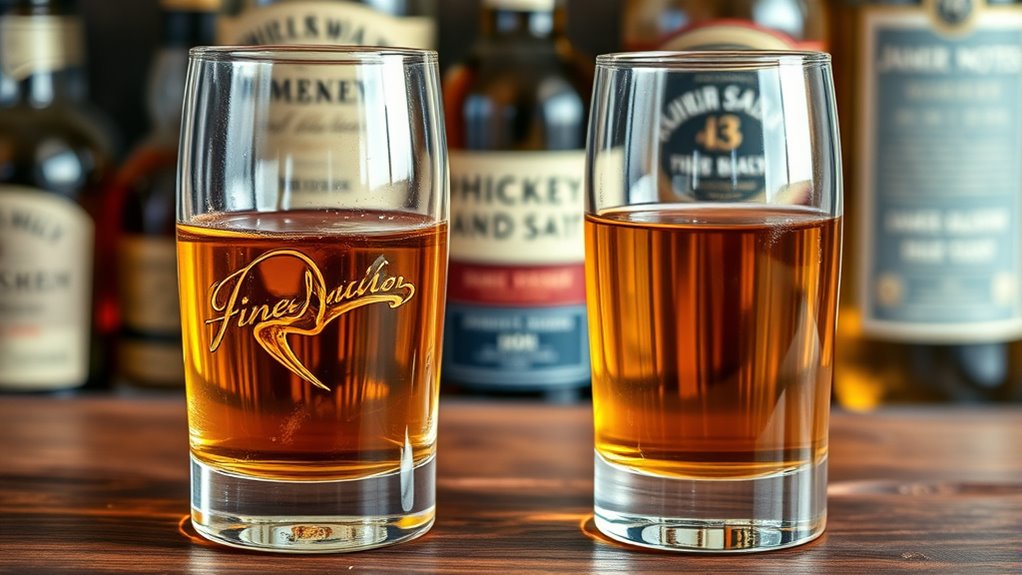

Single malt whiskey is made from malted barley at a single distillery, often aged in oak or sherry casks to develop complex flavors like vanilla, fruit, and spice. Blended whiskey combines malt and grain spirits from multiple distilleries to create a smoother, more balanced taste. Maturation plays a key role in shaping each style’s character. If you keep exploring, you’ll uncover how aging and blending influence the rich variety of whiskey flavors.
Key Takeaways
- Single malt whiskey is made from malted barley at one distillery, emphasizing purity and terroir.
- Blended whiskey combines malt and grain spirits from multiple distilleries for a balanced, smooth flavor.
- Single malts are typically aged longer in oak casks, developing complex and unique flavor profiles.
- Blended whiskeys focus on consistency and approachability, often blending younger and older spirits.
- Maturation influences both types but impacts single malts more visibly, shaping their distinctive character.
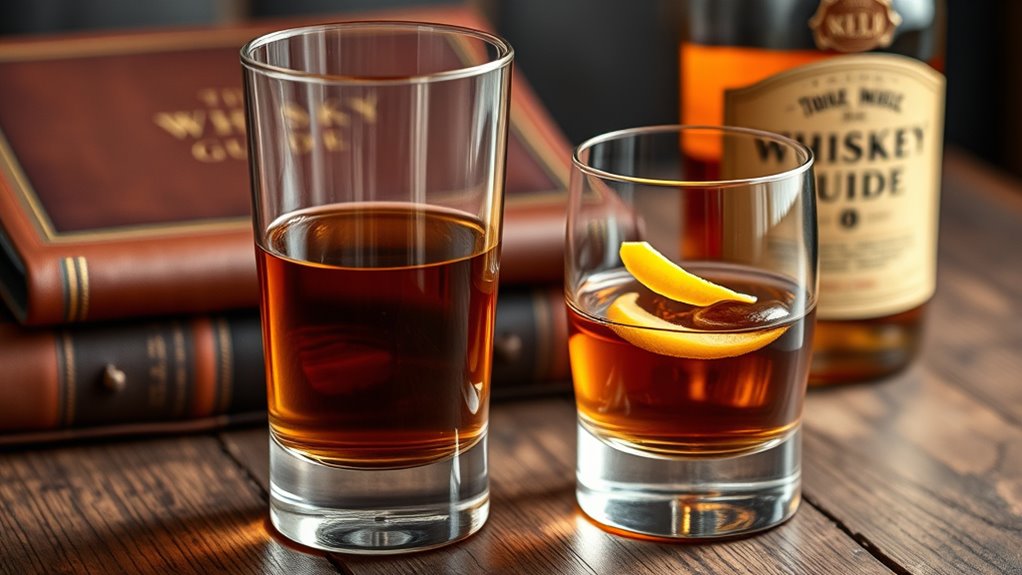
Whiskey is a complex and versatile spirit enjoyed by enthusiasts around the world. When exploring the differences between single malt and blended whiskey, understanding the role of cask maturation is essential. Cask maturation is the process where whiskey spends time aging in wooden barrels, allowing it to develop depth and character. During this period, the whiskey interacts with the wood, extracting compounds that influence its flavor profiles. This maturation process is vital for both types of whiskey, but it’s especially significant for single malts, which are often aged in carefully selected casks to highlight specific qualities. The choice of cask—be it oak, sherry, or other woods—imparts unique flavors, from vanilla and caramel to dried fruit and spice. These nuances become more pronounced as the whiskey matures, giving each bottle its distinct personality.
Single malt whiskey is made from malted barley distilled at a single distillery, and it’s often regarded for its purity and emphasis on terroir. Because it’s typically produced using pot stills and aged in specific casks, the flavor profiles of single malts can vary widely, from smoky and peaty to fruity and floral. The cask maturation process for single malts allows the distillery to craft a product that showcases the influence of its environment and aging process. This focus on individual distillery character means each bottle can tell a unique story through its flavors, which are shaped by the length of aging, the type of cask used, and the conditions of the aging warehouse. Additionally, the maturation process plays a crucial role in developing the complexity and depth of flavor in single malts.
On the other hand, blended whiskey combines malt whiskey with grain whiskey, often from multiple distilleries. The goal here is to create a balanced, consistent flavor profile that appeals to a broad audience. Because blended whiskeys are the result of blending different spirits, they tend to have a smoother, more approachable taste. The master blenders carefully select whiskies with complementary flavor profiles, often blending younger and older whiskeys to achieve harmony. While cask maturation still plays a role—since the individual components are aged separately—the final product aims for a cohesive flavor that’s less influenced by the nuances of a single cask or distillery. Instead, it reflects a crafted balance of flavors, which can include notes of vanilla, honey, and spices.
Top picks for "whiskey single malt"
Open Amazon search results for this keyword.
As an affiliate, we earn on qualifying purchases.
Frequently Asked Questions
Can Blended Whiskey Be as High Quality as Single Malt?
Yes, blended whiskey can be just as high quality as single malt. The craftsmanship debate often overlooks the skill required to create a well-balanced blend, which can result in impressive flavor complexity. Top-tier blended whiskeys showcase expert artistry, blending different spirits to achieve nuanced, refined profiles. So, don’t underestimate blended whiskey; it can offer the same depth and quality as single malts when crafted by skilled artisans.
Which Is More Suitable for Beginners: Single Malt or Blended Whiskey?
For beginners, blended whiskey is more suitable because it offers smoother, more approachable flavors. Use tasting techniques like swirling gently and noting aroma to appreciate its nuances. Store your whiskey upright in a cool, dark place to preserve quality. As you gain experience, explore single malts for more complex profiles. Starting with blended whiskey helps you develop your palate without overwhelming your senses.
How Does Aging Differ Between Single Malt and Blended Whiskeys?
You’ll find that the aging adventure differs between single malt and blended whiskeys. Single malts undergo a meticulous maturation process, influenced heavily by the barrel, which imparts unique flavors. Blended whiskeys combine multiple barrels’ influences, creating a consistent, complex character. While both age over time, single malts often reveal more distinctive depth from their specific barrel, whereas blended whiskeys balance barrel influences, offering versatility and a smoother, more approachable profile.
Are Blended Whiskeys More Affordable Than Single Malts?
Yes, blended whiskeys are generally more affordable than single malts. If you’re looking for budget-friendly options, blended whiskeys offer great taste without breaking the bank. They combine different grain spirits, which helps keep costs down. So, if you want quality whiskey without overspending, blended varieties are your best bet for affordable choices that still deliver enjoyable flavors.
What Food Pairings Complement Each Type of Whiskey?
For single malts, opt for food pairings like rich cheeses, smoked meats, or dark chocolate to enhance their complex flavors. Blended whiskeys work well with lighter dishes such as seafood, salads, or fruit desserts, providing a balanced flavor enhancement. In both cases, consider how the food’s profile complements the whiskey’s notes, creating a harmonious flavor experience that elevates your tasting.
Conclusion
Think of whiskey like a garden. Single malts are like rare, unique flowers—distinct and crafted with care—while blended whiskeys are a vibrant bouquet, combining many blooms for harmony. Both have their charm, but understanding their differences helps you choose what suits your taste. Just as a gardener values both the rare and the diverse, appreciating both types of whiskey lets you savor the full spectrum of flavors. Embrace the variety and enjoy the journey.