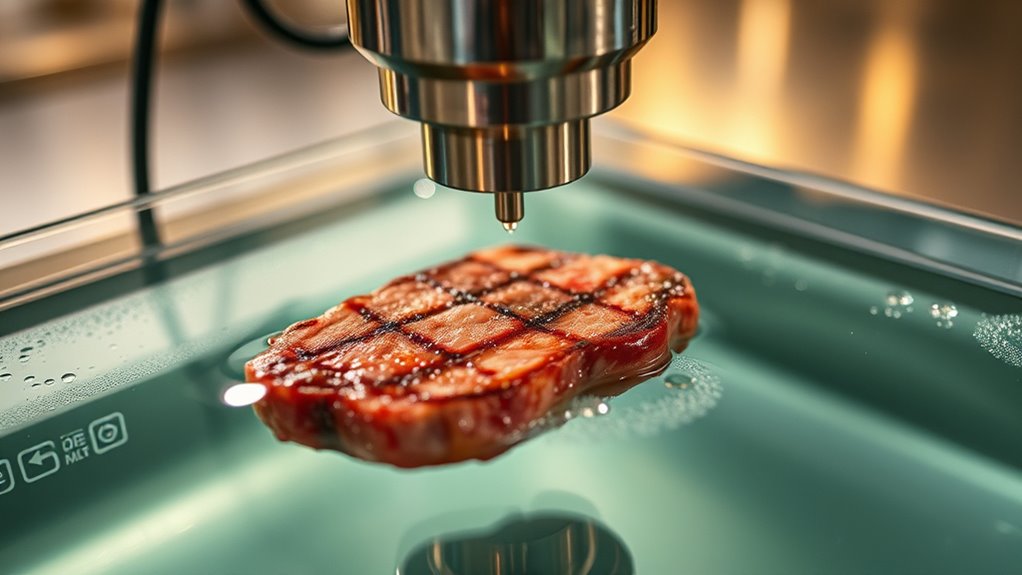

Top chefs swear by sous vide because it guarantees perfectly cooked results every time. By controlling precise temperatures, you get tender, juicy meats and evenly cooked dishes without guesswork. It also locks in flavors and reduces waste, making it efficient and reliable for professional kitchens. Familiarity with equipment and techniques can elevate your cooking skills. Keep exploring, and you’ll discover how mastering sous vide can transform your culinary creations.
Key Takeaways
- Sous vide ensures precise temperature control for perfectly cooked, tender, and flavorful dishes every time.
- It maintains moisture and prevents overcooking, resulting in consistent, high-quality textures.
- The technique allows for flavor infusion through sealed bags with herbs and spices.
- It reduces waste and rework, improving efficiency and reliability in professional kitchens.
- Sous vide offers scalability and consistency, elevating culinary standards for top chefs.
The Science Behind Sous Vide Cooking
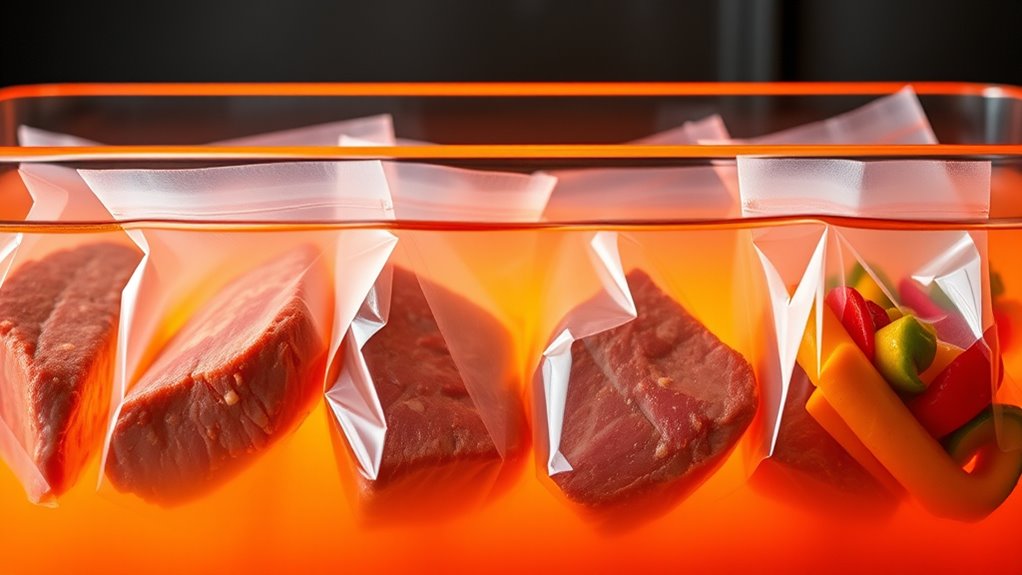
Have you ever wondered how sous vide cooking achieves perfectly tender and evenly cooked results? It all comes down to understanding the science behind it. Sous vide leverages principles from molecular gastronomy, where food is cooked in precisely controlled temperatures to alter its physical and chemical properties. The key process is thermal conduction, which transfers heat uniformly from the water bath to your food. Because the food is sealed in a bag, heat penetrates evenly, preventing overcooking or undercooking in parts. This controlled heat transfer results in consistent texture and flavor. Unlike traditional methods, sous vide minimizes thermal fluctuations, allowing you to achieve restaurant-quality dishes with precision. It’s a scientific approach that transforms your kitchen into a lab of culinary mastery. Additionally, understanding temperature control techniques is essential for mastering sous vide cooking at home.
Benefits of Using Sous Vide in Professional Kitchens
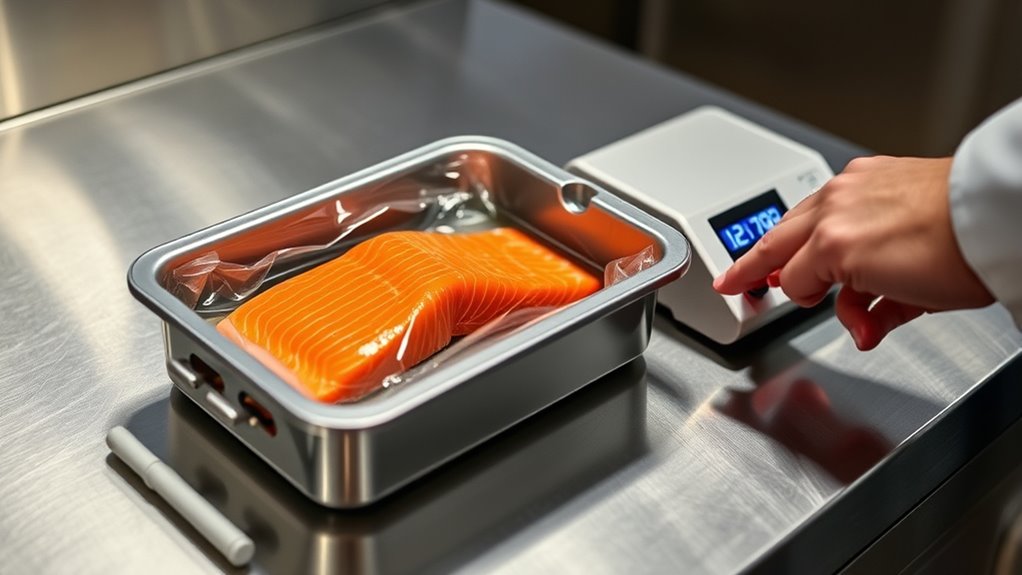
One of the main advantages of using sous vide in professional kitchens is its ability to deliver consistent, high-quality results with less variability. By precisely controlling temperature and time, you ensure every dish maintains excellence, even with varying staff experience. This technique emphasizes quality ingredients, enhancing flavors and textures that impress diners. With proper staff training, your team can confidently execute complex dishes efficiently, reducing waste and rework. The table below highlights key benefits:
| Consistency | Quality Control | Efficiency |
|---|---|---|
| Reliable results every time | Preserves ingredient integrity | Speeds up prep and service |
Implementing sous vide elevates your kitchen’s standards, making excellence achievable and scalable. Temperature regulation plays a crucial role in maintaining the ideal cooking environment.
Essential Equipment for Sous Vide Success
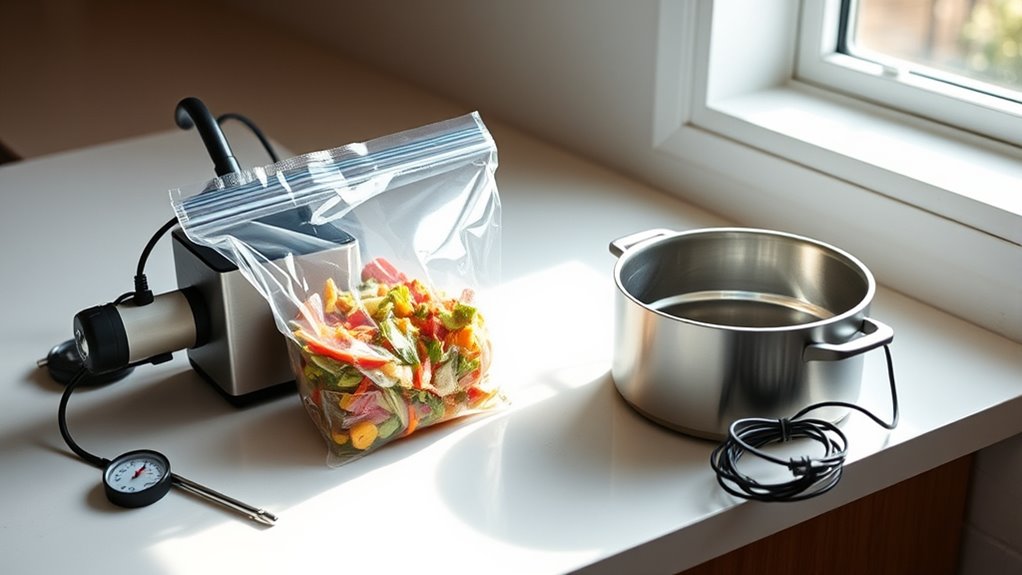
To succeed with sous vide, you need the right equipment. Precision water baths, vacuum sealing tools, and reliable circulators are essential for consistent results. Investing in these tools guarantees your cooking stays precise and efficient. Additionally, understanding safe installation practices ensures your setup remains secure and safe during use.
Precision Water Baths
Precision water baths are the cornerstone of successful sous vide cooking, guaranteeing your food stays at a consistent temperature throughout the process. They maintain temperature consistency by precisely controlling heat and water circulation. Imagine:
- A sleek device with an easy-to-read digital display, showing exact temperature settings.
- A powerful pump that keeps water moving smoothly around your food, preventing hot spots.
- A sturdy, insulated container that holds water steady, minimizing temperature fluctuations.
- Many models incorporate temperature calibration features to ensure accuracy over time.
Your water bath’s ability to circulate water evenly assures uniform cooking, while precise temperature control prevents overcooking or undercooking. This combination secures perfectly cooked dishes every time, making sous vide not only reliable but also effortless. With a quality precision water bath, you’re set for consistent results and culinary success.
Vacuum Sealing Tools
Why is vacuum sealing essential for sous vide cooking? It guarantees your food is airtight, preventing water from seeping in and maintaining precise temperature control. Proper sealing techniques eliminate air pockets that could compromise cooking results. Using quality vacuum sealing tools makes this process easy and reliable. Additionally, understanding the different seal types can help optimize your results for various ingredients.
Reliable Circulators
Reliable circulators are the heart of successful sous vide cooking, guaranteeing your water bath stays at a consistent temperature. Without them, precision cookers can’t do their job effectively. When choosing reliable circulators, picture these key features:
- Powerful motor that rapidly circulates water, preventing hot or cold spots.
- Intuitive controls for precise adjustments, giving you full command over temperature and time.
- Durable build quality that withstands frequent use and maintains accuracy over time.
- Consistent performance, which is essential for achieving uniform cooking results and is supported by sound sound healing science principles.
These features help you achieve restaurant-quality results at home. Reliable circulators are easy to set up and operate, making sous vide accessible even for beginners. Investing in a good precision cooker ensures your dishes are perfectly cooked, every time, with minimal fuss.
Step-by-Step Guide to Preparing Your First Sous Vide Meal
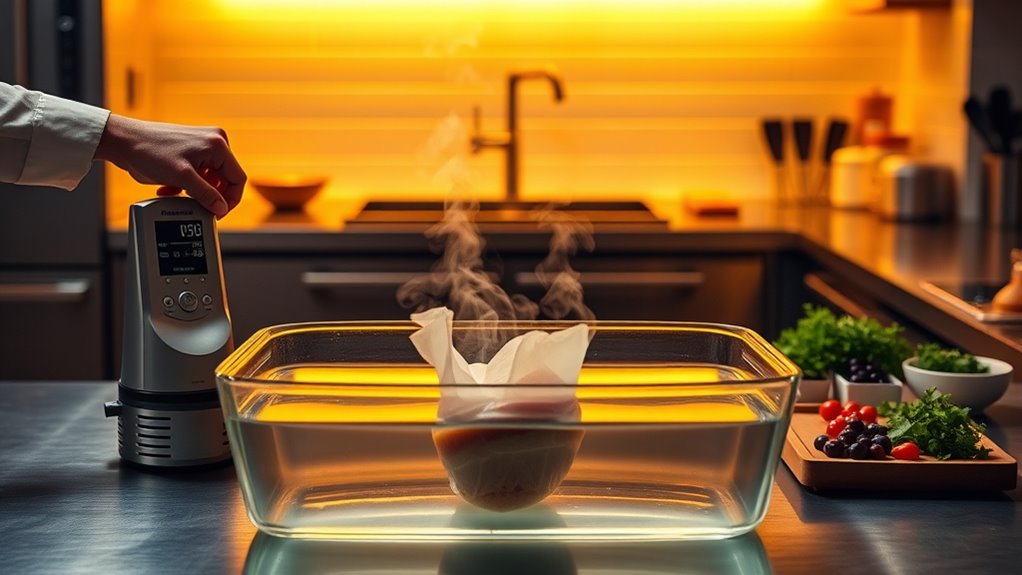
To get started, you’ll want to focus on maintaining precise temperature control to guarantee your food cooks evenly. Proper sealing techniques are essential to keep water out and lock in flavors. Mastering these steps sets a solid foundation for your first sous vide meal. Incorporating multi-functional gear can help streamline your setup and improve efficiency during the process.
Precise Temperature Control
Achieving perfect results with sous vide hinges on precise temperature control, which guarantees your food cooks evenly and retains its tenderness. To guarantee this, focus on maintaining temperature accuracy and thermal stability throughout the process. Passive voice detection can help identify areas where sentence structure could be improved for clarity and conciseness. Imagine: 1. A digital water bath thermometer showing a steady 135°F, with no fluctuations. 2. A sous vide cooker automatically adjusting its heating element to compensate for water loss. 3. Your sealed bag gently floating in a uniformly heated water bath, ensuring even cooking from edge to edge.
Proper Sealing Techniques
Getting your food properly sealed is essential for successful sous vide cooking. The right sealing techniques ensure even heat transfer and prevent water leaks, which could compromise packaging safety. Start by placing your food in a high-quality vacuum bag or resealable freezer bag. If using a vacuum sealer, remove excess air carefully to avoid air pockets that can hinder heat transfer. For resealable bags, use the water displacement method: slowly lower the bag into water, allowing the pressure to push out air before sealing. Make sure the bag’s seal is tight and secure. Proper sealing techniques minimize the risk of leaks and contamination, ensuring your meal cooks evenly and safely. Always double-check your seals before submerging to guarantee ideal packaging safety and cooking results. Additionally, selecting the right body jewelry materials can prevent irritation and ensure a safe, comfortable cooking or piercing experience.
Tips for Achieving Perfect Texture and Flavor
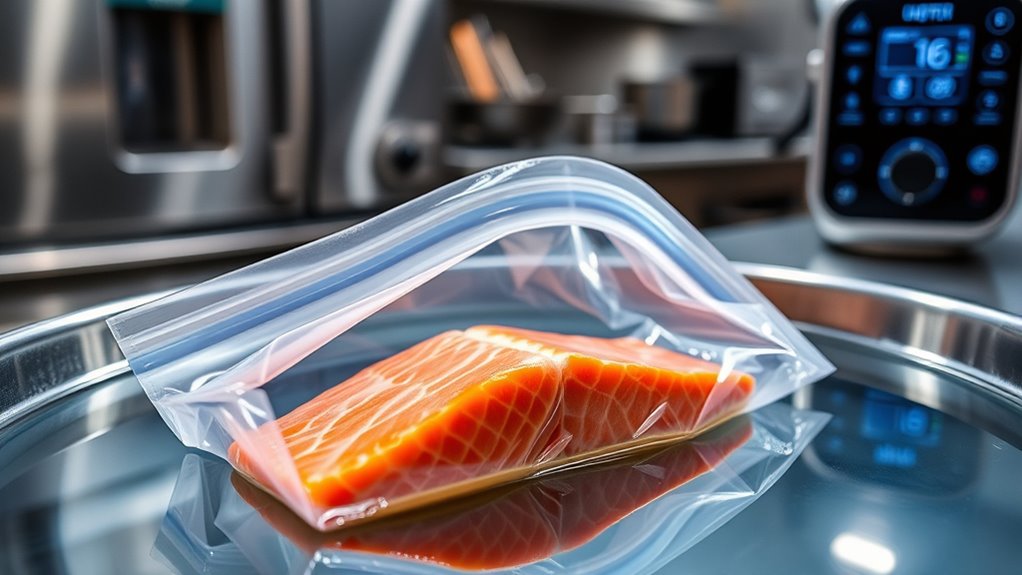
Mastering the right temperature and timing is essential for perfect sous vide results. To enhance texture and boost flavor infusion, focus on these tips:
- Adjust temperature carefully – lower temps create tender, delicate textures, while higher temps firm up proteins. This ensures your dish has the desired mouthfeel.
- Use precise timing – longer cook times can improve texture enhancement, making meats juicier and more tender without overcooking.
- Incorporate herbs and spices in the bag – this maximizes flavor infusion, allowing seasonings to meld deeply into your ingredients.
Common Mistakes to Avoid When Using Sous Vide
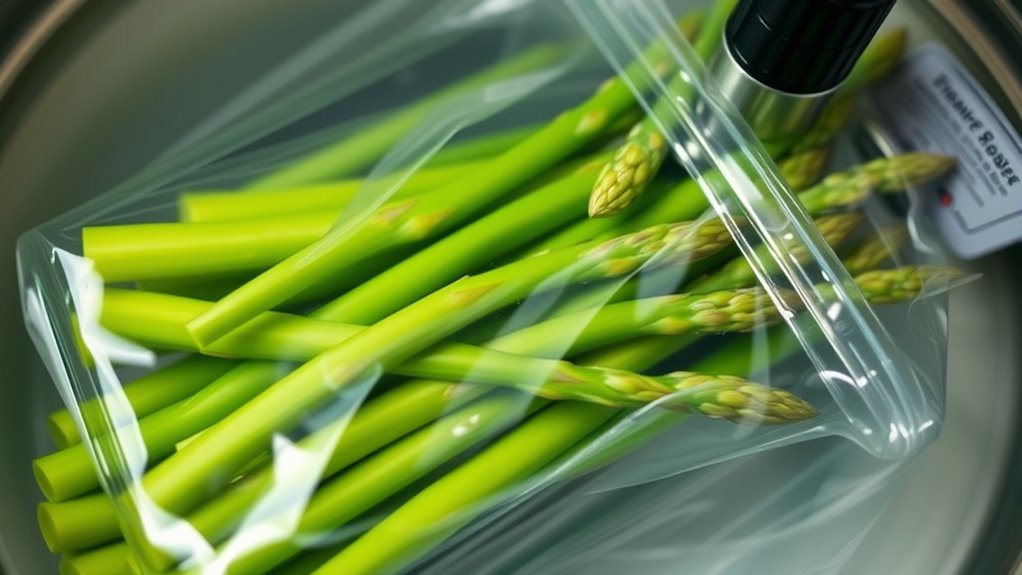
One common mistake when using sous vide is not properly sealing the bags, which can lead to water leaks and uneven cooking. If bags aren’t sealed tightly, water can seep in, affecting the cooking process and risking contamination. Improper sealing can also cause the food to float, making it harder to maintain consistent temperature. Another mistake to avoid is overcooking meat; since sous vide allows precise temperature control, it’s easy to leave meat in too long, resulting in a mushy texture or dry edges. Always double-check your seals and follow recommended cooking times. Keeping these in mind guarantees your dishes turn out perfectly cooked, tender, and flavorful without the common pitfalls of improper sealing or overcooking. Additionally, ensuring proper air purifier maintenance can help create a clean environment, free of airborne contaminants that could compromise food safety.
Creative Recipes and Ideas to Try at Home
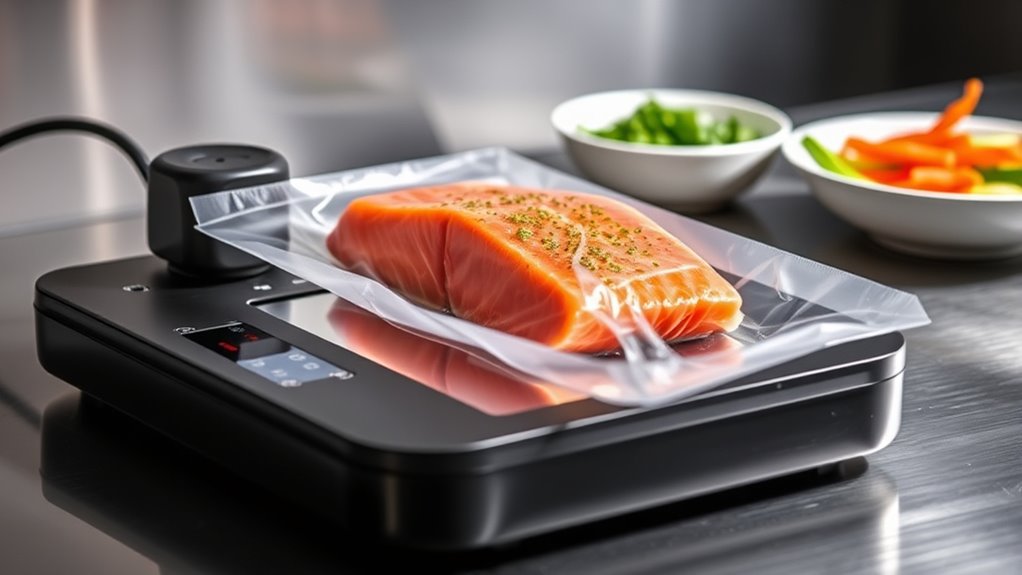
Once you’ve perfected your basics, experimenting with creative sous vide recipes can elevate your cooking game. Think beyond standard proteins—try infusing flavors like citrus and herbs into chicken, or creating a rich, tender beef short rib with robust seasoning. Focus on flavor pairing to develop complex, memorable dishes. For plating techniques, aim for vibrant presentation—garnish with microgreens or drizzle sauces artfully for visual appeal. Here are some ideas to inspire you:
- Infused salmon with lemon and dill, finished with a crisp skin for texture
- Pork belly cooked with apple and sage, sliced thin and layered for a modern terrine
- Vegetables like carrots and parsnips glazed with honey and thyme, arranged in colorful stacks
Additionally, exploring energy-efficient cooking methods can help reduce your kitchen’s environmental impact while maintaining top culinary quality. These creative recipes will impress and delight your guests at any dinner.
Frequently Asked Questions
How Does Sous Vide Compare to Traditional Cooking Methods in Nutrition Retention?
You’ll find that sous vide better preserves nutrients compared to traditional cooking methods, thanks to precise temperature control and shorter cook times. This technique minimizes nutrient loss, ensuring your food retains more vitamins and minerals. Additionally, sous vide enhances flavor because it cooks evenly and gently, locking in juices. Overall, you get healthier, more flavorful dishes with better nutrient preservation when using sous vide instead of conventional methods.
Can Sous Vide Be Safely Used for All Types of Food?
Yes, you can safely use sous vide for all types of food, but you need to prioritize food safety and equipment versatility. Proper temperature control and timing are essential to prevent bacteria growth, especially with meats and seafood. Invest in versatile equipment that accommodates different textures and sizes. Always follow recommended guidelines to guarantee safe, delicious results, making sous vide a flexible method for your entire menu.
What Are the Environmental Impacts of Using Sous Vide Equipment?
Using sous vide equipment has environmental impacts, mainly due to energy consumption and recycling challenges. You consume electricity, which may come from non-renewable sources, increasing your carbon footprint. Additionally, the plastic bags used can be tricky to recycle properly, contributing to waste. To minimize these effects, you can choose energy-efficient devices and opt for reusable or biodegradable bags, helping reduce your overall environmental impact.
How Long Can Food Safely Stay in a Sous Vide Bath?
You can safely keep food in a sous vide bath for up to 1-4 hours for most items, and sometimes up to 24 hours for tougher cuts. Food safety depends on maintaining the correct temperature and storage duration. If you stay within these guidelines, your food remains safe and retains quality. Always guarantee your water bath stays at the right temperature to prevent bacterial growth and ensure ideal storage duration.
Is Sous Vide Suitable for Large-Scale Commercial Food Production?
Sous vide is indeed suitable for large-scale commercial food production. With over 60% of high-end restaurants adopting this method, its industrial feasibility is proven. The key is equipment scalability—large, precise immersion circulators and vacuum sealers make it practical for volume cooking. You can efficiently produce consistent, high-quality dishes, reducing waste and increasing efficiency. So, if you’re considering mass production, sous vide offers a reliable, scalable solution.
Conclusion
Did you know that sous vide can improve meat tenderness by up to 60%? With its precise temperature control, you’ll consistently achieve restaurant-quality results at home. Once you master the basics, you’ll enjoy perfectly cooked meals every time—no stress, just delicious food. So why not give it a try? Embrace this innovative technique and impress your friends with flavors and textures they’ll never forget. Your culinary journey to perfection starts now!