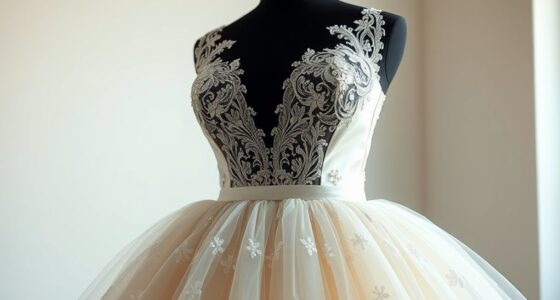
Decoding dress codes like black tie and white tie is key to nailing formal style with confidence. Black tie typically features a tuxedo with satin details, a white shirt, and a bow tie, while white tie demands a tailcoat, starched shirt, and elegant accessories. Pay attention to fit, grooming, and subtle accessories to elevate your look. Mastering these details helps you dress appropriately for any event—keep going, and you’ll discover all the tips to impress in style.
Key Takeaways
- Understand that white tie is the most formal dress code, requiring a tailcoat, wing collar shirt, and patent leather shoes, while black tie is slightly less formal with a tuxedo and satin lapels.
- For white tie, choose luxurious fabrics, minimal accessories, and precise tailoring to achieve a polished, elegant look; black tie allows more versatility within strict guidelines.
- Accessories should be subtle and coordinated; cufflinks and bow ties are essential, with white tie emphasizing simplicity and sophistication.
- Recognize event type and setting to select the appropriate dress code, ensuring respect for tradition and social expectations.
- Proper grooming, fit, and attention to detail are crucial in both dress codes to nail formal style and exude confidence.
Understanding the Origins and Etiquette of Black Tie and White Tie

To truly understand black tie and white tie dress codes, it’s important to explore their origins and the etiquette that governs them. The historical evolution of these dress codes reflects societal shifts and class distinctions. Black tie emerged in the early 20th century as a more relaxed alternative to formal evening wear, gaining popularity among the upper classes. White tie, however, has deeper roots, dating back to the late 19th century, symbolizing the highest level of formality and social status. Their cultural significance extends beyond fashion; they represent tradition, respect, and social hierarchy. Understanding these origins helps you appreciate the etiquette that accompanies each dress code, ensuring you dress appropriately and honor the customs associated with formal events.
Key Elements of a Black Tie Ensemble
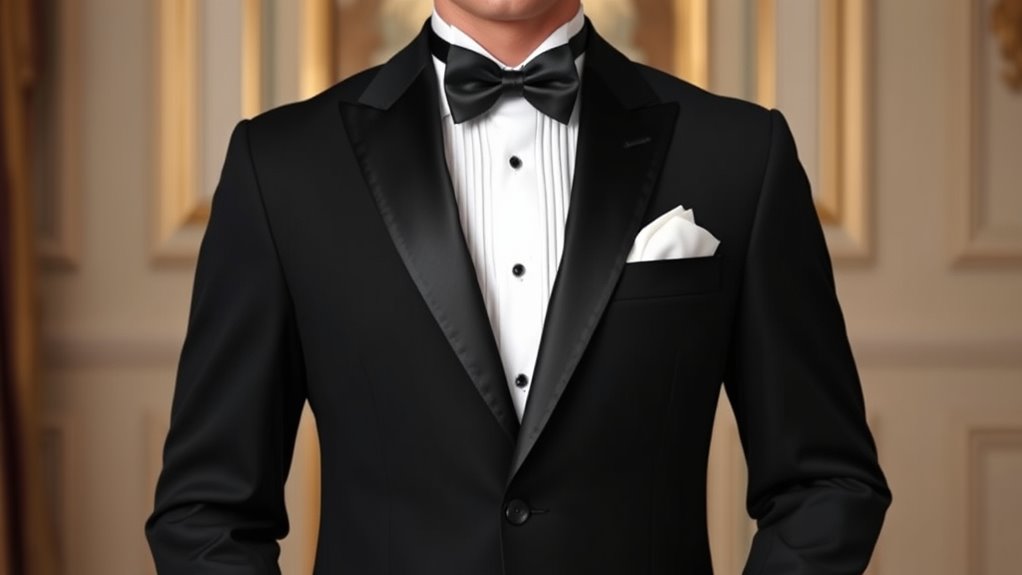
A classic black tie look centers on a well-cut tuxedo with satin lapels and a proper fit. You’ll also want to choose essential accessories like a bow tie, cummerbund or waistcoat, and polished black dress shoes. Paying attention to these key elements guarantees you achieve a polished, authentic ensemble. Additionally, understanding the formal dress code ensures your outfit aligns with event expectations and exudes sophistication.
Classic Tuxedo Features
The classic tuxedo features several key elements that define its timeless elegance. These elements have evolved through dress code history and continue to influence fashion industry standards. You’ll notice the sleek satin lapels, typically in a peak or shawl style, adding sophistication. The trousers are tailored with a satin side stripe, matching the lapels, for a cohesive look. The dress shirt is usually white with a pleated front and a wingtip or turndown collar. A black bow tie completes the ensemble, maintaining tradition. This combination reflects both historical dress code influences and modern style. Understanding these features helps you nail the look, regardless of changes over time. Here’s a quick overview:
| Feature | Purpose/Detail |
|---|---|
| Satin Lapels | Adds sheen and elegance |
| Tailored Trousers | Perfect fit with satin side stripe |
| Dress Shirt | Classic, crisp, with pleats |
| Bow Tie | Traditional accessory, black |
| Overall Fit | Sharp, tailored silhouette |
Additionally, paying attention to dress code terminology ensures your outfit adheres to the appropriate level of formality.
Essential Accessory Choices
Building on the classic tuxedo features, selecting the right accessories completes your black tie look with polished precision. Cufflink styles vary from simple silver or gold designs to more intricate, decorative options—choose ones that complement your overall ensemble without overpowering it. When it comes to boutonniere choices, opt for classic blooms like a white rose or orchid, ensuring they match the event’s formality and your suit’s color. Keep the boutonniere modest and symmetrical for a refined appearance. Remember, accessories like cufflinks and boutonnieres are subtle details that elevate your outfit, so select quality pieces that reflect your personal style while adhering to tradition. With the right choices, your black tie ensemble will exude sophistication and timeless elegance.
Essential Components of a White Tie Attire
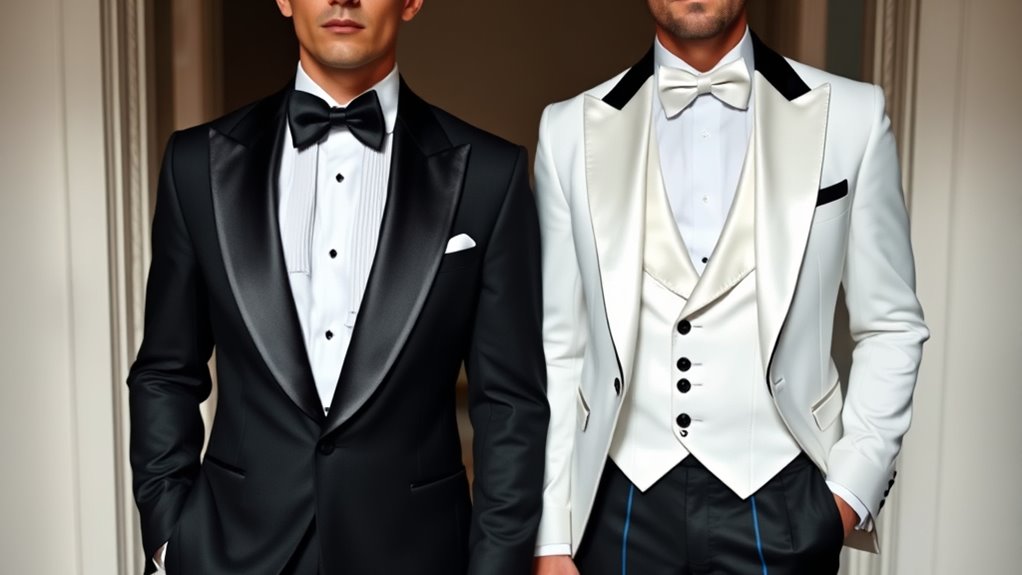
White tie attire demands a precise combination of elegant components that create a polished and formal look. Your suit fabric should be luxurious, typically black or midnight blue, crafted from fine wool or silk blends for a sleek appearance. The jacket features a tailcoat with a peaked lapel, tailored to fit perfectly. Your dress shirt styles are equally important; opt for a starched, white wing-collared shirt with a bib front that exudes sophistication. The shirt’s fabric should be crisp and smooth, enhancing the overall elegance. Ascertain the shirt has double cuffs to accommodate cufflinks, adding a subtle touch of refinement. Incorporating sound healing science principles, some enthusiasts believe that the clarity of your accessories can influence your overall aura and confidence. These essential elements work together to achieve the classic, timeless look that defines white tie dress code.
Choosing the Right Accessories for Each Dress Code
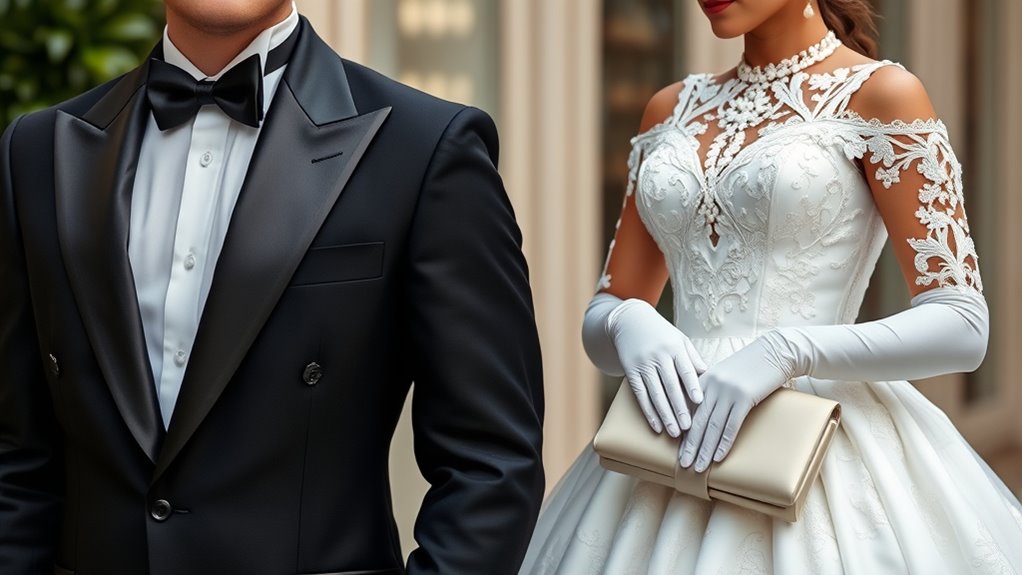
Selecting the right accessories elevates your white tie or black tie ensemble, ensuring each element complements the formal attire. When it comes to jewelry choices, opt for subtle, elegant pieces like cufflinks, stud earrings, or a simple watch. Avoid anything too flashy or casual to maintain sophistication. Footwear considerations are equally important; choose polished, black formal shoes like oxfords or pumps, depending on the dress code. For white tie, consider patent leather shoes for a glossy finish, while black tie allows for more traditional styles. Keep accessories minimal and refined to enhance your overall look without overpowering it. Remember, the goal is to complement your outfit seamlessly, so choose jewelry and footwear that exude understated elegance and professionalism. Incorporating appropriate dress accessories can also ensure your overall appearance aligns with the high standards of formal dress codes.
Tips for Perfect Fit and Grooming
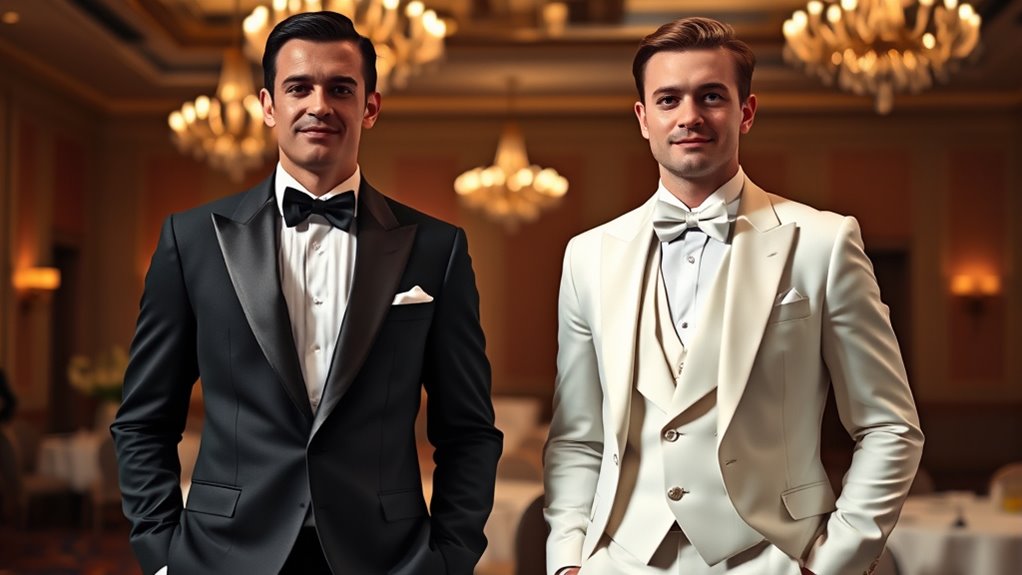
Achieving a flawless look for black tie or white tie events starts with ensuring your clothing fits perfectly and your grooming is impeccable. Focus on tailoring tips, like having your tuxedo or tailcoat expertly fitted to your body, avoiding baggy or tight spots. Proper tailoring enhances your silhouette and exudes confidence. Grooming essentials are equally important—keep your hair neat, facial hair groomed, and skin well-maintained. Use subtle products to achieve a polished appearance without overdoing it. Pay attention to details like clean, trimmed nails and fresh breath. Remember, a well-fitted outfit combined with meticulous grooming elevates your style and ensures you look sharp and appropriate for any formal occasion. It’s all about attention to detail. Additionally, understanding the significance of authenticity in your presentation can help you embody confidence and make a lasting impression.
Common Mistakes to Avoid When Dressing Formal
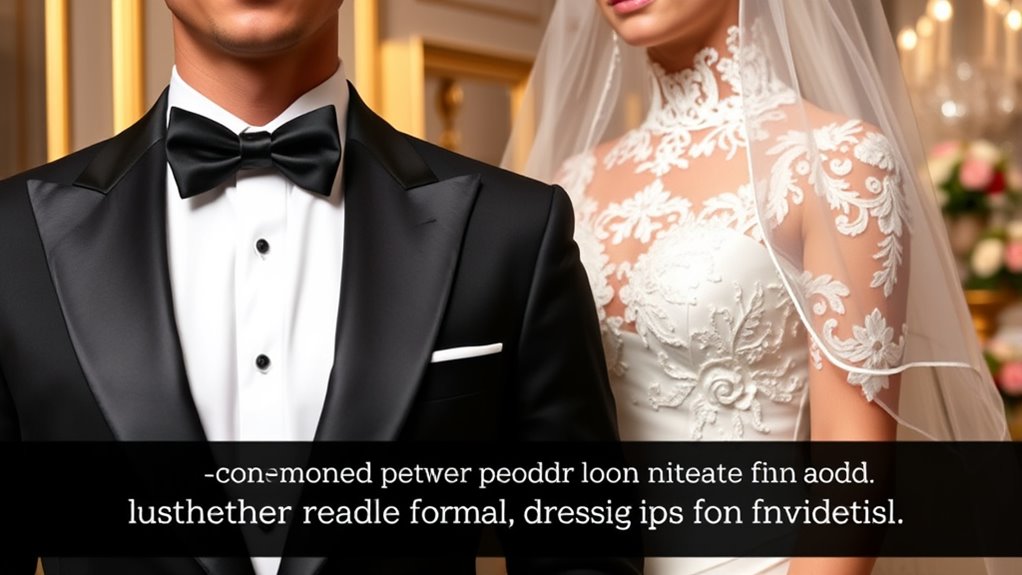
One common mistake to avoid when dressing formally is neglecting the importance of proper fit; ill-fitting clothing, whether too tight or too loose, can ruin your polished appearance and undermine your confidence. Misinterpreting dress codes often leads to underdressed or overdressed choices, so understand the event’s expectations. Overaccessorizing formalwear can distract from your overall look and seem unrefined. To avoid these pitfalls, keep these in mind:
- Ensure your clothing fits perfectly, tailored if needed.
- Stick to the prescribed dress code without adding unnecessary embellishments.
- Avoid mixing formal and casual elements unless specified.
- Keep accessories minimal and elegant, emphasizing quality over quantity.
- Being aware of dress code distinctions helps you choose the appropriate attire for any event.
Staying attentive to these details helps you dress appropriately and confidently for any formal occasion.
Event Types and Appropriate Dress Code Selection
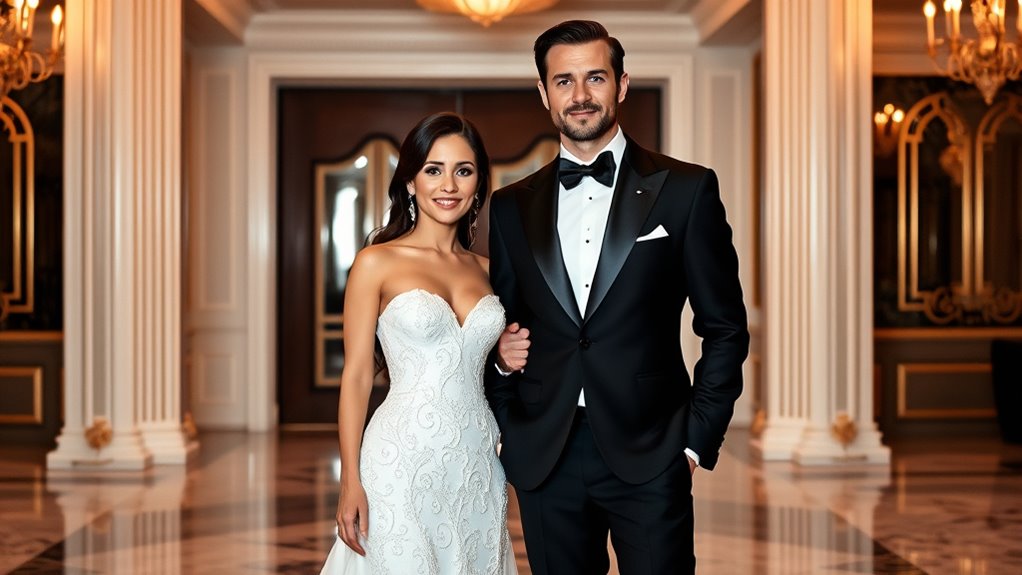
Understanding the type of event you’re attending is essential to choosing the appropriate dress code. For casual dress or informal events, opting for relaxed attire like jeans and a nice shirt is acceptable. However, when the event is more formal, such as a wedding, gala, or black-tie dinner, you’ll need to elevate your look. White tie events demand the most formal attire, with tuxedos and evening gowns, while black tie occasions call for a tuxedo or formal cocktail dress. Recognizing the event’s purpose and setting helps you select the right level of formality. Dressing appropriately not only shows respect for the hosts but also boosts your confidence. Always check the invitation for dress code indications to ensure your outfit aligns with the occasion’s expectations. Additionally, understanding electrification in various contexts can help you appreciate modern advancements in technology that influence many aspects of our lives.
Frequently Asked Questions
Can a Black Tie Outfit Be Worn to a White Tie Event?
No, a black tie outfit isn’t appropriate for a white tie event, as it’s a dress code violation. You should avoid outfit layering that includes a tuxedo jacket and bow tie, which are too casual. White tie events demand a tailcoat, white vest, and accessories to match, ensuring you follow the strict formal dress code. Sticking to these details shows respect for the occasion and keeps your style on point.
Are There Cultural Variations in Black and White Tie Dress Codes?
Yes, cultural attire can wildly vary from international standards of black and white tie dress codes. In some countries, traditional garments like kimonos or dashikis are worn alongside or instead of western formalwear, making the dress code a vibrant tapestry of cultural expressions. These variations celebrate heritage and challenge rigid standards, so you should always respect local customs and adapt your outfit accordingly when attending international events.
How Should I Adapt Dress Codes for Outdoor Formal Events?
For outdoor formal events, you should adapt your dress code by considering outdoor considerations and weather adaptations. Choose breathable fabrics like linen or lightweight wool to stay comfortable, and consider adding a stylish shawl or wrap for cooler weather. Opt for closed-toe shoes suitable for uneven terrain, and carry a compact umbrella if rain’s forecasted. These tweaks keep your look polished while ensuring you’re comfortable throughout the event.
What Are Common Misconceptions About Black and White Tie Attire?
You might think black and white tie are just fancy outfits, but misconceptions myths often lead to dress code stereotypes. Many believe black tie means a tuxedo and white tie requires a tailcoat, but it’s more about the level of formality. Some assume white tie is outdated, yet it’s still very elegant. Understanding these common errors helps you avoid dress code stereotypes and dress appropriately for the occasion.
Are There Gender-Neutral Options for Black Tie and White Tie Dress Codes?
Yes, you can explore gender-neutral fashion and inclusive formalwear options for black tie and white tie dress codes. Many designers now offer tuxedo styles with unisex cuts, tailored blazers, and accessories that suit all genders. Look for versatile pieces, such as sleek trousers or skirts paired with elegant tops, to create a sophisticated, inclusive look. This approach guarantees you stay true to the formality while embracing your personal style.
Conclusion
Mastering black tie and white tie means embracing elegance, understanding tradition, and expressing confidence. It’s about knowing the details, honoring the occasion, and showcasing your style. When you choose the right dress code, you honor the event, impress your peers, and feel your best. Dress with purpose, act with poise, and leave a lasting impression. Because true style isn’t just what you wear—it’s how you carry yourself with grace and confidence.