
Buying vintage offers you a sustainable way to access unique, high-quality fashion while supporting eco-friendly practices. It allows you to find one-of-a-kind pieces, often at a fraction of the original cost, and express your personal style. However, vintage shopping can take time, and finding authentic, well-maintained items might require patience and effort. If you’re willing to navigate these challenges, you’ll discover how vintage can enhance your wardrobe—and there’s more to contemplate along the way.
Key Takeaways
- Vintage fashion promotes sustainability by reducing waste and extending the life of high-quality, pre-owned luxury items.
- It offers unique, authentic pieces with distinctive details and craftsmanship not typically found in modern mass-market fashion.
- Finding the right fit and authentic items can be challenging, requiring patience and knowledge of labels and quality markers.
- Vintage shopping can be time-consuming and may involve repairs or cleaning before items are wearable.
- Owning vintage luxury pieces allows for personalized style at a lower cost while supporting eco-conscious fashion choices.
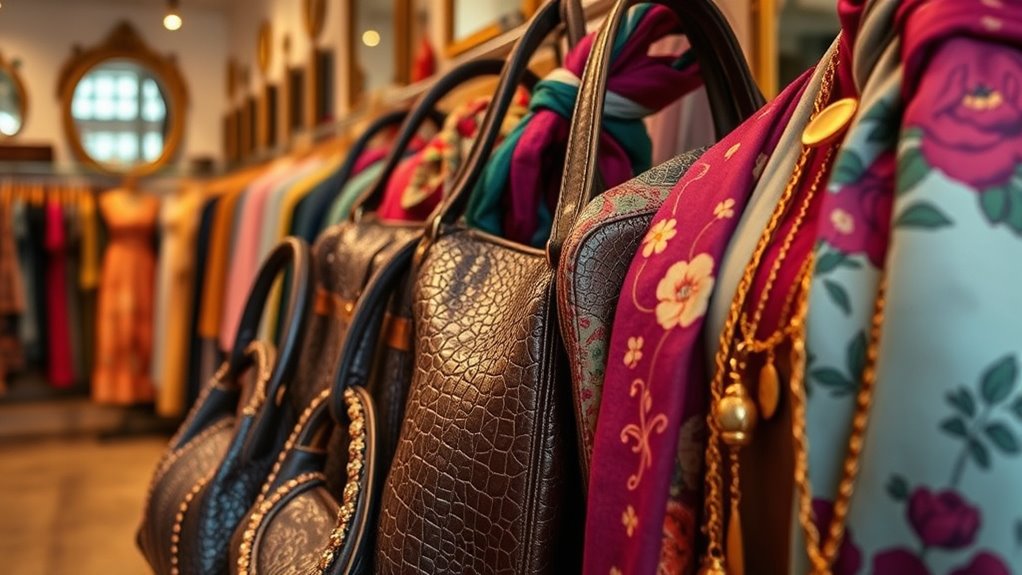
Vintage fashion has gained popularity for its unique style and sustainability benefits. When you choose to shop vintage, you’re engaging in sustainable shopping, which helps reduce waste and lessen the environmental impact of fast fashion. By opting for pre-owned pieces, you extend the life of clothing items, keeping them out of landfills and minimizing the demand for new production. This approach aligns with the growing trend revival, where fashion enthusiasts seek to reintroduce classic designs and timeless pieces into modern wardrobes. When you embrace vintage, you’re not just making a fashion statement—you’re participating in a movement that values eco-conscious choices and appreciates the craftsmanship of previous eras.
Shopping vintage allows you to stand out from the crowd. Unlike mass-produced fast fashion, vintage pieces often feature distinctive details, unique cuts, and high-quality materials that aren’t commonly found in contemporary stores. You can curate a wardrobe that reflects your personality and style, all while supporting sustainable shopping practices. Many vintage stores and online platforms make it easier than ever to access authentic pre-owned luxury fashion, giving you the opportunity to own designer labels at a fraction of the original cost. This not only makes luxury more accessible but also encourages a more thoughtful approach to buying fashion, where quality and longevity trump fleeting trends.
However, buying vintage comes with its own set of challenges. Finding the right fit can be tricky since sizing standards have changed over the years, and garments may have been altered or stretched out. You’ll need patience and an eye for quality, as some pieces might require repairs or cleaning before they’re wearable. *furthermore*, the availability of specific items can be unpredictable—you may spend time searching for that perfect vintage blazer or handbag, only to find it months later or never at all. Despite these hurdles, many see the thrill of discovering rare finds as part of the appeal, turning vintage shopping into a treasure hunt that’s both rewarding and sustainable.
It’s also worth noting that buying vintage requires a discerning eye. Not all pieces are genuinely authentic or in good condition, so you need to educate yourself about labels, fabrics, and authenticity markers. Additionally, understanding energy-efficient cloud servers can be beneficial for those interested in sustainable technology solutions, which aligns with the eco-conscious mindset of vintage shopping. While the process might demand more effort than shopping trendy, fast fashion, it pays off in having a wardrobe filled with meaningful, one-of-a-kind items. Overall, vintage fashion offers a compelling blend of style, sustainability, and individuality. If you’re willing to put in a little effort, you can enjoy the benefits of sustainable shopping while reviving trendsetting pieces that stand the test of time.
Frequently Asked Questions
How Can I Verify the Authenticity of Vintage Luxury Items?
To verify the authenticity of vintage luxury items, start with authentication tips like examining logos, serial numbers, and stitching details. Always compare the item to official images or descriptions from the brand. Use counterfeit detection tools or seek expert opinions from reputable authentication services. Trust your instincts and check for inconsistencies or signs of tampering. This proactive approach helps guarantee you’re investing in genuine vintage pieces.
What Are the Best Places to Buy Pre-Owned Luxury Fashion?
Imagine unearthing a treasure chest — that’s what shopping at top online marketplaces and thrift store finds feels like. You can score incredible pre-owned luxury fashion pieces at unbeatable prices. Websites like TheRealReal, Vestiaire Collective, and Depop are gold mines, offering authentic vintage gems. Immerse yourself in these platforms, sift through their collections, and you might just find that perfect designer piece that makes everyone stop and stare.
How Do I Assess the Condition of Vintage Clothing?
You assess vintage clothing by checking fabric durability—feel the material for softness and strength—and inspecting for signs of wear like tears or fading. Smell the garment for any lingering scent or odor, which might indicate poor storage or hygiene. Examine seams, buttons, and zippers closely for damage. If it passes these checks, you can confidently purchase, knowing the piece’s condition and longevity will meet your expectations.
Are Vintage Luxury Pieces Worth the Investment?
Vintage luxury pieces are worth the investment if you’re passionate about unique fashion and sustainability. For example, a designer handbag from the 1980s can appreciate over time and become a rare collectible. Luxury resale often offers high-quality items at a fraction of retail, aligning with vintage trends that emphasize individuality. While they may require careful assessment, these pieces can boost your wardrobe’s exclusivity and potential value.
How Can I Care for and Maintain Vintage Fashion Items?
To care for and maintain vintage fashion items, follow essential care tips like gentle cleaning and proper storage. Use preservation techniques such as acid-free tissue paper and cool, dark places to prevent damage. Regularly inspect your pieces for signs of wear, and avoid exposing them to direct sunlight or harsh chemicals. With careful handling and proper maintenance, your vintage items will stay beautiful and last for years to come.
Conclusion
Ultimately, choosing vintage is like holding a rare, timeless key—unlocking stories and style from the past. It’s a treasure chest of unique pieces, but also a delicate mirror reflecting the wear of years gone by. Whether you see it as a cherished heirloom or a fleeting trend, remember that each item carries the soul of its history. Embrace this journey, and let your wardrobe tell a story as rich and layered as the vintage pieces themselves.