
To verify a luxury label, start by inspecting the tags for quality fabric and clear, well-printed fonts, avoiding misspellings and blurry images. Check the serial numbers or authentication codes, which are often discreetly engraved or printed and can be verified through brand channels. Look for hallmarks like engraved logos or symbols, ensuring they’re sharp, evenly spaced, and match the brand’s style. Keep exploring further to uncover detailed tips on authenticating true designer pieces.
Key Takeaways
- Examine tags for high-quality fabric, clear printing, and consistent fonts, indicating authenticity.
- Check for serial numbers or authentication codes, verified through official brand channels.
- Look for hallmarks or logos on hardware and leather tags, ensuring precise placement and design.
- Verify country of origin details, such as “Made in Italy” or “Made in France,” for authenticity.
- Inspect craftsmanship details like stitching and finishing, which reflect genuine luxury standards.
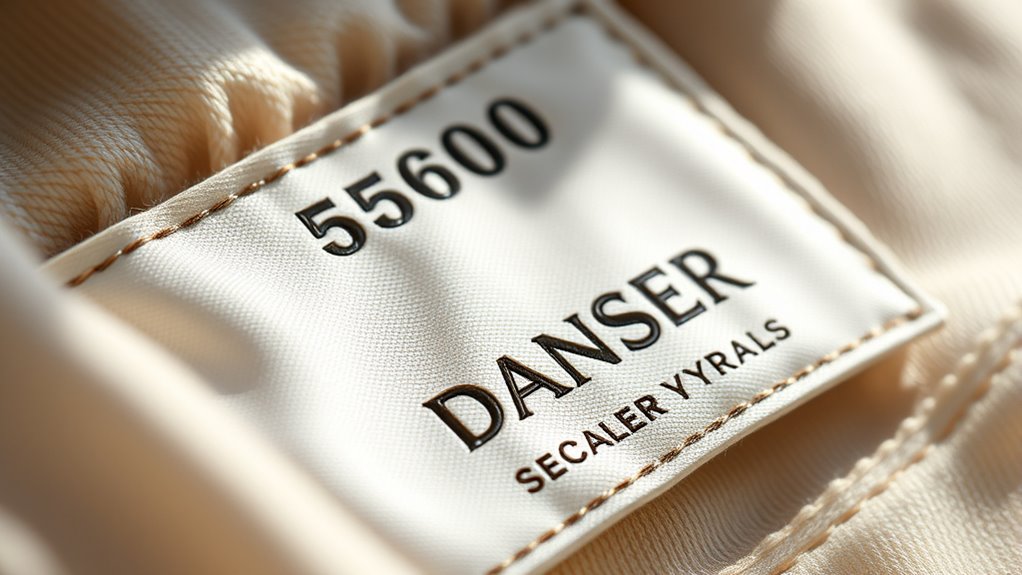
Have you ever wondered what truly distinguishes a luxury fashion label from more mainstream brands? It’s not just about the logo or price tag, but about the essence of brand authenticity. High-end labels invest heavily in maintaining their reputation for quality and exclusivity, and one way they do this is through meticulous craftsmanship indicators. When you examine a luxury item closely, these indicators reveal whether the piece lives up to its prestige or if it’s a counterfeit. Recognizing genuine craftsmanship involves paying attention to details like hand-stitched seams, the quality of materials, and precise finishing touches. Authentic luxury brands don’t cut corners; instead, they emphasize durability and finesse that are often evident in the fine details.
Reading a luxury fashion label starts with understanding how brands communicate authenticity through their tags, serial numbers, and hallmarks. The tags are more than just care instructions or brand names; they serve as a first line of verification. Genuine labels typically feature high-quality fabrics and clear, well-printed tags that feel sturdy and are sewn seamlessly into the garment. Fake tags often display inconsistent fonts, misspellings, or blurry printing. Furthermore, authentic tags often include specific details like the country of origin, which can vary depending on the brand. For instance, many luxury brands proudly state “Made in Italy” or “Made in France,” emphasizing their heritage and craftsmanship standards.
Serial numbers and hallmarks are equally essential in decoding luxury labels. Most genuine luxury pieces have unique serial numbers or authentication codes engraved or printed in discreet locations. These numbers aren’t just random; they’re carefully recorded by the brand and can often be verified through official channels or brand websites, providing peace of mind that your item is authentic. Hallmarks, like engraved logos or special symbols, further authenticate the piece. These are often embossed or stamped directly onto hardware, leather tags, or inside seams. Authentic hallmarks are sharp, evenly spaced, and consistent with the brand’s signature design language. Counterfeit items may mimic these marks but often fail to replicate the precision or the specific placement that true luxury pieces exhibit. Additionally, brand-specific hallmarks often serve as a signature detail that can help verify authenticity further.
In essence, decoding a luxury label involves more than just reading the visible tags; it’s about understanding the story of craftsmanship and brand authenticity behind each detail. When you invest time to analyze these indicators, you’re better equipped to distinguish genuine luxury from imitations, ensuring your prized possessions uphold their value and prestige.
Frequently Asked Questions
How Can I Verify the Authenticity of a Luxury Label?
You can verify the authenticity of a luxury label by inspecting its brand authenticity markers, like high-quality stitching, accurate logos, and genuine serial numbers. Use official brand websites or trusted authentication services for counterfeit detection, comparing details like hallmark markings and serial codes. Be cautious of unusual fonts, misspellings, or inconsistent hardware, as these often signal a fake. Trust your instincts and always buy from reputable sources to guarantee authenticity.
What Are Common Fake Labels to Watch Out For?
Think of counterfeit markers as wolves in sheep’s clothing—you need to spot the fake logo variations and subtle flaws. Common fake labels often mimic genuine tags but slip up on font, spacing, or stitching. Watch out for inconsistent serial numbers, misspelled brand names, or uneven hallmarks. These telltale signs help you identify fakes, so stay vigilant and compare labels carefully to protect yourself from counterfeit markers.
Do All Luxury Brands Include Serial Numbers on Their Products?
Not all luxury brands include serial numbers on their products. Some rely on brand logo variations and distinctive packaging design to authenticate items. You’ll find serial numbers more often on bags, wallets, or accessories, but many brands prioritize their logo and packaging details to verify authenticity. Always check for consistent branding, correct logo variations, and high-quality packaging, as these are key indicators even if a serial number isn’t present.
How Often Do Luxury Brands Update Their Labeling Standards?
Ever wonder how often luxury brands update their labels? They typically follow their own label update cycles, which can vary from annually to every few years. These updates often align with brand standard changes or new collections, ensuring authenticity and freshness. Do you think brands keep pace with fashion trends and technological advancements? Staying aware of these cycles helps you spot authentic products and understand the evolving standards of luxury labels.
Can Label Details Indicate Product Age or Vintage?
Yes, label details can help you identify vintage items. Look for vintage identification marks, like older logos or specific serial number formats, which often differ from current standards. Pay attention to label aging signs such as discoloration, fading, or fraying, as these indicate the product’s age. By examining these details, you can accurately determine if a piece is vintage and gauge its authenticity and era.
Conclusion
Now that you know how to decode labels, read serial numbers, and identify hallmarks, you can confidently spot authenticity, appreciate craftsmanship, and understand the story behind each piece. Recognize the signs, trust your eye, and enjoy the journey of discovering genuine luxury. With these skills, you’ll navigate the world of high-end fashion with ease, discern quality from counterfeit, and truly embrace the elegance behind every label. Your knowledge transforms shopping into an insightful, empowering experience.