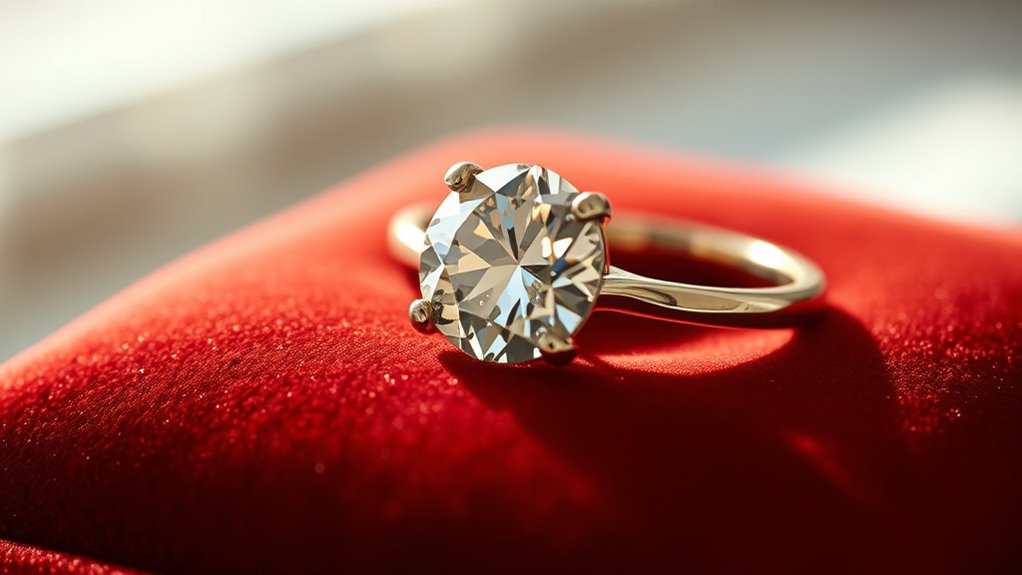

Understanding jewelry involves knowing key terms like carats, clarity, cut, and color. Carats measure a gemstone’s weight, influencing size and value. Clarity indicates how free the gem is from internal flaws, while the cut affects how it reflects light for sparkle. Color grading shows the richness of hue, tone, and saturation. Certification verifies authenticity and quality. Mastering these basics helps you pick beautiful, valuable jewelry—if you want to learn more, keep exploring these essential concepts.
Key Takeaways
- Carats measure gemstone weight and size, influencing appearance and value; larger stones are rarer and more eye-catching.
- Clarity indicates internal and external flaws; fewer inclusions mean higher clarity and better gemstone quality.
- Color grading assesses hue, tone, and saturation, with vibrant, consistent colors being more desirable.
- The cut determines how light reflects within the gemstone, affecting brilliance and sparkle.
- Certification verifies authenticity, quality, and ethical sourcing, ensuring informed and responsible purchasing decisions.
What Are Carats and Why Do They Matter?
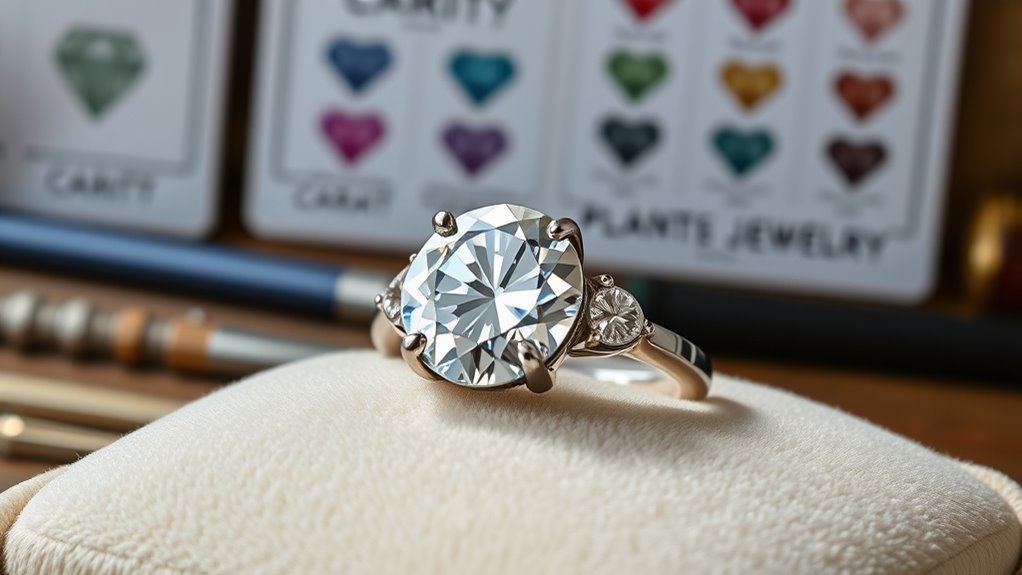
Have you ever wondered why carats are so important when choosing jewelry? Carats measure a gemstone’s weight, directly impacting its size and overall presence. A higher carat weight often signifies a more eye-catching piece, but it also influences diamond durability; larger stones can be more prone to chipping if not properly set. Beyond size, carats carry gemstone symbolism, representing rarity and value, which can make a piece more meaningful. Understanding carats helps you select jewelry that balances appearance, durability, and significance. Additionally, knowing about Free Floating gem settings can influence how a gemstone’s size appears and interacts with light, enhancing its brilliance. Whether you’re after a show-stopping centerpiece or a subtle accent, knowing what carats entail guarantees you make an informed decision that aligns with your style and values.
The Basics of Clarity in Gemstones
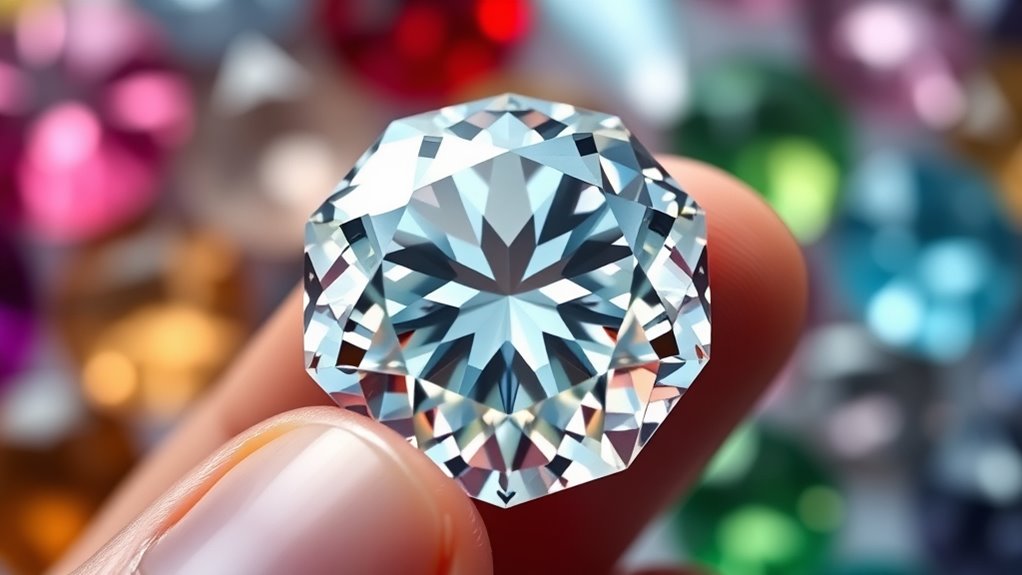
Clarity is a key factor in determining a gemstone’s beauty and value, as it refers to the presence or absence of internal and external flaws. These flaws are called inclusion types, which can vary from tiny feathers to mineral crystals or surface blemishes. The fewer and less visible the inclusions, the higher the clarity grade. Some gemstones undergo clarity enhancement techniques, such as laser drilling or fracture filling, to improve their appearance by reducing the visibility of inclusions. While these treatments can make a stone look more appealing, they also affect its value and care requirements. Understanding the different inclusion types and clarity enhancement methods helps you make informed decisions when selecting a gemstone that matches your beauty preferences and budget. Additionally, advancements in clarity enhancement technologies have made it possible to improve the appearance of lower-clarity stones without significantly compromising their durability or price.
Understanding the Cut and Its Impact on Sparkle
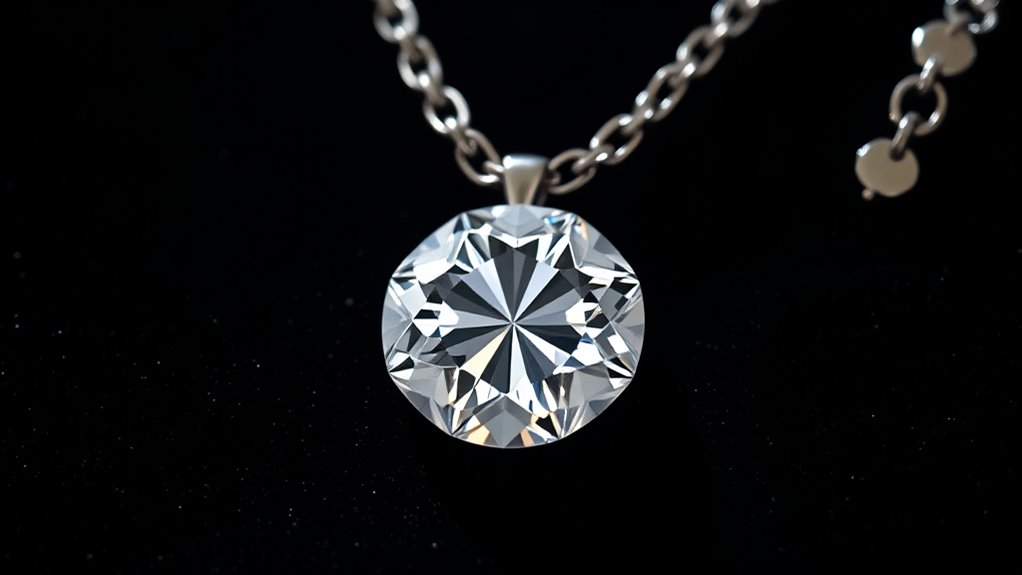
Your jewelry’s sparkle depends heavily on its cut, which affects how light reflects and creates fire. Symmetry and aesthetics make sure the stone looks balanced and appealing, while facet shapes and sizes influence how light travels through it. Understanding these aspects helps you choose pieces that truly shine.
Light Reflection and Fire
Ever wonder why some diamonds seem to burst with brilliance while others fall flat? It all comes down to how well the cut manages light reflection and fire. When a diamond is cut to ideal proportions, it maximizes light entry and bounce, creating more sparkle. Here are three key points to understand:
- Light Reflection: A well-cut diamond reflects light internally, sending it back through the top for maximum brilliance.
- Fire: The dispersion of light into rainbow colors, or fire, depends on precise angles in the cut.
- Sparkle: The overall sparkle results from the combination of light reflection and fire, making the diamond appear vibrant and lively. Additionally, a quality cut enhances the horsepower of the diamond’s brilliance, ensuring it captures the eye from every angle.
Choosing a cut that emphasizes these qualities ensures your diamond shines with mesmerizing brilliance.
Symmetry and Aesthetics
The way a diamond is cut greatly influences its overall appearance and how it captures light to create sparkle. Symmetry importance cannot be overstated, as well-aligned facets ensure light flows smoothly through the stone, maximizing brilliance. Poor symmetry can cause light to escape or scatter unevenly, dulling the diamond’s sparkle. Aesthetic balance is key; a well-cut diamond displays harmonious proportions and symmetry that enhance its beauty and desirability. When the facets are precisely aligned, the stone appears more attractive and visually appealing. You’ll notice that symmetrical cuts reflect light consistently, creating a mesmerizing shimmer. Additionally, a well-executed cut with proper facet alignment enhances the diamond’s overall sparkle and visual impact. Ultimately, the cut’s symmetry and aesthetic balance are fundamental to a diamond’s sparkle, making it look more stunning and valuable to the eye.
Facet Shapes and Sizes
Facet shapes and sizes play an essential role in determining a diamond’s sparkle and overall appearance. The right combination enhances brilliance and fire, making your gem truly stand out. For example:
- Facet shape – Whether round, princess, or emerald, the shape influences how light enters and reflects within the stone.
- Facet size – Smaller facets can increase sparkle by creating more reflectivity, while larger facets enhance the stone’s depth and brilliance.
- Facet arrangement – Proper alignment ensures maximum light return, emphasizing the diamond’s fire and scintillation.
Choosing the right facet shape and size depends on your personal style and the gem’s cut quality. Understanding these elements helps you select a diamond that shines brilliantly and captures attention.
Deciphering Color Grading in Gems
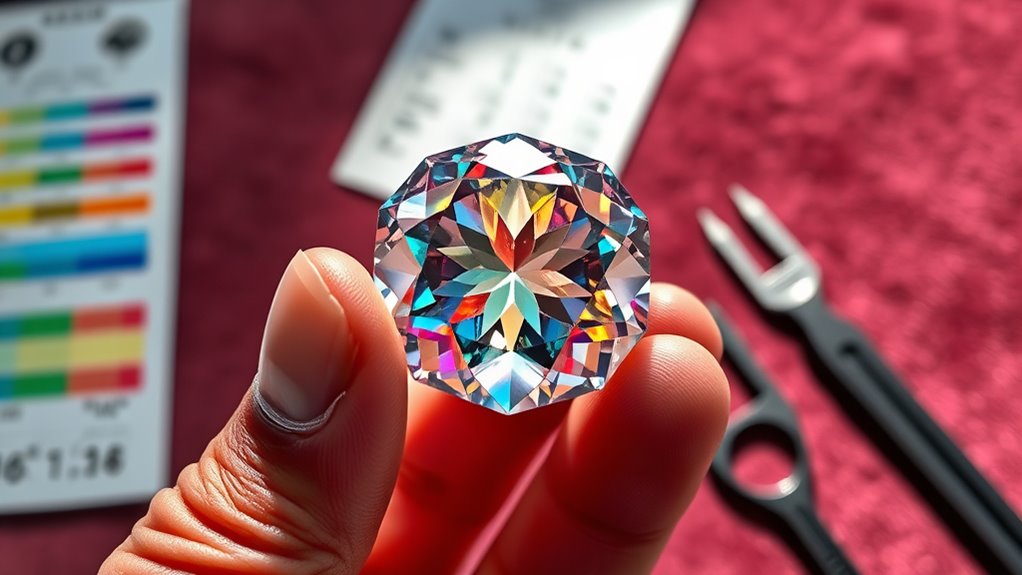
Understanding how color is graded helps you choose gems that match your preferences. You’ll learn about the color scale and how intensity affects a gem’s appearance. Grading systems explain how experts assess and communicate a gem’s true hue and saturation.
Color Scale and Intensity
Deciphering a gem’s color grade involves evaluating its hue, tone, and saturation, which together determine its overall visual appeal. To understand its color scale and intensity, focus on these key aspects:
- Color saturation: Look for vibrant, pure colors without dullness, indicating high saturation.
- Hue consistency: Check for uniformity in hue across the entire gem; inconsistent hues can reduce value.
- Color intensity: Observe how vivid or pale the color appears, with more intense colors generally being more desirable.
Grading Systems Explained
Have you ever wondered how gem colors are accurately rated? That’s where color grading comes in. This system evaluates a gemstone’s hue, tone, and saturation to determine its overall color quality. Skilled gemologists use standardized color grading scales to assure consistency, making it easier for buyers to compare stones. Keep in mind, gemstone durability also influences grading; a beautiful gem isn’t just about color but also how well it withstands daily wear. Higher durability means the gemstone is less prone to chips or scratches, preserving its appearance and value over time. Additionally, understanding decoding slang can help you better navigate informal descriptions or casual conversations about jewelry. By understanding color grading and gemstone durability, you gain a clearer picture of a gem’s true quality, helping you make smarter jewelry choices.
The Role of Certification and Grading Reports
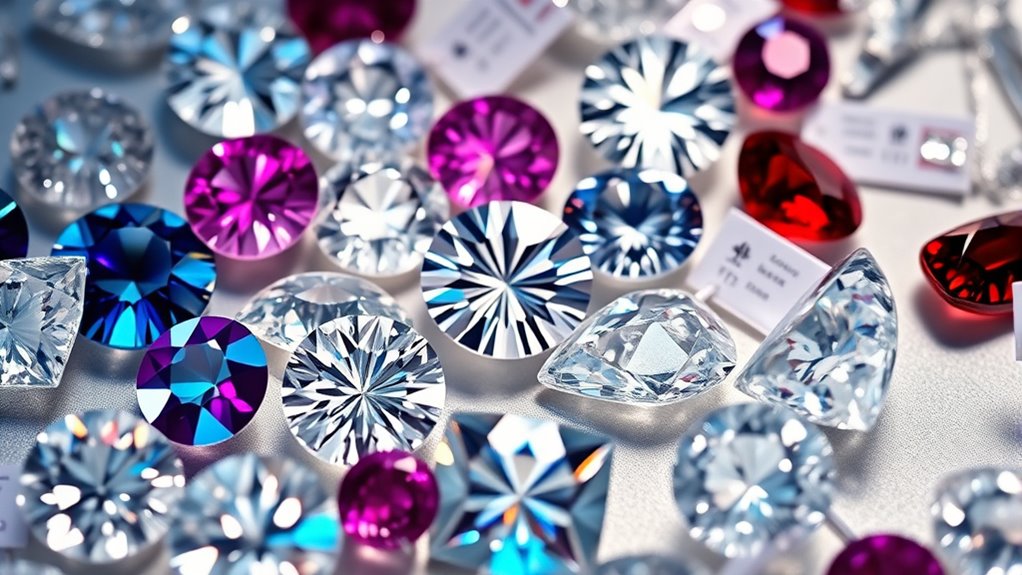
Certification and grading reports play a crucial role in ensuring the authenticity and quality of jewelry. These reports help you distinguish between synthetic vs. natural gems and verify ethical sourcing. Here’s what they reveal:
Certification reports verify jewelry authenticity, quality, and ethical sourcing for responsible, confident purchasing.
- Authenticity: Confirm if the gemstone is natural or synthetic, so you know what you’re truly buying.
- Quality: Details like clarity, cut, and color are objectively assessed, guiding your purchase.
- Ethical sourcing: Reports often include information about the gem’s origin, ensuring it’s ethically sourced and conflict-free.
Having this documentation gives you confidence in your jewelry, helps prevent scams, and guarantees responsible buying. Whether you’re investing in a diamond or a colored gemstone, certification safeguards your purchase and promotes transparency in the jewelry industry.
Tips for Choosing the Right Gemstone for You
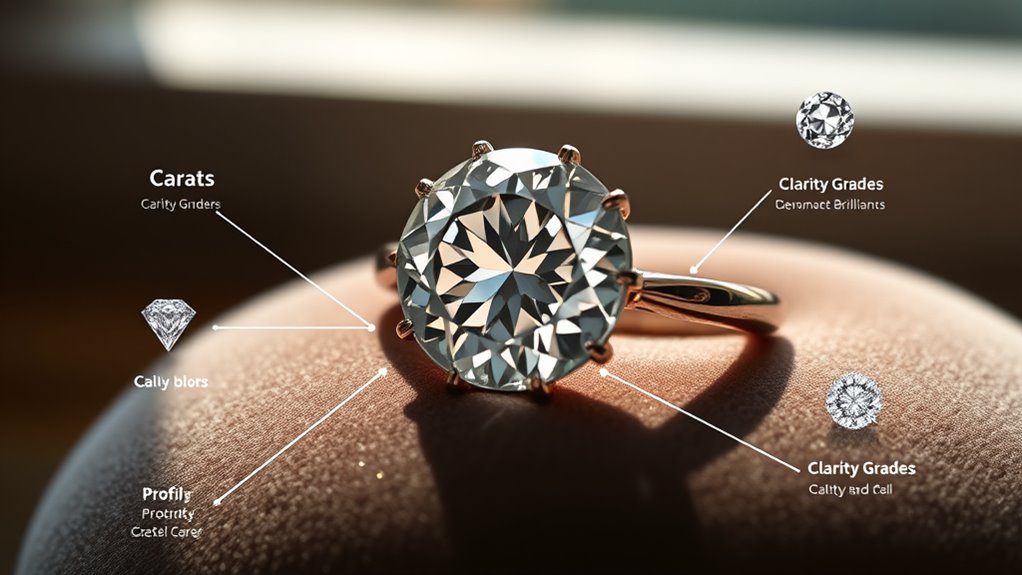
Choosing the right gemstone involves considering your personal style, budget, and the meaning you want your jewelry to convey. Think about whether your style is classic, modern, or eclectic, and select a gemstone that aligns with it. Budget considerations are vital; some stones, like sapphires or moissanite, offer beauty without breaking the bank, while diamonds tend to be more expensive. Set a clear budget to avoid overspending and explore options within that range. Also, consider the gemstone’s durability—if you want everyday wear, opt for harder stones like sapphires or rubies. Ultimately, choose a gemstone that resonates with your personality, fits your financial plan, and reflects the sentiment you wish to express. When selecting a gemstone, understanding high-quality products can help ensure you make a well-informed choice.
Frequently Asked Questions
How Do Synthetic Gemstones Compare to Natural Ones?
Synthetic gemstones, like lab-grown diamonds, often look just as stunning as natural ones, but they’re created in labs rather than mined. They typically cost less and have fewer inclusions, making them more perfect. However, some natural gemstones undergo treatments to enhance their appearance, which can be confused with synthetic origins. When choosing, you’ll want to contemplate these factors and ask about gemstone treatments and whether your stone is lab-grown or natural.
What Is the Significance of Fluorescence in Gemstones?
Fluorescence in gemstones indicates their luminescence properties, which can affect their appearance and value. When you examine a gemstone’s fluorescence grading, you’ll see how strongly it glows under UV light. This feature can enhance or diminish a gem’s brilliance, making it a key factor in quality and authenticity. So, understanding fluorescence helps you assess a gemstone’s beauty and potential worth more accurately.
How Does the Shape of a Gemstone Affect Its Value?
The shape of a gemstone greatly influences its value because it impacts its cutting style and visual appeal. You’ll find that well-cut shapes like round or princess maximize brilliance, making the gem more attractive and desirable. Unique shapes, such as oval or emerald cuts, add character and can increase value if they enhance the stone’s clarity and color. Ultimately, the shape you choose affects how stunning your gemstone looks and its worth.
Are There Eco-Friendly Alternatives to Traditional Jewelry Gems?
Yes, eco-friendly alternatives to traditional gems do exist. You might consider lab-grown diamonds, which have the same beauty but lower environmental impact. Recycled metals are also popular, reducing mining waste and conserving resources. These options prove that you can enjoy stunning jewelry while supporting sustainability. By choosing lab-grown diamonds and recycled metals, you help reduce environmental harm without sacrificing style or quality.
How Can I Tell if a Gemstone Is Ethically Sourced?
You can tell if a gemstone is ethically sourced by asking for certification or proof of ethical sourcing from the seller. Look for conflict-free gemstones, which guarantee no funding of conflict or violence. Reputable jewelers often partner with suppliers committed to ethical sourcing standards. Research brands known for transparency, and don’t hesitate to request detailed information about the gemstone’s origin to ensure it aligns with your values.
Conclusion
Now that you’re armed with the knowledge of carats, clarity, cut, and color, you hold the keys to revealing gemstone brilliance. Think of each gem as a story waiting to be told—your story. Trust your eye, ask questions, and choose what truly resonates with you. With this understanding, you’ll navigate the jewelry world with confidence, turning raw sparkle into treasured moments that shine as brightly as your unique journey.