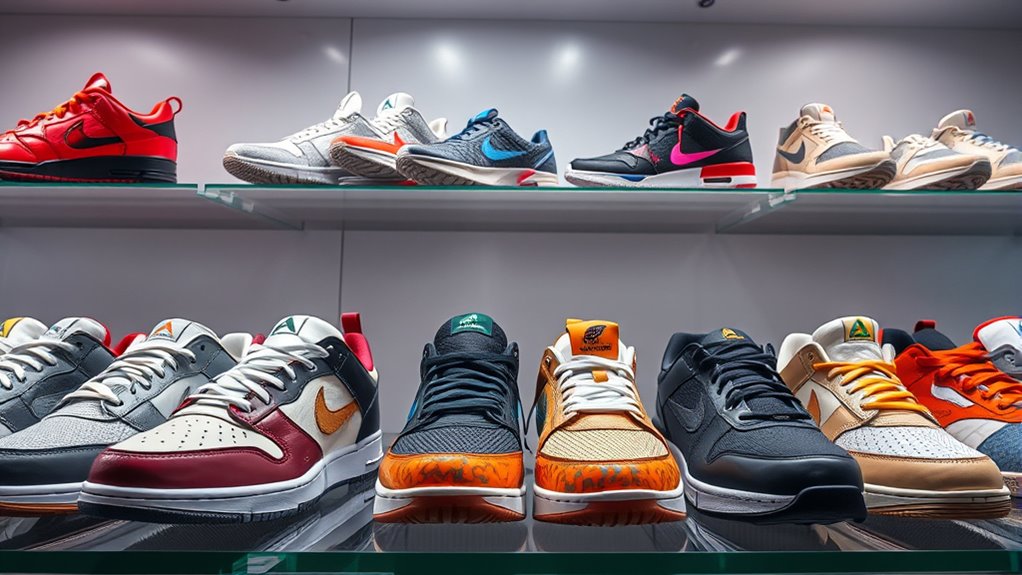

Sneakers have transformed from everyday athletic wear into highly sought-after collectibles fueling a multi-billion-dollar industry. Limited editions, collaborations, and vintage models now fetch top dollar, turning sneaker culture into a global business. As a collector or investor, understanding authenticity and market trends is key to success. If you want to uncover how these luxury kicks became a major force in fashion and finance, there’s more to explore below.
Key Takeaways
- Sneakers evolved from everyday wear to symbols of status and culture, increasing their desirability and collectible value.
- Limited editions and collaborations drive high resale prices, fueling the sneaker’s transformation into a lucrative market.
- The rise of online platforms and resale markets has expanded sneaker trading, emphasizing strategic buying and market trend analysis.
- Authenticity is crucial; professional verification protects investments and maintains credibility in the high-value sneaker industry.
- Collectible sneakers now represent more than fashion, serving as investments, status symbols, and cultural icons fueling big business.

Sneakers have evolved from everyday footwear to highly coveted collectibles, mesmerizing enthusiasts around the world. This transformation has turned sneakers into more than just shoes; they’re now symbols of status, culture, and investment. As a sneaker enthusiast or even a casual collector, you’ve likely noticed how rare editions and limited releases command astonishing prices. But with this surge in value, the vital importance of sneaker authentication has become paramount. Fake sneakers flood the market, and without proper verification, you risk buying counterfeit items that can diminish your collection’s worth. Professional sneaker authentication services are now indispensable tools for collectors and resellers alike, helping you verify the authenticity of your prized possessions. Proper authentication guarantees you’re investing in genuine sneakers, preserving their value and your reputation in the sneaker resale market.
The sneaker resale market has exploded over the past decade, fueled by a growing community of collectors and investors eager to buy and sell rare kicks. This thriving marketplace operates through online platforms and sneaker boutiques, where prices often skyrocket for limited-edition releases. As you navigate this market, you realize that sneaker resale isn’t just about flipping shoes for quick profit—it’s about strategic buying, understanding market trends, and recognizing which sneakers will appreciate over time. Resellers and collectors often seek out exclusive collaborations, limited drops, and vintage models, knowing these items can fetch considerably higher prices later. Your goal becomes mastering how to spot sneakers with genuine potential, whether for personal collection or resale profit.
In this dynamic environment, sneaker authentication plays a vital role. It’s a safeguard against counterfeit goods and a way to maintain credibility in the resale community. When you buy or sell in the sneaker resale market, authenticating your sneakers reassures buyers and increases your chances of securing fair deals. Whether you’re a seasoned reseller or a passionate collector, understanding the nuances of sneaker authentication can make or break your success. You learn to scrutinize details like stitching, materials, and logos — skills that help you distinguish genuine sneakers from replicas. Additionally, high-quality images and thorough documentation support accurate verification and can significantly improve your chances of a successful transaction. As the market continues to grow, staying informed about authentication techniques and market trends is essential. It’s no longer just about owning a pair of sneakers; it’s about knowing the story behind each pair and safeguarding its authenticity to preserve its value.
Frequently Asked Questions
What Are the Most Valuable Sneaker Collectibles Ever Sold?
You’ll find that the most valuable sneaker collectibles ever sold include rare Nike Air Yeezy 1 prototypes, which fetched around $1.8 million, thanks to their extreme sneaker rarity and Kanye West’s celebrity collaborations. These sneakers became iconic due to limited releases and high-profile endorsements, making them highly sought after. Their rarity and celebrity influence drive up their value, turning them into some of the priciest sneaker collectibles in history.
How Do Sneaker Authentication Services Work?
When you use sneaker authentication services, they carefully examine your shoes for counterfeit detection. Experts check key details like material quality, stitching, logos, and serial numbers to verify authenticity. They use specialized tools and experience to spot subtle differences from genuine sneakers. This process guarantees your sneakers are legit, giving you confidence in your collectible’s value and protecting you from counterfeit products in the sneaker market.
Which Brands Dominate the Sneaker Resale Market?
You’ll notice brands like Nike, Adidas, and Yeezy dominate the sneaker resale market, thanks to their iconic designs and limited editions. Ironically, these giants thrive on sneaker customization and resale platforms, turning rarity into riches. If you’re looking to cash in or score unique kicks, focusing on these brands gives you the best shot. Their popularity guarantees your investment or collection remains hot, even as trends rapidly change.
How Do Limited Editions Impact Sneaker Values?
Limited editions substantially boost sneaker values by influencing market trends and emphasizing rarity factors. When you acquire a limited-edition pair, you tap into the scarcity that drives demand and resale prices upward. These drops create hype, making sneakers more desirable and collectible. As a result, their value often appreciates over time, especially if they become iconic or hard to find, reinforcing the importance of exclusivity in the sneaker resale market.
What Are the Environmental Impacts of Sneaker Production?
Sneaker production leaves a hefty environmental footprint, like footprints in the sand that don’t fade easily. By choosing brands focused on sustainable manufacturing, you help reduce pollution and waste. Manufacturing sneakers often involves water use, toxic chemicals, and energy consumption. Opting for eco-friendly options lowers your impact on the planet, making you a part of the solution rather than the problem, and encouraging brands to adopt greener practices for future kicks.
Conclusion
Think of sneakers as hidden treasures waiting to be uncovered, each pair a unique gem in a vast treasure chest. As you explore this world, you’ll realize you’re not just buying shoes but collecting stories, history, and passion. Like a seasoned explorer, you’ll find that each sneaker holds a secret, a memory, or a future adventure. Embrace the journey, and soon you’ll see that these kicks are more than footwear—they’re your personal legacy.