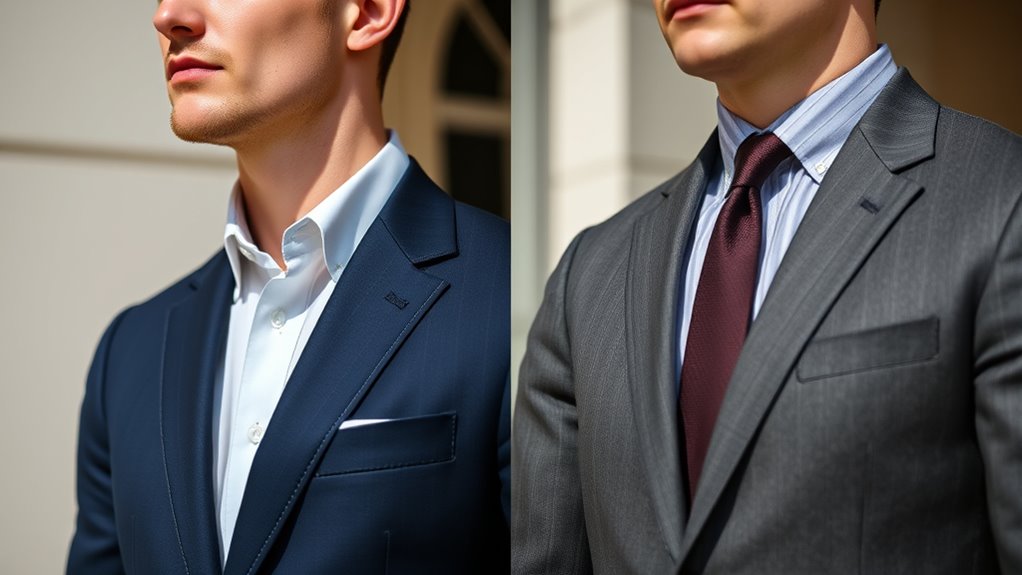

A custom tailored suit is worth it if you value perfect fit, high-quality craftsmanship, and personalized style. Off-the-rack suits are convenient and affordable but often lack the precise fit and unique details that a bespoke suit offers. Investing in a custom suit may cost more upfront, but it provides better comfort, durability, and long-term value. If you want to learn more about making the right choice for your needs, keep exploring the options.
Key Takeaways
- Bespoke suits offer a perfect fit and customization, enhancing comfort, personal style, and professional image.
- High-quality fabrics and craftsmanship in bespoke tailoring ensure greater durability and long-term value.
- While more expensive upfront, bespoke suits last longer and can be more cost-effective over time.
- Off-the-rack suits provide quick, affordable options but may require alterations for optimal fit.
- Investing in a bespoke suit is worthwhile for those prioritizing fit, personalization, and lasting quality.
Understanding the Differences in Fit and Comfort
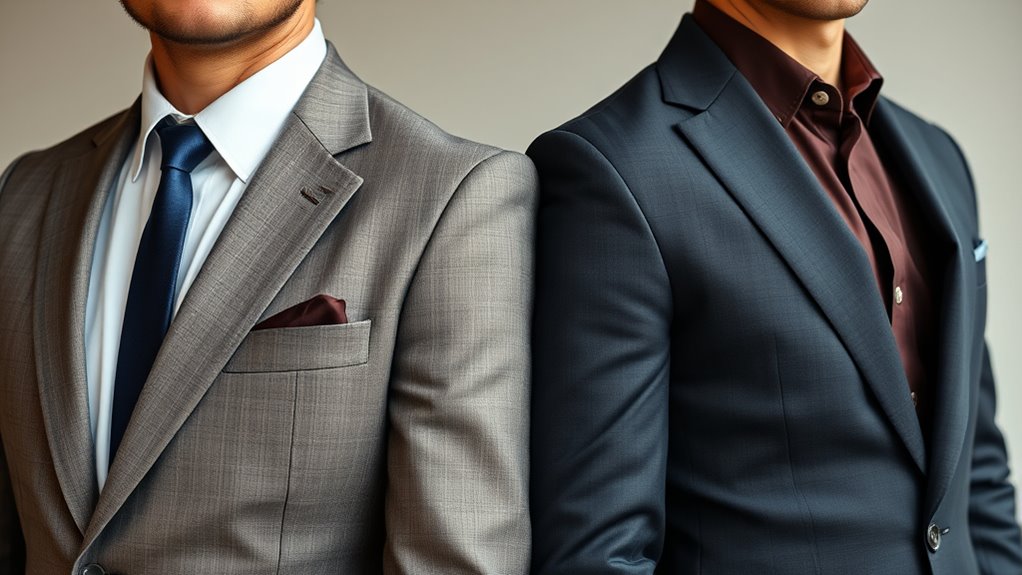
When it comes to fit and comfort, off-the-rack suits often feel more standardized, while bespoke suits are tailored specifically to your body. With off-the-rack options, fabric selection is limited, and the fit is based on generic sizes, which can lead to discomfort or a less polished look. In contrast, bespoke suits offer greater style diversity, allowing you to choose fabrics that suit your climate, occasion, and personal taste. This customization guarantees the suit conforms perfectly to your measurements, providing superior comfort and a better fit. The ability to select from a wide range of fabrics means you can prioritize softness, breathability, or durability. Overall, bespoke suits deliver a fit that feels natural and comfortable, thanks to their tailored construction and extensive fabric options. Additionally, understanding Free Floating elements can help in designing suits that move seamlessly with your body for enhanced comfort.
The Craftsmanship and Materials Behind Each Option

The craftsmanship and materials behind suits considerably influence their overall quality and appearance. With off-the-rack options, fabric quality can vary widely, often using less refined textiles. Bespoke suits, however, feature premium fabrics selected specifically for you, ensuring durability and a luxurious feel. Tailoring precision also differs: off-the-rack suits are mass-produced, leading to less exact fit, while bespoke suits are crafted with meticulous attention to detail, fitting your body perfectly. Additionally, the European craftsmanship involved in bespoke tailoring often results in a superior overall finish and longevity.
Cost Comparison: Upfront Investment and Long-Term Value
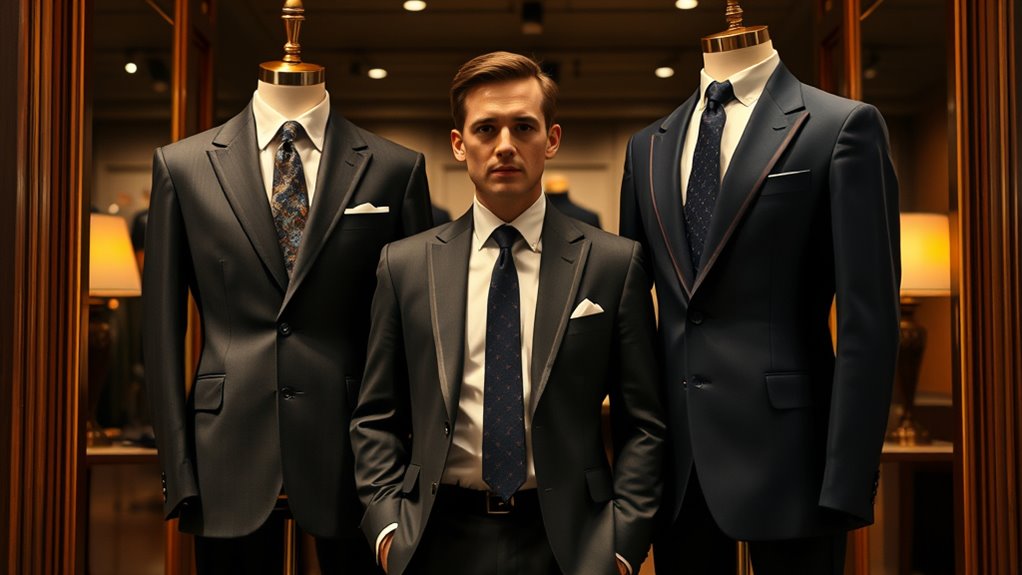
Bespoke suits typically require a higher upfront investment due to their custom craftsmanship and premium materials, but this initial cost often pays off over time. With bespoke tailoring, you can choose from a wide range of fabric selection and color options, ensuring a suit that fits your style perfectly. While off-the-rack suits are generally less expensive initially, they may need frequent replacements or alterations, adding to long-term costs. A bespoke suit, crafted for durability and personal preference, can last years longer with proper care. Although the upfront expense is significant, the investment results in a unique, high-quality garment that offers better fit, comfort, and longevity, often making it more cost-effective in the long run. Incorporating tool maintenance practices can help ensure your bespoke suit remains in excellent condition for years to come.
Time and Process Involved in Custom Tailoring
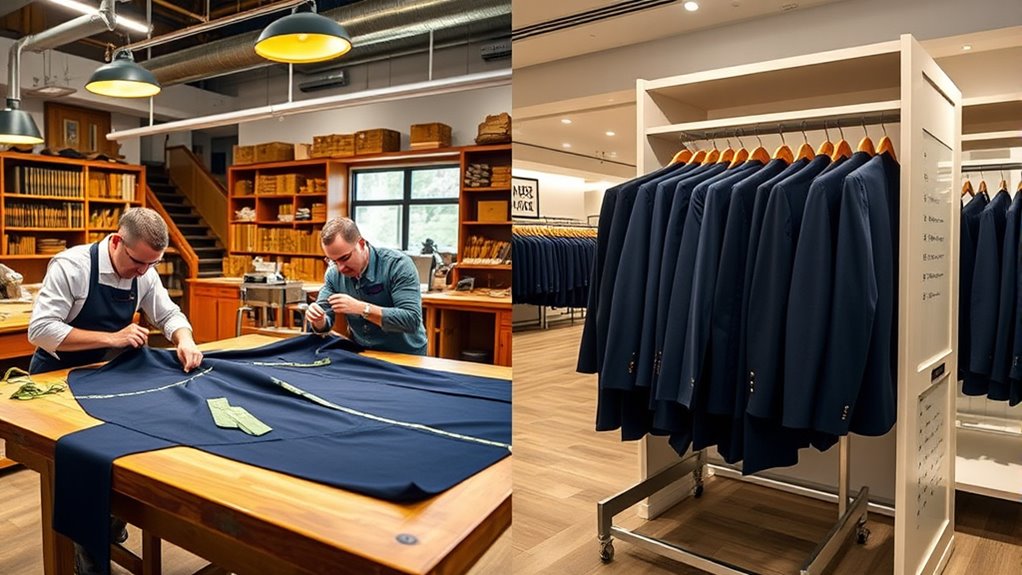
When you opt for a bespoke suit, the process begins with detailed measurements and fittings to guarantee a perfect fit. You’ll likely need multiple fittings along the way, which extend the overall timeframe. Expect it to take several weeks before your custom suit is ready to wear. Additionally, color accuracy in the tailoring process ensures that the fabric’s true hue is maintained, contributing to a polished final appearance.
Measurement and Fitting
Since custom tailoring involves precise measurements, the fitting process can take anywhere from a few hours to several weeks, depending on the complexity of the suit and the tailor’s workload. During this process, your measurements are meticulously taken to guarantee a perfect fit, considering factors like fabric texture and historical trends in tailoring. You’ll likely experience stages such as initial fitting, adjustments, and final approval. Key aspects include:
- Accurate chest, waist, and shoulder measurements for a balanced silhouette
- Consideration of fabric stretch and texture to ensure comfort
- Adjustments based on posture and movement for natural fit
- Incorporation of stylistic elements aligned with current and past fashion trends
- Attention to support breakfast details ensures the suit complements your overall style and comfort.
This thorough process guarantees a suit that fits seamlessly and reflects your personal style.
Multiple Fittings Needed
After your measurements are taken, the tailoring process typically involves multiple fittings to guarantee the suit fits perfectly and meets your expectations. During these fittings, you’ll see how the suit fabric responds to your body and movement. Skilled tailors use precise tailoring techniques to make adjustments, ensuring the suit contours to your shape. Each fitting allows you to evaluate aspects like shoulder slope, chest fit, and sleeve length, providing opportunities for fine-tuning. This iterative process helps identify subtle issues that off-the-rack suits can’t address. Multiple fittings might seem time-consuming, but they ensure the final product is crafted with care and accuracy. Ultimately, these fittings guarantee a fit that’s comfortable, sharp, and tailored precisely to your body’s unique contours. Additionally, understanding custom tailoring can enhance your appreciation for the detailed craftsmanship involved in creating a bespoke suit.
Timeframe for Completion
Creating a bespoke suit is a process that requires patience, as it typically takes several weeks to complete. During this time, you’ll work closely with your tailor, selecting fabrics and fine-tuning details. The process includes multiple steps, such as initial measurements, fabric selection, and fitting sessions. Each step involves careful attention to tailoring techniques to guarantee a perfect fit. Expect the timeline to include:
- Detailed fabric selection, which can take a few days
- Pattern creation and initial fitting, around one to two weeks
- Multiple fittings to refine the cut and fit
- Final tailoring and finishing touches, usually within a few weeks
- The entire process is guided by vetted practices to ensure transparency and quality.
Versatility and Style Options for Off-The-Rack and Bespoke Suits
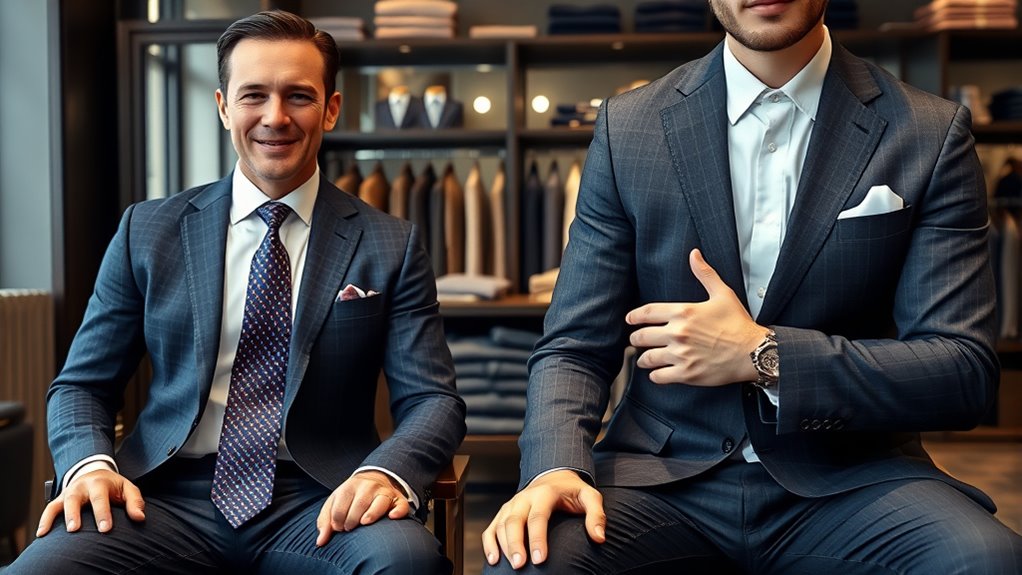
When choosing between off-the-rack and bespoke suits, your style options play a big role. Off-the-rack suits offer a wide range of ready-made choices, making it easy to find something that fits your needs quickly. However, bespoke suits provide more opportunities for customization, giving you a truly unique look that reflects your personal style.
Range of Style Choices
Bespoke suits offer a wide array of style choices, allowing you to customize every detail to match your personal taste and occasion. You can select from various fabric patterns, ensuring your suit reflects your unique style. The color options are extensive, giving you the flexibility to choose classic shades or bold hues. With bespoke tailoring, you can also decide on lapel styles, pocket designs, and button types for a truly personalized look. Off-the-rack suits tend to have limited options, often restricted to standard cuts and basic patterns. However, they still provide some versatility with seasonal fabric choices and minor adjustments. Ultimately, bespoke suits provide a broader range of style options, enabling you to craft a suit that perfectly aligns with your personality and the event’s formality. Additionally, bespoke tailoring often incorporates advanced fitting techniques that ensure the final suit complements your body shape perfectly.
Customization Opportunities
Both off-the-rack and bespoke suits offer distinct avenues for customization, allowing you to tailor your wardrobe to your needs and style preferences. With off-the-rack options, you can choose from various fabrics sourced from different suppliers, giving you some control over material quality and look. You might also select from predefined fits and lapel styles, but your options are limited compared to bespoke suits. Bespoke tailoring, on the other hand, provides complete customization, from fabric sourcing to suit branding details like stitching and button choices. You can select unique fabrics, patterns, and finishes that reflect your personal style. This flexibility guarantees your suit fits perfectly and aligns with your aesthetic, making bespoke suits a versatile choice for those seeking a highly personalized wardrobe.
The Impact on Personal Image and Confidence
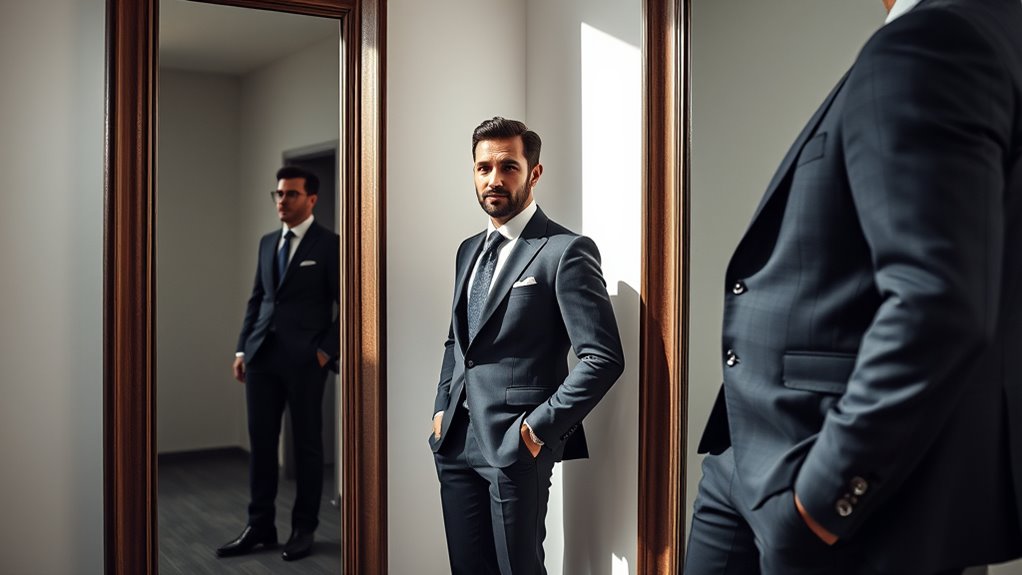
Choosing a suit that fits perfectly can considerably boost your personal image and confidence. When your clothing aligns with your style, it enhances your personal branding and projects a polished professional appearance. A well-fitted suit helps you stand out and leaves a strong impression. It signals self-respect and attention to detail, which are essential in professional settings. Additionally, a tailoring process rooted in Italian craftmanship ensures that your suit not only fits impeccably but also reflects timeless elegance.
Consider these benefits:
- Increased self-assurance during important meetings
- Better first impressions on clients or colleagues
- Elevated perception of your professionalism
- Enhanced overall style and presence
How to Choose Based on Your Lifestyle and Needs
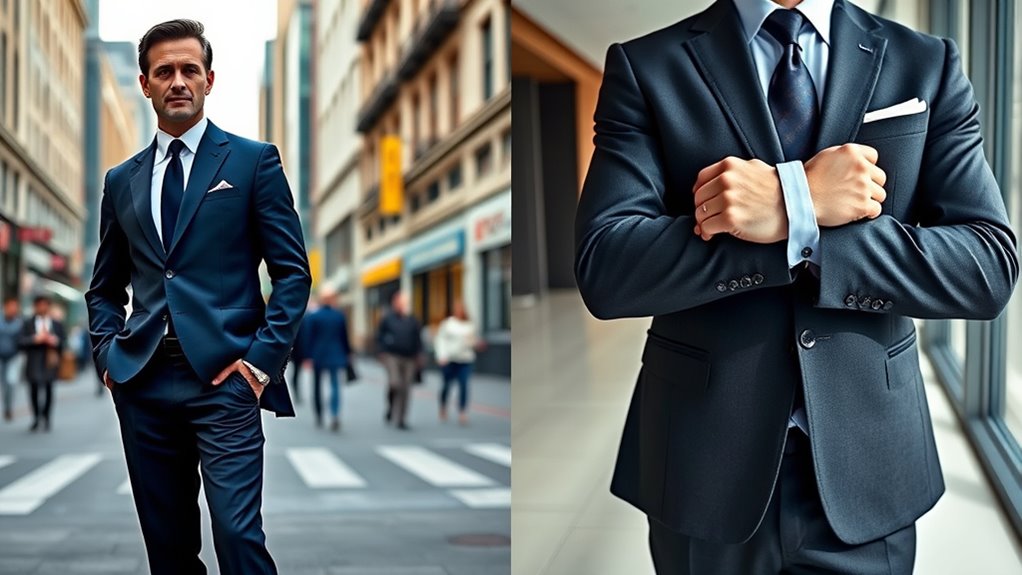
When choosing between off-the-rack and bespoke suits, consider your dress code and how often you’ll wear the suit. Think about your comfort needs and whether mobility is a priority for your daily activities. Also, assess your budget to determine if investing in a custom piece aligns with your financial plans.
Dress Code Compatibility
Your lifestyle and daily activities play a crucial role in determining whether a suit’s style and formality level match your needs. Consider the dress code requirements of your environment to make the right choice. For formal settings, opt for classic, well-structured suits with polished accessories coordination and color matching that exude professionalism. If your days are more casual, a less formal suit with versatile fabrics works better. Keep in mind, the color scheme should complement your overall wardrobe, making it easier to mix and match. When selecting a suit, think about:
- The level of formality expected at your workplace
- Events you regularly attend
- The flexibility of your wardrobe
- The importance of accessories matching seamlessly
Additionally, understanding the astrological traits linked to personal style can offer unique insights into which suit type might align best with your personality. Matching these factors ensures your suit fits your lifestyle perfectly.
Mobility and Comfort Needs
Since mobility and comfort are essential for maintaining productivity and ease throughout your day, selecting a suit that aligns with your lifestyle can make all the difference. Consider how fabric patterns impact your comfort; flexible, stretch fabrics offer better mobility for active days. For example, solid colors or subtle patterns tend to be more versatile and comfortable, especially if you move around a lot. Seasonal variations also matter—lighter fabrics like linen or seersucker keep you cool in summer, while heavier wool suits provide warmth in winter. A bespoke suit allows you to customize fabric choices for your climate and daily activities, ensuring maximum comfort. Off-the-rack options may not offer the same tailored ease, especially if frequent movement or comfort is a priority.
Budget and Investment Level
Choosing between off-the-rack and bespoke suits largely depends on your budget and how much you’re willing to invest in your wardrobe. If you’re mindful of costs, off-the-rack suits offer quick, affordable options with limited fabric choices and less focus on suit preservation. However, if you’re ready to invest more, a bespoke suit allows for personalized fabric selection and superior craftsmanship, enhancing longevity. Consider these factors:
- Your overall wardrobe budget and frequency of suit use
- Desired level of customization and fabric quality
- Long-term value versus short-term savings
- How much effort you’re willing to put into suit preservation
Ultimately, your investment level should align with your lifestyle needs, ensuring your suit remains sharp and durable over time.
Maintenance, Durability, and Longevity of Different Suits

Although off-the-rack suits often require less initial investment, their maintenance and durability can vary markedly compared to bespoke options. You’ll need to pay close attention to fabric care to keep them looking sharp over time. Regularly dry cleaning and proper handling help preserve the fabric’s integrity, but frequent cleaning can wear down cheaper materials faster. Storage tips are equally important; always hang your suit on a quality hanger to maintain its shape and avoid creases. In contrast, bespoke suits tend to use higher-quality fabrics that withstand wear longer and respond better to proper care. While they may require more initial effort, their durability and longevity often justify the investment, making them a better choice for lasting style and performance. Additionally, understanding fabric care and maintenance routines can significantly extend the lifespan of both off-the-rack and bespoke suits.
When a Custom Suit Becomes a Necessary Investment
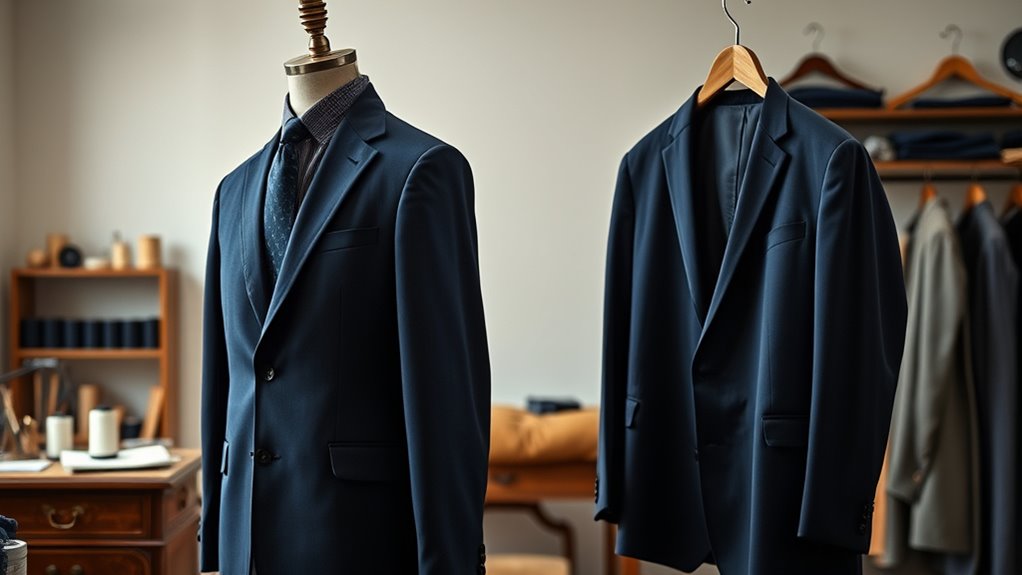
There are moments when investing in a custom suit becomes essential, especially when your wardrobe needs to balance style, fit, and long-term durability. A custom suit is worth it when you require specific fabric patterns that reflect your personality or unique professional environment. If you need color options beyond standard shades, a bespoke suit offers tailored choices that suit your preferences. Additionally, consider a custom suit when:
- You want perfect fit tailored to your body shape
- You desire high-quality fabrics for durability
- You need specific fabric patterns for a distinctive look
- You require a suit that aligns with your personal style and occasions
- You seek professional confidence that comes with a well-fitted, personalized wardrobe piece
In these cases, a bespoke suit isn’t just an upgrade; it’s a necessary investment to ensure confidence and elegance in every setting.
Making the Decision: Balancing Budget, Style, and Personal Preference
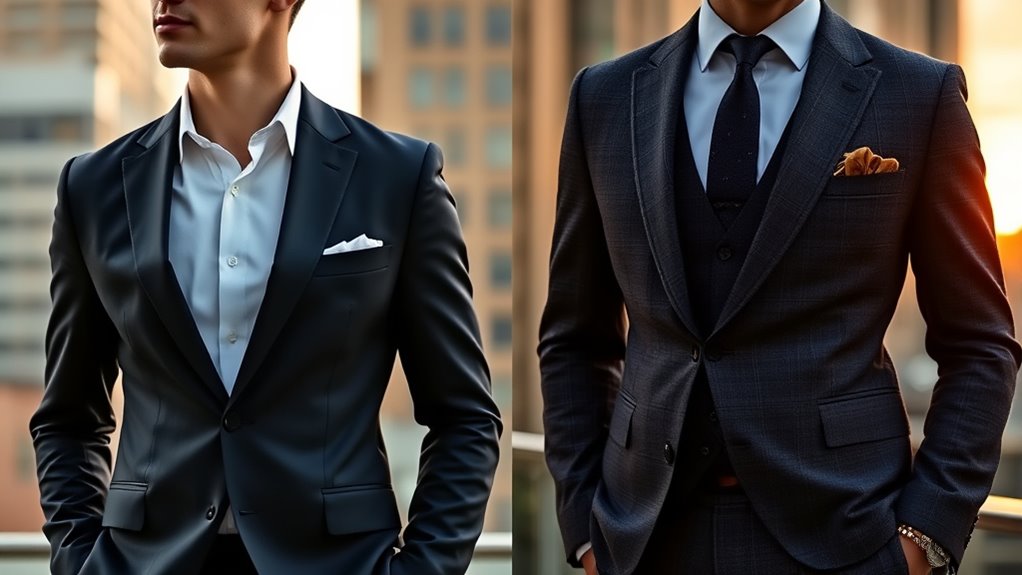
Deciding between off-the-rack and bespoke suits requires carefully weighing your budget, style preferences, and personal priorities. First, consider fabric quality: bespoke suits often feature higher-quality fabrics that last longer and feel better, but they come at a higher cost. If you value style versatility, a custom suit can be tailored to suit multiple occasions, offering more options for fit and details. On a tighter budget, off-the-rack suits provide quick, affordable options, though they may lack the perfect fit and unique customization. Think about how much you prioritize personal expression versus cost savings. Ultimately, balancing these factors helps you decide whether investing in a bespoke suit aligns with your style goals and financial situation.
Frequently Asked Questions
How Does Climate Affect Suit Material Choice?
Climate substantially influences your suit material choice. You should prioritize fabric breathability to stay comfortable, especially in hot, humid weather. For summer or tropical climates, lightweight materials like linen or cotton work best, offering seasonal suitability and airflow. In colder climates, opt for wool or heavier fabrics that provide insulation. Choosing the right material guarantees you stay comfortable and look sharp, regardless of the weather conditions.
Can Off-The-Rack Suits Be Altered for Better Fit?
Yes, off-the-rack suits can be altered for better fit, allowing you to customize the suit to your body shape. Suit alteration services focus on adjusting areas like the shoulders, sleeves, and waist, enhancing comfort and appearance. While these modifications improve fit, they may not achieve the same level of precision as a bespoke suit. Still, with proper fit customization, off-the-rack suits can look sharp and feel more tailored.
Are There Eco-Friendly Options for Custom Suits?
Yes, there are eco-friendly options for custom suits, and they’re worth exploring. Think of sustainable fabrics like organic cotton, hemp, and recycled wool as the green backbone of your wardrobe. Eco-conscious brands prioritize these materials, ensuring your suit not only fits perfectly but also reduces environmental impact. By choosing these brands, you’re making a statement that style and sustainability can go hand in hand, turning heads while caring for the planet.
How Often Should I Replace My Suit?
You should replace your suit every 3 to 5 years, depending on suit maintenance and how often you wear it. Regularly rotating your wardrobe helps prevent wear and tear, extending its life. Keep your suit properly cleaned, steamed, and stored to maintain its shape. If it no longer fits well or shows significant signs of wear, it’s time to invest in a new one to guarantee you always look sharp and polished.
What Are the Latest Trends Influencing Suit Design?
You might find that subtle shifts in suit color trends lean toward earthy tones and muted shades, giving your wardrobe a refined touch. Lapel styles are evolving with slimmer, notch lapels making a comeback and a hint of vintage influence. These latest trends emphasize versatility and personal expression, encouraging you to choose designs that complement your style. Staying current means embracing these nuanced changes, ensuring your suit remains stylish and sophisticated.
Conclusion
Ultimately, choosing between off-the-rack and bespoke suits is like deciding whether to wear a comfy hoodie or a custom-tailored tuxedo to conquer the world. If you want to stand out and feel unstoppable, a bespoke suit isn’t just a choice — it’s your secret weapon for making every moment legendary. Don’t settle for mediocrity when you can invest in a suit that turns heads and makes you feel like you just stepped into greatness.