
TL;DR

Get your wardrobe favorites delivered free with Prime
- Fast, free delivery on millions of items
- Prime Video, Amazon Music and more included
- Member-only deals all year
Dior has introduced Diororiginals, a collection restoring 13 fragrances from its archive under perfume creation director Francis Kurkdjian. The four-year project used archived formulas and in-house recreations as benchmarks, while some scents required substantial reshaping to meet current ingredient and industry regulations.
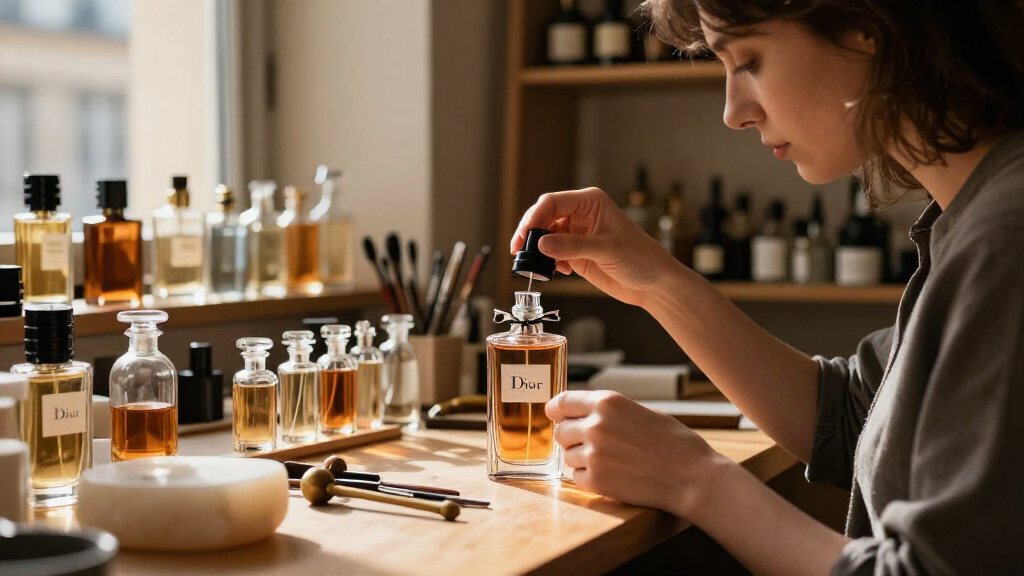
Dior has restored 13 fragrances from its heritage collection for Diororiginals, a project led by perfume creation director Francis Kurkdjian that took four years to complete. The work revisits scents whose formulas have changed over decades, adapting them to present-day ingredient and industry requirements while aiming to preserve their historical character.
The project addressed a challenge faced by fragrance makers: formulas can shift over time as ingredients and regulations change. Dior’s original report says decades of adjustments had left some scents far from their original compositions. Kurkdjian and his team searched archives, consulted suppliers and compared new trials with internal recreations of the older fragrances.
Some formulas were not wholly owned by Dior, according to the report, but were held by suppliers including IFF and Givaudan. Kurkdjian said the work involved explaining the restoration project to those companies and finding ways to reconstruct scents using materials that could be used in current products. The report also notes the use of alternatives such as allergen-safe synthetics and more environmentally conscious raw materials.
The 13 fragrances are Diorama, Diorissimo, Jules, Higher, Higher Energy, Diorling, Dune, Diorella, Eau Fraiche, Dune Pour Homme, Dioressence, Forever and Ever, and Dolce Vita. The Harper’s Bazaar report identifies Forever and Ever, created in 2002 by Jean-Pierre Béthouart, and Dolce Vita, created in 1995 by Pierre Bourdon, as examples in the collection. Diorling and Eau Fraiche, among others, required more extensive changes, while some scents needed only minor adjustments.
Keeping Dior’s Archive Wearable
Diororiginals puts the practical work of preserving a fragrance on display: a historic formula cannot always be sold unchanged when ingredients or rules governing their use have shifted. The project offers a way to keep these scents available while recognizing that a modern version may not be an exact reproduction of the original.
That distinction matters to fragrance buyers and collectors. A scent’s name and historical lineage may remain, but its composition can change through reformulation. Dior’s approach, as described by Kurkdjian, was to use recreated originals as internal reference points, then develop versions that could be marketed under current conditions. The collection also brings attention to fragrances beyond the house’s best-known lines, including Miss Dior and J’adore, which have received repeated updates and flankers.
The project is also a case study in the limits of restoration. Kurkdjian described the goal as making the fragrances feel old rather than simply modernizing them. That is a creative aim, not proof that every bottle will smell exactly as it did at launch. The distinction between historical reference and current commercial formula is central to understanding what Dior has restored.
Popular right now

De’Longhi Classic Matte Black Espresso Machine with Milk Frother

Samsung 42-Inch Class OLED S90F 4K Smart TV (2025)

KitchenAid Classic Series 4.5 Quart Tilt-Head Stand Mixer K45SS, Onyx Black
As an affiliate, we earn on qualifying purchases.
Why the Formulas Had to Change
The collection draws on fragrances introduced across several decades, from Diorama in 1949 to later releases such as Forever and Ever. The report describes perfume as a form of living art: formulas can be altered in small ways as regulations and available ingredients change, with cumulative adjustments affecting a scent’s character.
Kurkdjian told Harper’s Bazaar that Diororiginals took four years. He said reformulation is part of a perfumer’s work and that Dior had recently hired a person dedicated to it. This project went further than routine substitutions because some formulas were old, supplier-owned, or difficult to reproduce using materials that could be used in products today.
According to the report, the fragrances had to be restored by January 2027 to comply with international regulations. The deadline provided a reason to revisit the archive, but the source does not identify a specific regulation or explain the rules applying to each fragrance.
“The question was not to make them modern even though there’s modern ingredients, it’s to make them feel old.”
— Francis Kurkdjian, Dior perfume creation director, speaking to Harper’s Bazaar
What Dior Has Not Specified
The report does not provide full ingredient lists or a scent-by-scent account of the changes made to all 13 fragrances. It also does not specify which ingredients could not be retained, which regulations prompted each adjustment, or whether the restored formulas will be identical across every market.
Kurkdjian’s comments describe internal recreations as benchmarks, but the source does not establish that the new releases reproduce the original scents exactly. For some fragrances, including Eau Fraiche and Diorling, the formulas were described as having been “totally reshaped.” The precise differences between those versions and their historical counterparts remain unclear.
The report also does not give prices, release dates, distribution details, or information about whether each fragrance will be available in every country. Its descriptions of the collection’s quality and appeal are editorial judgments from Harper’s Bazaar, not independent testing or a statement from Dior about sales performance.
Availability and Formula Details
The next practical details for shoppers are when and where each Diororiginals fragrance will be sold, how much the bottles will cost, and whether availability will vary by market. The source report does not provide those specifics. Dior’s stated regulatory deadline for restoring the scents is January 2027, but that date alone does not confirm a retail launch schedule.
Buyers interested in a particular vintage fragrance may want to check the product information for the version sold in their market and compare it with older bottles or historical references. Dior has described a restoration guided by archival work and internal benchmarks; it has not said that the current releases are exact replicas of the original formulas.
Key Questions
What is Diororiginals?
Diororiginals is a collection of 13 Dior heritage fragrances restored under perfume creation director Francis Kurkdjian. The project took four years, according to Harper’s Bazaar.
Which fragrances are included?
The collection includes Diorama, Diorissimo, Jules, Higher, Higher Energy, Diorling, Dune, Diorella, Eau Fraiche, Dune Pour Homme, Dioressence, Forever and Ever, and Dolce Vita.
Are the restored scents exact copies of the originals?
That has not been established. Dior used in-house recreations of original formulas as benchmarks, but some fragrances had to be substantially reshaped to address current ingredient and industry requirements.
Why did Dior reformulate the fragrances?
Fragrance formulas can change as ingredients and regulations shift. The report says Dior adapted the scents for current requirements, including by considering alternatives such as allergen-safe synthetics and more environmentally conscious raw materials.
When will the fragrances be available, and what will they cost?
The source report does not give retail release dates, prices, or market-by-market availability. It says the restoration work had to be completed by January 2027 to meet international regulations, which is not itself a confirmed sales date.
Source: harpersbazaar.com