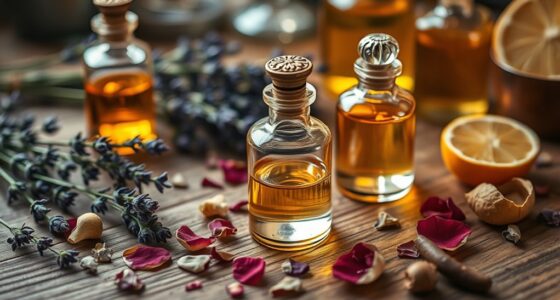

Fragrance scents change because brands often reformulate their formulas to improve stability, adapt to ingredient regulations, and meet evolving consumer preferences. Over time, natural and synthetic ingredients can degrade or become harder to source, leading to adjustments in the scent. These updates help guarantee the perfume remains consistent, safe, and relevant. If you want to understand more about what drives these changes and how they impact your favorite scents, keep exploring further.
Key Takeaways
- Ingredients can degrade over time, causing the scent to change, leading brands to reformulate for consistency.
- Market trends and consumer preferences influence reformulations to keep fragrances relevant.
- Regulatory restrictions on certain ingredients require brands to adjust formulas, altering scent profiles.
- Reformulations ensure ingredient stability, safety, and longer-lasting fragrances on skin and in bottles.
- Changes in ingredient sourcing or cost may lead to scent updates to maintain quality and affordability.
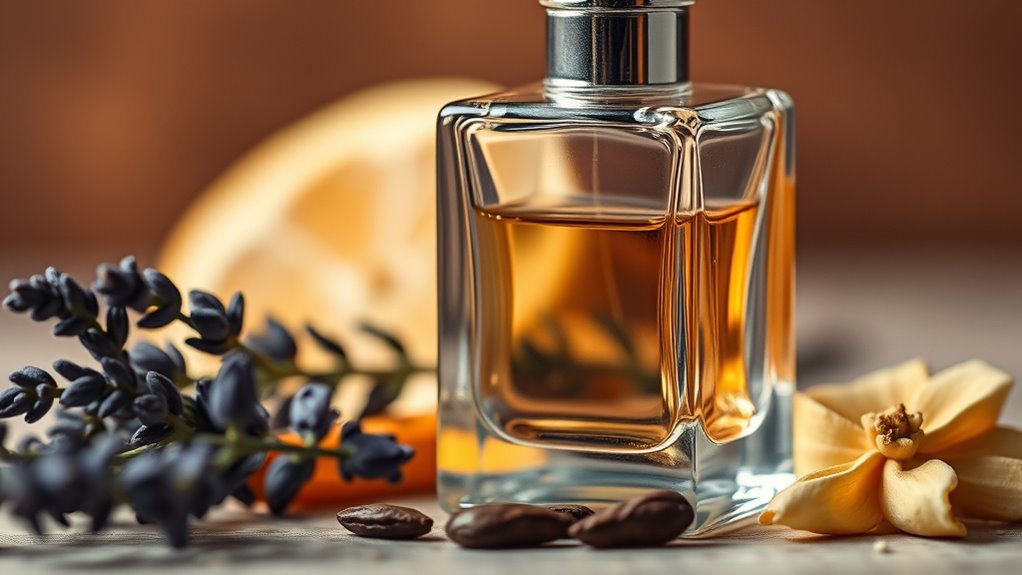
Have you ever wondered why some of your favorite fragrances seem to change over time? It’s a common experience, and the answer often lies in the complex world of fragrance reformulations. Fragrance manufacturers regularly adjust their formulas for various reasons, with ingredient stability and market trends playing key roles. Ingredient stability refers to how well a scent’s components hold up over time, both in the bottle and when worn on your skin. Some natural or synthetic ingredients can degrade or alter due to exposure to light, heat, or air, which can cause a perfume to smell different than when you first bought it. To combat this, perfumers sometimes reformulate their scents, swapping out ingredients that are less stable or more prone to change. These adjustments help preserve the intended scent profile longer, ensuring you get a consistent experience from one bottle to another. Additionally, formulation consistency is crucial for maintaining brand identity and customer trust over time. Market trends also heavily influence reformulations. Perfume brands are constantly monitoring consumer preferences and industry shifts. If a particular note falls out of favor or new regulations restrict certain ingredients, companies will adapt by reformulating their fragrances. For example, if a synthetic ingredient becomes expensive or difficult to source, the manufacturer might replace it with a different compound that delivers a similar scent but is more readily available. Similarly, consumers are increasingly seeking natural and cruelty-free products, prompting brands to modify formulas to meet these demands. These changes ensure that fragrances stay relevant and appealing in a competitive marketplace, but they can also lead to noticeable differences in scent over time.
Fragrance reformulations ensure lasting scent stability and a consistent experience over time.
Another factor to contemplate is regulatory compliance. Governments and industry organizations impose restrictions on certain ingredients deemed harmful or controversial. As regulations evolve, brands must reformulate their perfumes to comply with new laws, which can result in altered scent compositions. This process often involves substituting ingredients that may not have the exact same scent profile, leading to subtle or even significant shifts in how a fragrance smells.
Ultimately, reformulations are part of the natural lifecycle of a fragrance. They reflect the ongoing balancing act between ingredient stability, market demands, regulatory requirements, and innovation. While these changes can sometimes be frustrating for loyal fans who want consistency, they’re also necessary for brands to stay compliant, sustainable, and competitive. So next time you notice a familiar scent smells a little different, it’s likely a result of these thoughtful adjustments—aimed at keeping your favorite fragrances fresh, safe, and in tune with current trends.
Frequently Asked Questions
Do Reformulated Fragrances Smell the Same as the Original?
Reformulated fragrances often don’t smell exactly the same as the original because scent fidelity can vary. Manufacturers tweak ingredients for safety, cost, or regulation reasons, which affects fragrance consistency. You might notice subtle differences in the scent profile, longevity, or even how it evolves over time. While some reformulations aim to closely mimic the original, others may have a noticeably different aroma, so your experience may vary.
How Do Reformulations Affect Perfume Longevity?
Imagine a delicate tapestry that’s been subtly rewoven. Reformulations can impact perfume longevity by altering ingredient stability, making scents fade faster or linger longer. Ingredient changes influence this longevity impact, sometimes reducing the scent’s staying power or unexpectedly enhancing it. You might notice a reformulated fragrance doesn’t last as long as the original, but in some cases, new formulations can boost longevity, almost like giving the scent a fresh, resilient thread.
Are Reformulated Scents Safer for Sensitive Skin?
Reformulated scents can be safer for sensitive skin because brands often prioritize hypoallergenic benefits and ingredient transparency. By removing common irritants and carefully selecting gentle ingredients, these reformulations aim to reduce allergic reactions. You’ll notice that many reformulated perfumes now highlight their hypoallergenic benefits and ingredient transparency, helping you make informed choices. As a result, you might experience fewer sensitivities while still enjoying your favorite fragrances.
Can Consumers Tell if a Fragrance Has Been Reformulated?
You can often tell if a fragrance has been reformulated, but it’s not always obvious. Changes like ingredient substitutions or packaging updates might subtly alter the scent’s character. Sometimes, a slight shift in aroma feels like a whisper of the original or a bold new note. Your nose can pick up these differences over time, especially if you’re familiar with the scent, making it easier to detect reformulations.
Why Do Some Brands Hide Reformulation Details?
Some brands hide reformulation details due to brand secrecy and ingredient confidentiality. They want to protect their unique formulas and prevent competitors from copying their scents. By keeping these details under wraps, they maintain exclusivity and control over their products. As a consumer, you might notice subtle scent differences, but brands often choose to keep reformulation changes discreet to avoid confusion or concern.
Conclusion
Just like a chameleon changing its colors, fragrances often evolve over time. These reformulations are like a wardrobe switch, keeping scents fresh and relevant. While the original essence may shift, the heart of the fragrance remains, offering you new experiences without losing familiarity. So, next time your favorite perfume smells a bit different, embrace it as a new chapter in its story. After all, scents are alive, constantly transforming like a river flowing to new destinations.