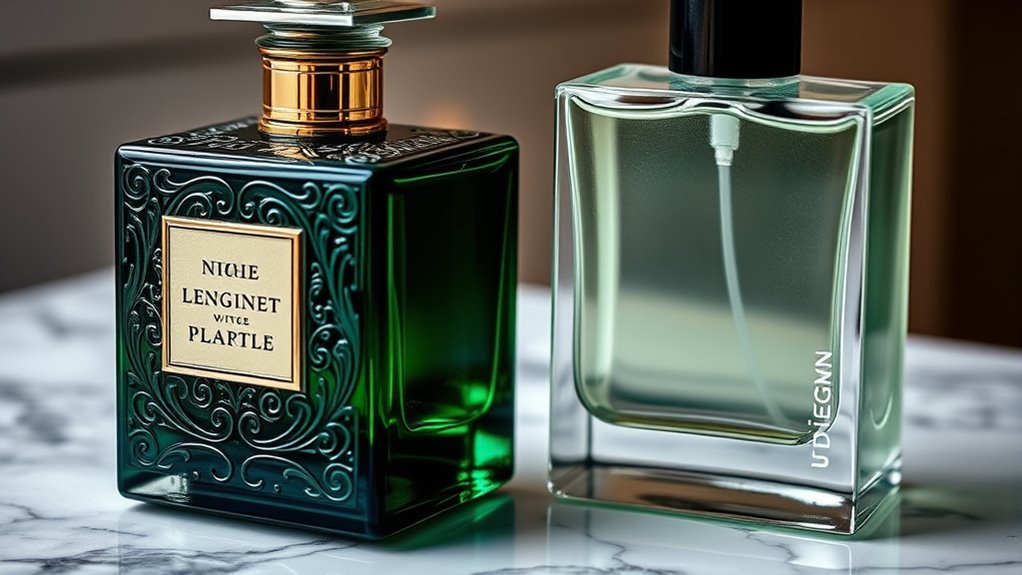

Niche fragrances focus on exclusivity, craftsmanship, and unique, artistic scents crafted in small batches, making them feel personal and rare. In contrast, designer fragrances are created by well-known brands aiming for broad appeal and familiarity, often emphasizing brand image. If you prefer standing out with original, handcrafted scents, niche might be your thing. But if you value trusted, recognizable names, designer options could suit you better. Discovering the differences can help you find a scent that truly fits your style.
Key Takeaways
- Niche fragrances are crafted in small batches with complex, innovative scents for exclusivity, while designer fragrances are widely available and mass-produced.
- Niche brands emphasize artistry, unusual ingredients, and individuality, whereas designer scents focus on brand recognition and broad appeal.
- Niche fragrances offer subtle, rare, and personal experiences, while designer fragrances tend to be familiar and aligned with lifestyle branding.
- Choosing niche highlights uniqueness and exclusivity, whereas choosing designer emphasizes trust, familiarity, and social status.
- Niche fragrances are ideal for those seeking originality, while designer scents suit those valuing consistency and mainstream appeal.
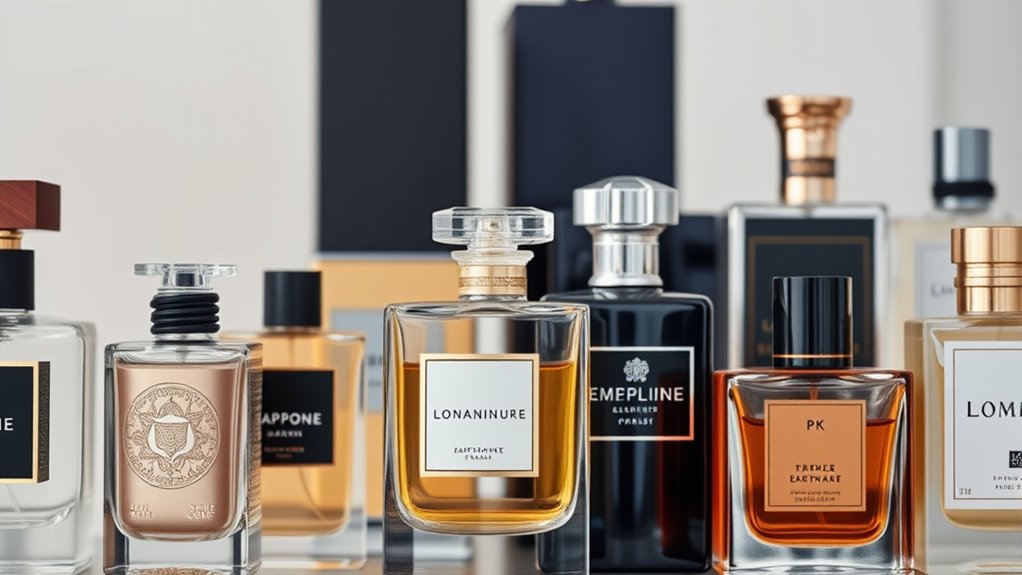
When choosing a fragrance, the decision often boils down to whether you prefer niche or designer scents. Both categories offer unique experiences, but understanding what sets them apart can help you find the perfect match. Niche fragrances tend to focus on fragrance exclusivity, often crafted in smaller batches by independent or boutique brands. These scents are designed to stand out, offering complex, innovative compositions that aren’t widely available. When you opt for a niche fragrance, you’re embracing something more personal and rare, which can feel more special because fewer people will have the same scent. You might find that niche brands push boundaries, experimenting with unusual ingredients or artistic concepts, making their fragrances feel more like wearable art. Additionally, niche fragrances often emphasize Free Floating qualities, creating a sense of effortless elegance and subtlety that distinguishes them from mass-market options.
On the other hand, designer fragrances are produced by well-known fashion houses and global brands. They benefit heavily from brand recognition, which means their scents are instantly recognizable and often associated with a certain lifestyle or image. When you wear a designer fragrance, you’re not just choosing a scent; you’re also aligning yourself with the reputation of the brand. These fragrances tend to be more accessible in terms of price and availability, making them a popular choice for everyday wear. Many designer scents are carefully crafted to appeal to a broad audience, emphasizing mass appeal, familiarity, and consistency. This means you can rely on a certain quality and scent profile, knowing that it’s been tested and approved by the brand’s standards.
While fragrance exclusivity is a significant advantage of niche scents—ensuring you’re unlikely to encounter someone with the same perfume—brand recognition provides a sense of comfort and status with designer options. If you prefer something unique that highlights your individuality, a niche fragrance might be more appealing. However, if you value the reassurance of a trusted name and the ease of finding your signature scent anywhere, a designer fragrance could be more suitable. Ultimately, your choice depends on what matters most to you: the thrill of discovering rare, exclusive scents or the familiarity and prestige tied to a recognized brand. Either way, understanding these differences helps you make a more informed decision, ensuring your fragrance aligns with your personality and preferences.
Top picks for "niche designer fragrance"
Open Amazon search results for this keyword.
As an affiliate, we earn on qualifying purchases.
Frequently Asked Questions
Are Niche Fragrances More Expensive Than Designer Ones?
Yes, niche fragrances are often more expensive than designer ones due to luxury pricing and the exclusive access they offer. You’ll notice higher costs because niche brands focus on rare ingredients and limited production, making their scents more unique and sought-after. This exclusivity drives up the price, giving you a sense of luxury and distinctiveness that you won’t find with mass-market designer fragrances.
Can Niche Fragrances Be Found in Mainstream Stores?
You won’t typically find niche fragrances in mainstream stores because they emphasize luxury exclusivity and scent uniqueness. These brands often sell through boutique shops or their own websites, aiming to provide a more personalized experience. While designer fragrances are widely available, niche scents are more elusive, catering to those seeking something distinctive and rare. If you’re after a truly unique scent, exploring specialized boutiques or online stores is your best bet.
How Long Do Niche Fragrances Typically Last?
Think of niche fragrances like rare gems—they often last longer than you’d expect. Typically, they offer 8 to 12 hours of fragrance longevity, with some even reaching 24 hours. The scent projection tends to be rich and strong, filling a room without overwhelming. You’ll enjoy a lasting impression, as niche scents are crafted with high-quality ingredients that guarantee your aroma stays vibrant and noticeable throughout the day.
Are Designer Fragrances Suitable for Sensitive Skin?
Designer fragrances can be suitable for sensitive skin if they feature hypoallergenic formulations and focus on natural ingredients. However, many contain synthetic chemicals that might irritate your skin. Always check the label for hypoallergenic options and test a small amount first. Opting for fragrances with fewer artificial additives and more natural components can help reduce the risk of irritation, making your scent experience more comfortable.
Do Niche Fragrances Have Limited Availability Worldwide?
Yes, niche fragrances often have limited availability worldwide. You’ll find that their luxury exclusivity and scent rarity make them harder to access compared to mainstream designer brands. These fragrances are usually crafted in small batches, and their distribution channels are more selective, ensuring you experience something unique. If you crave distinctive scents and exclusivity, you’ll appreciate how niche fragrances are often limited editions, making them a rare find globally.
Conclusion
Ultimately, choosing between niche and designer fragrances is like picking a song—you’ll connect differently depending on what resonates with you. I once bought a niche scent on a whim, and just like discovering a hidden favorite track, it became a signature that truly reflected my personality. Remember, your scent is your story—whether it’s mainstream or rare, make it uniquely yours. Trust your instincts, and let your fragrance be the soundtrack of your individuality.