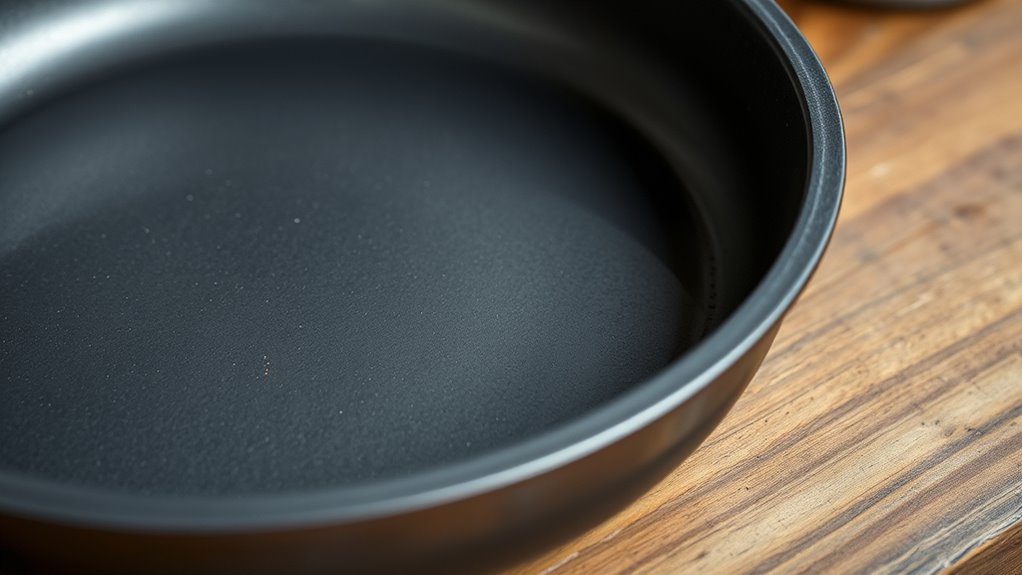

To season and care for your carbon steel pan, start by cleaning it thoroughly and drying completely. Apply a thin layer of high-smoke-point oil and heat it in your stove or oven to build up a natural non-stick surface. Use high-heat techniques like searing and avoid acidic foods early on. Regularly clean with hot water and reapply oil to maintain the patina. Keep up with these steps, and you’ll reveal the full potential of your pan.
Key Takeaways
- Thoroughly clean the pan to remove factory coating, then dry completely before initial seasoning.
- Apply a thin layer of high-smoke-point oil and heat to polymerize for a durable seasoning layer.
- Use high-heat cooking techniques like searing and stir-frying to build and maintain seasoning.
- Clean with hot water and a soft brush; avoid soap to preserve the seasoned surface.
- Regular use, proper cleaning, and oiling extend the pan’s non-stick qualities and lifespan.
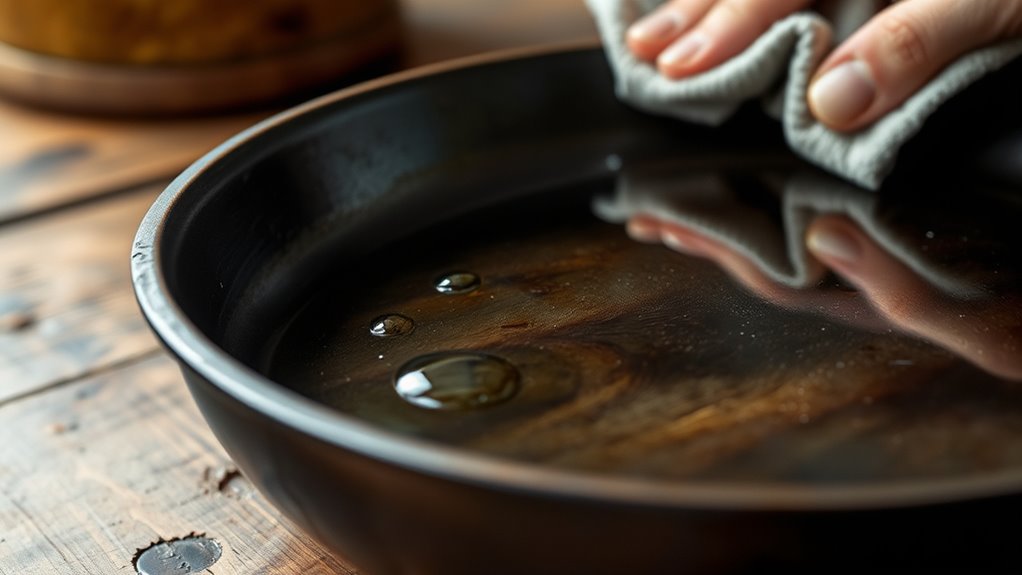
Carbon steel pans are a versatile and durable choice for both professional chefs and home cooks. These pans are known for their quick heating, excellent heat retention, and responsiveness, making them ideal for a variety of cooking techniques. However, to get the most out of your pan, mastering proper seasoning methods and ongoing care is essential. Seasoning isn’t just a one-time step; it’s an ongoing process that builds a natural, non-stick surface over time, enhancing your cooking experience and extending the lifespan of your pan.
Carbon steel pans offer quick heating, excellent heat retention, and a natural non-stick surface with proper seasoning.
When it comes to seasoning methods, your goal is to create a smooth, durable coating that prevents rust and improves non-stick performance. To start, clean your new carbon steel pan thoroughly with hot water and a mild dish soap to remove any factory coating or residual oils. Dry it completely—moisture is the enemy of seasoning—then heat the pan over medium heat until it’s dry and warm. Apply a thin layer of high-smoke-point oil, such as vegetable or flaxseed oil, using a paper towel or cloth. Spread the oil evenly across the interior surface, making sure to coat the sides as well. Then, heat the pan on the stove or in the oven at around 450°F (230°C) for about an hour. This process polymerizes the oil, creating a seasoned layer that improves with use.
Throughout your cooking journey, you’ll want to adopt specific cooking techniques that optimize your pan’s seasoning and performance. Searing, stir-frying, and pan-frying are some of the best methods for building up a seasoned surface, as they involve high heat and fat, which help to develop the non-stick layer. Avoid cooking highly acidic foods like tomatoes or vinegar-based sauces initially, as these can strip away the seasoning. Instead, focus on cooking foods that allow the oil to bond well with the steel, gradually enhancing the pan’s natural properties.
As you use your carbon steel pan, you’ll notice that it develops a darker, more seasoned patina—this is a sign your pan is improving. After each use, clean it with hot water and a soft brush or sponge—avoid soap, which can break down the seasoning. If food sticks, use coarse salt as an abrasive scrub. Always dry your pan thoroughly and apply a light coat of oil before storing to prevent rust. With proper seasoning methods and consistent care, your carbon steel pan will become a trusted kitchen companion, capable of handling everything from delicate sautés to hearty stir-fries.
Frequently Asked Questions
Can Carbon Steel Pans Go in the Dishwasher?
No, you shouldn’t put your carbon steel pan in the dishwasher. Dishwasher safety isn’t guaranteed, and the harsh detergents can strip away your seasoning. Instead, clean with soap and hot water, using a scrub brush if needed. Hand washing helps preserve the pan’s non-stick surface and prevents rust. Keep it dry afterward, and consider re-seasoning occasionally for the best performance.
How Do I Remove Rust From a Seasoned Pan?
Did you know that rust can develop on your pan if neglected? To remove rust, scrub the affected area with steel wool or a scrub brush, then rinse and dry thoroughly. To restore seasoning, apply a thin layer of oil and heat the pan until it smokes. This process helps with rust removal and restores your pan’s natural non-stick coating, ensuring it remains a reliable kitchen tool.
What’s the Best Way to Store Carbon Steel Pans?
To store your carbon steel pan properly, you should keep it in a dry, well-ventilated area to avoid moisture buildup. Use pan storage tips like stacking with a paper towel between pans or hanging it to prevent scratches and rust. Make sure the pan is completely dry and seasoned, then store it in a place where humidity is minimal. This way, your pan stays in great condition for years to come.
Are Carbon Steel Pans Safe for Induction Cooktops?
Yes, carbon steel pans are safe for induction cooktops because of their induction compatibility. They work well due to their magnetic properties, which allow them to heat efficiently. You’ll notice excellent heat distribution, ensuring even cooking across the surface. Just make sure your pan has a flat bottom and is properly maintained. With proper care, your carbon steel pan will perform superbly on induction, offering precise temperature control and longevity.
How Often Should I Re-Season My Pan?
You should re-season your pan when it shows signs of rust, dullness, or food sticking—typically every few months or after about 10-15 uses. Studies show proper pan maintenance extends your pan’s lifespan by up to 50%. Regular seasoning keeps the surface non-stick and rust-free. Keep an eye on your pan’s appearance, and re-season as needed to maintain ideal performance and longevity.
Conclusion
With proper seasoning and care, your carbon steel pan will become your culinary soulmate, transforming every meal into a masterpiece. Neglect it, and it’ll turn against you, sticking and rusting like an enemy. Think of it as a magic wand—handle it right, and it’ll serve you for a lifetime of unforgettable dishes. Treat it like gold, and it’ll reward you with flavors so incredible, you’ll wonder how you ever cooked without it.