Copper cookware naturally develops a patina over time, adding character, beauty, and a sense of history to your pieces. To maintain their shine, regularly clean with gentle tools like soft cloths and copper-specific polish, avoiding abrasive scrubbing. Embracing the patina can give your cookware vintage charm, but if you prefer a bright look, you can remove it with natural or commercial cleaners or apply protective coatings. Stick with proper care tips to keep your copper looking great for years to come.
Key Takeaways
- Regular cleaning with soft cloths and copper-specific polish maintains shine and delays patina formation.
- Patina reflects aging, character, and cultural heritage, adding rustic charm to copper cookware.
- Environmental factors like humidity and pollutants accelerate tarnishing; proper storage helps preserve appearance.
- Natural methods like lemon juice and salt can remove tarnish, but commercial cleaners offer more effective results.
- Coatings such as clear lacquer can prevent patina development but may alter the cookware’s natural aging process.
Understanding the Natural Aging Process of Copper
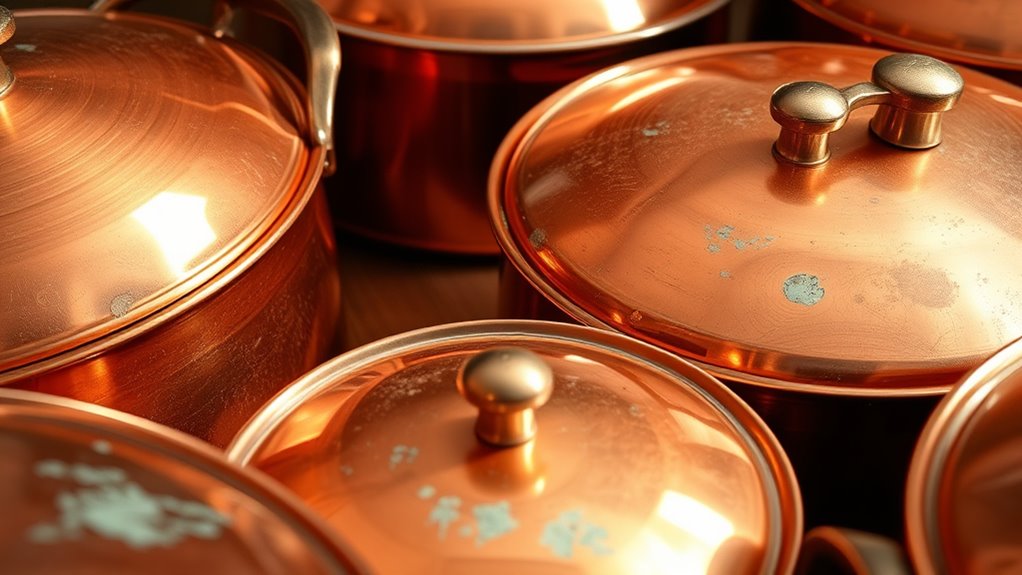
Copper naturally develops a patina over time, which is a thin layer of oxidation that forms when the metal reacts with air and moisture. This aging process holds historical significance, as aged copper pieces often carry a sense of authenticity and timelessness. In many cultures, the patina is seen as a symbol of character and history, reflecting a piece’s journey through time. The natural aging process connects you to the past, as copper artifacts and cookware have been valued for centuries across civilizations. This cultural symbolism elevates the metal beyond mere functionality, giving your copper cookware a sense of heritage. Embracing the patina allows you to appreciate its history and the stories embedded in its aging, making it a cherished part of your kitchen. Additionally, understanding copper maintenance helps preserve its beauty and significance over time, including patina care techniques that maintain its aesthetic appeal. Regular cleaning and proper copper preservation methods can help you enjoy the evolving beauty of copper cookware for generations to come.
Techniques for Restoring and Maintaining a Bright Shine
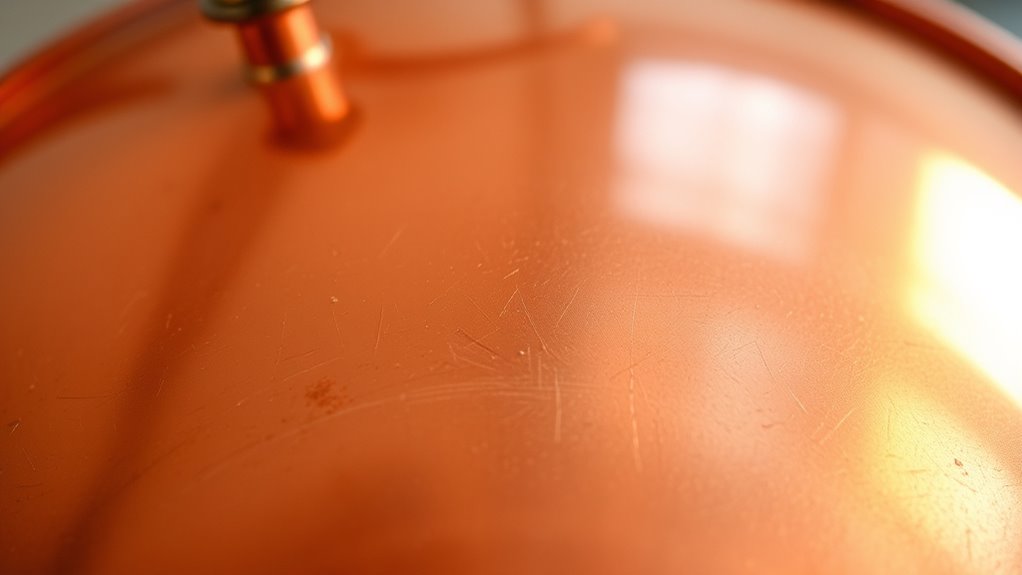
To restore and maintain a bright shine on your copper cookware, regular cleaning and polishing are essential. Start by using a gentle copper polishing cloth or a soft cloth with a copper-specific polish to remove tarnish and restore luster. For stubborn spots, chemical cleaners designed for copper can be effective; apply them carefully following the manufacturer’s instructions. Avoid abrasive materials that can scratch the surface. After polishing, rinse thoroughly with warm water and dry immediately to prevent water spots. Proper cleaning techniques are crucial for preventing damage and prolonging the life of your cookware. For a natural alternative, you can use a paste of lemon juice and salt, but commercial copper polish or chemical cleaners are often more efficient for deep tarnish. Regular care guarantees your copper cookware stays shiny and beautiful. Additionally, understanding copper oxidation can help you better prevent tarnish and maintain its vibrant appearance over time. Recognizing how oxidation affects copper can guide you in choosing the right cleaning methods to keep your cookware looking its best. Being aware of environmental factors such as humidity and exposure to air can further help in reducing tarnish formation and maintaining a bright finish.
The Formation and Beauty of Copper Patina
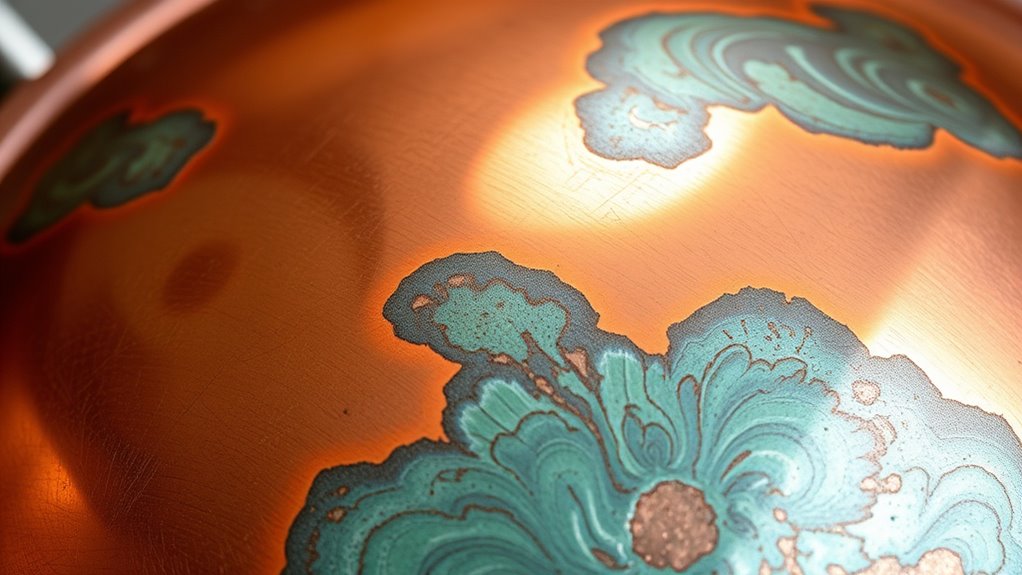
As copper ages, it naturally forms a patina through oxidation, giving your cookware a unique look. This process creates beautiful, varied colors that highlight the metal’s character. Embracing this transformation adds charm and personality to your copper pieces. Understanding oxidation processes can help you appreciate the natural evolution of your cookware’s appearance over time, especially since environmental factors like humidity and air quality influence the patina development process. Recognizing the chemical reactions involved can deepen your appreciation for the craftsmanship behind traditional copper cookware. Additionally, controlling environmental conditions can help manage the patina’s appearance, whether you prefer a shiny finish or a more aged look.
Natural Oxidation Process
When copper is exposed to air and moisture, it naturally undergoes oxidation, leading to the formation of a distinctive patina. This process occurs across various copper alloys, creating a protective layer that develops over time. The patina’s colors range from warm browns to vibrant blues and greens, adding character and depth to your cookware. Many people appreciate this natural aging as a form of decorative finish, enhancing the appeal of their copper pieces. The oxidation process is slow and steady, influenced by environmental factors like humidity and exposure. While some prefer to maintain a shiny surface, others embrace the evolving look, knowing that the patina signifies authenticity and history. This natural process highlights copper’s unique ability to develop beauty through aging.
Unique Visual Characteristics
The formation of copper patina creates a stunning array of visual effects that highlight the metal’s natural beauty. As the patina develops, you’ll notice a range of color variations, from rich browns to vibrant blues and greens, adding depth and character to your cookware. These changes create unique surface textures, making each piece one-of-a-kind. The patina’s surface can appear smooth or slightly rough, depending on exposure and handling. This visual diversity enhances the cookware’s antique charm and can even serve as a visual indicator of its history. To better understand, consider these key features:
- Color variations that evolve over time
- Unique surface textures, from polished to rough
- The natural, organic appearance of aged copper
Pros and Cons of Embracing the Patina
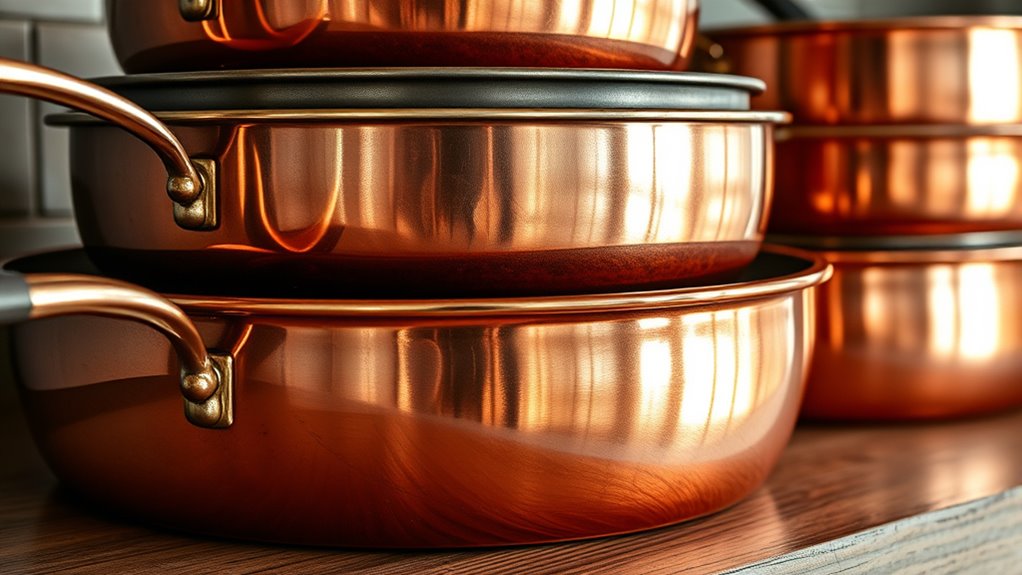
Ever wondered if embracing the natural aging process of copper cookware is worth it? If your aesthetic preferences lean toward a rustic, vintage look, letting the patina develop can add character and uniqueness to your pieces. It’s a cost-effective choice because you won’t need to invest in frequent polishing or replacements to maintain a shiny surface. However, consider that a darkened or stained patina might not appeal if you prefer a sleek, polished appearance. Some cooks find that the patina can affect the cookware’s heat responsiveness or make cleaning more challenging. Ultimately, embracing the patina is a personal decision: it highlights the cookware’s history and character but may require patience and acceptance of its evolving look. Understanding copper’s properties can help you better decide how to care for your cookware as it ages.
Methods for Removing or Preventing Patina
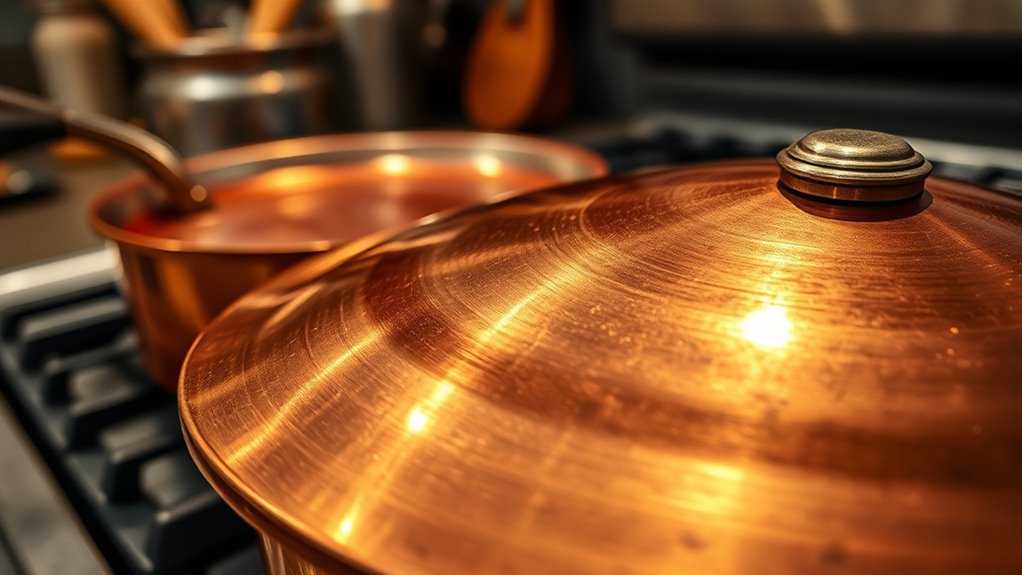
To keep your copper cookware looking bright and polished, you can actively remove or prevent patina from forming. Chemical treatments like lemon juice or commercial copper cleaners effectively remove tarnish, restoring shine. For prevention, coating options such as clear lacquer or specialized sealants create a barrier against oxidation. These coatings slow down patina development, keeping your cookware looking new longer. Regular polishing with a copper polish can also help maintain brightness and remove light tarnish before it sets in. Here are some ideas:
- Use chemical treatments like lemon juice or commercial cleaners for tarnish removal
- Apply coating options like clear lacquer to prevent patina formation
- Regularly polish to maintain shine and delay patina buildup
- Understanding copper oxidation can help you better manage and prevent patina development. Knowing how oxidation processes occur enables you to select more effective protective coatings and maintenance routines. Additionally, understanding biochemical reactions involved in tarnishing can lead to more innovative and eco-friendly solutions. These approaches help you control patina without compromising your cookware’s appearance, especially as environmental factors can influence oxidation rates and patina formation over time. Recognizing the role of personality traits in maintenance routines may also improve your overall care strategy.
Best Practices for Cleaning and Caring for Copper Cookware
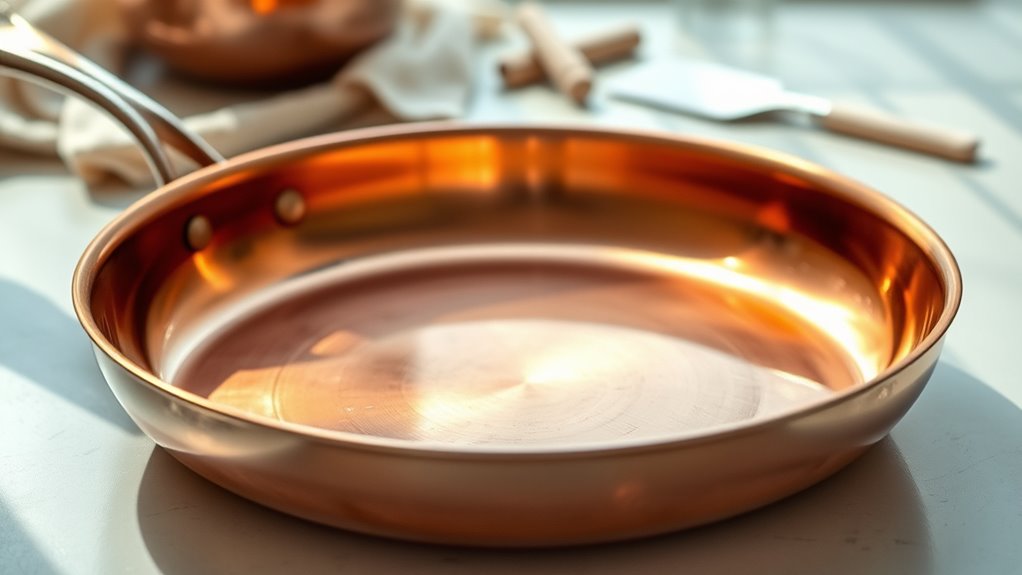
Properly cleaning and caring for your copper cookware guarantees it remains functional and attractive over time. To guarantee ideal copper cookware maintenance, use gentle cleaning methods and avoid abrasive materials that can scratch the surface. Regularly wipe your pots with a soft cloth and warm, soapy water, then dry thoroughly. When tarnish appears, employ copper polishing techniques such as a mixture of lemon juice and salt or commercial copper cleaners to restore shine. Avoid harsh chemicals that can damage the metal. Store your cookware properly to prevent unnecessary tarnishing or dents. Additionally, understanding financial goals can help you prioritize investments in quality cookware that lasts for years. Being aware of piercing aftercare can also help maintain your jewelry’s integrity and prevent infections. Incorporating smart home technology solutions like automated monitoring or cleaning alerts can simplify maintenance routines. Maintaining proper copper care techniques ensures your pots stay beautiful and functional long-term. With consistent care, your copper pots will maintain their lustrous appearance and excellent performance, making them a beautiful and practical addition to your kitchen for years to come.
Tips for Long-Term Preservation of Copper’s Luster

To keep your copper cookware shining, establish a regular cleaning routine that removes tarnish and buildup. Store your pots properly, avoiding humid environments that speed up tarnishing, and use gentle polishing techniques to restore their luster without damage. With consistent care, your copper pieces will remain beautiful and functional for years to come.
Regular Cleaning Routine
Ever wonder how to keep your copper cookware shining like new? Establishing a regular cleaning routine is key. To maintain its luster, consider seasonal polishing to remove tarnish buildup. Adjust your cleaning frequency based on use—more frequent if you cook often, less if stored unused. Consistent maintenance prevents tarnish and preserves that beautiful shine. Here are some tips:
- Use a gentle copper cleaner or homemade paste regularly
- Wipe after each use to remove food residue and moisture
- Avoid abrasive scrubbers that can scratch the surface
Proper Storage Methods
After regularly cleaning your copper cookware to keep it shiny, the next step is to focus on how you store it. Use proper storage containers that protect the surface from scratches and dust. Avoid stacking copper pots directly on top of each other; instead, place a soft cloth or paper towel between items to prevent abrasion. Humidity control is essential for long-term preservation, so store your cookware in a cool, dry place. Consider using silica gel packs or a dehumidifier in your storage area to reduce moisture buildup, which can cause tarnish or corrosion. Keep your copper cookware away from direct sunlight and extreme temperature changes. Proper storage ensures your cookware maintains its beautiful shine and patina over time, extending its lifespan and preserving its aesthetic appeal.
Gentle Polishing Techniques
Maintaining your copper cookware’s shine requires gentle polishing techniques that preserve its patina and prevent damage. To do this, stick to mild cleaning solutions and avoid abrasive materials. Use soft cloths or sponges to gently buff the surface, preventing scratches. When applying polishing techniques, opt for natural or copper-specific cleaners that won’t strip the patina.
Consider these tips:
- Use a mixture of lemon juice and salt for a natural cleaning solution.
- Apply a small amount of commercial copper polish with a soft cloth.
- Rinse thoroughly and dry immediately to prevent water spots.
Consistently gentle polishing helps maintain your cookware’s luster without harming its character, ensuring it stays beautiful for years.
Frequently Asked Questions
How Does Copper Cookware Affect Food Flavor Over Time?
You’ll notice that copper cookware can influence food flavor over time, often adding a subtle metallic copper flavor if not properly seasoned. Regular cookware seasoning helps prevent this, creating a protective layer that minimizes copper flavor leaching into your dishes. To keep your food tasting fresh, maintain your cookware’s shine and patina, and season it periodically. This way, you enjoy the benefits of beautiful, well-cared-for copper without unwanted metallic tastes.
Can Copper Cookware Be Safely Used in the Dishwasher?
Ditch the dishwasher when it comes to copper cookware. Dishwashers damage the delicate finish, making it unsafe and unsightly. Instead, stick to gentle cleaning methods like hand washing with mild soap and warm water. Regular polishing preserves the shine and prevents tarnish. By choosing careful cleaning, you’ll keep your copper cookware safe, shiny, and stunning, ensuring it stays in perfect condition for years to come.
What Are Eco-Friendly Methods to Clean Copper Cookware?
You can use eco-friendly cleaning methods to care for your copper cookware. Try natural polishing with ingredients like lemon juice and salt or vinegar and baking soda, which safely remove tarnish without harsh chemicals. These methods are effective, environmentally friendly, and gentle on your cookware. Regular use of natural polishing not only keeps your copper shiny but also reduces your ecological footprint, making it a smart choice for sustainable kitchen care.
How Do Temperature Changes Impact Copper’s Surface and Finish?
When you rapidly heat or cool your copper cookware, thermal expansion occurs, causing the surface to expand or contract. This can lead to surface oxidation over time, dulling its shine. For example, sudden temperature changes during cooking can stress the copper, potentially affecting its finish. To protect your cookware, avoid extreme temperature fluctuations, and gradually adjust heat to maintain its smooth, shiny surface and prevent oxidation.
Are There Specific Storage Tips to Prevent Tarnishing or Damage?
To prevent tarnishing or damage, you should store your copper cookware in a dry, cool place with good air circulation. Use storage solutions like soft cloths or padded drawers to protect its surface from scratches. Avoid stacking heavy items on top, and consider applying a thin layer of protective wax or lacquer for tarnish prevention. Proper storage helps maintain its shine and keeps your cookware looking new longer.
Conclusion
To keep your copper cookware shining bright, stay proactive with regular cleaning and gentle restoration. Embrace the natural patina as part of its charm, but don’t let it take over if you prefer a mirror finish. Remember, you’re steering the ship—care and attention are key to maintaining its beauty. With patience and the right techniques, you’ll keep your copper cookware looking like new, proving that a little tender loving care goes a long way in preserving its timeless appeal.