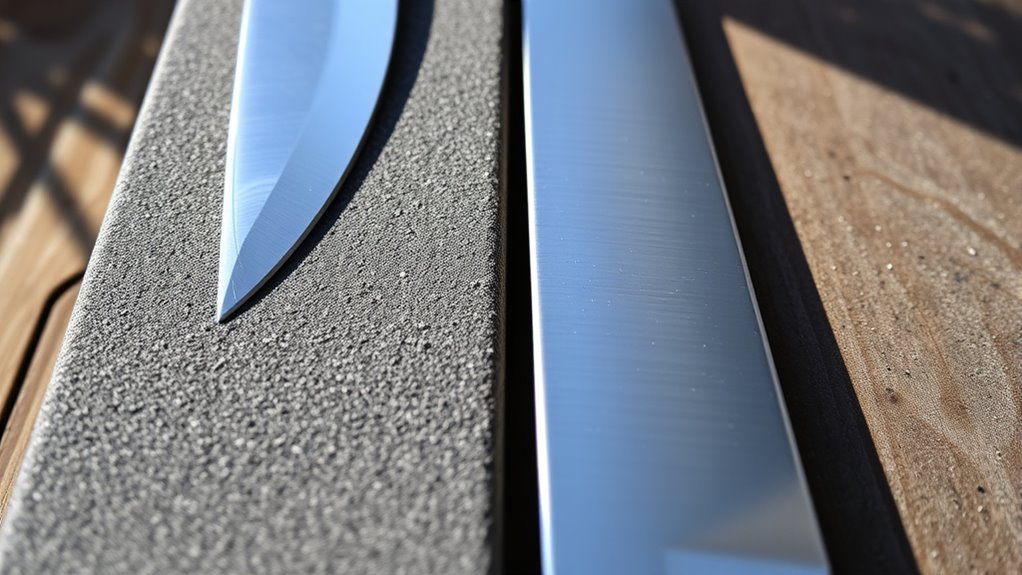

Eastern knives typically have a sharper sharpening angle around 15 degrees per side, making them ideal for precise, delicate cuts, while Western knives usually feature angles of 20 to 22 degrees for added durability and strength. This difference affects how you sharpen and maintain your blades, with Eastern styles requiring more delicate, precise strokes. Understanding these variations helps you keep your knives performing at their best. Keep exploring to discover how these angles influence your sharpening techniques and knife care.
Key Takeaways
- Eastern knives typically have an acute sharpening angle of around 15°, while Western knives usually have 20-22°.
- The sharper angle of Eastern knives allows for more precise, delicate cuts, whereas Western angles prioritize durability.
- Maintaining a consistent, fine-angle edge is essential for Eastern-style knives, often requiring fine grit stones.
- Western-style knives tolerate broader angles, making them more forgiving during sharpening with coarser abrasives.
- Proper matching of sharpening angle to blade design extends lifespan and optimizes cutting performance.

Have you ever wondered why some knives slice effortlessly while others struggle? The secret often lies in the blade’s geometry and how you sharpen it. When it comes to knife sharpening angles, understanding the differences between Eastern and Western styles can make a huge difference in your cutting performance. Eastern knives, like Japanese chef’s knives, usually feature a more acute sharpening angle, often around 15 degrees per side. This sharper edge allows for precise, delicate cuts, making them ideal for slicing fish or vegetables with finesse. Western knives, such as European chef’s knives, tend to have a broader edge angle, typically around 20 to 22 degrees per side. This creates a more durable edge suited for heavy-duty tasks like chopping through thick meats or bones.
Eastern knives have sharper angles for delicate cuts; Western knives prioritize durability with broader angles.
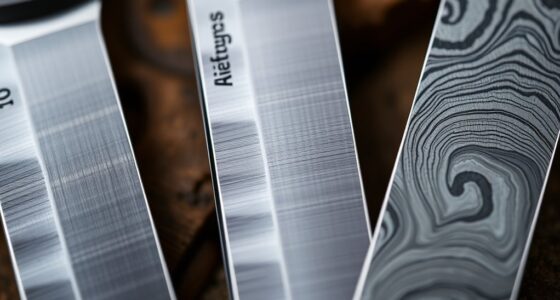
The key to mastering these differences lies in understanding blade geometry. Eastern blades are often thinner and have a more refined bevel, which contributes to their sharpness and ease of slicing. Western blades, on the other hand, have a thicker spine and a more robust bevel, giving them strength and longevity but slightly less finesse. Your sharpening techniques should reflect these design features. For a Japanese-style knife, you’ll want to maintain a consistent, ultra-acute angle—often around 15 degrees—using fine grit stones or sharpening systems designed for precision. This approach keeps the edge thin and sharp, allowing for clean, effortless cuts. Conversely, when sharpening Western-style knives, you may opt for a slightly larger angle and more aggressive strokes, focusing on building a durable edge that can handle tougher work without dulling quickly.
It’s essential to contemplate how your blade’s geometry influences the sharpening process. A more acute angle demands delicate, controlled motions, and frequent maintenance to retain its sharpness. A broader angle offers more forgiveness, making it easier to sharpen but potentially less sharp initially. The sharpening techniques you choose should match the blade’s intended use and design. For instance, a traditional Japanese knife might benefit from honing at a consistent 15-degree angle with water stones, while a Western chef’s knife might require a slightly wider angle with a honing steel or coarser stone. Both approaches, when executed correctly, will extend the life of your blades and improve their cutting performance.
Ultimately, understanding how blade geometry impacts your sharpening angles can elevate your skills in maintaining your knives. Whether you prefer the precision of Eastern knives or the robustness of Western styles, adapting your sharpening techniques to match the blade’s design is vital. It’s not just about honing an edge but about respecting the craftsmanship that went into your knives. With practice, you’ll find yourself effortlessly switching between sharpening methods, ensuring each knife performs at its best—cutting cleanly, smoothly, and with less effort every time.
Top picks for "knife sharpen angl"
Open Amazon search results for this keyword.
As an affiliate, we earn on qualifying purchases.
Frequently Asked Questions
How Do Sharpening Angles Affect Cutting Precision?
Sharpening angles directly impact your cutting precision by influencing blade flexibility and edge stability. A steeper angle creates a more stable edge, ideal for precise cuts, but may reduce flexibility. Conversely, a shallower angle offers greater flexibility, making the knife more responsive but less stable. Choosing the right angle depends on your cutting needs, balancing edge stability for accuracy and flexibility for maneuverability.
Can I Switch Between Eastern and Western Angles?
Yes, you can switch between Eastern and Western sharpening angles, but it’s important to maintain consistency to keep your knife’s performance ideal. Changing angles can affect cutting precision, so adapt your sharpening techniques carefully. Practice maintaining angle consistency during each session, and be mindful that shifting angles may require different honing approaches. Ultimately, understanding these differences helps you achieve the best edge and prolong your knife’s sharpness.
What Tools Are Best for Maintaining Specific Angles?
You should use sharpening stones and angle guides to maintain specific angles effectively. Sharpening stones, like water or oil stones, help you refine the edge, while angle guides ensure you keep the correct angle during sharpening. For precise results, choose guides tailored for either Eastern or Western angles, depending on your knife. These tools help you achieve consistent, sharp edges, making your sharpening process easier and more accurate.
Are There Safety Concerns With Different Sharpening Angles?
Yes, there are safety concerns with different sharpening angles. Using a very acute angle, common in Western styles, can make the blade sharper but more fragile, increasing the risk of chipping. Conversely, an Eastern angle offers durability but might require more precision during sharpening. Be cautious, as improper angles can cause slips or accidents. Remember, the blade’s aesthetics and cultural symbolism influence the angle choice, but safety should always come first.
How Do Sharpening Angles Influence Blade Durability?
Sharpening angles directly affect your blade’s durability. A steeper angle creates a sharper edge but may reduce durability and increase blade corrosion if you don’t sharpen frequently. Conversely, a shallower angle offers more durability, especially with regular sharpening, but might compromise sharpness. You should balance sharpening frequency and angle to maintain ideal performance, preventing corrosion and ensuring your blade stays effective over time.
Conclusion
Ultimately, choosing the right sharpening angle depends on your cooking style and preferences. Eastern angles offer durability, while Western angles provide precision. Remember, a sharp knife is a safe knife, and “a stitch in time saves nine.” Take the time to find what works best for you, and your kitchen skills will improve. Keep your blades properly sharpened, and you’ll enjoy safer, more enjoyable meals every time.