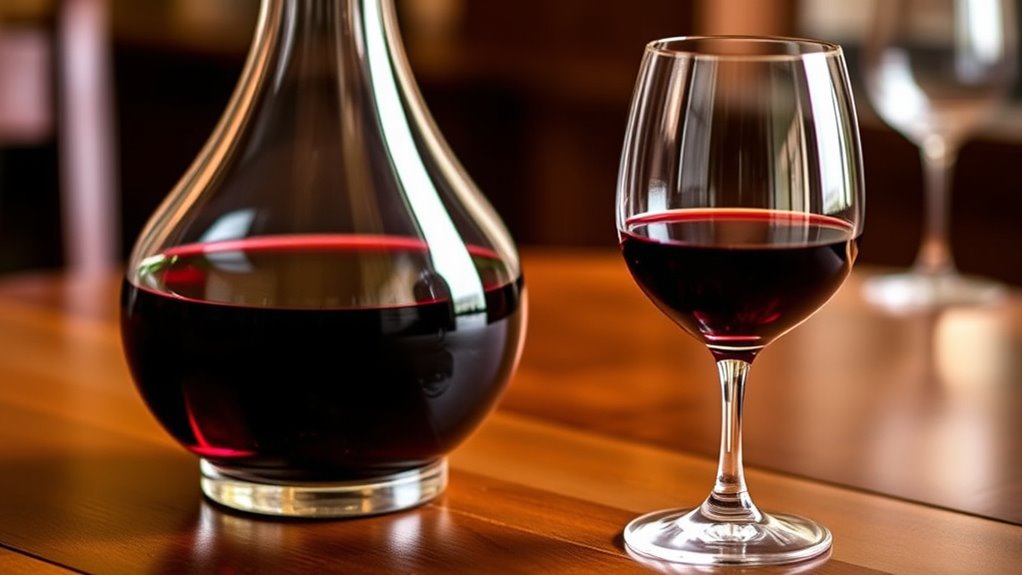

Decant wine mainly to enhance bold reds with tannins or to remove sediments from older wines, which benefit from aeration and clarity. Avoid decanting young whites, sparkling wines, and fortified wines like sherry or port, as they typically don’t need it. Proper timing and duration are key—too long can harm delicate flavors. Want to learn how to perfect your approach and know exactly when to decant? Keep exploring for expert tips.
Key Takeaways
- Decant bold reds with tannins and older wines with sediments to enhance aroma, clarity, and soften tannic sharpness.
- Avoid decanting young whites, light whites, sparkling wines, and fortified wines, which generally do not benefit from aeration.
- Decant for 1-2 hours for robust reds; use shorter times for older wines to prevent over-oxidation.
- Use a wide, clean decanter and pour slowly to minimize sediment transfer and maximize aeration.
- Do not decant prematurely or excessively, as over-exposure to oxygen can diminish wine’s freshness and delicate nuances.
Recognizing Young Versus Aged Wines
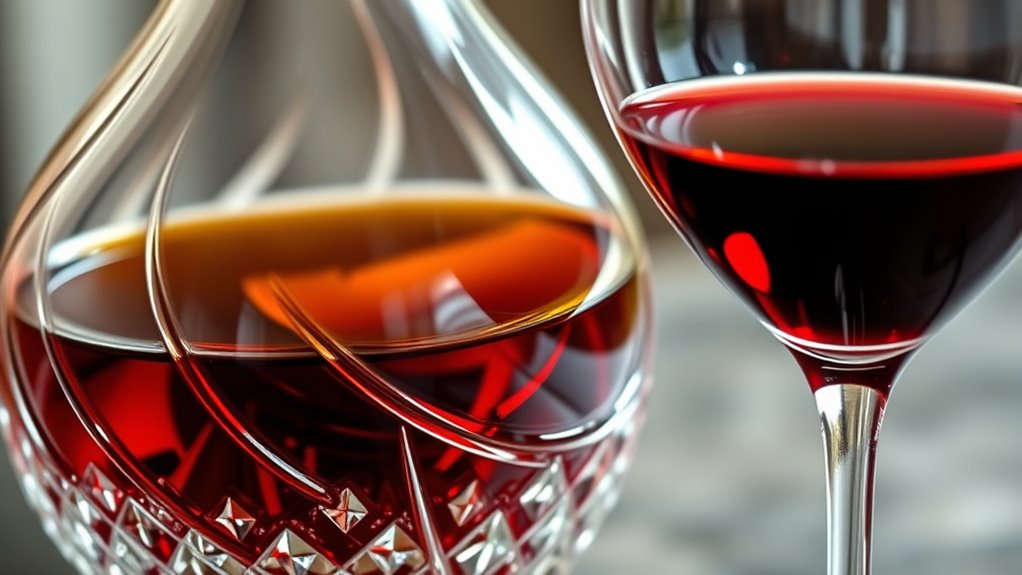
How can you tell if a wine is young or aged just by looking at it? Start by observing its color. Young red wines tend to have a vibrant, deep purple or ruby hue, while aged reds often develop lighter, brick or garnet tones. For whites, young wines are usually bright and clear with a pale yellow or green tint, whereas older whites may appear darker or more golden. Proper wine storage is essential to maintain these qualities, preventing premature aging. When considering decanting equipment, keep in mind that young wines might benefit from decanting to soften tannins and release aromas, but their appearance can give you clues about whether decanting will enhance the experience. Always assess the wine’s look to guide your decanting decision. Additionally, understanding the evolution of wine color can help you better determine its age and optimal decanting approach. Furthermore, factors such as light exposure can accelerate aging and alter the wine’s appearance over time. Proper temperature control during storage also plays a crucial role in preserving a wine’s visual and aromatic qualities over the years. Being aware of these storage conditions can help you decide the right time to decant and enjoy your wine. Moreover, oxygen exposure during storage can influence how quickly a wine ages and changes in appearance.
Understanding the Types of Wines That Benefit From Decanting
Decanting can profoundly enhance the wine-drinking experience, but not all wines benefit equally from this process. Typically, bold reds with tannins and sediments, like Cabernet Sauvignon, Syrah, and Nebbiolo, gain the most from decanting. These wines often need aeration to soften tannins and release complex aromas. Use appropriate decanting equipment to avoid disturbing sediments, especially with older wines. Proper storage conditions—cool, dark, and upright—help preserve wine quality before decanting. Additionally, European cloud innovation plays a role in advancing smart storage and decanting technologies. Innovative decanting techniques are also emerging to optimize aeration and sediment separation more effectively. Here’s a quick guide:
| Wine Type | Benefit from Decanting | Storage Conditions |
|---|---|---|
| Red Wines (Bold) | Yes | Cool, dark, upright |
| Older Wines | Yes (for sediments) | Same as above |
| Light Whites | No | Refrigerate, no decanting needed |
| Sparkling Wines | No | Keep chilled, avoid decanting |
The Role of Tannins and Sediments in Decanting Decisions
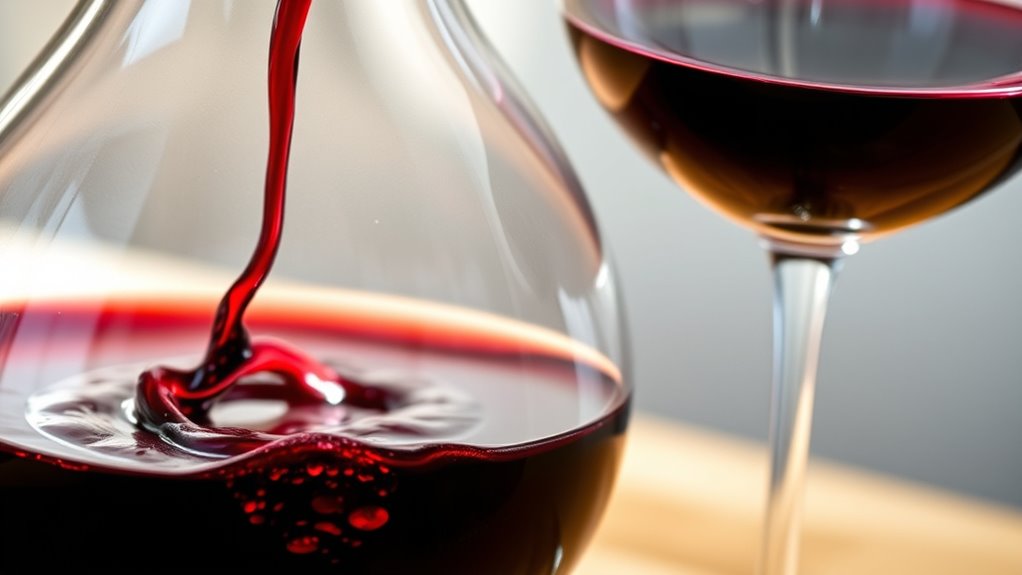
Have you ever wondered why certain wines benefit more from decanting than others? Tannins play a big role here—they can be quite aggressive in young wines, and decanting helps with tannin extraction, softening their impact. This process allows the wine to open up, revealing more nuanced flavors. Sediments, often found in older wines, are another reason to decant. These sediments can be gritty and unappealing if poured directly into your glass, so decanting helps with sediment removal, ensuring a cleaner, more enjoyable experience. If you notice a wine has a cloudy appearance or a gritty texture, decanting can improve its clarity and taste. Understanding the role of tannins and sediments helps you decide when decanting will truly enhance your wine.
When to Decant Sparkling and Fortified Wines

While tannins and sediments often indicate when to decant still wines, sparkling and fortified wines follow different guidelines. Decanting corks from sparkling wine, like Champagne or prosecco, isn’t recommended because it can cause excessive foaming or loss of bubbles. Fortified wines, such as sherry or port, generally benefit from decanting to remove sediment and enhance aroma, but only if using the right decanter styles. Choose a decanter with a wide base to maximize aeration, especially for older ports that develop sediment. For sparkling wines, simply pouring gently from the bottle is usually best. Decanting corks from fortified wines should be done carefully, ensuring minimal agitation. Knowing when and how to decant these wines improves your experience without compromising their effervescence or delicate aromas. Additionally, understanding proper decanting techniques can help preserve the wine’s integrity and enhance your tasting experience. Proper air exposure is essential for unlocking the full potential of some wines, but overexposure can diminish their qualities.
The Impact of Decanting on Aromas and Flavors

Decanting can considerably enhance the aromas and flavors of your wine, making them more vibrant and expressive. It also softens harsh tannic notes, creating a smoother tasting experience. As a result, you’ll notice more complex and layered flavors that might have been hidden before decanting. Incorporating visual and auditory cues can further improve your appreciation of wine by engaging multiple senses during tasting.
Enhances Aromatic Expression
Decanting markedly enhances the aromatic expression of wine by allowing volatile compounds to escape the bottle and interact with the air. This process releases hidden fragrances and amplifies subtle aromas that might be muted inside the bottle. Using effective aeration techniques, like swirling or pouring, helps to better expose the wine to oxygen, intensifying its scent profile. Decanting tools, such as specialized decanters, are designed to maximize surface area, promoting faster and more thorough aeration. As a result, you’ll notice more vibrant, complex aromas that reveal layers of fruit, floral notes, and spices. This heightened aromatic expression not only enriches your tasting experience but also grants you a deeper appreciation of the wine’s character and craftsmanship.
Softens Tannic Sharpness
As wine interacts with air during decanting, the sharpness of tannins begins to mellow, making the wine feel smoother on your palate. Unlike simply aerating, decanting involves pouring the wine into a vessel that allows for more contact with oxygen, effectively softening tannic edges. This process reveals a richer, more inviting texture, transforming astringency into velvety smoothness. Imagine:
- Tannins loosening like a tight grip easing
- Harsh edges rounding into gentle curves
- Astringency fading into a silky finish
- Aromas blooming as flavors soften
- The wine becoming more approachable and balanced
Decanting vs. aerating often depends on the wine’s age and structure. Proper wine storage techniques, such as keeping bottles upright, help preserve tannin integrity until you’re ready to decant and soften those sharp, bold characteristics.
Reveals Complex Flavors
When you pour wine into a decanter, it interacts more directly with oxygen, which can reveal hidden layers of aroma and flavor. Decanting music in the background can enhance this sensory experience, allowing you to better appreciate complex notes. Proper wine storage techniques also preserve these flavors, ensuring they develop fully over time. As you decant, you might notice more vibrant fruit, earthy undertones, or layered spice. The table below shows how decanting influences different flavor profiles:
| Flavor Type | Before Decanting | After Decanting | Impact |
|---|---|---|---|
| Fruit | Subtle, muted | Bright, expressive | Amplifies freshness |
| Earthy notes | Faint | Rich, prominent | Enhances depth |
| Spices | Mild | Bold, layered | Adds complexity |
| Tannins | Sharp, harsh | Silky, smooth | Softens bitterness |
| Aromas | Narrow | Expanded, nuanced | Reveals hidden layers |
Timing and Duration: How Long to Decant Different Wines
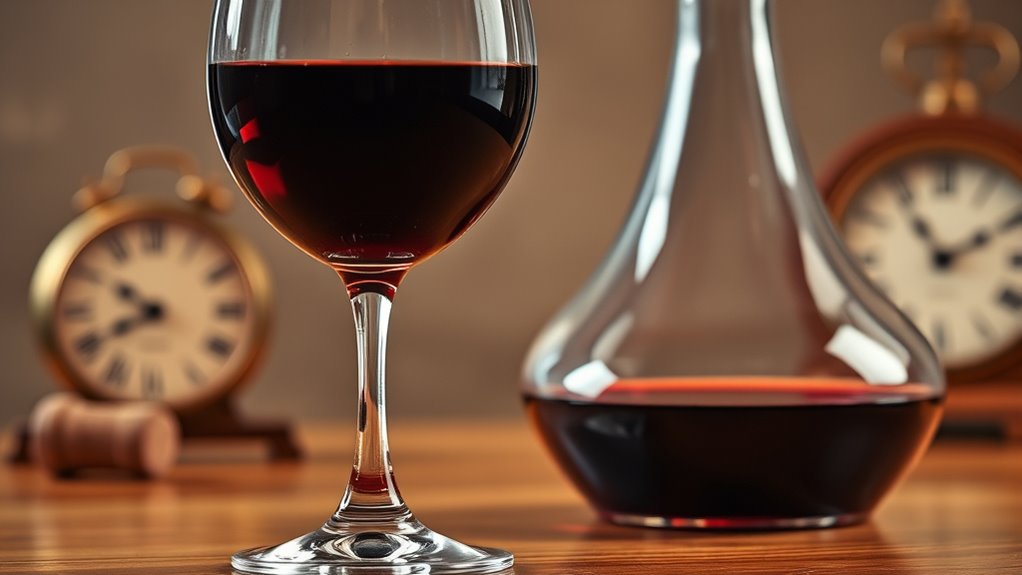
Understanding the ideal amount of time to decant different wines can considerably enhance their flavor and aroma. Generally, younger reds benefit from longer decanting, while older wines need less time to open up. When deciding how long to decant, consider these factors:
- The wine’s age and type
- The decanting container choices
- The wine’s tannin structure
- The decanting for special occasions
- Your taste preference
For bold, tannic reds, decant for 1-2 hours to soften harshness. Lighter reds may only need 30 minutes. Use a wide, shallow decanter to maximize surface area. For special occasions, plan ahead to allow enough time for proper decanting, ensuring every sip reveals its full potential.
When Decanting Might Do More Harm Than Good
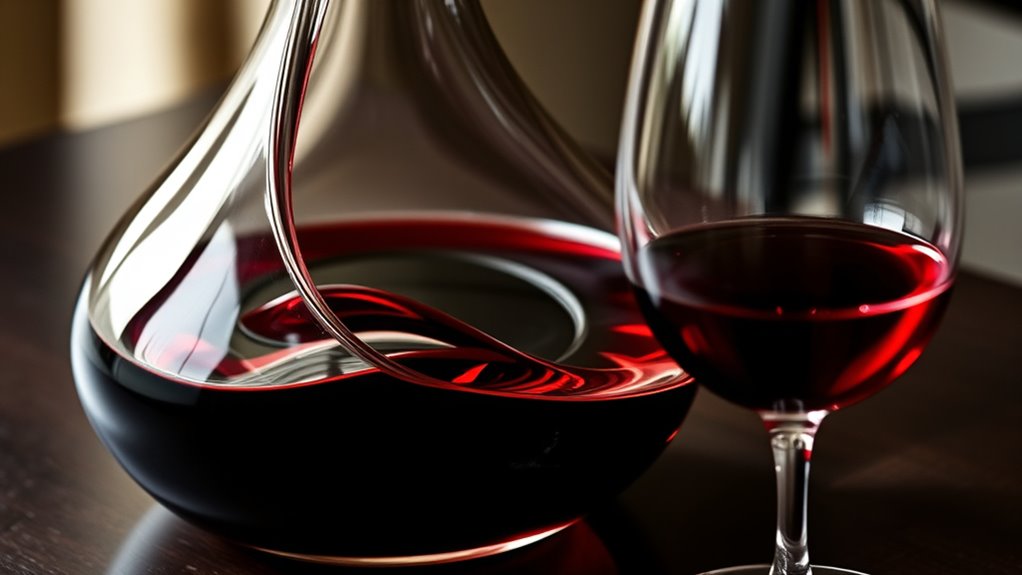
Decanting isn’t always beneficial; in fact, it can sometimes harm the wine. If you agitate delicate wines too much or expose them to too much oxygen, you risk losing their subtle flavors. Additionally, rushing the process by decanting too early can strip away qualities that need more time to develop.
Over-agitating Delicate Wines
Have you ever poured wine into a decanter only to find it tastes less refined afterward? Over-agitating delicate wines can cause this. When you swirl or shake the wine too much, you risk destroying its subtle aromas and smooth texture. Think about the gentle notes you want to enhance:
- Soft floral hints
- Fine tannins
- Elegant fruitiness
- Light spice nuances
- Crisp finish
Using decanting tools or considering music pairing can help. But excessive agitation might do more harm than good, especially with fragile wines. Let the wine breathe naturally. Gentle pouring and minimal movement preserve its delicate balance. Over-agitating interrupts this harmony, diminishing the wine’s finesse instead of elevating it. Sometimes, less is more—especially when handling delicate wines.
Excessive Oxygen Exposure
While decanting can enhance a wine’s aroma and flavor, exposing it to too much oxygen can quickly turn that benefit into a drawback. Excessive oxygen exposure accelerates oxidation risks, leading to flavor deterioration. If you leave wine exposed too long, it loses its freshness and complexity, often developing flat or nutty notes that mask its original character. To prevent this, consider the following:
| When to Decant | When to Avoid Decanting |
|---|---|
| Just before serving | If the wine is fragile or young |
| For full-bodied reds | When the wine has already been exposed to air |
| Short decanting times | To prevent over-oxygenation |
Be mindful of oxygen exposure; decanting isn’t always beneficial and can harm delicate wines.
Premature Decanting Risks
Decanting too early can do more harm than good, especially if you’re working with delicate or younger wines. Premature decanting risks exposing wine to unnecessary oxygen, which can accelerate aging or spoil its flavors. Many fall for decanting myths, believing it always improves wine, but timing matters. Misconceptions about storage often lead people to decant too soon, thinking it will enhance freshness. Visualize the dangers:
- a vibrant young red losing its fruit
- a delicate white turning flat
- aromas fading before you enjoy them
- tannins becoming bitter
- flavors becoming muddled
Decanting at the wrong time can strip away the wine’s potential, emphasizing the importance of patience and understanding when to decant. Know when your wine needs more aging and resist the urge to decant based on storage misconceptions or hearsay. Proper timing preserves the wine’s integrity and prevents undo harm.
Practical Tips for Successful Decanting

To guarantee your decanting process goes smoothly, start by choosing the right vessel—preferably a clean, wide-bowled decanter that allows the wine to breathe. Proper glassware selection is essential; a decanter with a broad base maximizes surface area, aiding aeration. Before pouring, gather decanting accessories like a flashlight or a candle to spot sediment easily. Hold the bottle at a slight angle as you pour to minimize sediment transfer. Pour slowly to prevent splashing and ensure controlled decanting. If needed, use a cheesecloth or a fine strainer to filter out any remaining sediment. Keep the decanter in a stable position while the wine breathes. Choosing the right decanter can make a significant difference in the effectiveness of aeration and sediment separation. Additionally, understanding the proper decanting techniques and the importance of proper wine storage can help you select the appropriate decanting method for different types of wines. Incorporating home wine cooling strategies can also help maintain optimal serving temperatures and preserve wine quality during decanting. These simple tips will help you achieve a smooth, effective decanting process, enhancing your wine experience.
Frequently Asked Questions
Can Decanting Improve the Taste of All Red Wines?
Decanting can improve the taste of many red wines by enhancing aeration benefits, which helps release their aromas and soften tannins. It’s especially beneficial for younger wines that haven’t fully aged, as it accelerates wine aging and reveals more complex flavors. However, not all reds need decanting—delicate or aged wines might lose their nuances. Trust your palate and experiment to see which wines benefit most from decanting.
Should I Decant Wine That Has Already Been Opened?
You should decant wine that’s already opened if you want to improve its flavor or aerate it further. Proper wine storage, like sealing it tightly and keeping it cool, helps preserve its quality until you’re ready to serve. When decanting, choose the right style—gentle pour for delicate wines or more vigorous aeration for bolder reds—to enhance the taste. Decanting can revive opened wine, making it more enjoyable.
How Can I Tell if a Wine Needs Aeration?
You can tell a wine needs aeration if its aroma seems dull or muted; ironically, swirling or decanting often helps bring out its true character. If you notice sediment or a lack of vibrancy, aeration can improve the wine’s aroma and flavor. Decanting also helps with sediment removal, making your sip smoother. Trust your senses—if the aroma feels flat, give it some air; your taste buds will thank you.
Is Decanting Necessary for Wines Served at Special Occasions?
Decanting isn’t always necessary for wines at special occasions, but it can enhance the experience. If you’re serving aged or full-bodied wines, decanting in a glass helps aerate and develop flavors, making them more enjoyable. Proper wine storage guarantees the wine’s quality, and using a decanting glass adds elegance. Trust your taste; if the wine benefits from aeration, decanting is worth the effort, especially during special events.
Can Decanting Help Reduce Wine Tannin Bitterness?
A word to the wise: practice makes perfect. Decanting can definitely help with tannin mellowing and bitterness reduction, especially in young, bold reds. By exposing wine to oxygen, you soften harsh tannins, making the wine smoother and more enjoyable. If you’re seeking a more balanced taste, decanting is worth trying. Just remember, not all wines need it—sometimes, patience is the best decanter.
Conclusion
Decanting wine is like opening a window to fresh aromas, but knowing when to do it makes all the difference. Trust your senses and the wine’s age to decide if decanting will enhance its character or just aerate it unnecessarily. With a little practice, you’ll become as confident as a sommelier, enriching your wine experience each time you pour. Remember, the right decanting can turn a good bottle into an unforgettable one.