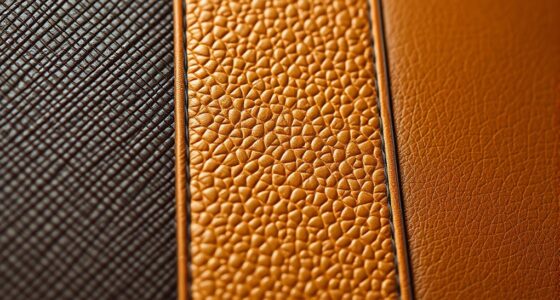
Understanding cashmere grades helps you avoid overpaying for low-quality fibers. Grade A cashmere is the finest, softest, and most durable, with longer, finer fibers that feel velvety and smooth. Grade B is decent but less refined, while Grade C is coarser and often less comfortable. To spot quality, check fiber length, softness, and the fabric’s sheen. Stay informed about grading details to make smarter, more confident purchases—your perfect cashmere piece is more within reach than you think.
Key Takeaways
- Understand that higher grades typically mean longer, finer, and more durable fibers, but always verify fiber quality beyond labels.
- Recognize that grading systems assess fiber purity, length, and fineness, which directly impact softness and longevity.
- Be cautious of premium pricing; excellent cashmere can be found in mid-range options with transparent sourcing and craftsmanship.
- Use tactile inspection—softness, smoothness, and slight sheen—to determine true quality regardless of grade labels.
- Prioritize transparent sourcing and manufacturing practices to ensure ethical, high-quality cashmere investment.
Understanding Cashmere: The Basics
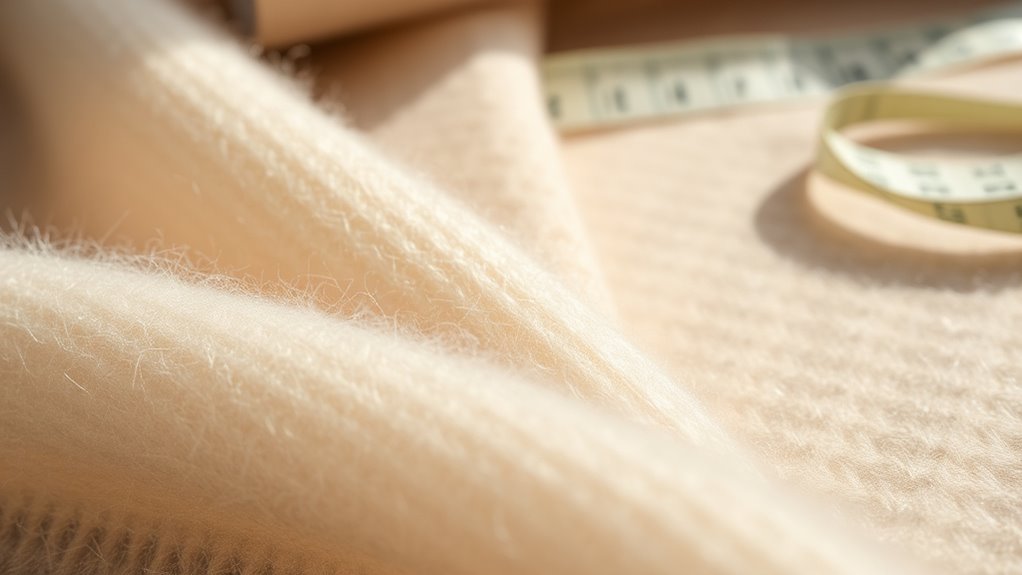
Cashmere is a luxurious fiber known for its exceptional softness and warmth, making it a popular choice for high-quality garments. To enhance its qualities, manufacturers often use cashmere blending, combining it with other fibers like silk or wool to improve durability and texture. Understanding the dyeing techniques is also essential, as they impact the richness of color and overall appearance of cashmere products. Some dyeing methods, such as piece dyeing or yarn dyeing, can affect how vibrant or long-lasting the color remains. Additionally, vetted deals on cashmere can help you find high-quality options at better prices. Recognizing fibers and blends is crucial in assessing the true value of cashmere garments. Being aware of manufacturing techniques can further inform your purchasing decisions. Paying attention to quality indicators like fiber length and ply count can help you identify superior cashmere items. For example, fiber length significantly influences the softness and durability of the fabric. By paying attention to these aspects, you can better assess the quality of cashmere items and ensure you’re investing in garments that offer both comfort and lasting beauty.
The Fabric Grading System Explained

Understanding how cashmere is graded helps you choose the best quality. You’ll learn about the grading criteria, quality indicators, and common mistakes to prevent. This knowledge ensures you make informed decisions when selecting cashmere garments. Additionally, being aware of the market trends can help you identify reputable sources and avoid overpaying for lower-grade products. Recognizing the importance of expertise in architectural solutions can also guide you toward trustworthy suppliers and professionals.
Grading Criteria Breakdown
Have you ever wondered how experts determine the quality of cashmere? It all comes down to specific grading criteria that assess fiber durability and dye consistency. Fiber durability measures how well the cashmere withstands wear over time, indicating its longevity and resistance to pilling. Higher-grade fibers are stronger and maintain their softness longer. Dye consistency evaluates how evenly the color is distributed, revealing the fiber’s ability to absorb dye uniformly. This affects the fabric’s appearance and ensures vibrant, lasting color without fading. These criteria help distinguish premium cashmere from lower-quality options. By understanding these factors, you can confidently identify high-grade cashmere and avoid overpaying for inferior products. Clear grading standards ensure you get the best value and quality for your investment.
Quality Indicators Explained
The fabric grading system provides a clear framework for evaluating cashmere quality, allowing you to make informed choices. Key quality indicators include fiber length, fineness, and purity, which directly impact softness and durability. Longer fibers tend to produce smoother, more luxurious textiles, while finer fibers contribute to a softer feel. When appraising cashmere, consider the sourcing—ethical production practices ensure the fibers come from responsible farms that prioritize animal welfare and sustainable methods. High-quality cashmere often involves strict standards to maintain purity and minimize contamination. Understanding these indicators helps you distinguish premium cashmere from lower-grade options, so you don’t overpay. By recognizing what influences quality, you can confidently select products that offer genuine comfort, longevity, and ethically sourced excellence.
Common Grading Mistakes
Many shoppers make common mistakes when grading cashmere, often due to misunderstandings of the fabric grading system. One major grading myth is relying solely on retailer labels, which can be misleading. To avoid overpaying, focus on actual fabric quality rather than marketing claims. Here are three common mistakes:
- Assuming higher label grades always mean better quality—labels can be inconsistent.
- Ignoring grading details and relying solely on retailer descriptions, which may exaggerate fiber quality.
- Overlooking the importance of tactile inspection; feel and softness often reveal more than a label.
Understanding these pitfalls helps you see past grading myths and make smarter choices. Don’t be fooled by superficial labels—knowing how to read the fabric grading system guarantees you get true value for your cashmere investments.
Factors That Influence Cashmere Quality
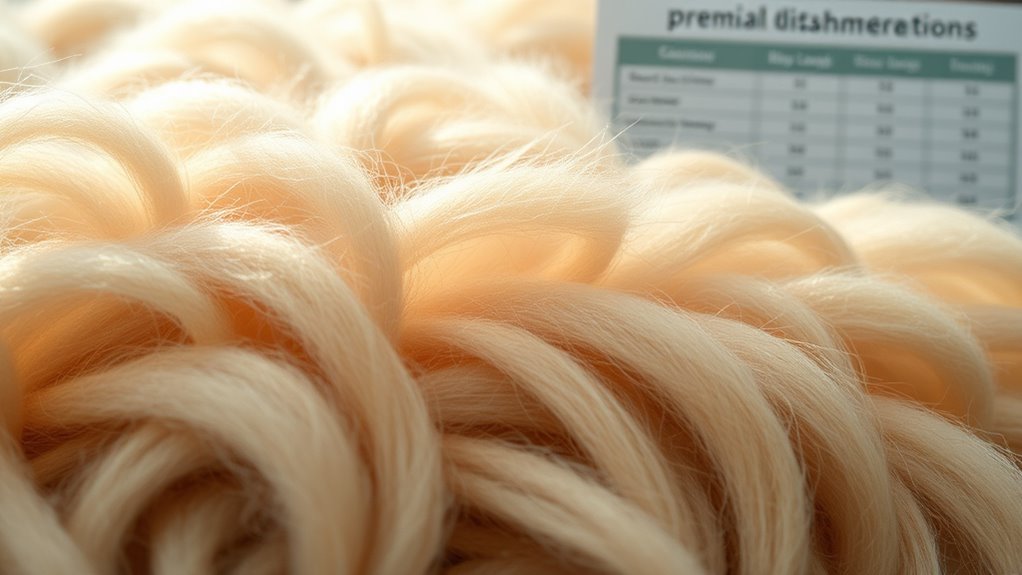
Several factors directly impact the quality of cashmere, influencing its softness, durability, and overall appearance. Your cashmere sourcing plays a vital role; high-quality fibers come from goats in specific regions like Mongolia and Inner Mongolia, where climate and grazing conditions produce finer wool. Ethical production also matters, ensuring that fibers are harvested responsibly without harming animals or the environment. The way cashmere is processed and spun affects its texture and strength—careful handling preserves fiber integrity. Additionally, the age and health of the goats influence fiber quality, with mature goats producing longer, more consistent fibers. Goat health significantly impacts the fiber’s quality, making it an important consideration when evaluating cashmere. Proper fiber processing techniques are essential to maintain the delicate qualities of cashmere and prevent damage during production. Understanding the finest regions known for superior cashmere can help you make more informed purchasing decisions, ensuring better value for your investment. Moreover, the layering of fibers during processing can affect the final texture and appearance of the fabric. Furthermore, sustainable harvesting practices are increasingly recognized as crucial for maintaining high-quality cashmere while protecting the environment. By understanding these factors, you can better assess the true value of cashmere and avoid overpaying for subpar products.
Distinguishing Grade A, B, and C Cashmere
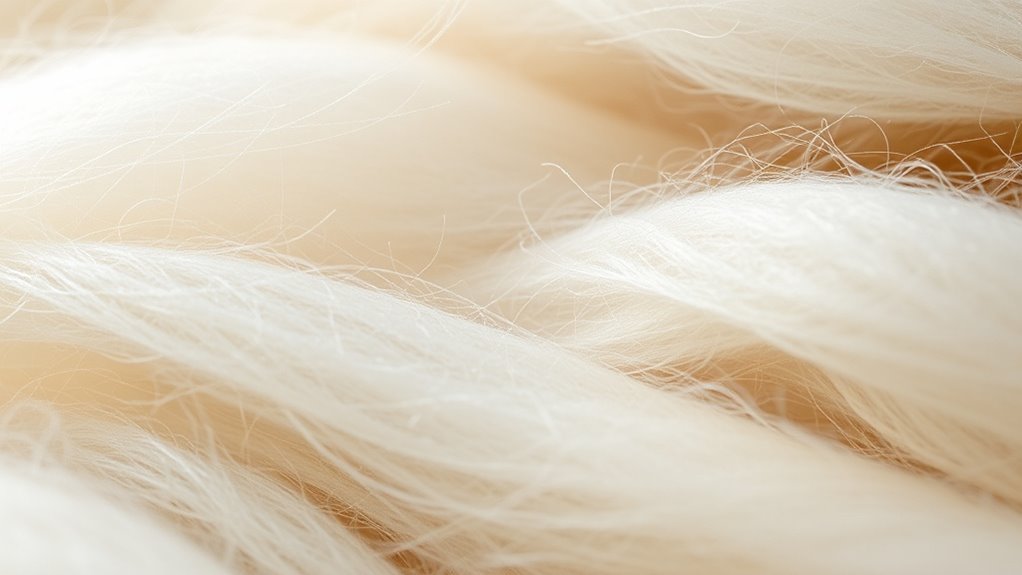
To accurately identify cashmere grades, you need to understand the differences between Grade A, B, and C fibers. Grade A cashmere is the finest, softest, and most luxurious, often from sustainable sourcing, with long, clean fibers. Grade B is slightly coarser and may include some shorter fibers, sometimes found in cashmere blends. Grade C consists of the coarsest fibers, often mixed with other materials, and lacks the softness of higher grades. To distinguish these:
- Feel the fiber’s softness; Grade A is plush and silky.
- Check for uniformity; higher grades have consistent fiber length.
- Consider the sourcing; sustainable sourcing usually correlates with higher-quality fibers.
Understanding these differences helps you avoid overpaying and guarantees you get genuine, high-quality cashmere.
How to Identify High-Quality Cashmere in Stores
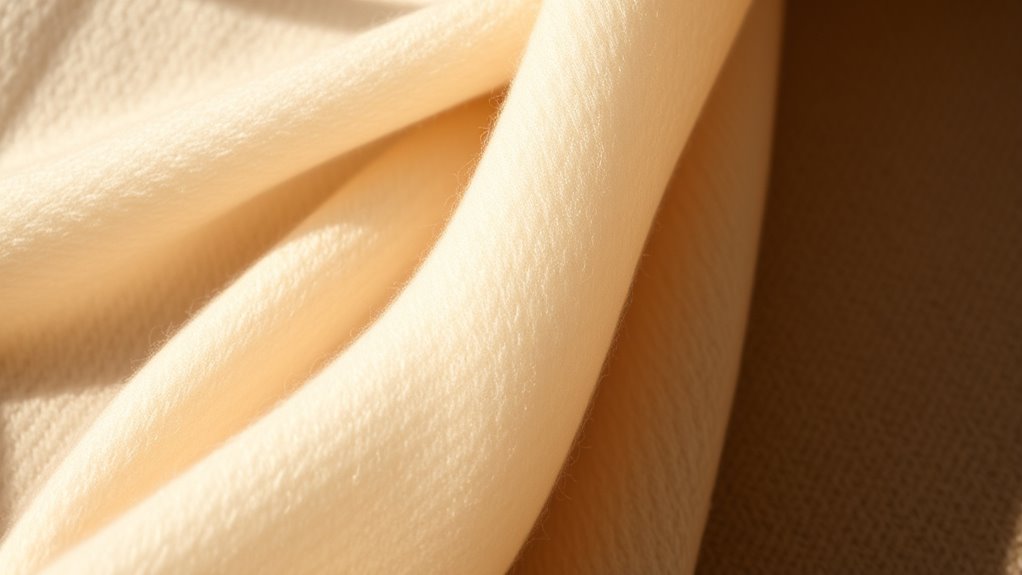
When shopping for high-quality cashmere, start by feeling the fiber texture—smooth and soft indicates better quality. Next, check for a natural sheen and luster, which signal fine fibers, and examine the knitting for tightness, ensuring durability. These simple tests help you confidently identify premium cashmere in stores. Incorporating knowledge of attention to detail techniques can also improve your ability to discern subtle differences in fiber quality through attentive inspection, especially when listening for market trends and insights that may indicate genuine craftsmanship. Developing an understanding of fiber chemistry can further enhance your ability to distinguish authentic cashmere from lower-quality blends.
Feel the Fiber Texture
How does the fiber feel when you touch it? The fiber feel should be soft and smooth, giving you a gentle texture sensation. High-quality cashmere is plush without being scratchy, and it should glide effortlessly under your fingers. To assess this, consider these points:
- Softness: Run your hand over the fabric; premium cashmere feels velvety and luxurious.
- Density: Slightly thicker fibers indicate better quality, providing a richer texture sensation.
- Elasticity: Gently stretch a small section; high-quality cashmere maintains its shape and returns to normal without pilling or looseness.
Paying attention to the fiber feel helps you distinguish superior cashmere from lower grades, ensuring you never overpay for lesser quality.
Check for Sheen and Luster
A natural sheen or subtle luster is a hallmark of high-quality cashmere. To assess this, perform a sheen assessment by holding the fabric under natural light and observing how it reflects light. High-quality cashmere will have a soft, even glow without excessive shine. During your luster evaluation, look for a gentle shimmer that enhances the fabric’s richness rather than an overly glossy appearance. If the material appears dull or flat, it might indicate lower quality or poor processing. Genuine cashmere’s sheen should be subtle, highlighting its fine fibers and craftsmanship. Remember, a well-made cashmere piece will have a refined luster that catches your eye without being overly reflective. This is a clear indicator of superior fiber quality in stores.
Examine the Knitting Tightness
Examining the knitting tightness is a crucial step in identifying high-quality cashmere. Tight knitting indicates better yarn tension control, resulting in durability and a refined appearance. To evaluate, consider these points:
- Check for consistency: Look closely at the stitches; high-quality cashmere features uniform knitting tightness across the fabric, with no loose or uneven areas.
- Feel the fabric: Tightly knit cashmere feels firm yet soft, showing controlled yarn tension. Loose knitting feels flimsy and less durable.
- Inspect the seams: Seams should be neatly stitched with consistent tension, reflecting careful craftsmanship and high yarn tension control.
Common Mistakes When Buying Cashmere

One common mistake when buying cashmere is assuming that higher price always guarantees better quality. Many shoppers overlook the importance of understanding care instructions, which directly affect how long your cashmere lasts and stays soft. Ignoring these details can lead to purchasing items that shrink, pill, or lose their luster quickly. Properly cared for cashmere preserves its softness and appearance. Additionally, understanding the standby generator safety and maintenance requirements can help you make smarter decisions about your wardrobe investments. For example, choosing the right air purifier and following proper maintenance dos and don’ts can extend the lifespan of your wardrobe essentials by protecting them from dust and pollutants. Recognizing pinball machine weight considerations is also important when arranging storage or display spaces for your collection. Being aware of climate control needs for delicate fabrics can further safeguard your investments. Also, understanding the role of vetted – wave and wind in protecting delicate fibers can help maintain your cashmere’s quality over time. By avoiding these mistakes, you ensure your investment pays off, and your cashmere remains beautiful and comfortable for years to come.
Price vs. Quality: Finding the Right Balance

Finding the perfect balance between price and quality in cashmere shopping requires a careful eye. You want to avoid overpaying for luxury branding while ensuring durability and softness. To do this:
- Focus on market trends that emphasize quality over brand names, which often means investing in reputable but less flashy labels.
- Understand that higher price doesn’t always guarantee better grade; sometimes, mid-range options offer superior softness and longevity.
- Look for transparent information about fiber origin and manufacturing practices, helping you assess true value rather than just luxury branding. Additionally, exploring at-home textile testing can help verify the fiber quality firsthand.
Tips for Caring for Your Cashmere to Maintain Its Grade
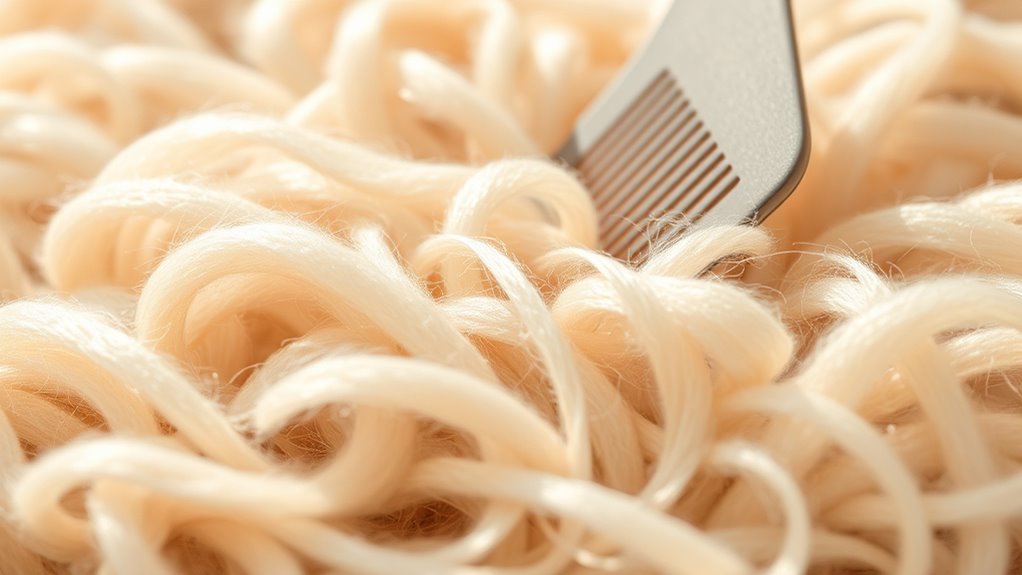
To keep your cashmere looking its best and maintain its high grade, proper care is essential. Gentle handling preserves its softness and highlights the eco friendly sourcing that underpins luxury branding. Always hand wash or use a delicate cycle with cold water, avoiding harsh detergents. Store your cashmere folded in a breathable container to prevent stretching. Regularly air it out to maintain freshness.
Imagine your cashmere as a delicate fabric in this scene:
| Soft fibers | Gentle touch | Eco friendly sourcing |
|---|---|---|
| Fine texture | Hand wash | Sustainable fibers |
| Plush feel | Store carefully | Luxury branding |
| Lush warmth | Air out | Quality preservation |
Treat it with care, and your cashmere stays luxurious and durable.
Frequently Asked Questions
How Does Geographic Origin Affect Cashmere Quality?
Your cashmere’s quality is greatly affected by its geographic origin due to regional differences and climatic influence. For example, Mongolian cashmere tends to be finer and softer because of colder, harsher winters that produce thinner, more delicate fibers. In contrast, cashmere from warmer regions might be coarser. Understanding these regional differences helps you identify high-quality cashmere and avoid overpaying for inferior grades.
Are There Specific Brands Known for Authentic High-Grade Cashmere?
Imagine slipping into a cloud of luxury cashmere, feeling its softness embrace you. Brands like Loro Piana, Brunello Cucinelli, and Hermès are renowned for authentic high-grade cashmere, thanks to their strong brand reputation and meticulous sourcing. These labels guarantee you get the finest fibers, offering unmatched quality that’s worth every penny. When you choose them, you’re investing in timeless elegance and exceptional comfort, elevating your wardrobe to new heights.
Can Cashmere Grades Vary Within the Same Product?
Yes, cashmere grades can vary within the same product due to grading inconsistencies and supplier variations. You might notice subtle differences in softness, thickness, or sheen even in a single garment. These variations happen because grading isn’t always perfectly standardized across manufacturers. To avoid overpaying, it’s essential to understand these potential inconsistencies and buy from trusted suppliers who maintain strict quality control.
What Are Eco-Friendly Options for High-Quality Cashmere?
Like choosing the path of the Green Knight, you can opt for eco-friendly cashmere that’s sustainably sourced and produced with eco-conscious methods. Look for brands committed to transparent supply chains, fair labor, and minimal environmental impact. These options often use natural dyes and renewable energy, ensuring your luxury investment aligns with your values. By prioritizing sustainable sourcing and eco-conscious production, you enjoy high-quality cashmere while supporting a healthier planet.
How Does Cashmere Blending Impact Overall Grade and Durability?
When you blend cashmere fibers, it can affect the overall grade and durability. Fiber blending helps maintain grade consistency, but adding other fibers might dilute the softness or quality of pure cashmere. While blends can improve strength and longevity, they may slightly reduce the luxurious feel. So, if you want high-grade, durable cashmere, opt for carefully balanced blends that prioritize fiber quality without compromising softness.
Conclusion
Knowing how to decode cashmere grades is like having a map in a treasure hunt—you avoid overpaying and find the true gems. Remember when I once bought a seemingly perfect sweater, only to realize it was grade C? That taught me to look beyond the surface. With this knowledge, you’ll confidently spot quality, ensuring your investment keeps you cozy and stylish for years. Trust your eye, and never settle for less than the best.