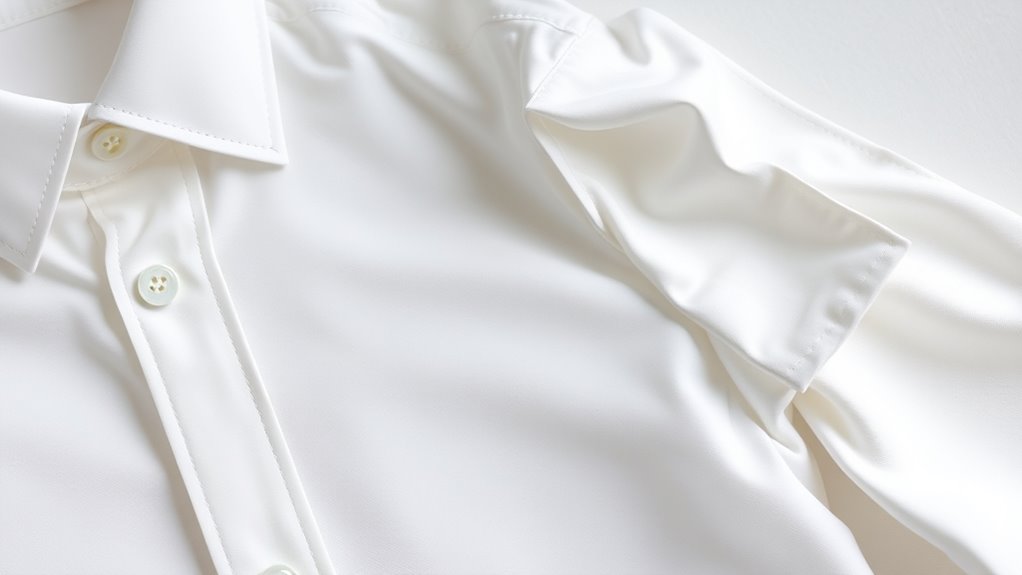

A dress shirt features several key parts that define its style and fit. These include the collar, which can be pointed, spread, or button-down; sleeves with cuffs, either button or French style; a front placket with buttons; and a yoke for structure across the shoulders. The body comprises the chest and back panels, while the hem can be straight or curved. Understanding each element helps you choose the perfect shirt—if you keep exploring, you’ll discover how these parts come together.
Key Takeaways
- The collar is the top part surrounding the neck opening, available in styles like point, spread, and button-down.
- The placket is the fabric strip that houses the buttonholes, running down the front of the shirt.
- The yoke is the panel across the shoulders, providing fit, structure, and support for the back and shoulders.
- The cuffs are the bands at the sleeve ends that secure the sleeve opening, with styles such as barrel, French, or convertible.
- The hem is the bottom edge of the shirt, often finished with a curved or straight cut for style and tuck-in versatility.
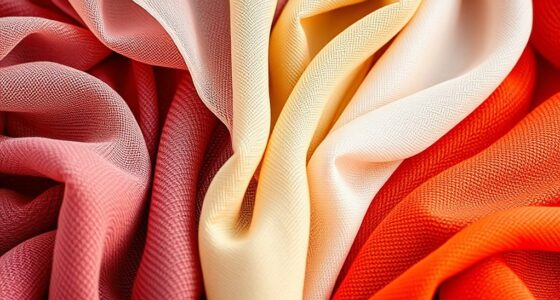
Have you ever wondered what makes a dress shirt both functional and stylish? It all starts with understanding the different parts that come together to create a well-made shirt. One of the most important elements is the fabric type. Cotton is the most popular choice because of its breathability and comfort, but you’ll also find shirts made from linen, silk, and blends that offer durability and stretch. Each fabric type has its own feel, weight, and level of formality, so choosing the right one depends on your needs and style preferences. For example, a crisp cotton poplin feels smooth and polished, perfect for office wear, while linen offers a more relaxed vibe, ideal for summer outings. The fabric not only influences how a shirt looks and feels but also affects how long it lasts and how easy it is to maintain. Color quality and accuracy are also essential for ensuring your shirt looks vibrant and true to its shade over time.
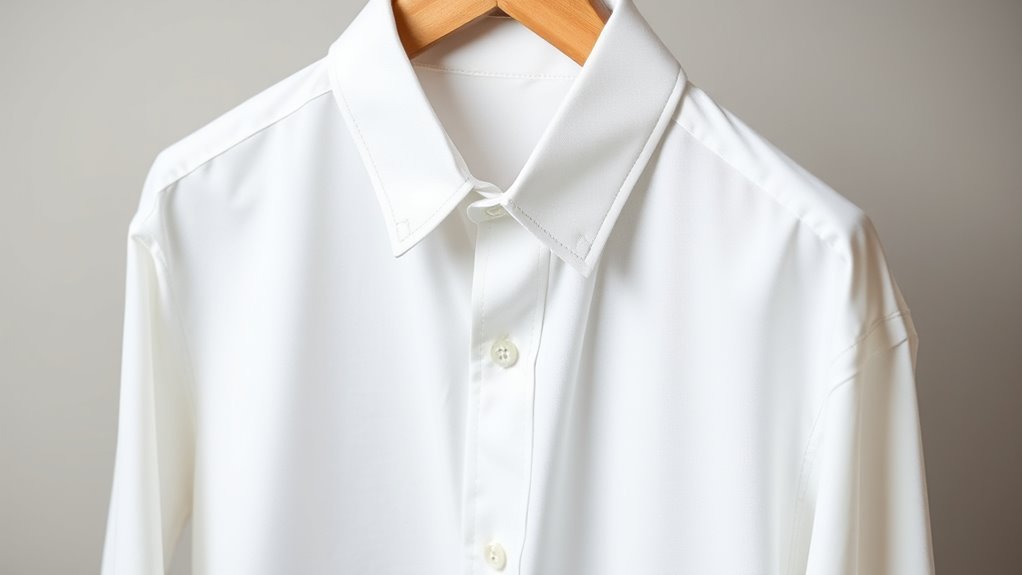
Next, let’s talk about collar styles, which are essential to both the aesthetic and function of a dress shirt. The collar frames your face and sets the tone for your entire outfit. There are several popular styles to consider. The classic point collar is versatile and works well with most tie knots, creating a sharp, professional look. The spread collar, with its wider distance between the points, offers a modern edge and can accommodate larger tie knots, making it suitable for formal settings. If you’re after a more casual, relaxed appearance, the button-down collar keeps the points secured with small buttons, preventing them from flaring out. Meanwhile, the cutaway collar has a broader spread, often used in fashion-forward or business-casual looks, and can give you a bold, confident vibe. Each collar style is designed with specific occasions and personal styles in mind, so choosing the right one can elevate your overall appearance.
The collar’s construction also matters. Some collars are fused with interfacing to keep their shape sharp, while others are non-fused for a softer, more natural feel. The collar’s height and stiffness can influence comfort and style, so it’s worth paying attention to these details. When selecting a shirt, consider how the fabric type and collar style work together to enhance your look. A high-quality fabric paired with a well-chosen collar can make a simple dress shirt stand out, whether you’re dressing for a business meeting or a casual dinner. Understanding these parts helps you pick shirts that fit your needs and personal style, ensuring you look sharp and feel confident wherever you go.
Top picks for "anatomy dres shirt"
Open Amazon search results for this keyword.
As an affiliate, we earn on qualifying purchases.
Frequently Asked Questions
What Fabric Options Are Best for Dress Shirts?
For dress shirts, you should choose fabrics like cotton or linen, which offer great breathability fabrics, keeping you comfortable all day. If you prioritize fabric durability, look for tightly woven cotton or cotton blends that resist wear and tear. Poplin and oxford cloth are versatile options, combining durability with breathability. Ultimately, selecting a fabric depends on your comfort and the occasion, ensuring you stay stylish and comfortable.
How Do I Choose the Right Collar Style?
Choosing the right collar style is like finding your signature look; it frames your face and sets the tone. You’ll want to contemplate collar stiffness—stiffer collars are more formal— and collar height, which affects how it complements your face shape. For a sharp, professional look, opt for a classic point or spread collar. Go for softer collars if you prefer a relaxed vibe, and match collar height to your neck length for balance.
What Are the Differences Between Slim and Regular Fits?
A slim fit shirt contours closely to your body, giving a modern, sleek look perfect for style versatility and a sharp silhouette. Regular fit offers more room in the chest and arms, providing comfort and a classic style. The fit comparison helps you choose based on your comfort preference and occasion, with slim fit ideal for a tailored appearance and regular fit suited for everyday wear and greater movement.
How Should I Care for and Iron a Dress Shirt?
Think your dress shirt’s invincible? Think again. To keep it sharp, promptly tackle stains with stain removal tricks—dabbing, not rubbing. When ironing, use the right techniques: set the iron to the correct heat, steam generously, and press gently along the fabric’s grain. Hang it immediately to avoid wrinkles, and you’ll stay looking crisp. Who knew caring for a shirt could be so essential? Your wardrobe will thank you.
Which Dress Shirt Features Are Most Important for Comfort?
For comfort, focus on dress shirt features like good ventilation and a flexible collar. Ventilation helps keep you cool and prevents overheating, especially during long wear. A collar with the right stiffness offers support without feeling tight or restrictive, giving you all-day comfort. Look for shirts with breathable fabrics and a collar that maintains its shape but remains soft. These features guarantee you stay comfortable and confident throughout your day.
Conclusion
As you now recognize each part of a dress shirt, you might notice how its design subtly mirrors life’s details—hidden seams and overlooked buttons that, like moments in your day, hold everything together. Sometimes, the smallest features reveal the most about craftsmanship and care, just as chance encounters can unexpectedly deepen your understanding. So, next time you wear your shirt, remember how every part plays a role—yet, it’s the unnoticed connections that truly complete the picture.