
If you value staying warm and managing moisture, lined gloves are your best bet, as they offer superior insulation and moisture-wicking features. But if you need better control and tactile sensitivity for activities like shooting or climbing, unlined gloves are more suitable since they’re thinner and more flexible. The right choice depends on whether your priority is comfort in cold weather or control during delicate tasks. Keep exploring to find the perfect fit for your needs.
Key Takeaways
- Lined gloves prioritize warmth and insulation, making them ideal for cold environments, while unlined gloves offer better tactile sensitivity.
- Unlined gloves provide greater dexterity and control, suitable for activities requiring fine motor skills, unlike lined gloves which may reduce flexibility.
- Lined gloves often feature moisture-wicking linings to manage sweat, whereas unlined gloves rely on outer fabric breathability.
- For harsh winter conditions, lined gloves offer superior protection and heat retention compared to unlined options.
- Unlined gloves are preferable for activities demanding precision and tactile feedback, especially in milder or indoor settings.
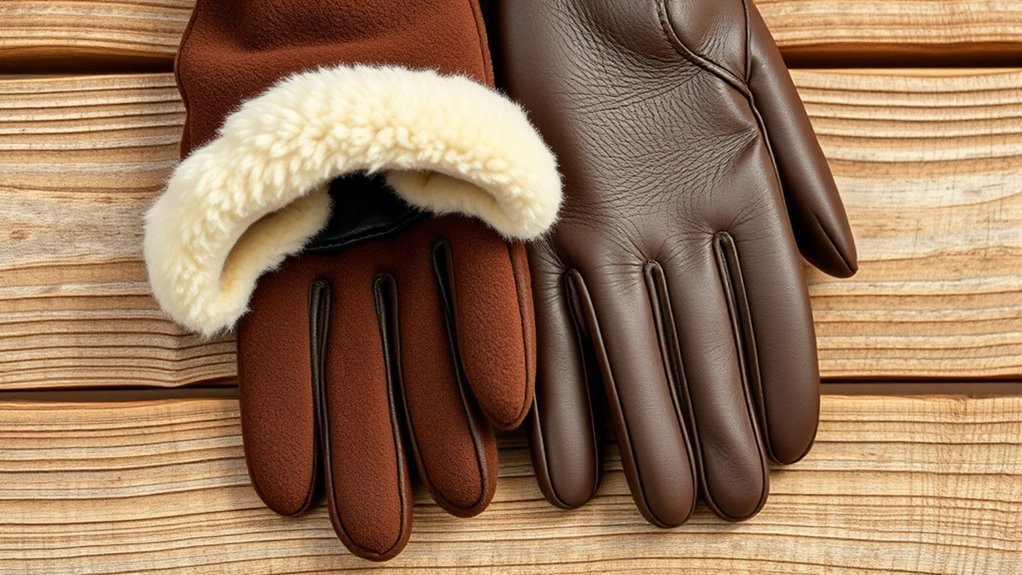
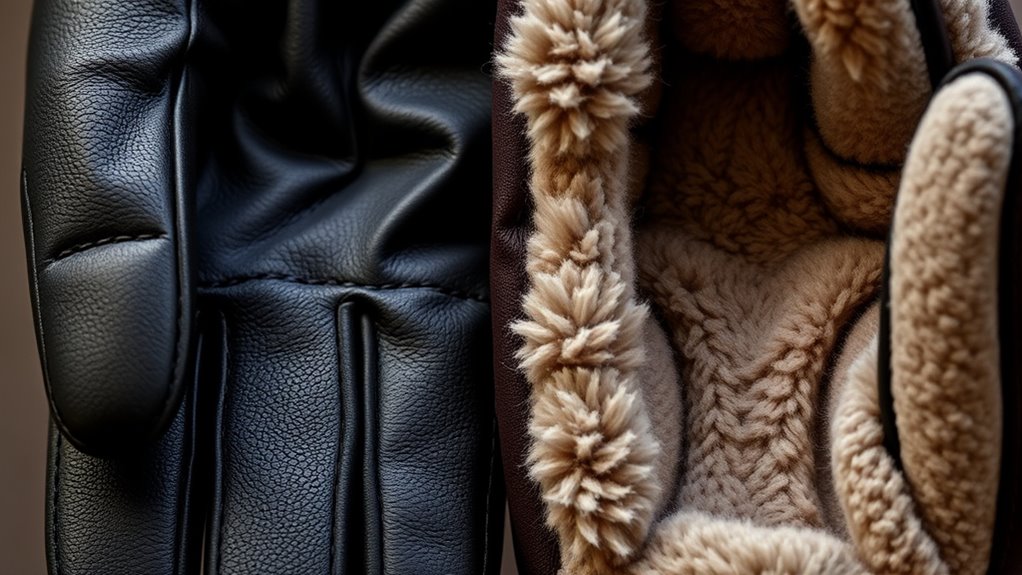
When choosing gloves, understanding the difference between lined and unlined options is vital because it directly impacts comfort, warmth, and suitability for various activities. Lined gloves typically feature an internal layer made of materials like fleece, wool, or Thinsulate, which considerably enhances thermal insulation. This added layer traps heat close to your skin, making lined gloves an excellent choice for cold weather. However, this insulation can sometimes reduce dexterity and tactile sensitivity, so if fine motor control is a priority, unlined gloves might be better suited for your needs.
Moisture management is another essential aspect to consider. Lined gloves often include moisture-wicking linings that help draw sweat away from your skin, keeping your hands dry and comfortable during prolonged wear or physical activity. This moisture management feature prevents sweat buildup, which can lead to discomfort or even frostbite in extremely cold environments. Conversely, unlined gloves rely more on the outer material to handle moisture. If the exterior fabric has good breathability and moisture-wicking properties, unlined gloves can still perform well, especially in milder conditions. But in very cold or damp environments, they might not provide the same level of moisture control as lined options.
Thermal insulation is the main advantage of lined gloves, making them ideal for winter sports, outdoor work in freezing temperatures, or chilly commutes. The added insulation helps your hands stay warm even when exposed to cold air and wind. Unlined gloves, lacking this extra layer, tend to be thinner and more flexible, offering better control and tactile sensitivity. This makes unlined gloves popular for activities requiring precision, like shooting, climbing, or handling small tools, where feeling the object in your hand outweighs the need for maximum warmth.
Choosing between lined and unlined gloves ultimately depends on your activity and environment. If you’re braving harsh winter conditions or need maximum warmth and moisture management, go for lined gloves. But if you prioritize control, dexterity, and a lighter feel—especially in milder weather or indoor settings—unlined gloves are usually the better choice. Remember, the right glove balances thermal insulation and moisture management with your specific needs for comfort, control, and protection.
Frequently Asked Questions
Do Lined Gloves Provide Better Insulation in Extreme Cold?
Yes, lined gloves offer better thermal insulation in extreme cold because the lining traps heat and keeps your hands warm. They also improve moisture management by wicking away sweat, preventing moisture buildup that can make your hands feel colder. With lined gloves, you get enhanced warmth and dryness, making them ideal for harsh winter conditions. You’ll stay comfortable longer, even when temperatures drop markedly.
Are Unlined Gloves More Suitable for High-Precision Tasks?
Think of unlined gloves as a painter’s fine brush—their glove dexterity lets you maneuver with precision. They’re perfect for high-precision tasks because their lightweight, breathable material keeps your hands agile and responsive. With less bulk, you feel closer to your work, enhancing control. If you need delicate handling or intricate movements, unlined gloves are your best ally, offering the dexterity and ventilation essential for detailed, high-precision work.
Can Unlined Gloves Reduce Sweating During Prolonged Use?
Yes, unlined gloves can help reduce sweating during prolonged use because they typically offer better breathability, addressing moisture management and minimizing trapped heat. Without an inner lining, air circulates more freely around your hands, keeping sweat at bay. If breathability concerns are a priority, unlined gloves are a good choice, especially for tasks that cause extended wear and generate heat, improving comfort and reducing discomfort from excessive sweating.
How Do Lining Materials Affect Glove Durability and Maintenance?
Lining materials considerably impact glove durability and maintenance. High-quality linings, like leather or fleece, enhance material longevity by resisting wear and tear, but may require special cleaning to maintain their integrity. Synthetic linings, such as polyester, are easier to clean and dry quickly, but might not last as long. You should consider how often you’ll clean the gloves and the conditions they’ll face, balancing durability with ease of maintenance.
Are There Specific Industries That Prefer Unlined Over Lined Gloves?
In the grand theater of industrial sectors, safety standards often favor unlined gloves, especially where tactile precision reigns supreme—like electronics or fine assembly lines. These industries prefer unlined gloves to maximize dexterity and control, even if it means sacrificing a bit of comfort. So, if you’re working where sensitivity is king, you’ll find unlined gloves are the industry’s choice, proving that sometimes, feeling is more than just believing.
Conclusion
Ultimately, choosing between lined and unlined gloves depends on what matters most to you—comfort or control. If you prioritize warmth and softness, lined gloves are your best bet. For better dexterity and a lightweight feel, unlined gloves shine. Remember, “A stitch in time saves nine,” so pick what’s right now to stay comfortable and in control. Whichever you choose, your hands will thank you for making the right call.