

Choosing organic cotton over conventional options in luxury goods helps you reduce environmental harm by avoiding chemical pesticides, fertilizers, and water waste. Organic farming promotes biodiversity, healthier soils, and fewer pollutants reaching waterways, making your purchases more sustainable. Although organic items can be pricier, they support eco-friendly practices and better health for farmers. To understand the full impact of your choices and how they shape a greener future, keep exploring these differences further.
Key Takeaways
- Organic cotton reduces environmental pollution, aligning luxury brands with eco-friendly values and enhancing their sustainability image.
- Conventional cotton’s chemical use can harm ecosystems, contrasting with the eco-conscious appeal of organic luxury products.
- Organic cotton promotes biodiversity and soil health, reinforcing luxury brands’ commitments to environmental responsibility.
- Though often more expensive, organic cotton minimizes health risks for farmers, supporting social responsibility in luxury sourcing.
- Consumer preference for organic cotton in luxury goods drives industry shifts toward sustainable and environmentally friendly practices.
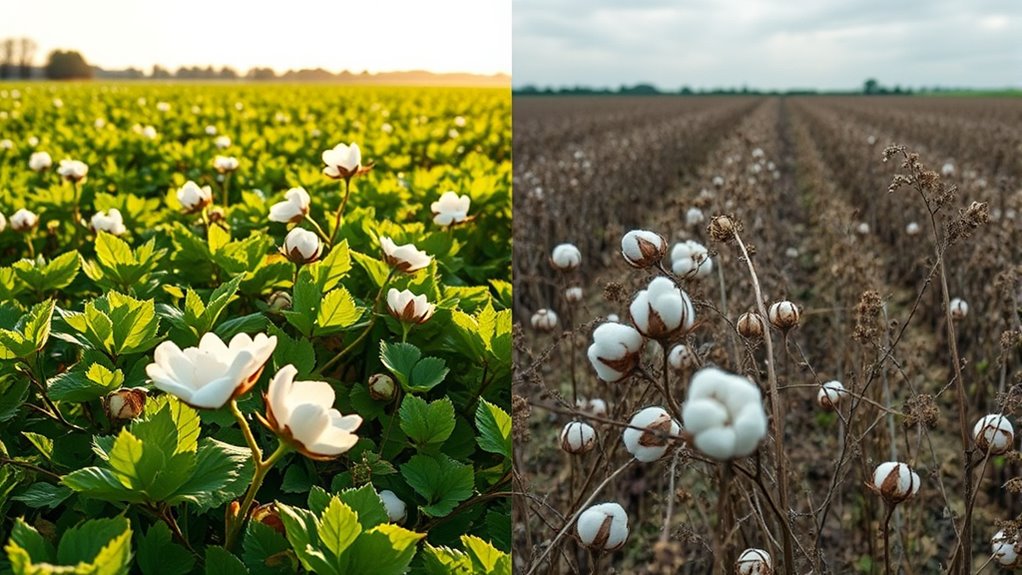
When choosing between organic cotton and conventional cotton, understanding their differences can help you make more informed decisions. Luxury items made from these fabrics carry different implications in terms of sustainability benefits and environmental impact. Organic cotton is cultivated without synthetic chemicals, pesticides, or fertilizers, which means it’s grown in a way that’s gentler on the planet. This method often results in healthier soils, reduced water usage, and less pollution, making it a more eco-friendly choice. Conversely, conventional cotton relies heavily on chemical inputs to maximize yields, but these chemicals can seep into water supplies and harm ecosystems. By opting for organic cotton, you help support farming practices that prioritize environmental health, reducing your overall ecological footprint.
Choosing organic cotton supports eco-friendly farming and reduces environmental harm.
The sustainability benefits of organic cotton extend beyond just the farming process. When you choose organic, you’re encouraging a system that promotes biodiversity and soil vitality. Organic farming practices often involve crop rotations and natural pest control, which help maintain ecological balance. This contrasts sharply with conventional cotton farming, where heavy chemical use can lead to soil degradation, loss of biodiversity, and increased water contamination. By selecting organic, you’re contributing to a cycle that supports long-term sustainability rather than short-term yields that come at the environment’s expense. Additionally, organic cotton farming often supports biodiversity, fostering a healthier ecosystem for surrounding wildlife and plant life.
Luxury brands increasingly highlight the environmental impact of their products, and choosing organic cotton can align with your values as a conscious consumer. High-end fashion and home goods made from organic cotton not only feel luxurious but also carry a message of responsibility. The reduced chemical footprint of organic farming means fewer pollutants reach waterways and communities, making these items better for both the planet and the people involved in their production. When you invest in organic cotton luxury items, you’re supporting farming methods that prioritize health, sustainability, and environmental stewardship.
While conventional cotton may offer lower costs and wider availability, it often does so at a significant environmental cost. Its reliance on chemical inputs contributes to pollution, water wastage, and health risks for farmers. Organic cotton, though sometimes pricier, offers an alternative that aligns with sustainable practices and reduces negative environmental impacts. As a consumer, your choices impact the broader ecosystem, and opting for organic cotton helps promote a more sustainable future for luxury goods. Ultimately, understanding these differences empowers you to make purchases that reflect your commitment to reducing environmental impact while enjoying the comfort, quality, and elegance that luxury items provide.
Frequently Asked Questions
How Does Organic Cotton Impact Local Farmers’ Livelihoods?
You’ll find that organic cotton positively impacts local farmers’ livelihoods by increasing farmer income through better market prices and demand. It also promotes community development by encouraging sustainable practices and fostering cooperative efforts. Organic farming reduces costs related to chemical inputs, helping farmers save money. As a result, farmers can invest more in their communities, improve living standards, and build resilient local economies, ultimately creating a more sustainable and equitable agricultural environment.
Are Organic Cotton Products More Durable Than Conventional Ones?
Organic cotton products tend to be more durable than conventional ones because of better fabric longevity and material resilience. When you choose organic, you often get garments that withstand regular wear and washing better, maintaining their quality longer. This is due to the natural fibers being less processed and free from harsh chemicals, which helps keep the fabric stronger over time. So, investing in organic cotton can give you longer-lasting, resilient clothing.
What Certifications Verify Organic Cotton Claims?
Did you know that over 90% of consumers trust eco labels? Certifications like GOTS (Global Organic Textile Standard), OEKO-TEX Standard 100, and USDA Organic verify organic cotton claims through rigorous certification processes. These eco label legitimacy standards guarantee that your organic cotton products meet strict environmental and social criteria, giving you confidence in their authenticity. Always look for these trusted certifications to confirm your cotton’s organic status and support sustainable practices.
How Does Organic Cotton Influence Global Water Resources?
Organic cotton positively impacts global water resources by promoting water conservation practices. It requires less water during cultivation compared to conventional cotton, helping to preserve essential water supplies. Additionally, organic farming supports ecological balance by avoiding harmful chemicals that can pollute water sources. You can contribute to this effort by choosing organic cotton products, aiding in the protection of water resources and fostering sustainable agricultural ecosystems worldwide.
Can Organic Cotton Meet Luxury Fashion Industry Standards?
You’ll be glad to know that organic cotton can meet luxury fashion standards, especially with sustainable innovation driving material versatility. Did you know organic cotton production uses 91% less water than conventional methods? This eco-friendly fabric offers the quality and durability luxury brands demand, proving that sustainability and high-end fashion can go hand in hand. Your choices support environmentally conscious fashion without compromising on style or excellence.
Conclusion
So, when choosing between organic and conventional cotton, remember that every choice you make has an impact. Organic cotton may cost more upfront, but it supports sustainable farming and better environmental health. In the end, it’s about weighing the pros and cons and making a decision that aligns with your values. Don’t just look at the surface—dig a little deeper. After all, the proof’s in the pudding, and your choices shape the future of our planet.