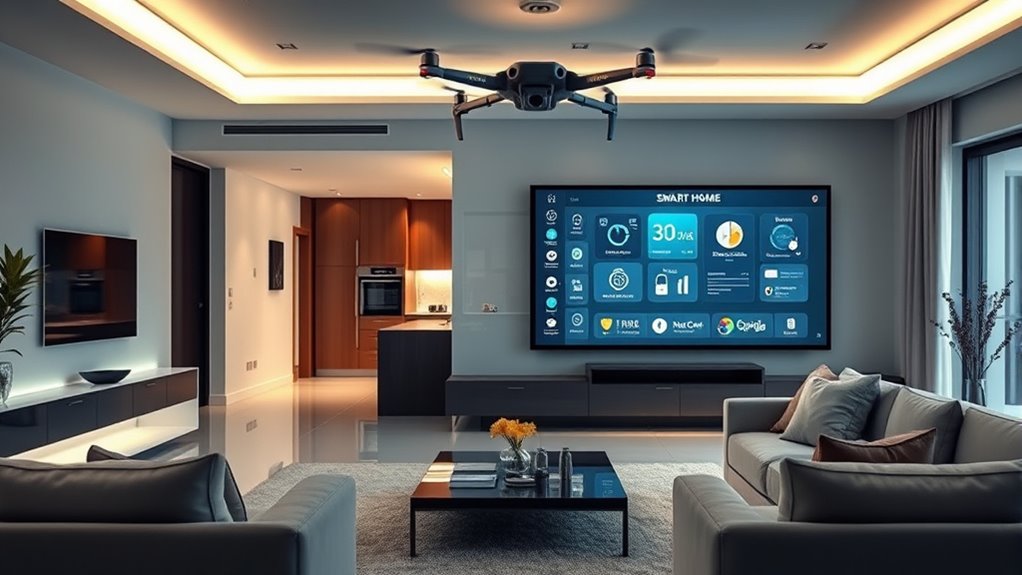

Advanced smart homes go far beyond basic voice assistants like Alexa by offering seamless personalization, energy optimization, and sensor-driven automation. You can control lighting, temperature, and security effortlessly through voice commands that recognize your unique voice. The system learns your routines, adjusts settings automatically, and monitors health and comfort in real time. If you want to discover how these innovative features create a truly connected and effortless living space, there’s plenty more to uncover.
Key Takeaways
- Integrate multimodal sensors and AI-driven analytics for proactive environmental adjustments beyond voice commands.
- Implement personalized routines and health monitoring systems for a truly tailored living experience.
- Upgrade to energy optimization technologies that learn and adapt to occupancy patterns and weather conditions.
- Incorporate advanced security and safety features with seamless connectivity and real-time monitoring.
- Enable seamless interoperability among devices and platforms for a unified, intuitive smart home ecosystem.

Have you ever wondered what it’s like to live in a home that anticipates your needs and adapts seamlessly to your lifestyle? With advanced smart homes, that vision becomes a reality. These homes don’t just respond to simple commands; they utilize sophisticated technologies like voice recognition and energy optimization to create a truly intuitive environment. Imagine walking into your house and simply saying, “Good morning,” as your smart system adjusts the lighting, temperature, and even pulls up your daily schedule. Voice recognition plays a critical role here, allowing your home to understand and distinguish your voice from others, ensuring personalized responses and privacy. This technology enables effortless control over various systems, making it feel like your home is listening and learning just for you.
Energy optimization is another core feature of these homes. Instead of wasting energy on unused appliances or lighting, your house learns your routines and adjusts accordingly. For example, it can lower the thermostat when you’re away or dim the lights during the evening to save power. Advanced sensors and intelligent algorithms work together to analyze occupancy patterns and weather forecasts, fine-tuning energy consumption for maximum efficiency. This not only reduces your carbon footprint but also cuts down on utility bills, making your home both eco-friendly and cost-effective. The seamless integration of these systems means you rarely have to lift a finger to maintain comfort and sustainability.
Moreover, these homes are designed to adapt dynamically. Sensors detect motion, ambient light, and even air quality, proactively adjusting settings to enhance your comfort and well-being. If you’re feeling under the weather, your smart home can automatically increase air circulation or suggest remedies through integrated health apps. The system’s ability to learn your preferences over time means it becomes more attuned to your lifestyle, creating a space that feels personalized and effortless. You’re free to focus on what truly matters, knowing that your environment is constantly working behind the scenes to support your needs.
In essence, advanced smart homes go beyond basic automation. They leverage voice recognition for intuitive control and energy optimization for sustainable living, transforming your house into a responsive, efficient, and personalized sanctuary. Additionally, smart sensors continuously monitor environmental conditions to optimize comfort and safety. This level of sophistication turns everyday living into an experience where technology anticipates your desires, making your home smarter—truly a mansion for the future.
Frequently Asked Questions
How Secure Are Advanced Smart Home Systems Against Hacking?
Your smart home systems have some cybersecurity vulnerabilities, but strong encryption protocols substantially boost their security. Regularly updating your devices and changing default passwords help protect against hacking attempts. While no system is completely invulnerable, staying vigilant and choosing devices with robust security measures can minimize risks. Trust in encryption and proactive security practices, and you’ll enjoy the convenience of advanced smart homes without compromising your safety.
Can Smart Home Upgrades Be Integrated With Existing Home Infrastructure?
Think of your home as a puzzle you’re fitting new pieces into. Yes, smart home upgrades can seamlessly integrate with your existing infrastructure, thanks to retrofit compatibility and wiring integration. You just need the right components and professional guidance to connect new devices without overhauling everything. This way, you enhance your home’s intelligence while preserving its original charm, making the upgrade smooth and efficient.
What Is the Average Cost of Comprehensive Smart Home Upgrades?
You’ll typically spend between $10,000 and $50,000 on extensive smart home upgrades, depending on your choices. Costs vary based on DIY installation options and ensuring system compatibility across devices. If you handle the installation yourself, you can save on labor, but you need to select compatible products. A thorough upgrade includes security, lighting, climate control, and entertainment systems, creating a seamless, connected mansion tailored to your lifestyle.
How Do Smart Homes Handle Power Outages or System Failures?
When a power outage hits, your smart home becomes an unstoppable fortress with backup power systems and system redundancy. You won’t even notice the blackout because backup generators and uninterruptible power supplies kick in instantly, keeping your systems running smoothly. Redundant setups guarantee if one component fails, another takes over seamlessly. This way, your mansion stays connected, safe, and smart, no matter what chaos the power grid throws your way.
Are There Environmentally Sustainable Options for Smart Home Technology?
Yes, you can choose eco-friendly devices and prioritize solar sustainability in your smart home. Opt for energy-efficient appliances, LED lighting, and sensors that reduce power consumption. Integrate solar panels to power your system sustainably, decreasing reliance on grid energy. These upgrades help you lower your carbon footprint, make your home more environmentally friendly, and guarantee your smart home operates sustainably while still offering advanced automation and connectivity.
Conclusion
Imagine your smart home as a symphony conductor, seamlessly blending every device into a harmonious melody. With these advanced upgrades, you’re not just living in a house—you’re commanding a living, breathing ecosystem that responds effortlessly to your every need. As you step inside, feel the orchestra of technology tuning itself to your rhythm, transforming your mansion into a symphony of comfort, control, and innovation—your personalized masterpiece waiting to be played.