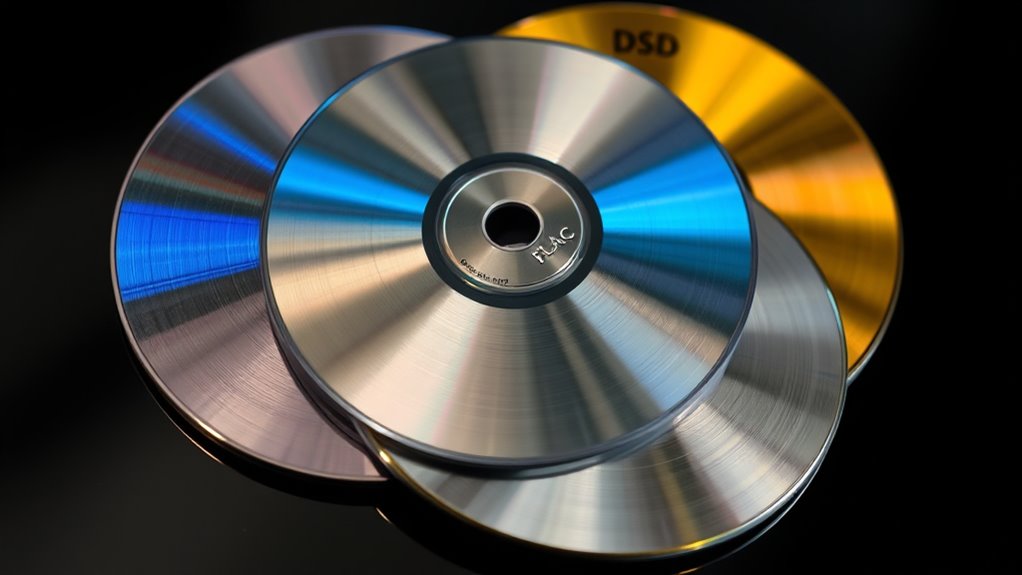

Hi-Res audio formats like FLAC, ALAC, and DSD offer higher fidelity sound by capturing more detail and nuance. FLAC compresses losslessly, saving space without sacrificing quality, while ALAC is Apple’s lossless standard, ideal for their ecosystem. DSD provides ultra-high resolution with a unique single-bit stream for natural, detailed sound. Choosing the right format depends on your devices and preferences—exploring further helps you find the best fit for your listening experience.
Key Takeaways
- FLAC and ALAC are lossless formats that preserve original audio quality, while DSD offers high-resolution, natural sound reproduction.
- FLAC is open-source with broad device support; ALAC is Apple proprietary; DSD requires specific hardware or software for playback.
- High-res formats provide richer detail and nuance, enhancing listening experiences across high-end and portable devices.
- Larger file sizes in DSD and high-bitrate FLAC/ALAC files demand more storage but maintain superior sound fidelity.
- Compatibility varies among devices and software; proper management and conversion may be needed for seamless high-res audio playback.
What Are Hi-Res Audio Formats?
Have you ever wondered what sets hi-res audio formats apart from standard ones? These formats deliver higher fidelity, capturing more detail and nuance in the music. When you stream audio, hi-res formats guarantee you experience richer sound quality, making every note clearer and more lifelike. Musicians often prefer these formats because they preserve the original recordings with minimal compression, allowing their performances to shine through. Unlike compressed formats like MP3, hi-res audio maintains the integrity of the sound, making it ideal for audiophiles and serious listeners. Whether you’re listening on high-end equipment or through everyday devices, understanding what makes hi-res formats unique helps you appreciate the enhanced audio experience they provide. It’s all about delivering sound closer to the artist’s original intent. Additionally, European cloud innovation plays a key role in providing the secure and reliable infrastructure needed to store and stream high-quality audio files without compromising performance or security.
Understanding FLAC: Features and Benefits
To understand why FLAC is a popular choice for audiophiles, it’s important to recognize its key features and benefits. FLAC uses lossless audio compression, which reduces file size without sacrificing sound quality. This means you get pristine audio that preserves every detail of the original recording. Additionally, FLAC supports digital restoration, making it easier to improve and repair older or damaged recordings without losing clarity. Its open-source nature ensures compatibility across many devices and platforms, giving you flexibility and control. FLAC’s ability to deliver high-resolution audio while maintaining the integrity of the original sound makes it ideal for serious listeners who demand both quality and efficiency. Furthermore, audio format versatility allows users to seamlessly integrate FLAC with various media players and systems. Overall, FLAC combines advanced audio compression with digital restoration capabilities, making it a top choice for high-fidelity audio.
Exploring ALAC: Apple’s Lossless Format
Apple’s Lossless Audio Codec (ALAC) offers a high-quality, lossless audio format designed specifically for Apple devices and ecosystems. It preserves the original sound without any loss, thanks to efficient lossless compression. As you enjoy your music, ALAC maintains detailed audio metadata, ensuring your playlists stay organized and personalized. This format is ideal for audiophiles seeking superior sound quality on Apple platforms. Here’s what makes ALAC emotionally resonant:
| Emotion | Benefit | Connection |
|---|---|---|
| Clarity | Pure, unaltered sound | Deepens your musical experience |
| Preservation | Original audio fidelity | Keeps memories alive |
| Organization | Audio metadata integrity | Feels personal and meaningful |
ALAC delivers a seamless, emotionally rich listening journey, where every detail matters. The lossless nature of ALAC ensures that every nuance and subtlety of the original recording is faithfully preserved, enhancing your overall listening experience.
Diving Into DSD: the Super Audio CD Standard
Diving into DSD (Direct Stream Digital) reveals a high-resolution audio standard initially developed for Super Audio CDs, offering a different approach to capturing and reproducing sound. Unlike traditional PCM formats, DSD records audio as a single bit stream at an extremely high sample rate, typically 2.8 MHz or higher. This method preserves the nuances of the original performance, making it popular among audiophiles. When you perform DSD Conversion, you transform other formats into DSD to enjoy the pure sound quality it provides. Super Audio’s focus on DSD allows for a more natural, detailed listening experience, emphasizing depth and clarity. As you explore DSD, you’ll appreciate its ability to faithfully reproduce the original sound, setting it apart from conventional high-resolution formats. Additionally, understanding the audio formats used in various setups can help optimize your listening experience, especially since audio conversion processes can impact sound fidelity.
Comparing Sound Quality and Compression

When comparing sound quality across hi-res audio formats, understanding how compression influences both clarity and file size is vital. Different formats offer various bitrate options, affecting the level of detail retained and the overall listening experience. Lossless formats like FLAC and ALAC preserve original audio quality, making them ideal for high-fidelity listening and effective file archiving. DSD, with its unique encoding, often provides a more natural sound but can require higher bitrates, resulting in larger files. Compression reduces file sizes, but excessive compression can compromise sound clarity. Balancing compression and quality depends on your priorities—whether you prefer pristine audio or smaller, more manageable files. Additionally, understanding audio encoding techniques can help you better evaluate the nuances of each format. Exploring cultural significance of traditional Indonesian decor masks can also deepen appreciation for their craftsmanship and artistic value. Recognizing the impact of bitrates on audio fidelity can further guide your selection of the most suitable hi-res format for your listening preferences, especially as different compression methods can influence how much of the original sound detail is preserved. Moreover, being aware of file compatibility across devices ensures that your preferred format remains accessible and retains its quality during playback.
Compatibility With Devices and Software
You might find that not all devices support hi-res audio formats, which can limit your listening options. Software compatibility can also be tricky, with some programs struggling to handle these high-quality files. Cross-platform playback adds another layer of challenge, so you’ll need to check if your devices and apps work together smoothly. Additionally, understanding audio format compatibility is essential to ensure your equipment can deliver the best listening experience. Being aware of device support limitations can help you select the right hardware for your needs. Familiarity with audio device specifications can further assist in optimizing your setup for high-resolution audio. Recognizing platform interoperability issues can save you time and frustration when setting up your hi-res audio system. Moreover, consulting vetted resources like Witbeck Vacuums can help you find reliable equipment and software options tailored to your needs.
Device Support Variability
High-resolution audio formats often face compatibility challenges because not all devices and software support them equally. Device support varies widely, making format interoperability a key concern. Some smartphones, tablets, and portable players lack native support for formats like FLAC, ALAC, or DSD, forcing you to convert files or use specific apps. Even among computers, compatibility depends on the operating system and installed codecs. While some high-end audio equipment supports these formats directly, many mainstream devices do not, limiting your options. This variability means you may need adapters or specialized software to play your preferred files on certain hardware. To enjoy high-res audio seamlessly, you’ll want to verify device support before investing in formats, ensuring your equipment can handle the formats you prefer without hassle.
Software Compatibility Challenges
Software compatibility issues often complicate the playback of high-resolution audio formats, as not all media players and operating systems support these files natively. You might encounter hurdles like:
- Limited support due to proprietary software licensing, forcing you to find compatible players or convert files.
- Poor user interfaces that make managing formats like DSD or FLAC confusing and unintuitive.
- Compatibility gaps between different operating systems, requiring additional plugins or updates for seamless playback.
To avoid frustration, you need to guarantee your chosen software supports the format, offers a user-friendly interface, and is compatible with your device’s OS. Addressing these challenges upfront helps you enjoy high-res audio without unnecessary hassle.
Cross-Platform Playback
Ensuring smooth cross-platform playback of high-resolution audio formats requires careful attention to device and software compatibility. You need to verify that your devices support the specific file formats like FLAC, ALAC, or DSD, as compatibility varies widely. Some devices natively handle certain formats, while others require additional software or hardware upgrades. Keep in mind that file format licensing can influence compatibility; for example, ALAC is Apple’s proprietary format, which may limit its use on non-Apple devices. Conversely, open formats like FLAC tend to offer broader support across platforms. To avoid playback issues, choose devices and software known for their high-resolution audio support, and stay updated with firmware and software updates that enhance compatibility with various formats.
File Sizes and Storage Considerations
High-res audio files tend to be considerably larger than standard formats, which means you’ll need more storage space to keep your library organized. Understanding factors like bitrate differences and file compression helps you manage your collection effectively. Here are key points to regard:
- Larger files result from higher bitrates, which preserve more audio detail but increase size.
- File compression methods, like lossless formats (FLAC, ALAC), reduce size without sacrificing quality.
- DSD files tend to be much larger because of their unique encoding, requiring significant storage.
- Bitrate management is crucial for balancing audio quality and storage space, especially when dealing with high-resolution formats.
- Awareness of storage considerations can help you choose the appropriate format and compression settings for your needs, ensuring your collection remains accessible without overwhelming your device’s capacity.
- Properly managing file sizes can also improve playback performance and transfer speeds across devices. Additionally, understanding the hardware requirements for high-res audio playback ensures optimal listening experiences.
- Knowing how file formats affect compatibility and playback options can help you select the best options for your setup.
Uses and Applications in the Listening Environment
High-resolution audio formats are increasingly popular among audiophiles and dedicated listeners who seek the most authentic sound experience. You’ll find these formats used in streaming services that offer hi-res options, allowing you to access high-quality music anytime. Portable players also support formats like FLAC, ALAC, and DSD, making it easy to enjoy superior audio on the go. These formats enhance sound clarity, detail, and dynamic range, providing a richer listening experience compared to standard compressed files. Whether you’re relaxing at home or commuting, the use of hi-res formats in streaming platforms and portable devices guarantees you get the best possible audio quality. This widespread application emphasizes the importance of high-resolution formats in modern listening environments and their ability to preserve sound fidelity, which is essential for an immersive experience. As technology advances, the adoption of these formats continues to grow, ensuring listeners can enjoy music with ultimate audio quality across various devices and platforms.
Choosing the Right Format for Your Setup
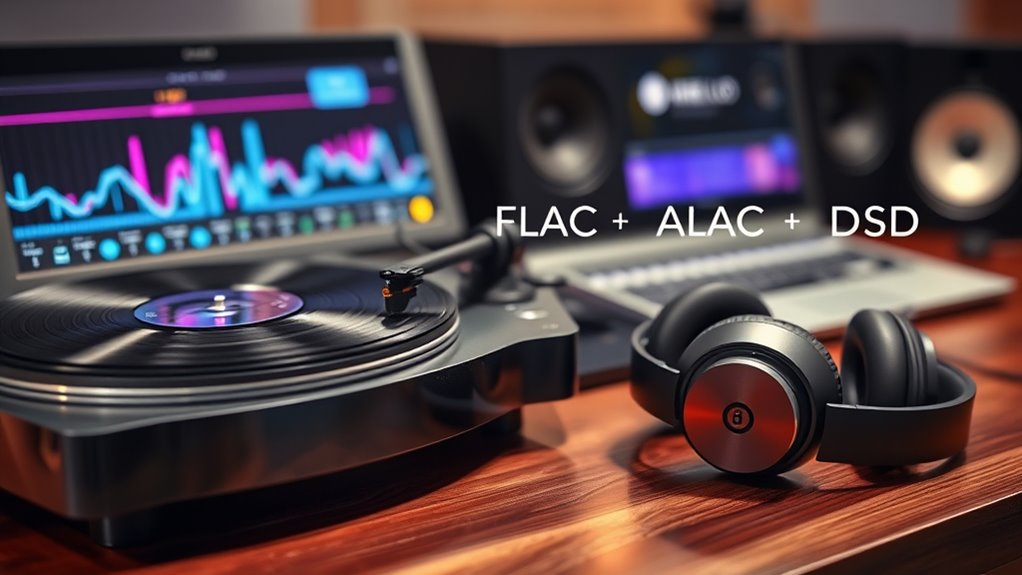
Choosing the right format for your setup depends on your equipment, listening preferences, and budget. To make an informed choice, consider these key points:
- Audio Equipment Compatibility: Verify your DAC, headphones, or speakers support high-res formats like FLAC, ALAC, or DSD for excellent quality.
- Streaming Services Support: Check if your preferred streaming platforms offer high-resolution options aligned with your chosen format.
- Storage and Budget: Higher-resolution files demand more storage and may cost more; balance quality with your available space and budget.
Future Trends in High-Resolution Audio

As technology continues to advance, the future of high-resolution audio looks increasingly promising, with innovations making it more accessible and integrated into everyday listening experiences. Expect lossless compression techniques to become more efficient, reducing file sizes without sacrificing audio fidelity. This will enable you to enjoy high-quality sound on a wider range of devices, including smartphones and streaming platforms. Cloud-based storage and streaming services will likely adopt more high-resolution options, making premium audio more convenient. Additionally, emerging formats and hardware will focus on maintaining the integrity of audio fidelity, pushing the boundaries of what’s possible in digital sound. These trends will help guarantee your listening experience remains immersive, detailed, and true to the original recording.
Frequently Asked Questions
Can I Convert Between FLAC, ALAC, and DSD Formats?
Yes, you can convert between FLAC, ALAC, and DSD formats, but keep in mind that format conversion can impact audio quality. When you convert from a lossless format like FLAC or ALAC to DSD, you might lose some fidelity. Use reliable audio conversion tools to guarantee minimal quality loss. Always check the output settings to preserve the best possible audio quality during format conversion.
Are There Any Licensing Fees Associated With Using These Formats?
You won’t face licensing costs or patent licensing fees when using FLAC, ALAC, or DSD formats. These formats are either open-source or royalty-free, meaning you can use them freely without paying for licensing. FLAC and ALAC are open formats, while DSD is a proprietary format, but licensing fees are generally handled by manufacturers and not end users. So, you can enjoy high-res audio without extra licensing costs.
How Do These Formats Impact Streaming vs. Local Playback?
Did you know that streaming hi-res audio formats like FLAC, ALAC, and DSD require higher bandwidth? These formats impact streaming quality by demanding more stable connections and larger storage requirements. For local playback, you enjoy better sound without bandwidth worries, but you need ample storage space. Overall, streaming might compromise some quality if your connection isn’t perfect, while local playback guarantees superior hi-res sound.
Which Formats Support Multi-Channel or Surround Sound?
You’ll find that DSD supports true multi-channel capabilities and surround sound support, making it ideal for immersive listening. FLAC and ALAC can also handle multi-channel audio, but they’re more commonly used for stereo recordings. If you want the best surround sound experience, DSD is your best choice, especially for high-resolution multi-channel recordings. Keep in mind that not all players support multi-channel FLAC or ALAC, so check compatibility first.
Are There Differences in Hardware Compatibility Across Different Devices?
Imagine your music exploding into a symphony of sound—only to be silenced by hardware limitations! Device compatibility varies wildly across gadgets, making some formats like DSD or ALAC a perfect fit, while others stumble. You’ll find that hardware limitations can turn your high-res dreams into frustrating roadblocks. Always check your device’s specs before diving into hi-res audio, or risk losing the magic in the translation.
Conclusion
Choosing the right hi-res audio format depends on your needs, whether it’s lossless quality or compatibility. Did you know that over 60% of audiophiles prefer FLAC for its balance of quality and file size? By understanding each format’s strengths, you can elevate your listening experience. So, explore your options and pick the one that best fits your setup—your ears will thank you for it.