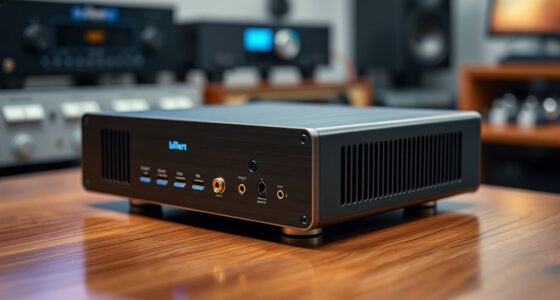
Most smartphones don’t have enough power to properly drive high-impedance headphones, which require more voltage and current for ideal sound. Without a dedicated amplifier, you might experience lower volume and compromised audio quality. To fully enjoy high-impedance models, you should consider using an external portable amplifier. Want to know how to get the best performance from your headphones? Keep exploring to find out more.
Key Takeaways
- Most smartphones lack the power to fully drive high-impedance headphones, leading to insufficient volume and sound quality.
- High-impedance headphones require higher voltage and current than smartphones typically provide.
- Using a portable headphone amplifier can significantly improve performance with high-impedance models.
- Some modern smartphones offer higher output levels but may still struggle with demanding high-impedance headphones.
- For optimal sound, pairing high-impedance headphones with an external amp or DAC/amp combo is recommended.
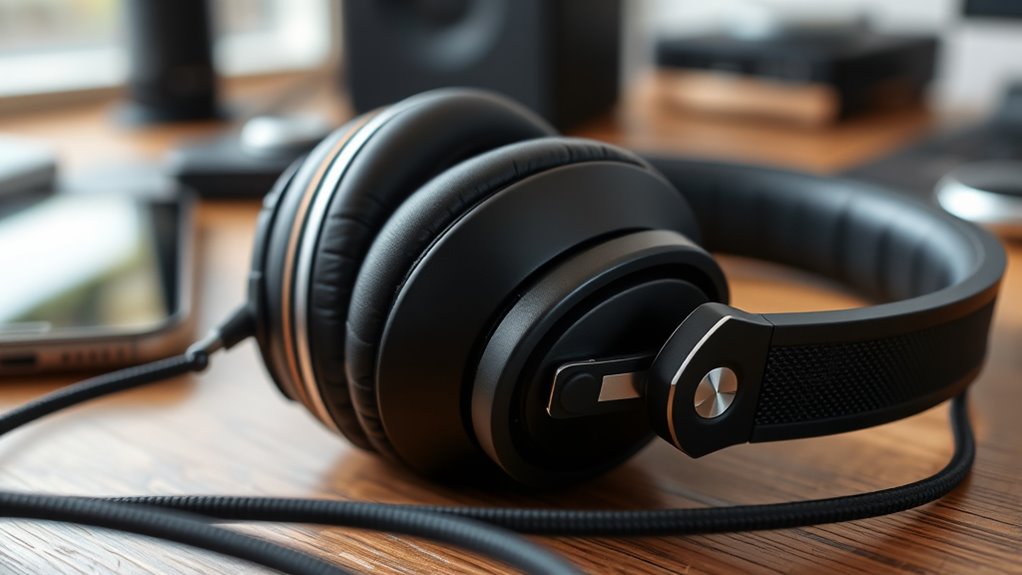
High-impedance headphones are designed to deliver high-quality sound by requiring more power from your audio source. If you’re considering investing in such headphones, you might wonder whether your phone can handle them. The key factor here is understanding the amplifier requirements of high-impedance models. Unlike low-impedance headphones, which can be driven directly by smartphones, high-impedance headphones typically need more voltage and current to reach ideal volume levels and sound clarity. Most smartphones have limited power output, which may result in insufficient volume or compromised sound quality when you try to use high-impedance headphones without additional equipment.
High-impedance headphones need more power; smartphones alone may not provide optimal sound quality.
To get the most out of high-impedance headphones, you often need an external headphone amplifier. These devices boost the signal, providing the necessary power to drive your headphones properly. If you’re serious about audio quality, investing in a dedicated amplifier can considerably improve your listening experience. However, this setup isn’t always convenient for portable use, which leads many to explore portable alternatives. Portable headphone amplifiers are compact and battery-powered, making them a practical solution for enhancing sound on the go. They can easily connect between your phone and your headphones, making sure you get enough power without sacrificing portability. Some models even come as in-line modules or small DAC/amp combos that fit comfortably in your pocket or bag.
But keep in mind, if you plan to rely solely on your phone, you may face limitations in driving high-impedance headphones effectively. While some newer smartphones boast higher output levels, they still might not match the power that high-impedance headphones demand for their best performance. In such cases, a portable alternative becomes almost essential. These devices not only provide the necessary amplification but also often improve audio fidelity by handling digital-to-analog conversion more efficiently. Additionally, understanding the power output capabilities of your device can help determine whether it can adequately support high-impedance headphones without additional gear.
If portability is your priority, look for lightweight, battery-powered amps designed specifically for high-impedance headphones. They typically feature a simple interface, making it easy to connect your device and headphones without fuss. Remember, the goal is to guarantee your headphones receive enough power to operate at their full potential, which your phone alone might not provide. So, whether you choose a dedicated amp or a portable alternative, the key is matching your gear’s capabilities with your headphones’ impedance to unleash the best possible sound.
Frequently Asked Questions
Do High-Impedance Headphones Require a Dedicated Headphone Amplifier?
High-impedance headphones often need an amplifier because of their higher impedance, which affects headphone compatibility with phones. Your phone’s built-in output might not provide enough power, leading to low volume and poor sound quality. Using a dedicated headphone amplifier ensures you get the best audio experience, especially with high-impedance models. So, yes, an amplifier is usually necessary to fully enjoy high-impedance headphones and maintain ideal headphone compatibility.
Can Smartphone Audio Quality Impact High-Impedance Headphone Performance?
Your smartphone’s audio source can impact high-impedance headphone performance, especially if it lacks sufficient power. While many phones are compatible, lower-quality audio output might result in reduced volume or clarity. To guarantee ideal sound, check your headphones’ impedance and your device’s output capabilities. If performance is lacking, consider using a dedicated headphone amplifier to boost audio quality and fully enjoy your high-impedance headphones.
Are High-Impedance Headphones Suitable for Casual Listening?
If you love Hi Fi sound and listening comfort, high-impedance headphones might seem ideal. However, for casual listening, they’re less suitable because they require powerful amps for peak performance. Imagine enjoying music on your phone; you might notice less volume and duller sound. Unless you have dedicated equipment, high-impedance headphones aren’t the best choice for everyday use, as they’re designed for serious audiophiles seeking top-tier audio quality.
What Are the Signs of Underpowered High-Impedance Headphones?
You’ll notice underpowered high-impedance headphones when the audio distorts at higher volumes or sounds unusually quiet even when turned up. You might also experience low volume levels that don’t improve with your device’s volume controls. These signs indicate your phone isn’t providing enough power, causing poor sound quality and limiting your listening experience. To fix this, consider using a headphone amplifier or switching to lower-impedance headphones.
How Do Impedance Levels Affect Overall Sound Clarity?
Impedance levels directly impact sound fidelity, as a mismatch can cause audio distortion or volume issues. When your device’s output impedance isn’t suited for high-impedance headphones, you’ll notice a loss of clarity and detail. To enjoy peak sound, guarantee your gear matches the headphones’ impedance specifications. Otherwise, you risk compromising the sound quality, leading to a less immersive listening experience.
Conclusion
So, next time you consider those high-impedance headphones, ask yourself—can your phone truly handle the challenge? Imagine the music fading into silence, the sound lost in the struggle of power. Will your device rise to the occasion, or leave you longing for that perfect, immersive experience? The choice is yours, but remember, the right gear might just be waiting in the shadows, ready to unleash a whole new world of sound.