
Satellite messaging on phones lets you stay connected in remote areas where cellular signals don’t reach. To use it, you need a compatible device or an external satellite phone or terminal, and a service plan. Sending messages works like texting but relies on satellite networks, which can have higher costs, latency, and limited bandwidth. Knowing these basics helps you prepare for off-grid adventures—keep going to uncover more essential tips for satellite messaging effectiveness.

Get your wardrobe favorites delivered free — and shop member deals
- Fast, free delivery on millions of items
- Access to Prime Big Deal Days deals on October 6–7
- Prime Video, Amazon Music and more included
Key Takeaways
- Satellite messaging on phones requires compatible devices or dedicated satellite apps to send and receive texts via satellite networks.
- Coverage is limited in remote or deep terrain areas; check satellite coverage maps before your trip.
- Satellite messages may experience higher latency and limited bandwidth, often suitable only for brief texts rather than multimedia.
- Emergency satellite services can be activated independently of regular signals, offering critical safety in remote situations.
- Using satellite messaging involves higher costs and planning for device compatibility, coverage, and message size to ensure reliable communication.
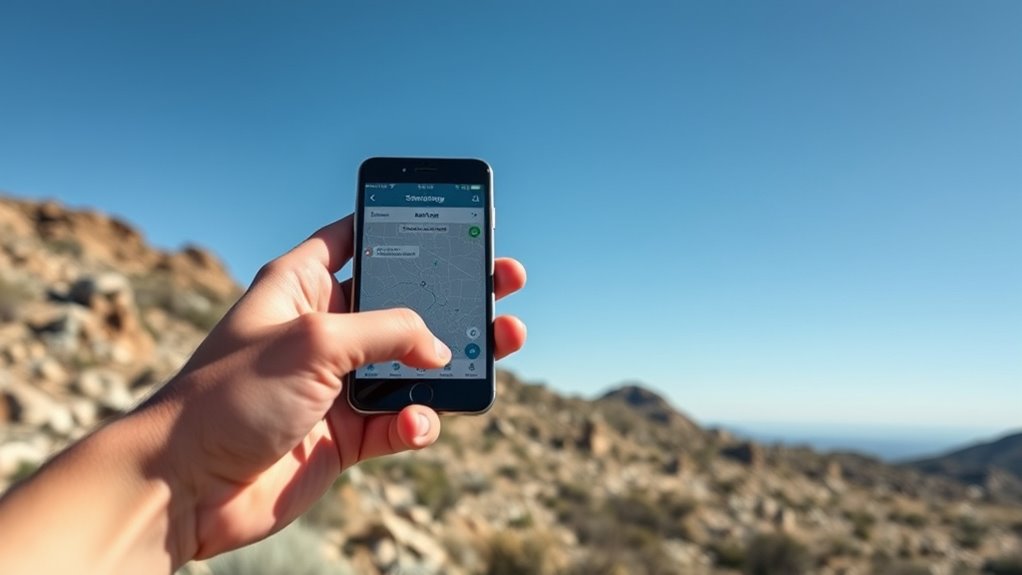
Have you ever wondered how you can send a message in remote areas with no cell service? Satellite messaging on phones makes that possible by leveraging satellite network coverage. Unlike traditional cellular networks, which depend on local towers and infrastructure, satellite networks use orbiting satellites to relay your messages. This technology is especially useful when you’re off the grid—hiking in mountains, sailing across oceans, or exploring remote wilderness where cellular signals simply don’t reach. With satellite messaging, you’re no longer limited by the availability of cell towers; instead, your messages travel directly to satellites orbiting the Earth, then back down to your recipient. This seamless connectivity means you can stay in touch no matter how isolated your location might be.
But it’s essential to understand that satellite coverage isn’t everywhere. While satellite network coverage has expanded considerably over recent years, there are still areas with limited or no satellite signal, especially deep inside dense forests or remote mountain ranges. Before heading into such places, it’s wise to check the satellite service provider’s coverage map so you know what to expect. Many providers also offer emergency satellite services, which are designed specifically for critical situations. These emergency services can often be activated even when regular messaging isn’t available, ensuring you can summon help or communicate urgent information when every second counts. For adventurers and travelers venturing into remote regions, having access to emergency satellite services can be a lifesaver, providing peace of mind that help is just a message away.
Using satellite messaging on your phone is surprisingly straightforward, but it does require some preparation. First, you’ll need a compatible device or an app that communicates with satellite networks. Many providers sell dedicated satellite phones or offer apps that connect via an external satellite terminal. Once set up, sending a message is similar to texting—just with the added benefit that your message is transmitted via satellite rather than cellular towers. Keep in mind, though, that satellite messaging can sometimes have latency issues or limited bandwidth, so it’s best suited for brief texts rather than multimedia-heavy messages. Additionally, understanding the high costs associated with satellite communication can help you plan your usage accordingly.
satellite phone for remote communication
As an affiliate, we earn on qualifying purchases.
As an affiliate, we earn on qualifying purchases.
Frequently Asked Questions
Do All Smartphones Support Satellite Messaging Technology?
Not all smartphones support satellite messaging technology. You need a device with specific mobile compatibility that can access satellite coverage, which is different from traditional cellular networks. Most standard phones lack this feature, so if you want satellite messaging, you’ll need a compatible device designed for it. Check your phone’s specifications or carrier options to verify it can connect to satellite coverage for messaging when you’re outside regular cellular networks.
How Secure Is Satellite Messaging Compared to Traditional SMS?
Satellite messaging is generally more secure than traditional SMS. About 85% of satellite services use advanced encryption protocols, which protect your data from interception. You can feel confident that your messages maintain privacy because these protocols prioritize data privacy and secure transmission. While no system is completely invulnerable, satellite messaging offers a higher level of security, making it a safer choice for sensitive communications in remote areas.
What Are the Costs Associated With Satellite Messaging Services?
Satellite messaging costs vary depending on your chosen cost plans and billing options. You can expect pay-as-you-go models or monthly subscription plans, which offer different features and data limits. Generally, satellite messaging is more expensive than traditional SMS because of the technology involved. Be sure to compare providers’ billing options to find a plan that fits your usage needs and budget, ensuring you stay connected when off-grid.
Will Satellite Messaging Work in Remote or Rural Areas?
Satellite messaging works in remote or rural areas, but your success depends on satellite signal strength. If you’re in a location with strong satellite coverage, you’ll likely send and receive messages without issues. However, rural connectivity challenges, like obstructions or weak signals, can hinder performance. Keep in mind that in very remote spots, the signal might be unreliable, so it’s good to have backup communication methods for emergencies.
How Reliable Is Satellite Messaging During Extreme Weather Conditions?
They say “when the weather clears, the signal clears,” and that’s true for satellite messaging too. During extreme weather, your satellite signal strength can weaken, and weather interference may cause messages to be delayed or lost. While satellite messaging is generally reliable, severe storms or heavy rain can disrupt communication. It’s wise to have a backup plan, especially in critical situations, since conditions can impact the service.
satellite messaging app for smartphones
As an affiliate, we earn on qualifying purchases.
As an affiliate, we earn on qualifying purchases.
Conclusion
Now that you understand satellite messaging on phones, you’re better equipped to navigate your communication options when off the grid. Think of it as having a secret lifeline, ready to connect you when traditional signals fail. With this knowledge, you can confidently venture into remote areas, knowing you’re never truly out of reach. Just remember, like a lighthouse guiding ships through darkness, satellite messaging keeps your connection alive amidst the silence of the wilderness.
emergency satellite communication device
As an affiliate, we earn on qualifying purchases.
As an affiliate, we earn on qualifying purchases.
satellite terminal for outdoor use
As an affiliate, we earn on qualifying purchases.
As an affiliate, we earn on qualifying purchases.
Fall Picks
fall essentials
As an affiliate, we earn on qualifying purchases.