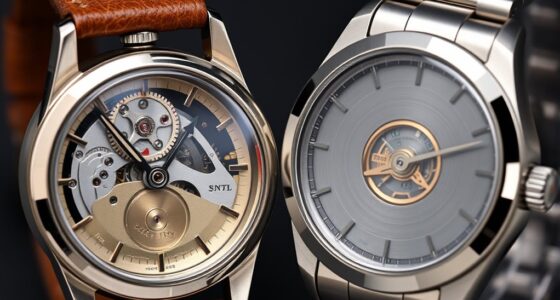

Anti-magnetic watches are built to resist magnetic fields that can disrupt their accuracy. The gauss rating shows how strong a magnetic field the watch can withstand—higher ratings mean better protection. A watch with a 1,000 gauss rating can handle most magnetic disruptions you encounter daily. Knowing what these numbers mean helps you choose the right watch for your environment. Stick around to learn more about how these ratings impact your watch’s performance.
Key Takeaways
- Gauss ratings measure a watch’s magnetic resistance; higher ratings mean better protection.
- 1,000 gauss is standard for most everyday magnetic interference, ensuring accuracy.
- Lower gauss ratings, like 60 or 80, offer less magnetic resistance.
- Anti-magnetic watches use special materials to withstand magnetic fields without losing precision.
- Choosing a higher gauss rating is ideal for environments with strong magnetic sources or frequent exposure.

Anti-magnetic watches are designed to resist the disruptive effects of magnetic fields, which can throw off a typical watch’s accuracy. Magnetic field exposure is a common issue, especially as magnetic sources become more prevalent in everyday life—smartphones, speakers, and even certain appliances. When your watch encounters these magnetic fields, its delicate internal components can become magnetized, causing the movement to run fast, slow, or even stop altogether. That’s where anti-magnetic features come into play, ensuring your watch maintains its precision regardless of external magnetic influences.
Anti-magnetic watches resist magnetic fields to keep your timekeeping accurate and reliable.
One of the most important aspects of anti-magnetic watches is their ability to withstand magnetic field exposure without losing accuracy. Watches rated with higher gauss numbers are better equipped to handle stronger magnetic fields. For example, a watch with a rating of 1,000 gauss can resist magnetic interference from most everyday sources, while a lower-rated watch might only handle 60 or 80 gauss. When shopping for an anti-magnetic watch, understanding what those gauss ratings mean helps you choose the right piece for your lifestyle. If you work in an environment with high magnetic exposure—such as an engineering lab or a medical facility—you’ll want a watch with a higher gauss rating to protect its precision.
In addition to maintaining accuracy, anti-magnetic watches also tend to boast better watch durability. The materials used in their movements—such as silicon parts or special alloys—are inherently more resistant to magnetism and physical wear. This means that not only do you get a timepiece that stays accurate, but you also enjoy a higher level of overall watch durability. Durability benefits make them suitable for demanding conditions and outdoor activities, ensuring they withstand everyday bumps and magnetic influences without compromising performance. These watches are built to last longer, especially in demanding conditions, and are less likely to require costly repairs caused by magnetic damage. Their robustness makes them reliable companions whether you’re at work, traveling, or engaged in outdoor activities.
Ultimately, understanding the significance of gauss ratings and the design features of anti-magnetic watches empowers you to make smarter choices. You gain a timepiece that preserves its accuracy even in magnetic-rich environments and offers enhanced durability over standard watches. Whether you’re an active professional or simply want a dependable watch that withstands everyday magnetic challenges, investing in an anti-magnetic watch means you’re choosing reliability and precision that lasts.
Frequently Asked Questions
How Do Anti-Magnetic Watches Compare in Durability to Standard Watches?
Anti-magnetic watches are generally more durable against magnetic interference than standard watches because they use specialized watch case materials that resist magnetic fields. These materials protect the movement, preventing damage or inaccurate timekeeping. While they might be slightly more sensitive to shocks or impacts, overall, anti-magnetic watches offer better longevity in environments with magnetic sources, making them a reliable choice if durability against magnetic interference matters to you.
Are Anti-Magnetic Watches Suitable for Everyday Wear?
Think of your watch as a loyal companion, standing firm against magnetic interference. Yes, anti-magnetic watches are perfect for daily usage, providing reliable performance amid everyday magnetic fields. They’re built to withstand the subtle magnetic forces you encounter, ensuring your timepiece stays accurate and dependable. So, go ahead—wear it daily, knowing it’s designed to stand strong against magnetic interference and keep you punctual through every moment.
What Materials Are Used to Enhance Anti-Magnetic Properties?
You enhance anti-magnetic properties by using magnetic shielding materials and non-magnetic alloys. Magnetic shielding, often made from soft iron or specialized materials, protects the movement from external magnetic fields. Non-magnetic alloys, such as Glucydur or Nivarox, are incorporated into the movement components to resist magnetization. These materials work together to guarantee your watch remains accurate and reliable even when exposed to magnetic environments.
Can Magnetic Fields Damage Traditional Mechanical Watches?
Magnetic fields can indeed damage traditional mechanical watches by causing watch magnetization, which disrupts their accuracy. You might think your watch is safe around everyday magnetic interference, but strong magnets or prolonged exposure can affect the movement. To protect your watch, avoid placing it near electronic devices or magnetic objects. If your watch becomes magnetized, a professional demagnetization service can restore its precision quickly.
How Often Should I Have My Anti-Magnetic Watch Checked?
You should have your anti-magnetic watch checked every 3 to 5 years to guarantee it remains resistant to magnetic interference. Regular watch servicing helps verify the watch’s magnetic resistance and maintain its accuracy. If you notice it running unusually fast or slow, get it checked sooner. Proper maintenance keeps your watch protected from magnetic fields and ensures it continues to perform reliably over time.
Conclusion
Understanding gauss ratings helps you choose a watch that resists magnetic fields, safeguarding its accuracy. Whether you seek durability, precision, or peace of mind, knowing what anti-magnetic features offer empowers you to make smarter choices. Because a watch that stays accurate, resists magnetism, and endures daily wear isn’t just about time—it’s about trusting your timepiece to keep up with you. So, choose wisely, wear confidently, and let your watch work as hard as you do.