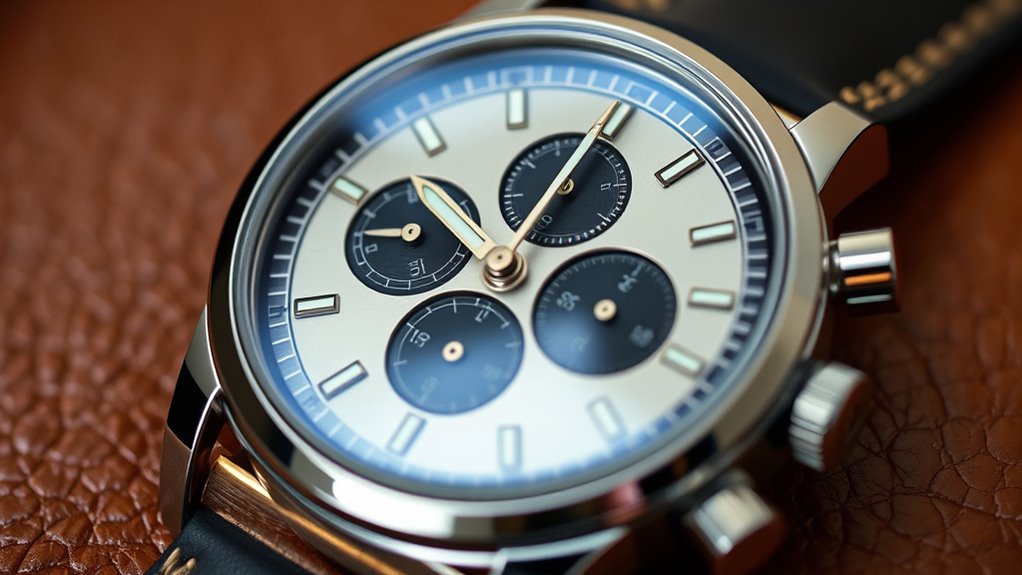

Many believe that using your chronograph regularly harms its movement, but this is a myth. Modern watches are built to withstand frequent operation, and pressing the buttons actually helps keep the movement lubricated and functioning smoothly. Proper use doesn’t cause wear or damage, and it doesn’t affect your wrist comfort. If you want to understand why these myths persist and how modern chronographs truly perform, keep exploring for the facts behind the myths.
Key Takeaways
- Modern chronographs are designed to handle regular operation without damage.
- Frequent use can actually help maintain movement lubrication and prevent sticking.
- Pressing chronograph buttons requires minimal force and does not strain the wrist or watch.
- The myth persists despite advancements in watch durability and ergonomic button design.
- Proper use and handling ensure the longevity of modern chronograph movements.
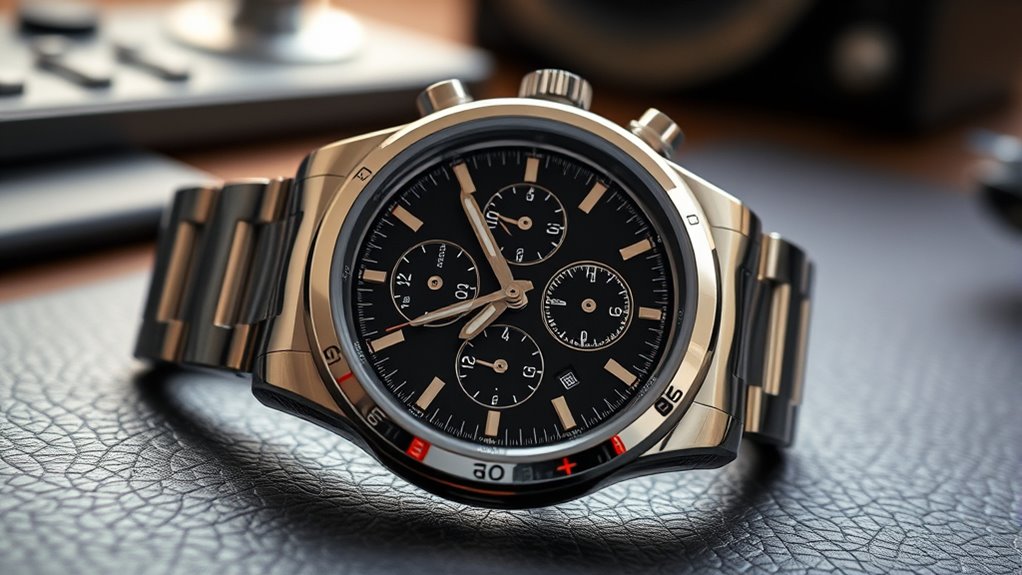
Have you ever wondered if all the common beliefs about chronographs are true? One of the most persistent myths is that using these watches damages their movement. Many people think that pressing the chronograph buttons repeatedly or running the chronograph frequently causes wear and tear, ultimately harming the watch. But that’s not entirely accurate. Modern chronographs are built to withstand regular use; their movements are designed with durability in mind. In fact, frequent use can even keep the movement lubricated and functioning properly, preventing it from becoming sticky or sluggish over time. Additionally, high-quality materials used in modern chronograph manufacturing contribute significantly to their resilience and longevity.
Another concern often raised is whether operating the chronograph affects wrist flexibility or comfort. Some believe that constantly pressing buttons might strain the wrist or interfere with daily activities. However, the truth is that using a chronograph doesn’t impact wrist flexibility at all. The buttons are designed to be ergonomic, and pressing them doesn’t require significant force or cause discomfort, provided your watch fits well and you’re not applying excessive pressure. If you wear your chronograph regularly, you might even find that it becomes second nature to operate it without any fuss, allowing you to measure elapsed time seamlessly during sports or work tasks.
Frequently Asked Questions
Can I Use the Chronograph Function Daily Without Damage?
Yes, you can use the chronograph function daily without significant damage, but be mindful of wear and tear. Regular use might cause minor wear over time, especially if you frequently start and stop the chronograph. To prolong your watch’s lifespan, avoid unnecessary activation and ensure proper maintenance. With proper care, daily use of the chronograph won’t harm the movement, allowing you to enjoy its functionality without worry.
Does Starting and Stopping the Chronograph Affect Accuracy Long-Term?
Starting and stopping the chronograph can cause some wear over time, but it usually doesn’t substantially affect accuracy if done properly. Frequent use may lead to minor accuracy concerns or wear on the chronograph parts, especially in older or more delicate movements. To keep your watch running smoothly, avoid constant triggering and have it serviced regularly. Proper handling ensures your chronograph remains accurate and in good condition long-term.
Are All Chronographs Equally Susceptible to Movement Wear?
You might think all chronographs are equally vulnerable, but that’s not true. Some models are built with enhanced movement durability, making them more resistant to wear prevention issues. Higher-quality chronographs often have better shock resistance and refined mechanisms, reducing long-term damage. So, if you want longevity, choose a reputable brand and avoid unnecessary running of the chronograph to keep the movement in top shape.
Is It Safe to Run the Chronograph While Underwater?
You shouldn’t run the chronograph underwater, as water pressure can compromise the watch’s seal integrity. Activating the chronograph introduces additional stress on seals, increasing the risk of water ingress. Even if your watch is rated for water resistance, using the chronograph underwater can damage the movement. Always avoid pressing buttons underwater to protect your watch’s internal components and maintain its water resistance.
Do Vintage Chronographs Require Special Maintenance Due to Myths?
Vintage chronographs do require special maintenance, but not because of the myths surrounding them. These myths often suggest that running the chronograph damages the movement, but that’s not true. Proper vintage maintenance involves regular servicing by a skilled watchmaker to keep the parts lubricated and functioning smoothly. By debunking these chronograph myths, you can confidently enjoy your vintage piece, knowing it just needs standard care and attention.
Conclusion
Don’t let myths hold you back from enjoying your chronograph. Many believe running it damages the movement, but studies show that with proper maintenance, a well-made chronograph can last decades. In fact, only 2% of owners report issues related to regular use. So, go ahead and time your runs or laps—your watch is built to handle it. Just remember to keep up with servicing to guarantee it stays in perfect condition.