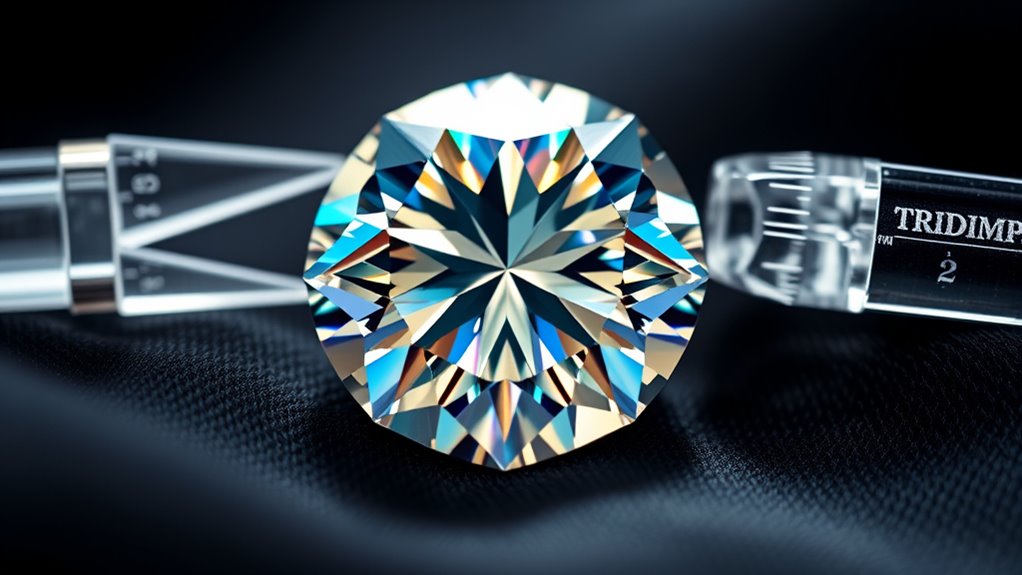

Understanding the 4Cs—cut, color, clarity, and carat weight—is key to confidently choosing a diamond. These factors influence a diamond’s brilliance, appearance, and value. Learning how each C affects size, sparkle, and price helps you make informed decisions and avoid marketing tricks. Balancing these qualities based on your preferences and budget guarantees you select the perfect stone. Keep exploring to discover how to navigate these details for a smart purchase.
Key Takeaways
- Understanding the 4Cs (cut, color, clarity, carat) helps assess a diamond’s quality and value accurately.
- Certification standards like GIA ensure transparency and consistency in grading and comparing diamonds.
- Balancing the 4Cs allows personalized choices that maximize beauty and fit your budget.
- Specific facets, such as cut and clarity, significantly influence a diamond’s brilliance and overall appearance.
- Knowing how shape, setting, and grading reports impact size and aesthetics boosts confidence in your purchase.
Understanding the Importance of the 4Cs
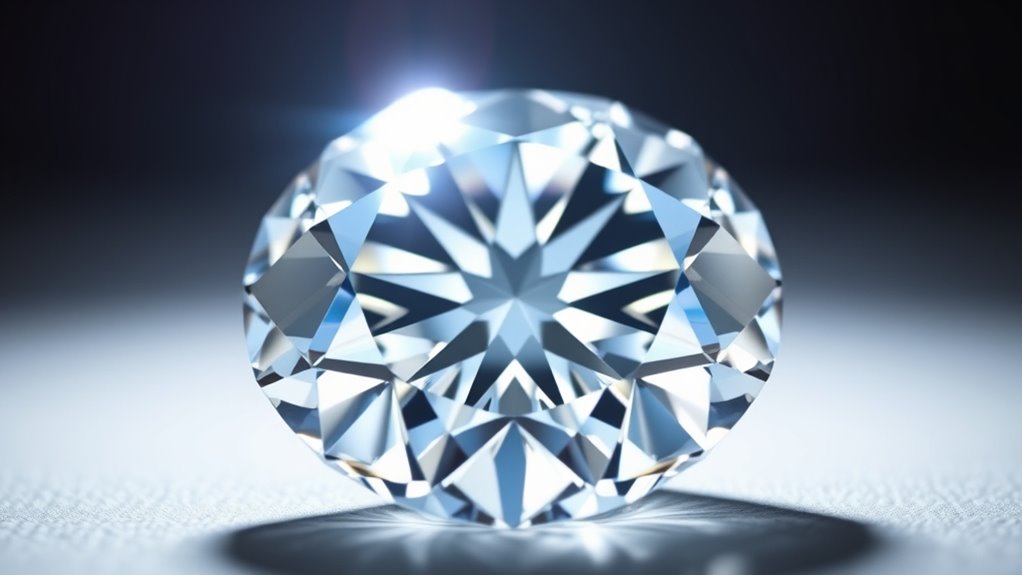
Have you ever wondered what makes a diamond truly valuable? In the diamond industry, understanding the 4Cs—cut, color, clarity, and carat weight—is essential, as they determine a stone’s quality and worth. Certification standards, like those from GIA, ensure that what you’re buying meets strict criteria, providing transparency and trust. These standards act as a universal language, helping you compare diamonds confidently. These grading criteria are based on established industry standards, which provide consistency across different evaluations. Without grasping these aspects, it’s easy to be misled by marketing or superficial appearances. The grading process involves detailed assessments that help establish a diamond’s value objectively. The 4Cs serve as the foundation for evaluating a diamond’s true value, guiding your purchase from a place of knowledge rather than guesswork. Recognizing their importance empowers you to make informed choices and find a diamond that truly matches your expectations. Understanding the 4Cs is crucial for making confident and informed diamond purchases. Additionally, understanding how Certification standards influence the grading process can further enhance your confidence in your buying decision. A clear comprehension of diamond grading can help you identify the best value and avoid overpaying.
Exploring Diamond Cut and Its Impact on Brilliance
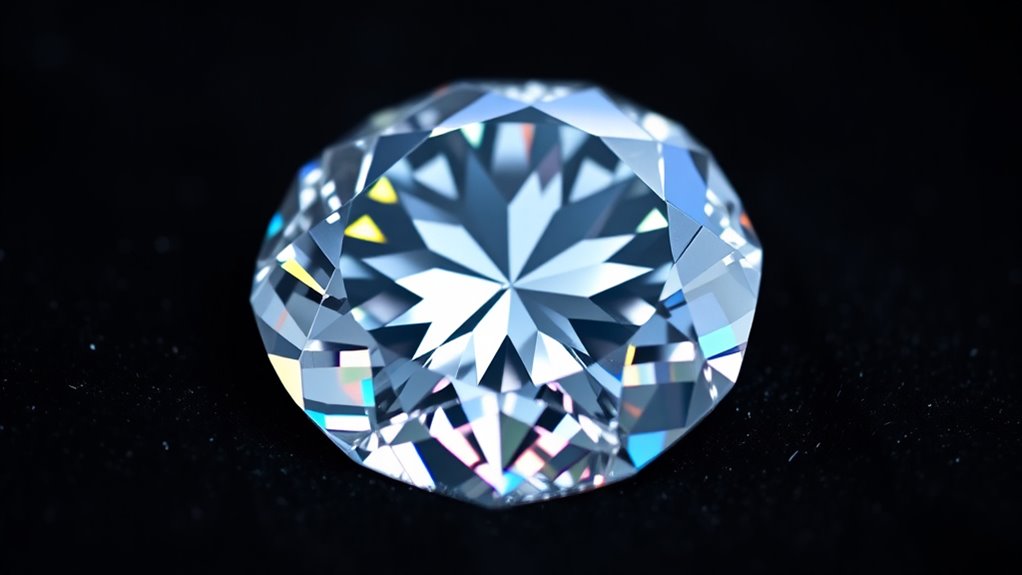
While color, clarity, and carat weight influence a diamond’s appearance, the cut determines how brilliantly it sparkles and reflects light. The quality of the cut, including diamond symmetry, plays a vital role in brilliance. When facets are precisely aligned, light enters and reflects internally, creating that mesmerizing sparkle. Poor symmetry causes light to leak, dulling the stone’s fire. Similarly, polish quality affects how smoothly the surface reflects light; a well-polished diamond has fewer surface blemishes that can diminish brilliance. A superior cut maximizes the stone’s fire and scintillation, making it stand out. Proper cut quality ensures the diamond’s light performance is optimized, enhancing overall sparkle and appeal. Additionally, facet alignment is crucial because it directly impacts light reflection and overall brilliance, and cut grading provides an objective measure of the craftsmanship involved. Proper light reflection within the diamond is essential to achieve maximum brilliance and visual impact. To fully appreciate a diamond’s brilliance, understanding how light performance is affected by cut quality helps buyers make more confident choices.
Deciphering Color Grades and Their Visual Effects
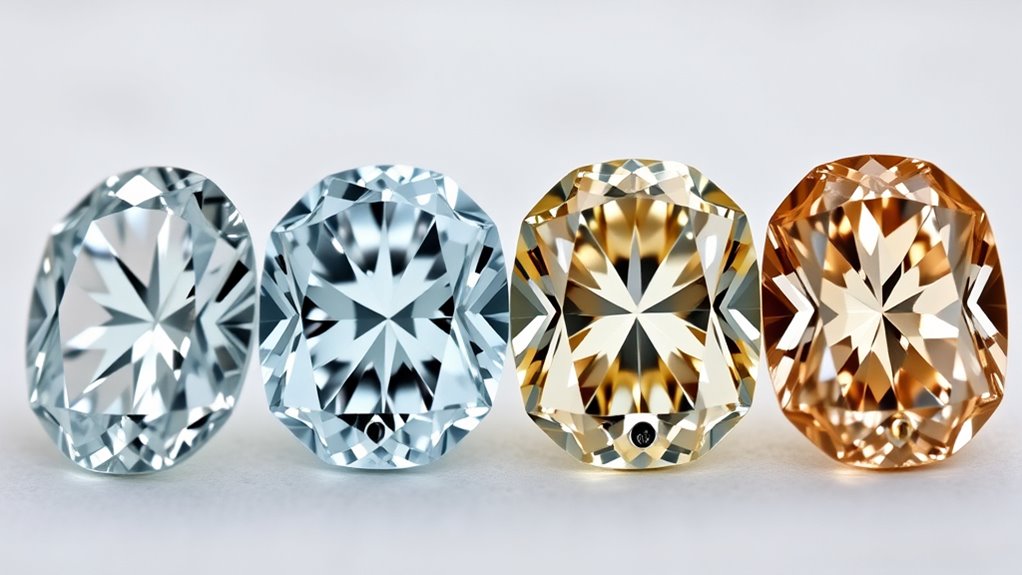
Understanding the color grade scale helps you recognize how subtle or noticeable color differences can be in a diamond. You’ll see that even slight variations may affect the stone’s sparkle and overall appearance. By grasping these details, you can choose a diamond that best suits your preference for brilliance and value. Additionally, being aware of grading scales can help you better interpret expert evaluations and ensure you select a high-quality stone. Familiarity with visual cues in grading can also aid in assessing a diamond’s true beauty before purchase.
Color Grade Scale
The color grade scale is essential for evaluating a diamond’s hue, as it directly influences the stone’s brilliance and overall appearance. This scale measures how much color saturation a diamond has, ranging from colorless to light yellow or brown. As you move down the scale, the hue variations become more noticeable, affecting how the diamond reflects light. Higher-grade diamonds with minimal hue variations appear more transparent and allow more light to pass through, creating greater sparkle. Lower-grade stones may show more color, which can dull their brilliance. Understanding this scale helps you determine how the subtle differences in hue impact the overall look and value of your diamond. By recognizing the significance of the color grade scale, you can make more confident buying decisions.
Visible Color Differences
Visible color differences in diamonds are often noticeable to the naked eye and can considerably influence how a stone appears. Variations in color saturation and hue may cause the diamond to look warmer, cooler, or more vibrant. Even small differences in hue variations can create a noticeable shift in appearance, especially in lower color grades. To understand this better, consider the table below:
| Color Saturation | Visual Effect |
|---|---|
| High | More intense, vivid color |
| Moderate | Slight warmth or coolness |
| Low | Nearly colorless, subtle hue |
| Hue Variations | Impact on Look |
| Slight yellow | Slightly warmer appearance |
| Slight brown | Duller or more muted look |
| Slight gray | Cooler, less vibrant look |
Impact on Sparkle
Ever wondered how a diamond’s color grade influences its sparkle? The answer lies in how color affects light reflection and brilliance. Lower color grades often have a slight yellow or brown tint, which can dull the diamond’s sparkle. However, diamond fluorescence plays a role too; strong fluorescence can mask color tints, making a slightly lower grade appear whiter and more radiant. Additionally, diamond symmetry impacts sparkle by ensuring light is properly reflected within the stone. Well-cut diamonds with excellent symmetry maximize brilliance, regardless of color grade. When you understand the interplay between color, fluorescence, and symmetry, you can choose a diamond that offers vibrant sparkle and visual appeal, even if it’s not the highest color grade.
Evaluating Clarity and Its Role in Sparkle
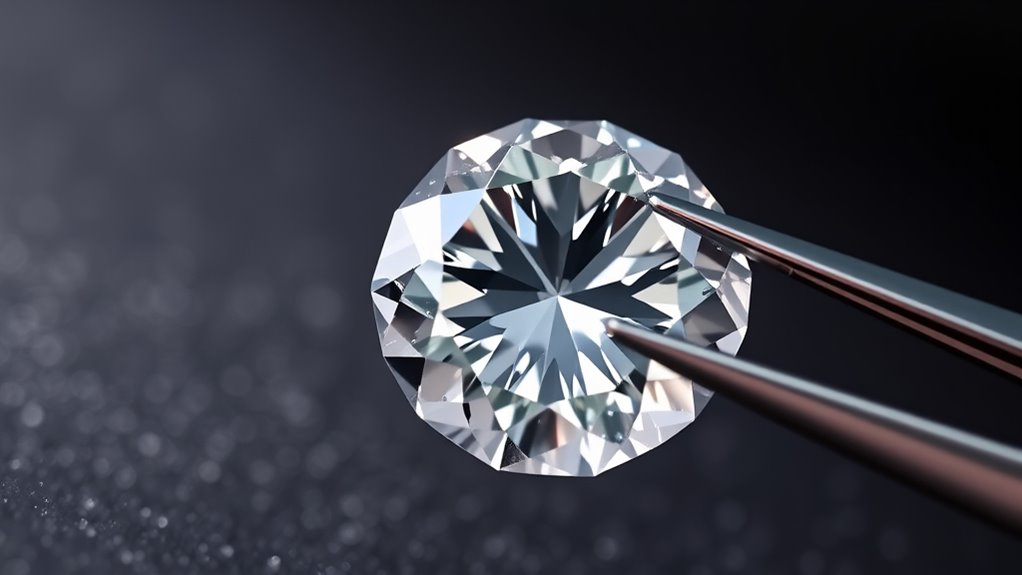
Clarity plays a crucial role in a diamond’s sparkle because even tiny inclusions or blemishes can disrupt the way light travels through the stone. When evaluating clarity, flaw detection is essential—you want to identify any internal or external imperfections that could affect brilliance. Some flaws are visible to the naked eye, while others only appear under magnification. Fluorescence effects also influence clarity; strong fluorescence can sometimes mask small inclusions, enhancing overall appearance, but it can also cause a cloudy or hazy look in certain lighting conditions. By carefully examining these aspects, you ensure the diamond’s internal quality supports maximum sparkle. Additionally, understanding the grading scale used by gemological laboratories helps in assessing a diamond’s clarity accurately. Recognizing how market demand influences clarity grading can also help in making a confident purchase decision. Analyzing the impact of inclusions on light performance allows for a more comprehensive evaluation of a diamond’s brilliance and helps in selecting a stone that will shine confidently. A thorough understanding of cut quality alongside clarity ensures that the diamond’s facets are optimized for maximum light return, which is essential for achieving that impressive sparkle. Remember, a higher clarity grade generally means fewer flaws, resulting in a more luminous, eye-clean stone that confidently shines. Additionally, being aware of how clarity grading interacts with overall diamond quality helps buyers make informed choices.
The Significance of Carat Weight and Size Choices
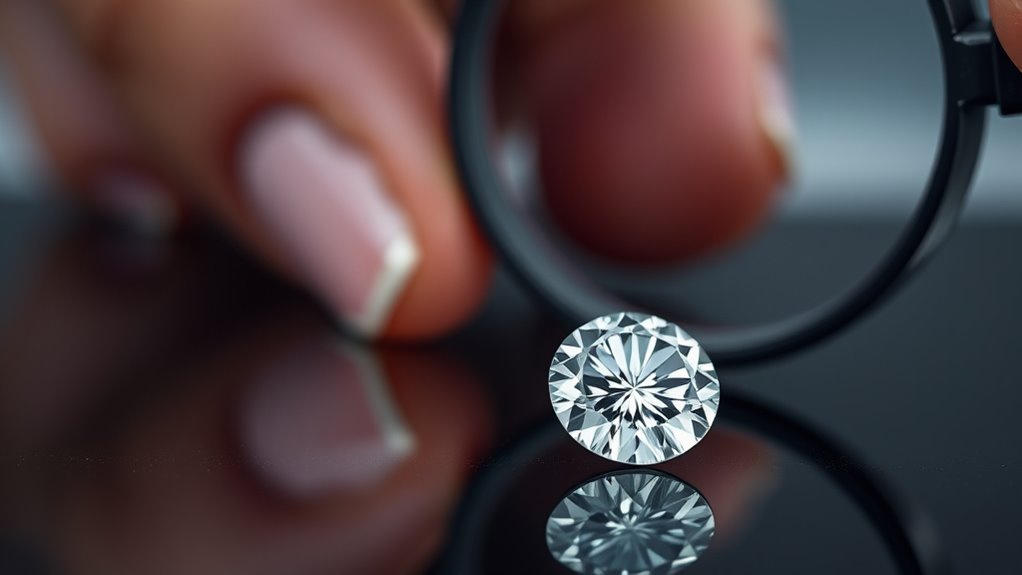
Choosing the right carat weight and size can significantly impact a diamond’s overall appearance and presence. Larger carats tend to draw more attention and create a bold statement, but they also come with a higher price tag. The diamond shape plays a vital role here; for instance, a princess cut may appear larger than a round cut of the same carat weight due to its shape and facets. Additionally, your preferred setting styles influence how size is perceived—prong settings can showcase more of the diamond’s size, while bezel settings offer a sleek look. Consider how the size complements your hand and style. For example, electric bike horsepower can influence the perceived size and performance of a bike, similar to how diamond size affects visual impact. It’s also helpful to understand how diamond proportions can affect the overall look and brilliance of the stone. Properly caring for your jewelry and understanding piercing aftercare can ensure your investment remains stunning over time. Furthermore, paying attention to diamond grading reports can help you make an informed decision about the quality and value of your purchase. A thorough understanding of diamond certification can also provide additional confidence in your selection. Ultimately, selecting the right carat weight and size balances your aesthetic desires with practical considerations, ensuring your diamond feels just right.
Balancing the 4Cs to Find Your Perfect Diamond
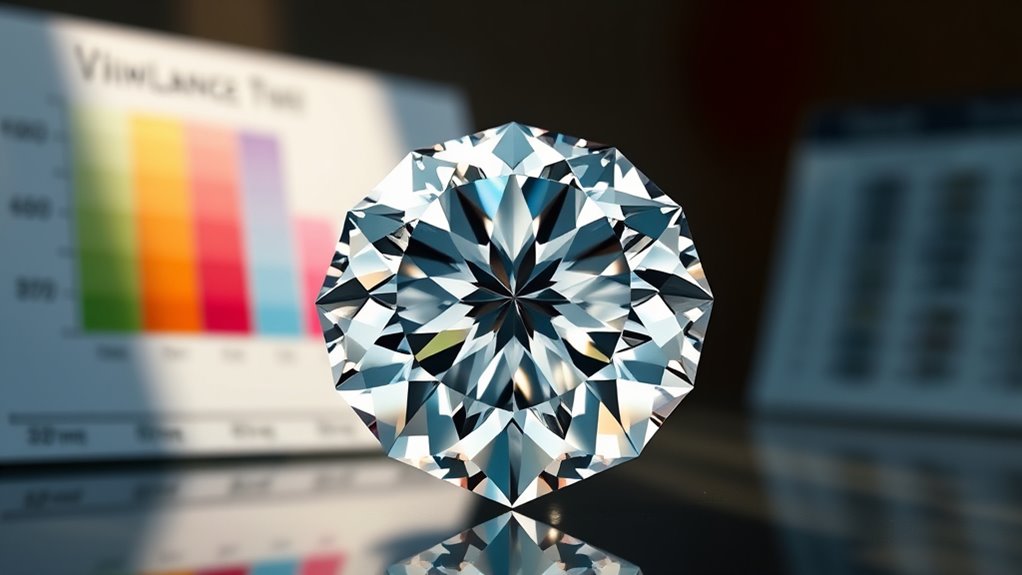
Finding the perfect diamond involves balancing the 4Cs—cut, color, clarity, and carat weight—because each one influences the stone’s overall beauty and value. To make an informed choice, consider how these factors interact. For example, a well-cut diamond enhances brilliance, even if it has slightly lower color or clarity. Always look for a diamond certification to verify quality and ethical sourcing to guarantee responsible mining practices. Prioritize what matters most to you—size, sparkle, or purity—and adjust the others accordingly. Here’s a quick guide:
| C | Focus | Trade-offs |
|---|---|---|
| Cut | Brilliance and fire | Higher cut grade may increase cost |
| Color | Brightness and whiteness | Slightly lower color can save money |
| Clarity | Cleanliness and transparency | Slight inclusions may be unnoticeable |
| Carat Weight | Size and presence | Larger stones often cost more |
Frequently Asked Questions
How Do Fluorescence and Other Enhancements Affect Diamond Appearance?
Diamond fluorescence and other enhancements can substantially impact how your diamond appears. Fluorescence causes some diamonds to glow under UV light, which can sometimes make them look milky or cloudy if strong. Enhancements, like laser treatments or coatings, can improve color and clarity, making the diamond look more appealing. However, these treatments may affect value and durability. Always ask about fluorescence and enhancements to ensure your diamond meets your expectations.
What Are the Best Practises for Inspecting a Diamond in Person?
When inspecting a diamond in person, you should use proper gemstone lighting to see its true sparkle and clarity. Hold the diamond at different angles, focusing on the facets, and check for any visible inclusions or color tints. Familiarize yourself with diamond grading reports, which detail clarity and color, so you can compare what you see with the official assessment. Trust your eyes and take your time to make an informed decision.
How Does Diamond Certification Influence Buying Confidence?
Think of diamond certification as a trusted map guiding your journey. It boosts your confidence by providing verified diamond grading details, such as cut, color, clarity, and carat weight. Certification benefits include transparency, authenticity, and peace of mind, ensuring you know exactly what you’re buying. With this official stamp, you can confidently compare diamonds, avoid surprises, and make a well-informed purchase that truly sparkles.
Are Synthetic Diamonds Comparable to Natural Ones in Quality?
Synthetic diamonds are comparable to natural ones in quality, especially when it comes to brilliance and durability. Lab-grown vs natural comparisons show that lab-grown diamonds often have fewer flaws and are more affordable. While natural diamonds are rare gemstones, synthetic options offer a sustainable and ethical choice without sacrificing beauty. You can confidently choose a lab-grown diamond for stunning quality, knowing it’s a responsible alternative to a rare gemstone.
How Can I Determine the Best Diamond for My Budget?
You can find the best diamond for your budget by exploring pricing strategies and smart budget allocation. Start by prioritizing the 4Cs that matter most to you, like cut or color, and adjust others accordingly. Research different retailers and look for deals or certifications. Remember, a stunning diamond doesn’t have to be the most expensive—focus on quality and value to make a confident choice within your budget.
Conclusion
By understanding the 4Cs, you gain confidence in choosing the perfect diamond. Did you know that cut quality has the biggest impact on a diamond’s brilliance, accounting for 75% of its sparkle? Balancing cut, color, clarity, and carat guarantees you find a stunning, value-packed stone. So, trust your knowledge, weigh your priorities, and make an informed decision—you’ll be confident in your sparkling choice for years to come.